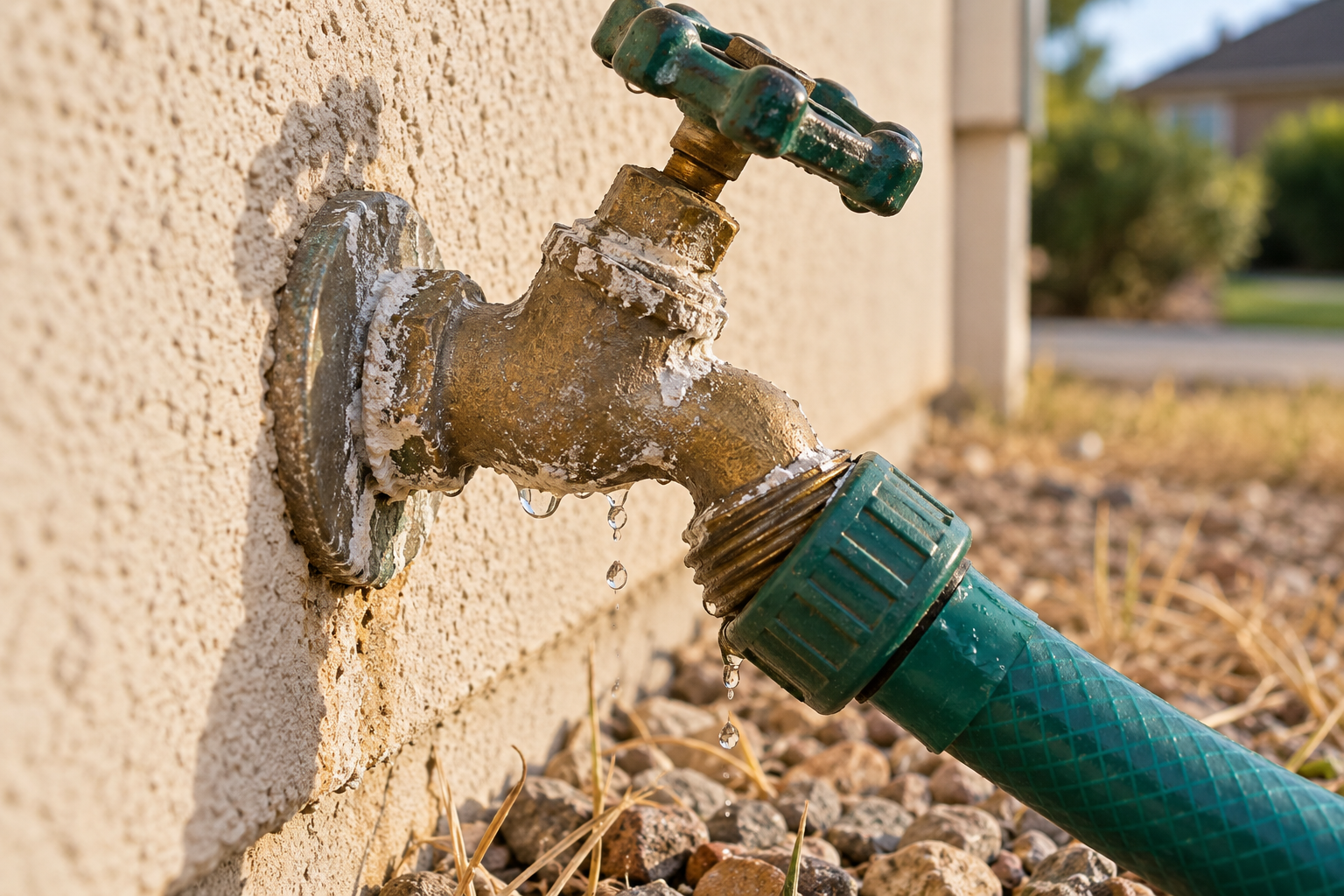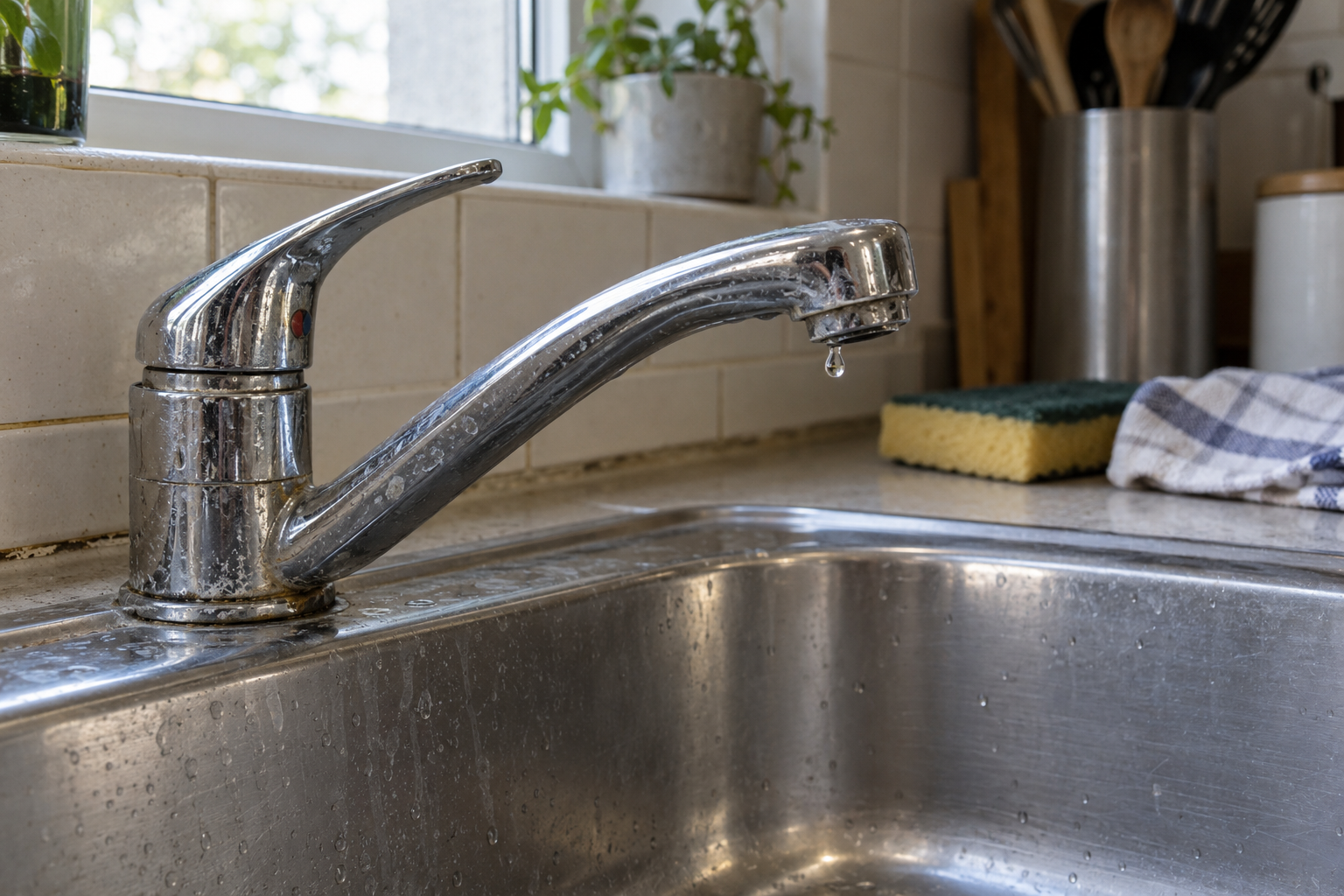
> San Antonio Local Insight: Fixture and faucet leaks in San Antonio happen faster because hard water minerals (21 gpg from Edwards Aquifer) grind down valve seats, corrode cartridges, and prevent proper sealing. A faucet that lasts 15 years in soft-water cities often starts leaking within 5–8 years in San Antonio without a water softener.
Local San Antonio Field Notes Before You Start
Before following any generic plumbing checklist, adjust it for our Edwards Aquifer water. At roughly 357 mg/L, or 21 grains per gallon, the calcium carbonate and magnesium in the water can turn a small maintenance issue into repeat wear on valves, seals, drains, heaters, and appliance connections. That means small rubber seals, cartridges, fill valves, and supply stops deserve extra attention because mineral grit wears those parts faster here.
A homeowner in King William should be especially careful because historic cast iron, galvanized pipe, and tight retrofit spaces change what a safe repair looks like. If you are comparing advice from national repair guides, shorten the maintenance interval and inspect for white scale, crusted fittings, stiff shutoff valves, and early corrosion before assuming the part simply “got old.”
For budgeting, use local pricing instead of national averages: fixture labor commonly runs $150-$300 for simple faucet or supply work, while toilet replacement often lands around $300-$800 including the unit. If the issue appears after a summer high-use period or after a rare freeze like Winter Storm Uri, treat it as a local risk signal and document what you see before calling a licensed plumber in Bexar County.
Quick answer: identify the leak before buying parts
A successful Delta faucet repair starts with locating the water, not guessing at a cartridge. Dry the sink, spout, handle base, supply connections, and cabinet floor, then operate the faucet while watching each area. A drip from the spout usually points to worn internal sealing parts. Water around a handle can indicate an O-ring, bonnet, or cartridge problem. Moisture below the sink is more likely to come from a supply connection, lift-rod opening, drain, or water traveling down from above. These are different repairs, even when the puddle looks similar.
If water is running continuously, spreading into cabinetry, or approaching an outlet, close the faucet's hot and cold stop valves immediately. If the stops do not close, use the home's main shutoff. A slow spout drip is rarely an emergency, but a leak below the sink can damage particleboard, flooring, and the ceiling beneath it. Do not order a part until you have identified the faucet series or removed the old component for comparison.
Common causes and the clues they leave
Worn seats, springs, seals, O-rings, or a cartridge account for many faucet symptoms. A single-handle ball-style faucet may use small rubber seats and springs; other single-handle and two-handle designs use cartridges. Mineral deposits can keep sealing surfaces from closing cleanly. A loose handle or retaining part may change how the valve operates, but tightening exterior hardware will not cure a damaged internal seal.
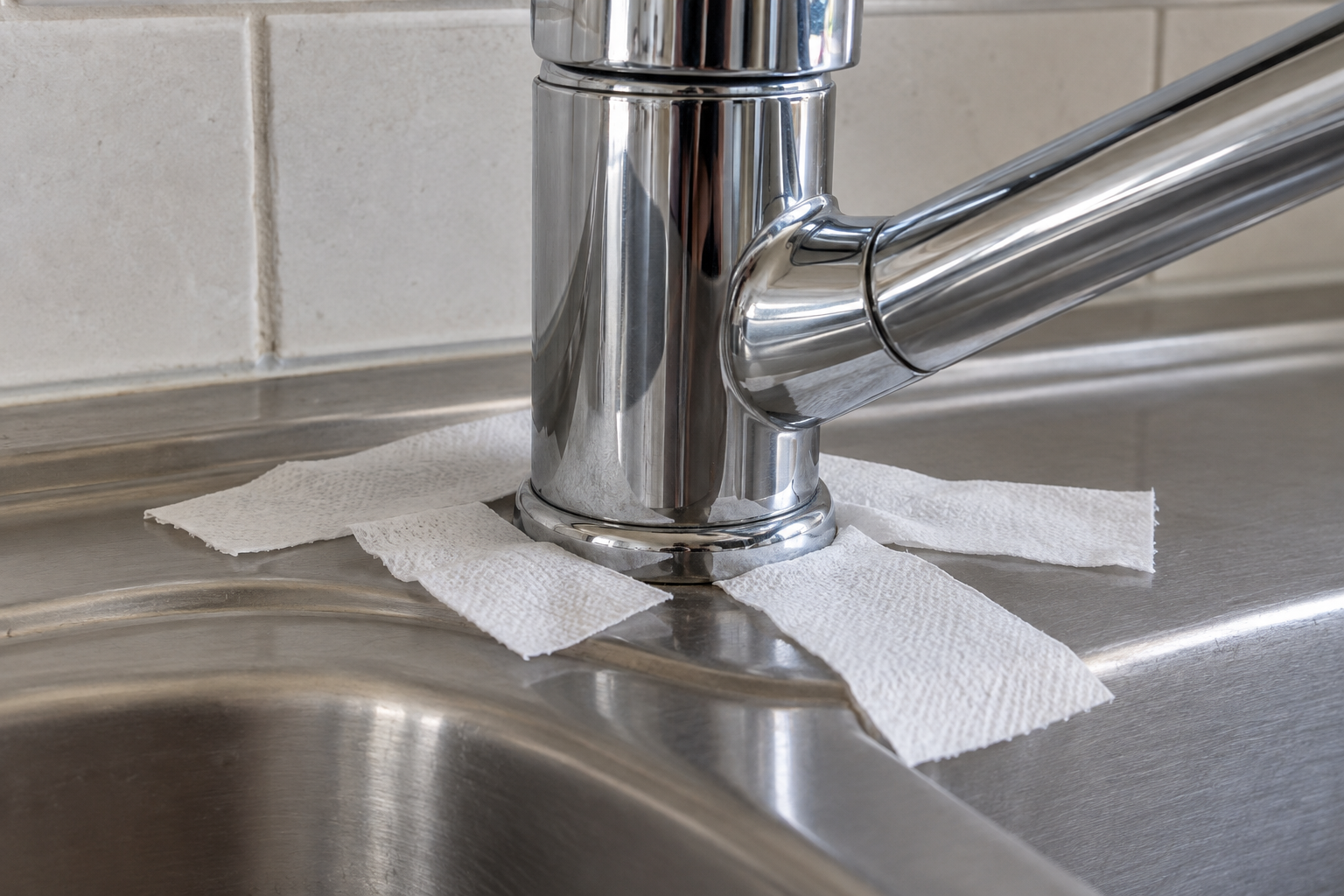
Also rule out look-alikes. Water at the aerator joint may run backward along the spout. A loose supply nut can drip only while water is flowing, while a failing hose may leak under constant pressure. Splashing around the deck can enter an unsealed mounting hole. Mark the first point that becomes wet with a square of dry tissue; this is often more reliable than following a drop after it has traveled.
Safety first: shutoff, pressure, and nearby electricity
Clear the cabinet before working and confirm that both stop valves actually stop flow. Turn them clockwise gently; old valves can break if forced. Open the faucet to relieve pressure and cover the drain so screws cannot disappear. If water has reached a receptacle, disposal connection, or powered appliance, do not touch wet electrical equipment. Shut off the relevant circuit from a dry location and call qualified help if there is any uncertainty.
Hot water can scald, and a pressurized line can spray when loosened. Never remove a cartridge, bonnet, hose, or supply connection with the water on. Stop if a valve will not isolate the fixture, corrosion has thinned a pipe, or movement at the faucet makes plumbing inside the wall flex. Sewer gas is not normally involved in faucet work, but a drain leak or disconnected trap is a separate sanitation issue that should be corrected promptly.
A step-by-step diagnostic check
First, dry everything and place paper towels beneath the faucet. Test cold alone, hot alone, and both together. Watch the handle base, spout, deck, pull-down hose, supply tubes, shutoff stems, drain flange, and trap. Second, note whether leakage occurs with the faucet off, only while running, or only when the spout swivels or sprayer is extended. That timing narrows the source.
Third, clean the aerator if flow is uneven, but do not assume low flow and a leak share one cause. Fourth, photograph the faucet and look for an identifying tag on the supply line or beneath the sink. Measure and compare the removed part rather than relying on appearance alone. Finally, after any repair, run hot and cold water for several minutes, move the handle through its range, inspect with a dry tissue, and check again after an hour. A leak that returns needs more diagnosis, not more force.
Tools and replacement parts worth gathering
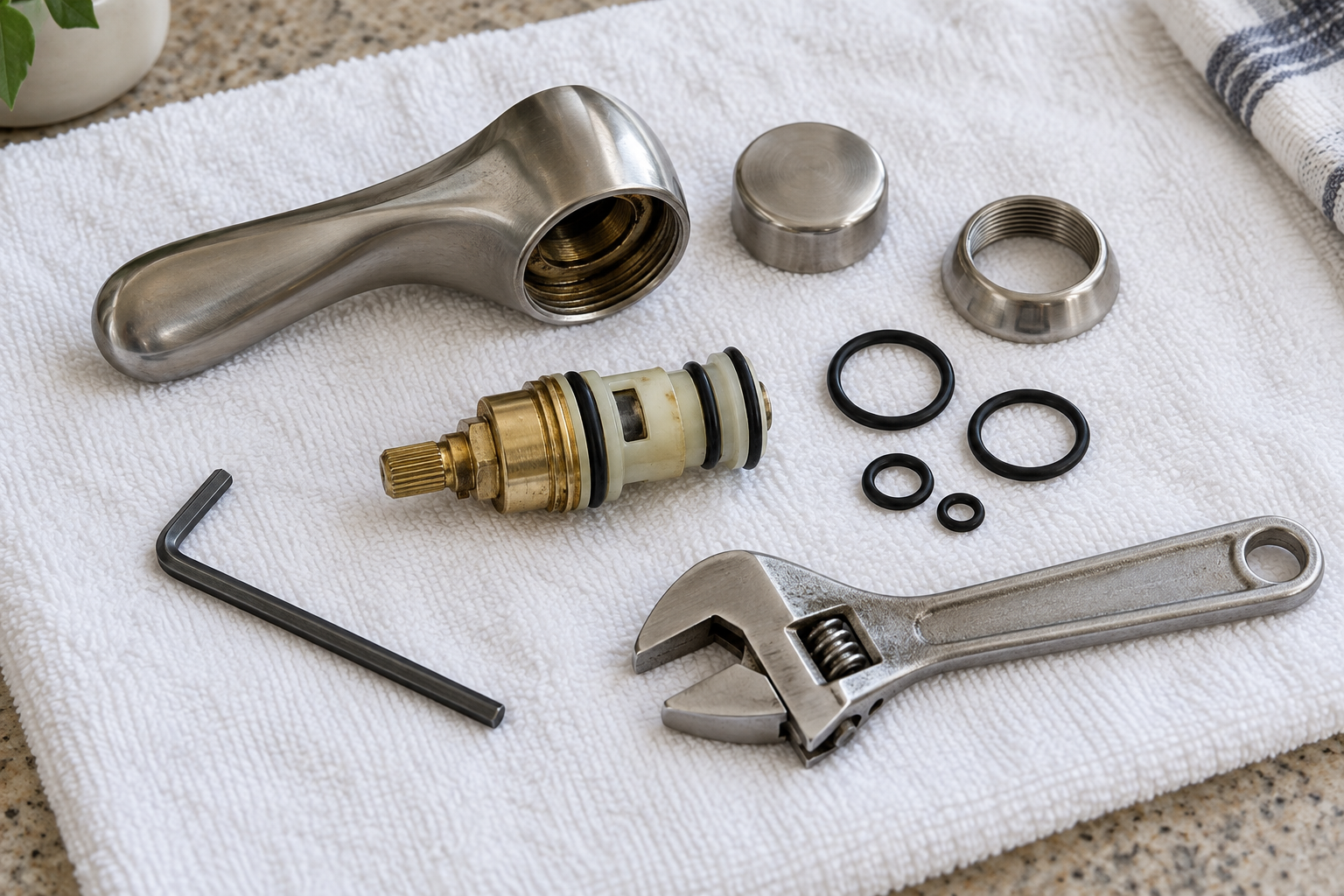
Useful basics include a basin or adjustable wrench, hex keys, Phillips and flat screwdrivers, needle-nose pliers, a flashlight, towels, a small container for parts, and silicone plumber's grease approved for potable-water plumbing. A faucet repair tool kit can be convenient, but use padded jaws or tape to protect finished surfaces. Vinegar can soften removable mineral deposits; never mix cleaners.
Replacement components must match the faucet. Bring the old cartridge or seals to a plumbing counter when identification is uncertain. Do not substitute petroleum grease, random O-rings, pipe dope, or plumbing tape where the design calls for a gasket. Tape seals tapered threaded pipe joints; it does not repair a cartridge or compression connection. Organize removed pieces in order and take photos so springs, seals, and orientation go back correctly.
DIY repairs that are usually reasonable
Cleaning an aerator, tightening an accessible mounting nut, replacing a verified cartridge, or installing the correct seat-and-spring kit can be reasonable for a careful homeowner. Follow the instructions for the exact faucet family. Remove decorative caps gently, hold the faucet body against twisting, and pull the cartridge straight rather than prying against the valve. Clean the cavity without scratching sealing surfaces, lightly lubricate specified O-rings, and align tabs before reassembly.
Tighten only enough to seat parts and stop movement. Excess torque can crack a retaining nut, distort a seal, or damage the valve body. Restore water slowly while watching the open cabinet. If the apparent faucet leak is actually from a pipe, read about pipe leak repair boundaries before proceeding. Concealed piping, soldering near combustible materials, or recurring pressure problems are not good trial-and-error projects.
When a plumber is the better choice
Call a licensed plumber when shutoffs are seized or leaking, the valve body is cracked, corrosion affects supply piping, water is entering a wall or floor, or the faucet cannot be positively identified. Professional help is also sensible when repeated cartridge replacements fail. The true cause may be damaged internal surfaces, excessive pressure, debris from aging piping, or an installation problem. A plumber can isolate these issues without turning a small repair into a larger one.
Treat active flooding, a bulging cabinet floor, water below the room, or electricity near moisture as urgent. Close the water and keep the area unused. If multiple fixtures have changed pressure or color, the issue may be broader than the faucet. Compare the situation with a water pipe repair problem rather than continuing to dismantle the fixture.
Cost, time, and replace-versus-repair decisions
A simple cleaning may take less than an hour and cost almost nothing. A correctly identified seal kit or cartridge is generally a modest parts purchase, while professional pricing depends on access and faucet design; a typical local service call and faucet repair often lands around $150–$300, before any shutoff-valve or supply-line replacement. Ask for a diagnosis and written scope rather than relying on a universal online price. After-hours service and hidden damage naturally increase cost.
Repair makes sense when the body and finish are sound, parts are available, and the faucet suits the sink. Replacement becomes more attractive when the casting is cracked, several components are failing, corrosion is widespread, or labor to identify an obsolete model approaches the cost of a compatible new fixture. Include the condition of stop valves and supply lines in the decision; a new faucet connected to questionable old hoses is not a complete upgrade.
Preventing another faucet leak
Operate shutoff valves periodically so they are less likely to seize, and inspect beneath the sink every few months. Keep cleaners from sitting on plated finishes and address mineral buildup with methods approved for the finish. Avoid using the spout as a support and do not yank pull-down hoses. If household pressure is unusually high or fluctuates, have it tested rather than allowing seals throughout the home to absorb the stress.
After a repair, check the cabinet the same day and again over the following week. A washable tray can reveal drips but should not be used to conceal an active leak. Record the faucet model and replaced part for next time. That small note can turn a future Delta faucet repair from a guessing exercise into a straightforward maintenance task.
FAQ
What usually causes a Delta faucet to drip?
Worn sealing components, a damaged or mineral-coated cartridge, or debris on a sealing surface are common causes. The exact part depends on the faucet design, so symptom and model identification come first.
Can I repair it myself?
Often, if the water can be isolated, the leak is accessible, and the correct part is known. Stop if plumbing twists, shutoffs fail, or the valve body appears damaged.
How urgent is a dripping faucet?
A spout drip should be scheduled for repair, while water below the sink or near electricity deserves immediate shutoff and assessment.
Should I use plumbing tape?
Only on joints specifically designed for thread seal tape. It does not fix cartridges, compression fittings, or rubber seals.
What should I avoid?
Avoid forcing old valves, overtightening parts, scratching seal surfaces, mixing cleaners, and buying a cartridge based only on a similar appearance.
Why This Is Different in San Antonio
San Antonio's Edwards Aquifer supplies some of the hardest municipal water in the United States: about 357 mg/L, or 21 grains per gallon. That limestone-filtered groundwater carries calcium carbonate and magnesium into our fixtures, valves, drains, heaters, and supply lines. For delta faucet repair, that matters because mineral deposits grind down seals, cartridges, fill valves, supply stops, spray arms, and small water passages faster than many generic guides assume.
- Scale buildup makes small restrictions worse, especially at cartridges, aerators, shutoff valves, drains, and heater connections.
- Fixtures, pipes, and appliances in our area can wear out 30-50% faster than in soft-water cities when maintenance is delayed.
- SAWS publishes annual water quality reports, but the practical homeowner takeaway is simple: maintenance intervals here should be shorter than national advice suggests.
Homes in King William are particularly affected because historic homes may still have cast iron, galvanized pipe, and tight retrofit spaces. Unlike cities with naturally soft water, local homeowners should treat hard-water maintenance as normal prevention, not an upsell.
> "When I see early leaks in San Antonio, I always look for hard-water scale, corrosion, and older neighborhood pipe materials before blaming one bad fixture." — Licensed local plumber
What San Antonio Homeowners Pay (2026)
| Service | Typical Cost in San Antonio |
|---|---|
| Faucet replacement labor | $150–$300 |
| Emergency plumber call | $150–$350; after hours $250–$500 |
| Plumber hourly rate | $85–$150/hr |
Prices are based on local metro area ranges for 2026. Costs may vary by neighborhood, access, pipe material, after-hours timing, and whether the plumber finds hard-water damage beyond the visible problem.
When to Call a San Antonio Plumber
Call a licensed local plumber if the problem involves active leaking, a shutoff valve that will not close, sewer smell, recurring clogs, water near electrical components, a water heater leak, or any pipe inside a wall, ceiling, or slab. Locally, expect many licensed plumbers to charge roughly $85-$150 per hour, with emergency visits commonly around $150-$350 and after-hours calls closer to $250-$500.
When you call, ask three local questions:
1. Are you licensed and insured for work in Bexar County or the surrounding local metro?
2. Have you dealt with Edwards Aquifer hard-water scale on this type of repair?
3. Should I also check the water heater, shutoff valves, or water softener while you are there?
Fixture specialists here regularly find scale embedded around cartridges, seats, and aging supply stops, so a good pro should be able to explain whether the failure is normal wear, mineral damage, freeze damage from a cold snap like Winter Storm Uri, or a sign of a larger plumbing system problem.
San Antonio FAQ
Is local water hard?
Yes. San Antonio water is very hard at about 357 mg/L, or 21 grains per gallon, because much of it comes from the Edwards Aquifer and passes through limestone. That mineral content is why scale shows up quickly on faucets, showerheads, valves, drains, and water heaters.
Do local homes need a water softener?
A water softener is recommended for many local homes, especially if you see white scale, repeated faucet or valve problems, short water-heater life, or cloudy spots on dishes. A typical whole-home water softener installation in San Antonio runs about $1,500-$4,000.