> San Antonio Local Insight: San Antonio's extremely hard water from the Edwards Aquifer (357 mg/L, 21 gpg) shortens water heater lifespan by 2–4 years. Sediment buildup forces heating elements to overwork, causes popping/rumbling noises, and leads to premature tank failure. local plumbers recommend flushing every 6 months — double the national frequency.
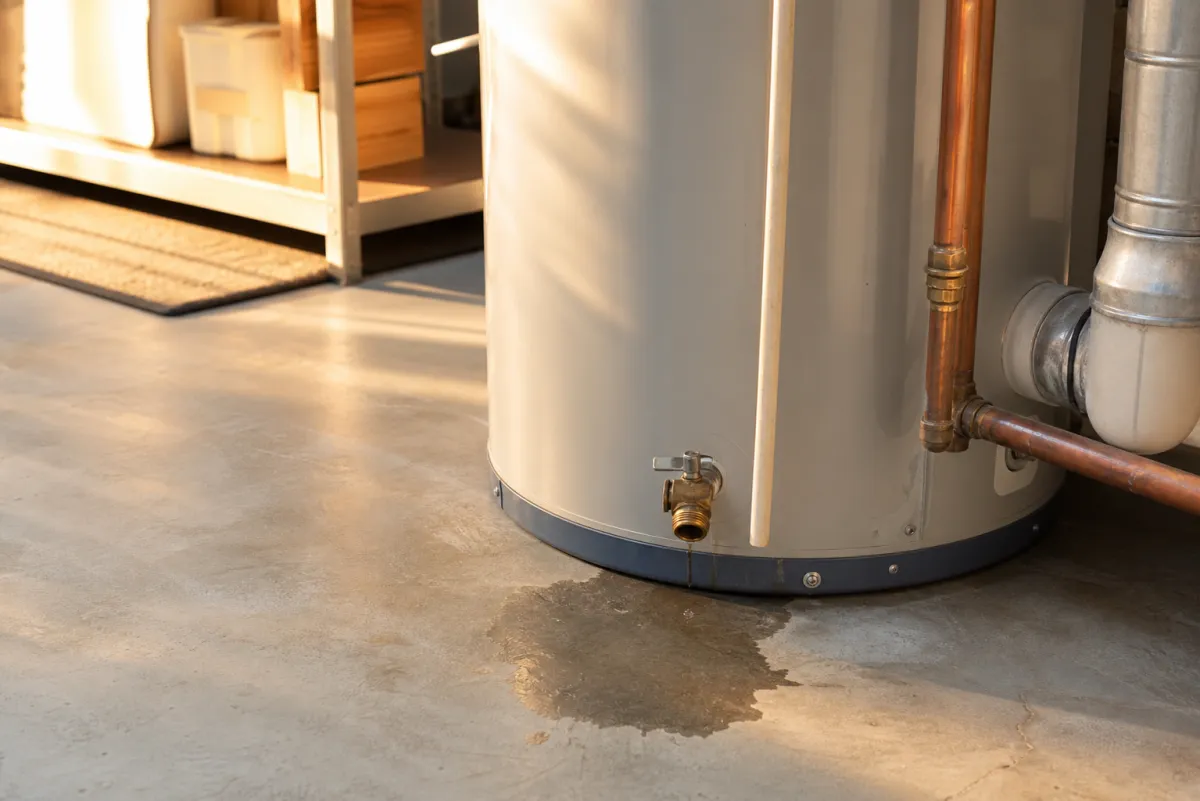
The location of a water-heater leak determines the response. Condensation on a cold inlet is different from water at the tank seam, and a dripping relief pipe is different from a loose connector. Treat every unidentified leak as active until the source is proven; water can travel along insulation or piping before reaching the floor.
In Helotes, heaters in garages and exterior utility spaces can face bigger temperature swings. Place a dry paper towel at each visible connection to trace moisture without touching electrical parts. A connector repair may cost $200–$500, while a leaking tank generally means replacement.
Make the Area Safe and Find the Highest Wet Point
Keep people away from standing water. If it is safe and dry, turn off the heater’s breaker or gas control. Close the cold-water supply valve only if it operates smoothly; forcing a scaled, corroded valve can create a second leak. For rapid flooding, use the home’s main shutoff and call for help.
Dry the visible surfaces, then inspect from top to bottom. Check the cold inlet, hot outlet, flexible connectors, expansion tank connection, temperature-and-pressure relief valve, drain valve, and tank jacket. Condensation should diminish as conditions change; a plumbing leak continues or returns under pressure.
What Each Leak Location Suggests
Top connections: Moisture around threaded nipples or connectors may be repairable if the tank beneath is sound. Green staining on copper or white crust indicates a slow leak has existed for some time.
Relief discharge pipe: The temperature-and-pressure valve protects against dangerous conditions. Never plug, cap, or reduce its pipe. Dripping can result from a faulty valve, excessive pressure, thermal expansion, or overheating; the cause must be tested.
Drain valve: A loose cap is not a repair for a leaking valve body. An old plastic valve may crack when turned, particularly after years of scale buildup.
Bottom or tank seam: Water emerging from the jacket, combustion chamber area, or welded seam usually indicates internal tank failure. Replacement is the responsible repair; sealants do not restore a pressure vessel.
Limit Damage While You Wait
Move stored items, photograph the leak, and use towels or a wet vacuum only when there is no electrical hazard. Do not rely on the drain pan if its line is clogged or terminates indoors. Check adjacent drywall and baseboards, especially when the heater sits above finished space.
After a small repair, monitor with dry tissue over several heat cycles. Pressure increases as water heats, so a connection that looks dry immediately after service can leak later. A plumber may measure static pressure and thermal expansion, inspect the relief valve, and verify that replacement connections are compatible with the metals present.
Why This Is Different in San Antonio
Water supplied from the Edwards Aquifer is very hard—about 357 mg/L, or 21 grains per gallon. That mineral load does not create every plumbing problem, but it changes how quickly scale forms and how often equipment needs attention. SAWS customers can confirm service alerts and water-quality information with the utility; private-well owners should use a current lab test rather than assume their chemistry matches the municipal supply.
Across San Antonio and Bexar County, homes also combine hot attics and garages, long cooling seasons, and occasional hard freezes. Winter Storm Uri showed why exposed lines, exterior-wall plumbing, and equipment in unconditioned spaces deserve a seasonal check. Mineral deposits can hide a weak seal or restricted passage until a pressure or temperature change makes it obvious. The practical response is earlier inspection—not aggressive chemicals or unnecessary replacement.
What San Antonio Homeowners Pay (2026)
| Repair or replacement | Typical local range | Typical trigger |
|---|---|---|
| Diagnostic visit | $150–$350 | Source is unclear or safety testing is needed |
| Connector or valve repair | $200–$500 | Accessible external leak, sound tank |
| Relief/expansion correction | $300–$900 | Pressure or thermal-expansion problem |
| Tank replacement | $1,200–$2,800 | Internal tank or seam failure |
| Tankless replacement | $2,500–$5,500 | Unit failure plus vent/gas/electrical work |
Second-floor access, emergency timing, water-damage mitigation, permits, drain-pan work, and code corrections can add cost. Get the scope in writing and confirm whether disposal and cleanup are included.
When to Call a San Antonio Plumber
Call urgently for fast water flow, water near wiring or the burner, relief-valve discharge, gas odor, a carbon-monoxide alarm, or a tank-shell leak. If the main valve will not close, contact SAWS through its current emergency channel for a utility-side issue and a plumber for the house-side shutoff.
Even a slow leak needs timely service if it returns after drying, has stained framing, or involves a corroded fitting. Insurance may require prompt mitigation and documentation. Do not dismantle a gas valve, relief valve, or energized access panel to chase the source.
San Antonio FAQ
Can I patch a leaking tank?
No durable homeowner patch restores a failed pressure vessel. Isolate it safely and plan replacement.
Why does the relief pipe drip only after heating?
Thermal expansion or overheating can raise pressure during a heat cycle. The valve and system pressure need testing; never cap the pipe.
Is water under the heater always a tank leak?
No. It may come from a connector, drain valve, relief line, condensation, or nearby plumbing. Trace the highest wet point.
Should I close the supply valve?
Yes for an active leak if the valve is accessible and turns normally. Do not force a corroded valve or enter water near electricity.