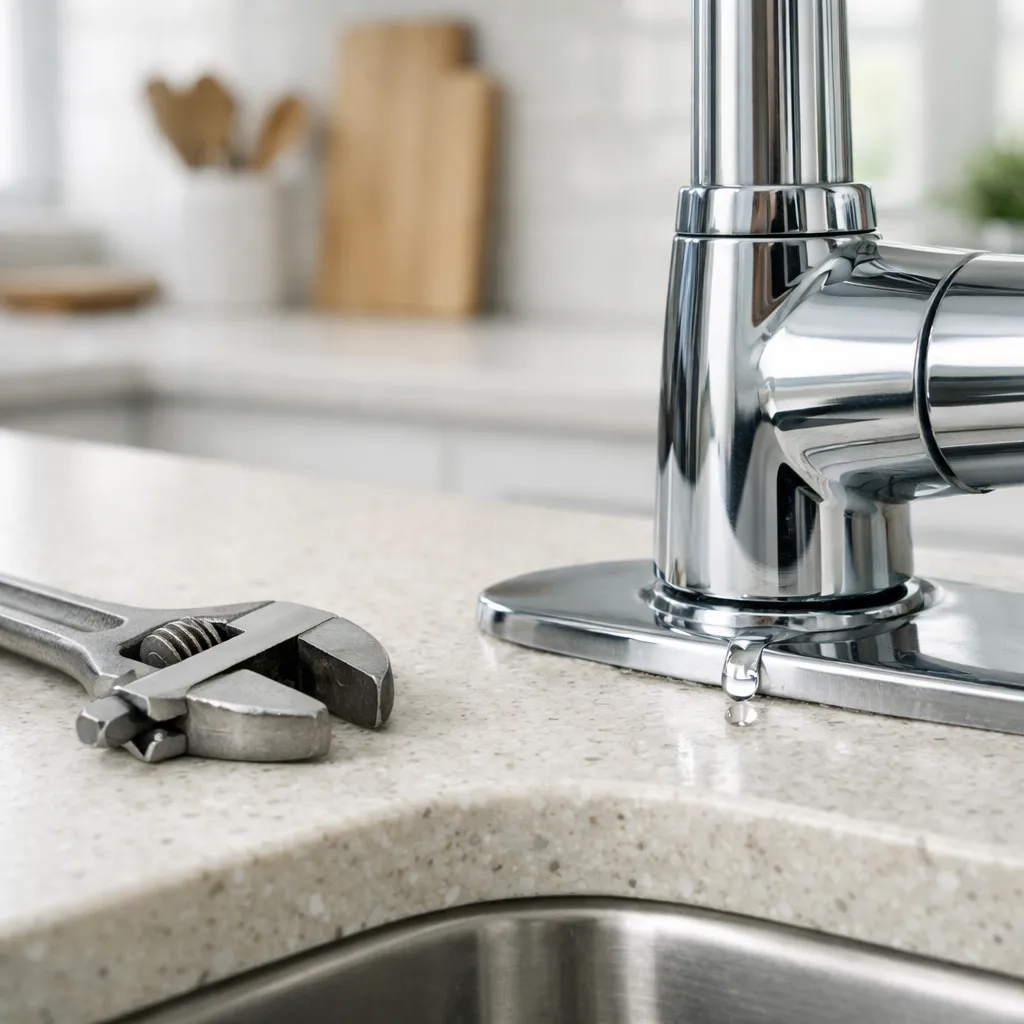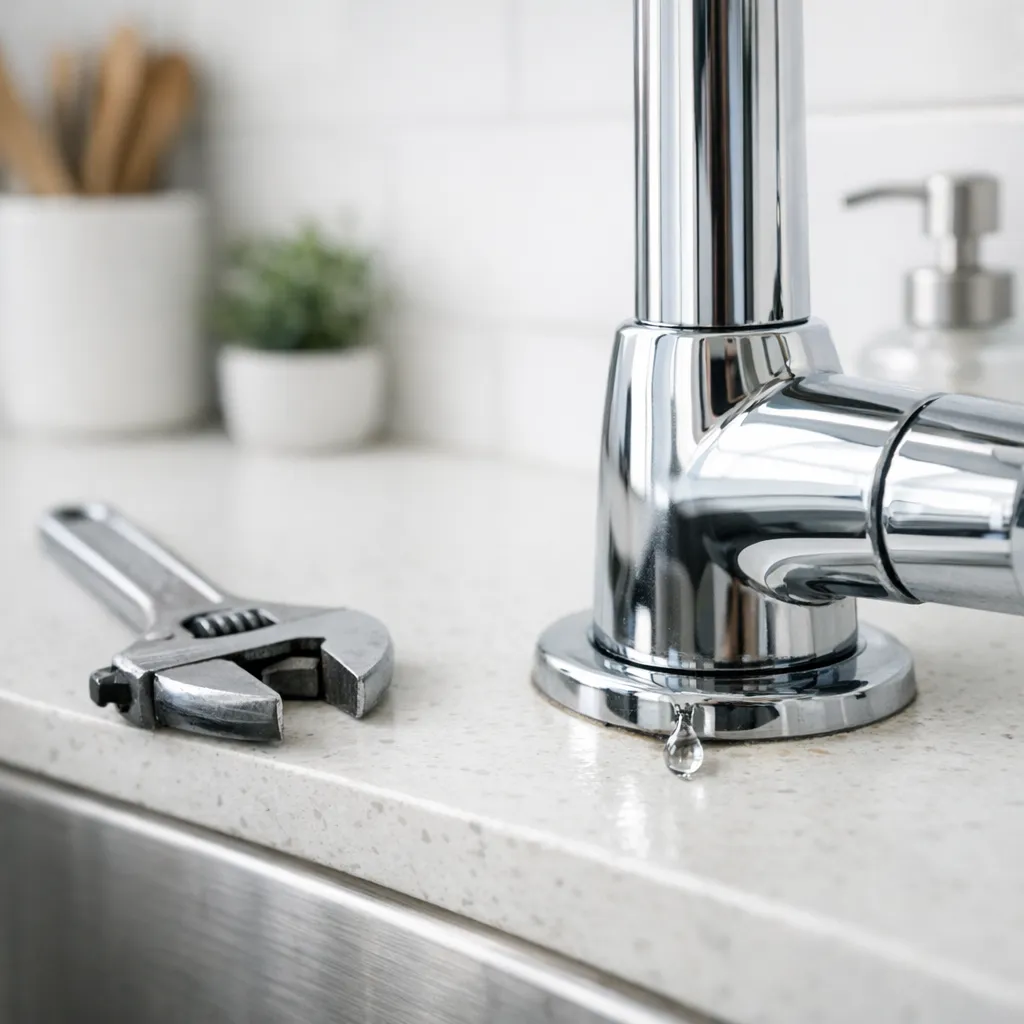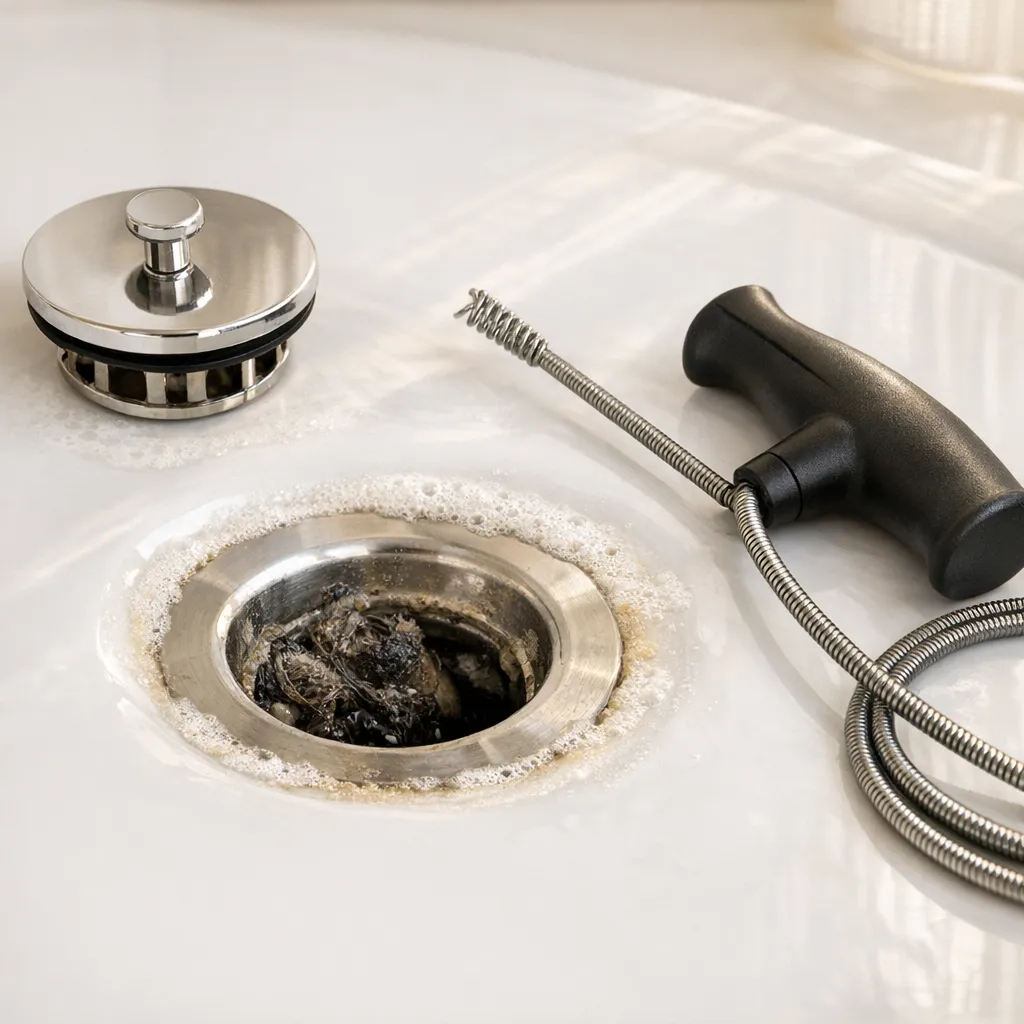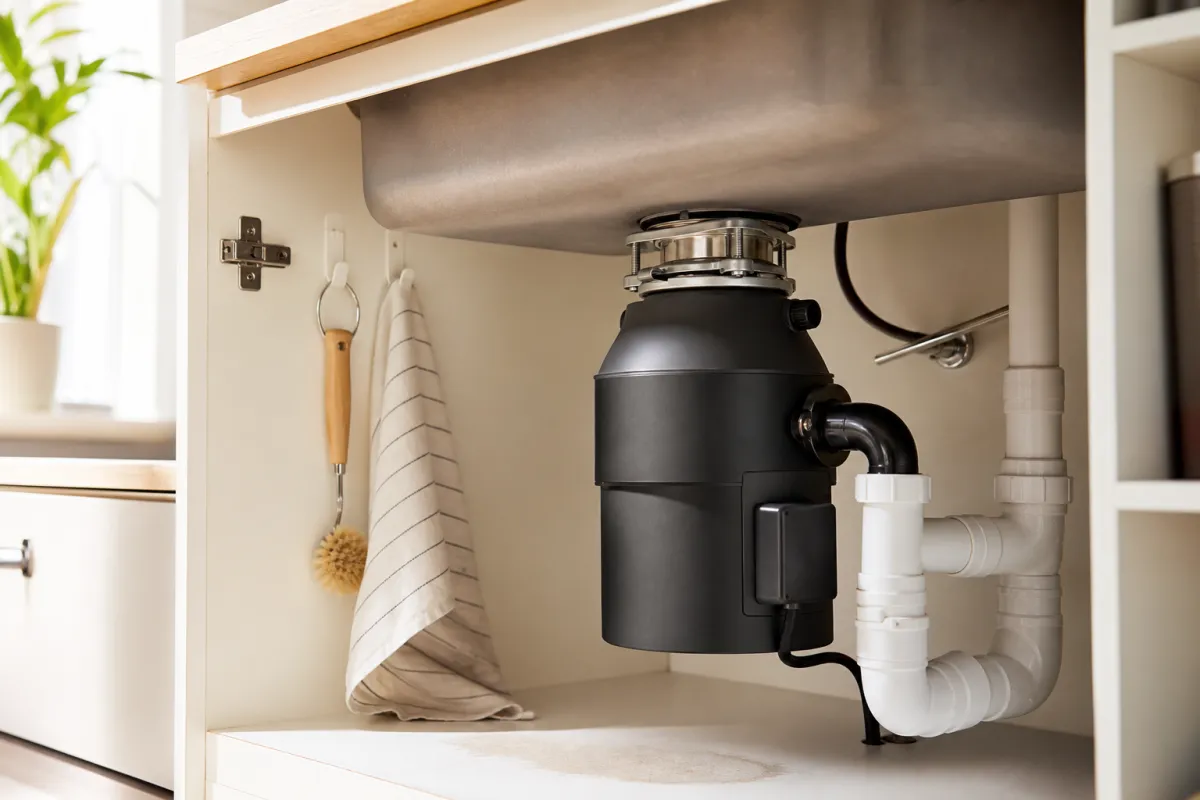
> San Antonio Local Insight: Hard water mineral deposits (21 gpg from Edwards Aquifer) affect toilet components, garbage disposals, and fixtures throughout local homes. Scale buildup causes premature wear, reduces performance, and creates problems that soft-water cities rarely see. Regular descaling maintenance is essential for San Antonio plumbing.
For most active kitchens, 3/4 horsepower is the practical starting point—but the cabinet and drain decide whether it is the right fit. San Antonio water from the Edwards Aquifer is about 357 mg/L, or 21 gpg. That hard water encourages scale at the chamber and discharge path, so stainless grinding components, a sound warranty, and easy-to-service plumbing deserve as much attention as the motor rating.
Homes around Westover Hills and Alamo Ranch often have newer PEX supply systems, yet the disposal, flange, trap, and appliance connections still see the same mineral load. Measure outlet height before buying: a deeper sink plus a taller insulated unit can leave too little fall to the wall drain. Expect roughly $250–$650 for a normal installed unit, while drain relocation or electrical corrections can push the project above $800.
A homeowner in Westover Hills and Alamo Ranch should be especially careful because newer PEX-heavy homes still get hard-water damage at fixtures, cartridges, and appliances. If you are comparing advice from national repair guides, shorten the maintenance interval and inspect for white scale, crusted fittings, stiff shutoff valves, and early corrosion before assuming the part simply “got old.”
For budgeting, use local pricing instead of national averages: drain cleaning usually runs $150-$350, and a sewer camera inspection is commonly $200-$400. If the issue appears after a summer high-use period or after a rare freeze like Winter Storm Uri, treat it as a local risk signal and document what you see before calling a licensed plumber in Bexar County.
The right garbage disposal size depends primarily on how many people live in your home, how often you cook, and what kinds of food scraps typically reach the sink. For many households, a 3/4-horsepower garbage disposal offers the best balance of grinding ability, durability, noise control, and price. A smaller household with light kitchen use may be comfortable with a 1/2-horsepower model, while a large family or frequent home cook may benefit from 1 horsepower.
Horsepower is only part of the decision. You also need to check the space beneath the sink, the condition of the plumbing, electrical compatibility, septic-system considerations, and whether a dishwasher drain will connect to the disposal. Choosing a larger motor without checking these details can turn a simple replacement into an expensive installation problem.
Quick Size Guide by Household and Kitchen Use
The following table is a practical starting point rather than an absolute rule. A household that cooks every day may need a stronger disposal than a larger household that mostly eats prepared food. When you are between two sizes, choosing the larger motor can provide smoother grinding and reduce the chance of frequent jams—but only if it fits the cabinet and your budget.
| Disposal size | Typical household | Best suited for | Main limitation |
|---|---|---|---|
| 1/3 HP | 1–2 people, very light use | Occasional soft scraps and basic cleanup | More likely to jam; limited durability under regular use |
| 1/2 HP | 1–3 people, light to moderate use | Apartments, condos, and smaller kitchens | Can struggle with larger batches or fibrous scraps |
| 3/4 HP | 2–5 people, regular cooking | Most everyday household kitchens | Costs more and may be physically larger |
| 1 HP | 4 or more people, heavy use | Frequent cooking, larger meal preparation, busy kitchens | Higher price and greater under-sink space requirements |
| 1 1/4 HP and above | Large or demanding kitchens | Heavy residential use and specialty installations | Often unnecessary for an average household |
A disposal should not be treated as a trash can, regardless of motor size. Even a powerful 1-horsepower unit can clog a drain if it is fed grease, large amounts of potato peel, coffee grounds, expandable foods, or hard nonfood material. Horsepower gives the grinder more ability to process appropriate scraps; it does not make the connected drainpipe immune to blockages.
What Garbage Disposal Horsepower Actually Tells You
Horsepower indicates the approximate power of the disposal’s motor. A stronger motor generally maintains speed more effectively when food enters the grinding chamber. That can mean finer particles, fewer stalls, and less effort when processing a normal batch of scraps. It can also improve the experience of using the disposal because the unit may clear material more quickly instead of laboring through it.
Motor size does not tell you everything about quality. Two 3/4-horsepower models can differ substantially in chamber material, corrosion resistance, sound insulation, mounting design, warranty coverage, and overall dimensions. One may use more stainless-steel components, while another relies on galvanized metal or composite parts. A lower-priced model with the correct horsepower may still be noisier or wear more quickly than a better-built unit of the same size.
Do not choose horsepower based on the largest object you hope to grind. Manufacturers may advertise the ability to process certain tougher scraps, but routine disposal habits matter more than occasional demonstrations. The safest approach is to scrape bones, grease, fibrous stalks, fruit pits, seafood shells, and large quantities of peelings into the trash or compost where appropriate.
When a 1/3-Horsepower Disposal Is Enough
A 1/3-horsepower disposal is generally the entry-level option. It may be adequate in a small apartment, guest suite, vacation property, or one-person household where the disposal receives only occasional use. If most plates are scraped thoroughly before washing and only small amounts of soft residue enter the sink, the low purchase price can be appealing.
The tradeoff is limited grinding power. These units may slow down or jam when scraps are added too quickly. They also tend to be built to a lower price point, which can mean less sound insulation and fewer premium internal components. Saving money at purchase may not be worthwhile if the disposal needs frequent resetting, manual unjamming, or earlier replacement.
A 1/3-horsepower model is usually a poor fit for a household that prepares several meals a day. If you are replacing an existing unit because it repeatedly jams, installing another disposal of the same low power may reproduce the problem. Before upgrading, however, confirm that the problem is not a restricted drain, incorrect use, damaged impellers, or inadequate water flow.
Why 1/2 Horsepower Works for Light Everyday Use
A 1/2-horsepower disposal is a reasonable minimum for many small households. It offers more useful grinding ability than a 1/3-horsepower unit without the price or bulk of larger models. It can work well for one to three people who cook moderately, scrape plates before rinsing, and feed scraps into the disposal gradually while running cold water.
This size is especially relevant when cabinet space is limited. Compact 1/2-horsepower models may leave more room for cleaning supplies, a pull-out bin, or an under-sink water filter. Dimensions vary by model, so do not assume every unit with the same horsepower occupies the same space. Measure the full height and width available around the drain, trap, dishwasher hose, and cabinet base.
Choose a larger size if the kitchen regularly handles substantial meal preparation. A 1/2-horsepower disposal can process normal soft scraps, but repeated heavy loads may increase wear and produce more jams. If the price difference between a well-built 1/2-horsepower model and a 3/4-horsepower model is modest, the stronger unit may provide better long-term value for an actively used kitchen.
Why 3/4 Horsepower Is the Best Fit for Many Homes
For a typical household asking, “What size garbage disposal do I need?” the most broadly useful answer is 3/4 horsepower. It offers enough reserve power for regular meal cleanup without moving into the cost and bulk of the largest residential units. It is often suitable for two to five residents, provided the disposal is used correctly and the drain system is in good condition.
Many models in this category include features that are less common on budget units. Depending on the product, these may include improved sound insulation, stainless-steel grinding components, multi-stage grinding, better vibration control, or longer warranty coverage. These features can matter as much as the motor rating, particularly in an open-plan kitchen where disposal noise carries into adjoining rooms.
A 3/4-horsepower unit is not automatically the right purchase if the cabinet is cramped or the plumbing is poorly aligned. Some models have wide bodies or longer grinding chambers. A deeper sink also lowers the drain opening and reduces the vertical space available for the disposal and P-trap. Measure before ordering, especially when replacing a compact unit with a quieter, insulated model.
When a 1-Horsepower Disposal Is Worth Buying
A 1-horsepower disposal makes sense for a large household, a kitchen used for frequent cooking, or anyone who routinely prepares meals in substantial batches. The stronger motor is less likely to stall when an appropriate amount of food enters the chamber. It can also grind scraps into smaller particles, which may help them move through properly configured drainpipes more easily.
The upgrade is not always necessary. A one- or two-person household with careful disposal habits may gain little practical benefit from paying for a 1-horsepower unit. Larger models can occupy valuable cabinet space, and premium versions may cost considerably more than midrange alternatives. The added power will not solve a sagging drain line, clogged P-trap, undersized pipe, or recurring main-sewer problem.
Consider 1 horsepower when durability and smooth performance matter more than obtaining the lowest initial price. Compare the warranty, component materials, sound rating, physical dimensions, and replacement-parts availability—not just the motor number. A well-designed 3/4-horsepower disposal may be a better purchase than a cheaply constructed 1-horsepower model.
Check Sink, Cabinet, Plumbing, and Dishwasher Compatibility
Measure from the underside of the sink opening to the cabinet floor, then note the position of the wall drain and P-trap. The disposal outlet needs to sit high enough for wastewater to flow downhill into the trap and wall connection. If the new outlet is too low, the installer may need to reconfigure the drain. In some cabinets, that work is impractical without opening the wall or selecting a shorter disposal.
Check the sink mounting system as well. Many residential disposals use a common three-bolt mounting arrangement, but compatibility should never be assumed. A replacement from the same product family may attach to the existing flange, while another model may require removing the old sink flange and installing a new one with plumber’s putty or the seal specified by the manufacturer. Corrosion, leaks, or movement around the old flange are reasons to replace it rather than reuse it.
If a dishwasher drains through the disposal, the new model needs a dishwasher inlet. The factory knockout plug inside that inlet must be removed before connecting the hose. Leaving it in place can cause the dishwasher to retain water or back up. If no dishwasher is connected, the plug normally remains intact. Follow the appliance instructions because an incorrectly routed hose can allow dirty sink water to flow back toward the dishwasher.
Check Electrical Requirements Before Choosing a Model
Garbage disposals commonly operate from household electrical power through either a cord-and-plug connection or a hardwired connection. The new unit must match the intended installation method, or an approved manufacturer cord kit may be required. Do not assume a power cord is included in the box. Product listings often show the disposal without making the cord arrangement obvious.
Turn off the correct circuit breaker before touching wiring, and verify that power is absent with an appropriate tester. A wall switch in the off position is not sufficient protection. Wiring errors beneath a sink are especially concerning because the equipment operates near water. Damaged insulation, loose connections, missing strain relief, ungrounded wiring, scorched conductors, or a wet electrical box are reasons to stop and call a licensed electrician.
Some installations use an air switch mounted near the sink instead of a conventional wall switch. Others may require changes to the receptacle or circuit protection to meet current local requirements. If the new disposal has different electrical specifications, the breaker trips during use, or the existing installation shows signs of an improvised repair, do not keep resetting it. The motor, wiring, or circuit may need professional diagnosis.
Consider Noise, Feed Type, Materials, and Warranty
Continuous-feed disposals operate while the switch is on and allow scraps to be added gradually. They are the most familiar residential design and are available across a wide range of horsepower levels. Batch-feed models run only when a special stopper activates the unit. This can reduce the possibility of objects entering an operating disposal, but batch-feed units may cost more and require a different cleanup routine.
Noise level is another important buying factor. A larger motor is not necessarily louder because premium models often include insulation and vibration-isolating mounts. Cabinet construction, sink material, installation quality, and loose plumbing can also affect perceived noise. A lightweight stainless-steel sink may transmit more vibration than a heavier sink, even when the disposal itself is designed for quieter operation.
Compare the grinding chamber and component materials. Stainless steel is generally valued for corrosion resistance, but product descriptions may use vague phrases that do not mean every internal part is stainless. Read the actual specifications and warranty exclusions. A long warranty is most useful when it includes in-home service or straightforward replacement terms; the headline number alone does not explain labor coverage or claim requirements.
Budget for the Complete Installation, Not Just the Disposal
Basic residential garbage disposals often begin around the lower hundreds of dollars, while quieter 3/4- and 1-horsepower models can cost several hundred dollars. Pricing varies by brand, features, region, and sales. Professional replacement may add roughly $150 to $500 or more when the existing plumbing and wiring are reusable. Complex drain alterations, new electrical work, sink-flange repairs, or cabinet modifications can increase the total.
When comparing products, include any required power cord, sink flange, mounting hardware, air switch, discharge tube, dishwasher connector, and plumber’s putty or approved sealant. Some items may be supplied, while others are sold separately. Buying the cheapest disposal can become less attractive if it requires extra components or carries a short warranty.
Get an itemized estimate when professional installation is needed. Ask whether the quote includes removal and disposal of the old unit, testing the dishwasher connection, correcting minor drain alignment, and checking for leaks after operation. A very low installation price may cover only a direct swap. It may not include corroded fittings, seized mounting hardware, or electrical corrections discovered after the old unit is removed.
Mistakes to Avoid When Selecting and Using a Disposal
Do not buy solely by household size. Two people who cook from scratch every day may place more demand on a disposal than a family that rarely prepares food at home. Think about meal frequency, cleanup habits, available space, noise sensitivity, and expected years of use. Avoid choosing a model simply because it has the highest horsepower available.
Do not assume a bigger disposal can safely process anything. Grease and cooking oil can cool inside the drain and contribute to a blockage. Large quantities of starchy or expandable foods may form a paste. Fibrous material can wrap around components, while nonfood objects can damage the unit. Run cold water, add permitted scraps gradually, and let the water continue briefly after grinding stops so particles move through the trap.
Never place a hand inside a disposal, even when the switch is off. If an object falls in, shut off the breaker or unplug the unit where safely accessible, confirm it cannot start, and use suitable tongs or another appropriate retrieval tool. If the object is jammed, the unit leaks from its body, gives off a burning smell, hums without turning, or repeatedly trips the breaker, stop using it until the cause is identified.
Septic Systems, Drain Problems, and Other Special Cases
A garbage disposal can add suspended food material to a septic system. Whether that is acceptable depends on the system’s design, condition, maintenance schedule, and local guidance. A more powerful disposal may grind scraps more finely, but it does not eliminate the added solids. Households with septic systems should minimize disposal use and ask a local septic professional if there is uncertainty about capacity or maintenance.
Do not install a new disposal as a solution to slow drainage. If both sides of a double sink drain slowly, wastewater rises in another fixture, sewage odors appear, or the sink repeatedly backs up, the problem may be in the trap, branch drain, venting, or main sewer line. Operating a disposal against a blockage can force dirty water into the sink or dishwasher connection.
Stop using the sink if wastewater appears contaminated with sewage or if a drain backup affects multiple fixtures. Avoid chemical drain cleaners in a disposal because they can create splash and exposure hazards for anyone who later opens the plumbing. A plumber can determine whether the restriction is local or farther downstream and can advise whether the existing drain arrangement is suitable for a disposal.
Deciding Between DIY and Licensed Help
A direct replacement may be manageable for an experienced homeowner when the new disposal fits the existing mount, outlet position, plumbing, and electrical connection. The work still requires shutting off power, supporting a heavy appliance beneath the sink, making watertight connections, and testing carefully. Follow the manufacturer’s instructions rather than relying on a generic installation sequence.
Call a plumber when the drain must be lowered or rerouted, the sink flange is damaged, pipes are heavily corroded, leaks have affected the cabinet, or recurring clogs suggest a deeper drainage issue. Hidden moisture may have damaged the cabinet floor, wallboard, or framing. Replacing the disposal without addressing that damage can conceal mold, deterioration, or an ongoing leak.
Call a licensed electrician if there is no suitable grounded connection, the wiring looks damaged, the disposal circuit repeatedly trips, or you are uncertain whether the unit is corded or hardwired correctly. Stop immediately if you encounter wet wiring, sparks, heat damage, or a burning odor. If sewage or suspected gas odors are present, leave the affected area as appropriate and contact the relevant qualified professional or utility rather than continuing DIY work.
Frequently Asked Questions
Is a 1/2-horsepower garbage disposal enough for a family of four?
It may work if the household uses the disposal lightly and scrapes most food into the trash or compost. For regular cooking and cleanup, however, a 3/4-horsepower model is usually the more comfortable choice. It offers additional grinding capacity without necessarily requiring the size or expense of a 1-horsepower unit.
Can I replace a 1/2-horsepower disposal with a 3/4-horsepower model?
Usually, but compatibility must be checked. Measure the cabinet space and compare the new unit’s outlet height, width, mount, dishwasher inlet, and electrical arrangement. A stronger disposal does not necessarily require major plumbing changes, but a physically larger model may interfere with the P-trap, cabinet base, filter equipment, or stored items.
Does a higher-horsepower disposal use much more electricity?
A larger motor can draw more power while operating, but disposals generally run for short periods. Purchase decisions are usually better based on grinding performance, durability, noise, and installation compatibility than on small differences in brief operating time. The circuit and wiring must still be appropriate for the selected model.
What is the best garbage disposal size for a septic system?
There is no universal horsepower that makes disposal use harmless to a septic system. A 3/4-horsepower unit may grind material finely, but the solids still enter the system. Minimize the amount of food sent down the drain and follow advice based on your specific tank, household load, and local maintenance requirements.
How long should a garbage disposal last?
Service life varies with construction, frequency of use, water conditions, installation quality, and what is put into it. Warranty length can offer a useful comparison, but it is not a guaranteed lifespan. Repeated jams, severe corrosion, body leaks, persistent odors after cleaning, or motor failure may justify replacement rather than continued repair.
Final Buying Checklist
Before ordering, confirm your household’s actual kitchen use and select the smallest model that can handle it comfortably. For light use, consider 1/2 horsepower; for most active kitchens, start with 3/4 horsepower; and for larger or demanding households, compare 1-horsepower options. Avoid 1/3 horsepower unless use will be genuinely minimal.
Measure the available cabinet height and width, verify the drain outlet alignment, identify the sink mount, check the dishwasher connection, and determine whether the disposal is plugged in or hardwired. Compare component materials, noise insulation, warranty terms, included accessories, and total installed cost. If the plumbing is restricted, the wiring is questionable, or hidden water damage is present, correct those conditions before installing a larger disposal.
Why This Is Different in San Antonio
The local issue is the combination of very hard Edwards Aquifer water, long cooling seasons, and plumbing that ranges from historic metal pipe to newer PEX installations. At 357 mg/L (21 gpg), mineral scale accumulates quickly on continuously wet surfaces. SAWS water-quality reporting is useful context, but scale does not prove that every failure was caused by water chemistry; diagnose the actual leak, restriction, or electrical symptom.
Season also matters. Summer cooking and heavy household use load kitchen drains, while a freeze event like Winter Storm Uri can expose already stressed fittings in an unconditioned cabinet or exterior wall. Bexar County homeowners should inspect after a hard freeze, but never energize a wet disposal or force a brittle connection.
What San Antonio Homeowners Pay (2026)
| Service | Typical local range |
|---|---|
| 1/2 HP unit, product only | $100–$250 |
| 3/4 HP unit, product only | $180–$450 |
| Typical installed replacement | $250–$650 |
| Complex plumbing/electrical install | $650–$1,000+ |
These are planning ranges, not quotes. Access, disposal model, corroded fittings, outlet condition, after-hours timing, and cabinet damage determine the final total. Ask for an itemized scope before approving work.
When to Call a San Antonio Plumber
Call a licensed plumber for a disposal purchase and installation, wastewater backup, a shutoff that will not close, or work that requires changing the flange, trap, or wall connection. Stop immediately and use a licensed electrician when water reaches wiring, a breaker trips repeatedly, the receptacle is scorched, or the unit is improperly hardwired. DIY cleaning is reasonable only while power is isolated and the work stays within the manufacturer’s instructions.
When booking service, describe when the symptom occurs, whether the dishwasher is involved, and what you already tested. Ask whether the technician regularly works with hard-water scale and older Bexar County plumbing. That information produces a more useful diagnosis than requesting a generic “tune-up.”
San Antonio FAQ
Does 21 gpg hard water automatically ruin a garbage disposal?
No. The minerals mainly create scale on wet surfaces and contribute to residue retention and corrosion around connected plumbing. Correct use, a dry cabinet, and prompt attention to slow drainage or leaks matter more than aggressive chemical treatment.
Should I install a water softener for this problem alone?
Not solely for one disposal symptom. A softener may make sense when the household also has repeated scale at faucets, valves, showers, and the water heater. Evaluate the full plumbing system and ongoing salt and maintenance costs; a typical whole-home installation can run about $1,500–$4,000.
Who should handle permits or code questions?
For altered plumbing or electrical work, use licensed trades who can confirm the current requirements that apply to the address. That is especially important when a direct appliance swap turns into drain relocation, receptacle work, or repair inside a wall.