> San Antonio Local Insight: San Antonio's hard water from the Edwards Aquifer affects every plumbing system in your home. With 357 mg/L mineral content (21 grains per gallon), our water causes faster corrosion, heavier scale buildup, and more frequent repairs than most US cities. Understanding this local factor helps you make better decisions about maintenance, repair, and prevention.
Listen Through One Complete Pump Cycle
Before following any generic plumbing checklist, adjust it for our Edwards Aquifer water. At roughly 357 mg/L, or 21 grains per gallon, the calcium carbonate and magnesium in the water can turn a small maintenance issue into repeat wear on valves, seals, drains, heaters, and appliance connections. That means even a drainage or pump checklist should account for mineral crust, sediment, stuck check valves, and storm-driven testing before the next heavy rain.
In Westover Hills and Alamo Ranch, newer PEX-heavy construction can still transmit pump vibration through rigid discharge supports and framing. Listen at startup, steady run, and shutdown. A single thud points toward drain-back or the check valve; grinding or a stalled hum is a shut-it-off warning. Expect roughly $150–$350 for a diagnostic or ordinary valve visit before after-hours premiums.
The Edwards Aquifer measures around 357 mg/L, or 21 gpg. That hard water is not the cause of every noise, but mineral sediment can make a check valve less reliable. Thunderstorm cycling and freeze-damaged exterior lines left from events such as Winter Storm Uri are more useful clues than a generic age estimate.
A sump pump should be noticeable when it starts, but it should not sound like a hammer, grinder, or washing machine full of rocks. If you are asking, “why is my sump pump so loud,” the type and timing of the noise are the best clues. A single thump as the pump stops often points to the check valve. Rattling may come from a loose discharge pipe. Grinding, scraping, or continuous humming can indicate a jammed or failing pump.
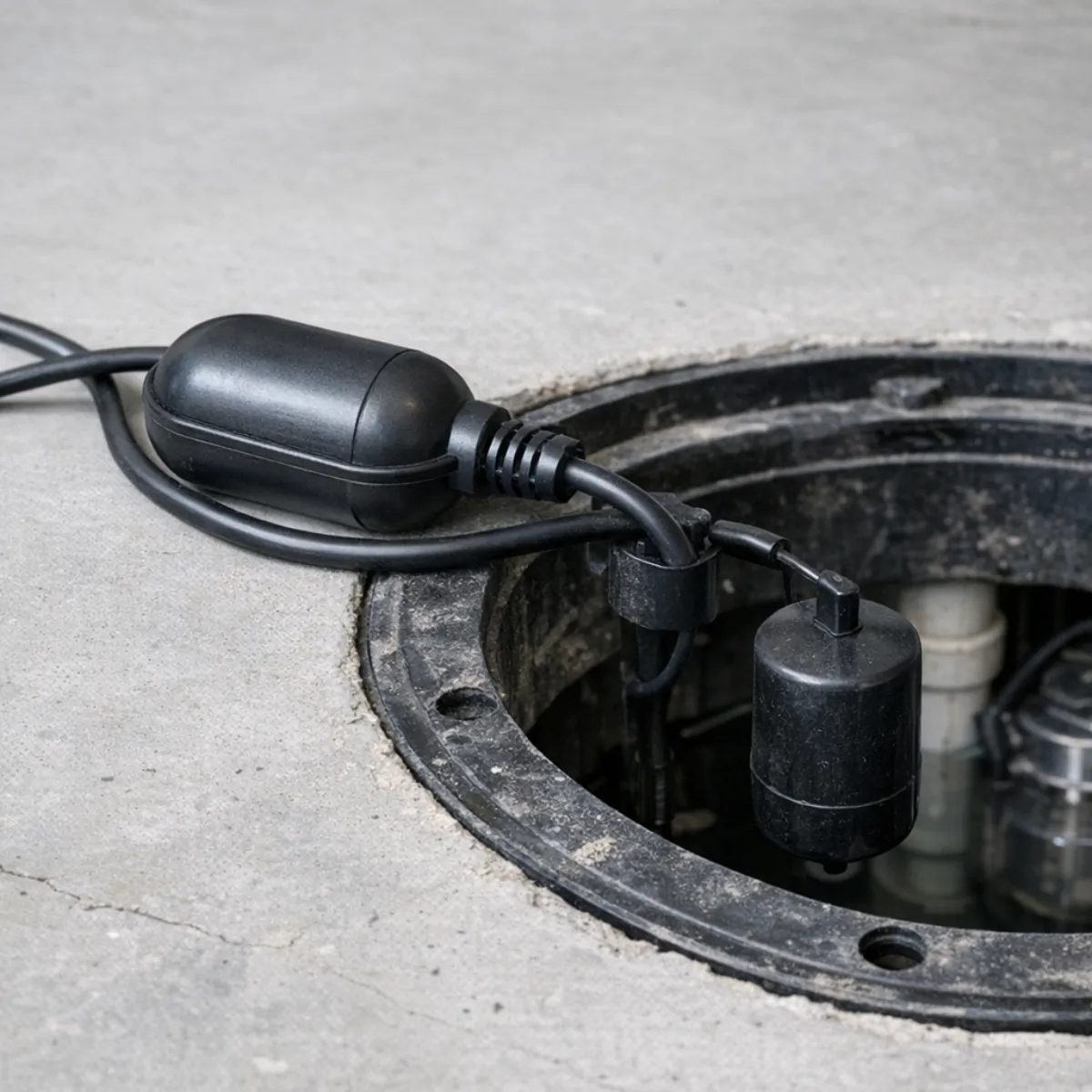
Start with observations that do not require touching wet equipment: note whether the sound occurs at startup, throughout the run, or at shutdown; look for water rising unusually high; and check for visible pipe movement. Because a sump pit combines water and electricity, unplug the pump or switch off its dedicated breaker before reaching into the pit. If water is rising rapidly, the breaker trips, wiring is damaged, or there is a burning smell, stop troubleshooting and call a qualified professional.
Match the Sound to the Most Likely Cause
Different sounds usually come from different parts of the system. A sharp bang immediately after shutoff is commonly water reversing in the discharge line and slamming a check valve closed. Repeated knocking can mean the pipe is striking a joist, wall, or pit cover. A loud rush or gurgle near the end of a cycle may be air moving through the line or water draining back because of valve or pipe-layout problems.
Mechanical noises deserve more caution. A steady hum with little or no water movement can mean the float is stuck, the impeller is blocked, the discharge is frozen or clogged, or the motor cannot start. Grinding and metallic scraping may indicate debris in the intake or worn internal parts. Pumps also sound louder when the pit is uncovered, the unit vibrates against the basin, or a powerful pump pushes water through undersized piping. Sound is evidence, not a diagnosis, so pair it with pump behavior and water level.
Make These Safe First Checks
Watch one complete cycle from a dry location with the cover in place if possible. Does the float rise freely? Does the pump remove water promptly and stop before running dry? Note whether the discharge pipe jumps when the pump starts or stops. Outside, confirm that water emerges from the outlet and is directed away from the foundation. Do not open plumbing while the pump is running, and never test by putting a hand into the basin.
Next, switch off power at the breaker or unplug the pump with dry hands while standing on a dry surface. Inspect only what is readily visible: a displaced cover, a pipe touching framing, a loose bracket, debris near the top of the pit, or a power cord interfering with the float. Restore power only after the area is dry and the cover is secure. If the receptacle, plug, or cord shows corrosion, heat damage, or exposed conductors, leave it off and use an electrician or sump-pump professional.
Use This Quick Noise Guide
The table below helps prioritize the next step. It does not replace diagnosis when the pump is failing to remove water.
| Noise or behavior | Likely area to inspect | Safe homeowner action | Call promptly when |
|---|---|---|---|
| One bang at shutdown | Check valve or unsupported pipe | Observe pipe movement; check accessible supports with power off | Valve leaks, pipe shifts heavily, or water returns |
| Rattle through the cycle | Pipe contact, loose lid, pump vibration | Secure the lid; identify contact points | Pump rocks, fittings leak, or vibration is severe |
| Gurgle or slurp | Air, drain-back, pit level | Note water level and cycle timing | Pump short-cycles or loses prime repeatedly |
| Hum with no pumping | Stuck float, blockage, motor fault | Cut power; confirm outlet discharge is not visibly blocked | Water rises, breaker trips, or motor stays stalled |
| Grinding or scraping | Debris, impeller, worn motor | Turn the system off | Any persistent mechanical grinding |
| Runs almost constantly | Heavy inflow, poor discharge, undersizing | Check exterior outlet and rainfall conditions | Water level does not fall or flooding is possible |
Do not keep cycling a stalled pump to “see if it clears.” A motor that cannot turn can overheat, and an obstructed discharge can separate a weak fitting. If heavy rain is underway, prioritize backup pumping and professional help over noise reduction.
Quiet a Banging Check Valve
A check valve keeps water in the discharge pipe from falling back into the basin after each cycle. A conventional valve can close abruptly, producing the classic single thud. A properly sized, sump-rated quiet or spring-assisted check valve may close more gently. Pipe support also matters: even a good valve sounds harsh if several feet of pipe can swing and hit framing.
Valve replacement requires disconnecting the discharge line and controlling the water trapped above it. That water can spill into the work area, and an incorrectly oriented or poorly sealed valve can disable the system. Check the arrow showing flow direction and the pump manufacturer’s requirements. If the line is heavy, glued in place, difficult to isolate, or positioned above electrical equipment, hire a plumber or sump specialist. Never omit the check valve merely to eliminate the bang; drain-back can cause excessive cycling and reduce pumping capacity during a storm.
Reduce Vibration and Pipe Rattle
Vibration becomes room-filling noise when the pump or pipe transfers it into the structure. With power off, verify that the pump sits level and stable on a solid basin base rather than on loose gravel. The pump should not lean against the basin wall. A fitted cover can reduce airborne noise, but it must allow the required pipe and cord penetrations without pinching them, and it should remain serviceable.
Discharge piping should be supported with appropriate clamps while retaining the layout and clearances specified for the system. Cushioning at a contact point may reduce resonance, but do not improvise with absorbent fabric, flammable foam, or a material that traps moisture around electrical parts. Avoid forcing rigid pipe sideways to make it quiet; that stresses joints. If vibration began after a new pump was installed, ask the installer to review pump sizing, alignment, adapters, and support rather than treating the noise as normal.
Address Gurgling, Slurping, and Short Cycling
A slurp at the end of a cycle may happen when the pump draws the level low enough to pull in air. Float adjustment can sometimes change the shutoff level, but only within the manufacturer’s approved range. A float set too low may make the pump run dry; one set too high reduces reserve capacity and can allow overflow. Tethered floats also need clear travel without catching the wall, pipe, cord, or cover.
Frequent short cycles—starting, stopping, and restarting within a brief period—are more important than the sound itself. Causes include water draining back through a failed check valve, an undersized basin, a poorly positioned float, or unusually high groundwater inflow. Short cycling adds wear and may signal that the installation cannot keep up. Record cycle intervals during dry weather and rain, then have a professional assess the valve, basin, pump capacity, and discharge route if the pattern persists.
Treat Humming, Grinding, and Burning Odors as Warnings
A pump that hums but does not move water needs immediate attention. Turn off power before the motor overheats. From outside the pit, check whether the float appears trapped and whether the outdoor discharge opening is buried, iced over, or visibly obstructed. Do not strike the motor, bypass the float, cut a frozen pipe with a torch, or reach toward the impeller while power is connected.
Grinding can result from hard debris entering the intake, a damaged impeller, worn bearings, or internal motor failure. Some pumps can be safely removed and cleaned according to their manuals, but the work is wet, heavy, and electrically sensitive. A burning odor, hot plug, repeated breaker trip, smoke, or melted insulation calls for a professional and possibly an electrician. Do not substitute a larger breaker or extension cord; the circuit protection may be preventing a fire or shock.
Consider Pump Type, Size, and Installation
Pedestal pumps place the motor above the pit, so they can sound more prominent in the room. Submersible pumps operate in the basin and are often quieter when paired with a sealed or fitted cover, although model and installation quality matter more than a simple label. Older pumps may grow louder as bearings wear, but age alone does not prove that replacement is necessary.
An oversized pump can move water forcefully, create pipe shock, and complete very short cycles. An undersized unit may run for long stretches and still leave the level high. Pump selection should account for vertical lift, pipe length and diameter, fittings, inflow, and the manufacturer’s performance curve—not just horsepower. If noise appeared after changing the pump or rerouting the discharge, ask for a sizing and head-pressure review before buying another unit.
Avoid Fixes That Create Bigger Problems
Do not seal the pit permanently with adhesive, pile insulation over the pump, or box in the equipment so tightly that inspection and service become difficult. A cover should be appropriate for the basin and local radon or moisture considerations. Do not drill random relief holes, alter the discharge diameter, or remove fittings unless the pump manual or a qualified installer specifies the change.
Avoid pouring drain cleaner, bleach, oil, or lubricant into the basin. These products may damage components, create fumes, or discharge outdoors. Never disable a GFCI or other required electrical protection to prevent nuisance trips, and do not run a sump pump from an ordinary indoor extension cord. Noise-control work is successful only if the pump remains accessible, electrically safe, correctly vented where applicable, and able to move the required water.
Know When to Escalate Beyond DIY
Call a sump-pump contractor or plumber when the water level keeps rising, the pump cannot match inflow, the discharge line is hidden or frozen, fittings leak, the check valve needs difficult replacement, or the system repeatedly short-cycles. Mechanical grinding, a seized impeller, sewage contamination, and uncertainty about pump sizing also justify professional service. If the pit handles sewage rather than groundwater, do not open it; sewage ejector systems involve pathogens and sewer-gas controls.
Use a licensed electrician for damaged wiring, a hot receptacle, repeated breaker or GFCI trips, or a questionable circuit. During severe weather, arrange an emergency backup pump if safe to do so and protect valuables by moving them away from the floor. A battery backup, high-water alarm, or properly installed secondary pump can reduce future flood risk, but each must be sized and maintained as part of the whole system.
Frequently Asked Questions
Is a loud sump pump always about to fail?
No. A shutdown thump may come from the check valve or pipe support while the pump itself remains functional. However, a new grinding sound, stalled hum, burning smell, reduced flow, or rising water can indicate imminent failure and should not be ignored.
Why does my sump pump bang only when it turns off?
Water in the vertical discharge line can reverse briefly and snap the check valve closed. A sump-rated quiet check valve and better pipe support may help, but the valve must be correctly sized, oriented, and installed.
Can I put rubber under the pump to reduce noise?
Use only a stable base or isolation product approved for the pump and basin. Loose rubber, foam, or improvised pads can shift, block the intake, interfere with the float, or degrade in water. Correct alignment and pipe support are safer first steps.
Why is the pump louder during heavy rain?
It may run more often, push against a full or restrictive discharge, or reveal pipe movement that is less noticeable during occasional cycles. Confirm that water exits outdoors and that the basin level falls normally. Seek help if the pump runs continuously or loses ground.
Should I replace an old pump just because it is noisy?
Not automatically. Diagnose the sound, check performance, and consider service history, corrosion, cycling, and backup protection. Replacement is sensible when mechanical wear, unreliable starts, insufficient capacity, or unavailable parts make repair a poor risk.
Why This Is Different in San Antonio
San Antonio's Edwards Aquifer supplies some of the hardest municipal water in the United States: about 357 mg/L, or 21 grains per gallon. That limestone-filtered groundwater carries calcium carbonate and magnesium into our fixtures, valves, drains, heaters, and supply lines. For why is my sump pump so loud, that matters because mineral scale changes the maintenance schedule, failure signs, and realistic repair costs for local homeowners.
- Scale buildup makes small restrictions worse, especially at cartridges, aerators, shutoff valves, drains, and heater connections.
- Fixtures, pipes, and appliances in our area can wear out 30-50% faster than in soft-water cities when maintenance is delayed.
- SAWS publishes annual water quality reports, but the practical homeowner takeaway is simple: maintenance intervals here should be shorter than national advice suggests.
For a noisy sump pump, ask specifically about check-valve slam, pipe support, impeller wear, and measured pump capacity.
Homes in Westover Hills and Alamo Ranch are particularly affected because newer PEX-heavy construction still sees fixture wear from 21 gpg hard water. Unlike cities with naturally soft water, local homeowners should treat hard-water maintenance as normal prevention, not an upsell.
What San Antonio Homeowners Pay (2026)
| Service | Typical Cost in San Antonio |
|---|---|
| Emergency plumber call | $150–$350; after hours $250–$500 |
| Plumber hourly rate | $85–$150/hr |
| Pump or check-valve diagnosis/repair | $200–$650 |
Prices are based on local metro area ranges for 2026. Costs may vary by neighborhood, access, pipe material, after-hours timing, and whether the plumber finds hard-water damage beyond the visible problem.
For a noisy sump pump, ask specifically about check-valve slam, pipe support, impeller wear, and measured pump capacity.
When to Call a San Antonio Plumber
Call a licensed local plumber if the problem involves active leaking, a shutoff valve that will not close, sewer smell, recurring clogs, water near electrical components, a water heater leak, or any pipe inside a wall, ceiling, or slab. Locally, expect many licensed plumbers to charge roughly $85-$150 per hour, with emergency visits commonly around $150-$350 and after-hours calls closer to $250-$500.
For a noisy sump pump, ask specifically about check-valve slam, pipe support, impeller wear, and measured pump capacity.
When you call, ask three local questions:
1. Are you licensed and insured for work in Bexar County or the surrounding local metro?
2. Have you dealt with Edwards Aquifer hard-water scale on this type of repair?
3. Should I also check the water heater, shutoff valves, or water softener while you are there?
For a noisy sump pump, ask specifically about check-valve slam, pipe support, impeller wear, and measured pump capacity.
Plumbers who regularly work across Bexar County see hard-water damage every week, so a good pro should be able to explain whether the failure is normal wear, mineral damage, freeze damage from a cold snap like Winter Storm Uri, or a sign of a larger plumbing system problem.
For a noisy sump pump, ask specifically about check-valve slam, pipe support, impeller wear, and measured pump capacity.
San Antonio FAQ
Is San Antonio water hard?
Yes. San Antonio water is very hard at about 357 mg/L, or 21 grains per gallon, because much of it comes from the Edwards Aquifer and passes through limestone. That mineral content is why scale shows up quickly on faucets, showerheads, valves, drains, and water heaters.
For a noisy sump pump, ask specifically about check-valve slam, pipe support, impeller wear, and measured pump capacity.
Do local homes need a water softener?
A water softener is recommended for many local homes, especially if you see white scale, repeated faucet or valve problems, short water-heater life, or cloudy spots on dishes. A typical whole-home water softener installation in San Antonio runs about $1,500-$4,000.
For a noisy sump pump, ask specifically about check-valve slam, pipe support, impeller wear, and measured pump capacity.