> San Antonio Local Insight: Drain and sink clogs in San Antonio are different from other cities. Edwards Aquifer hard water (357 mg/L) deposits white calcium scale inside pipes that traps hair, grease, and soap more aggressively. Standard drain cleaners often fail because they dissolve organic matter but not mineral buildup. homes here need descaling-specific methods.
A Local First Look
In Stone Oak kitchens, a slow sink is often grease and food residue anchored to calcium scale from the Edwards Aquifer. Many homes also have disposals, dishwasher connections, and crowded cabinet plumbing, so diagnosis matters before disassembly. Stop the dishwasher, remove standing water, and check for leaks with dry tissue. Routine drain clearing is often $150–$350; persistent branch-line trouble may justify a $200–$400 camera inspection.
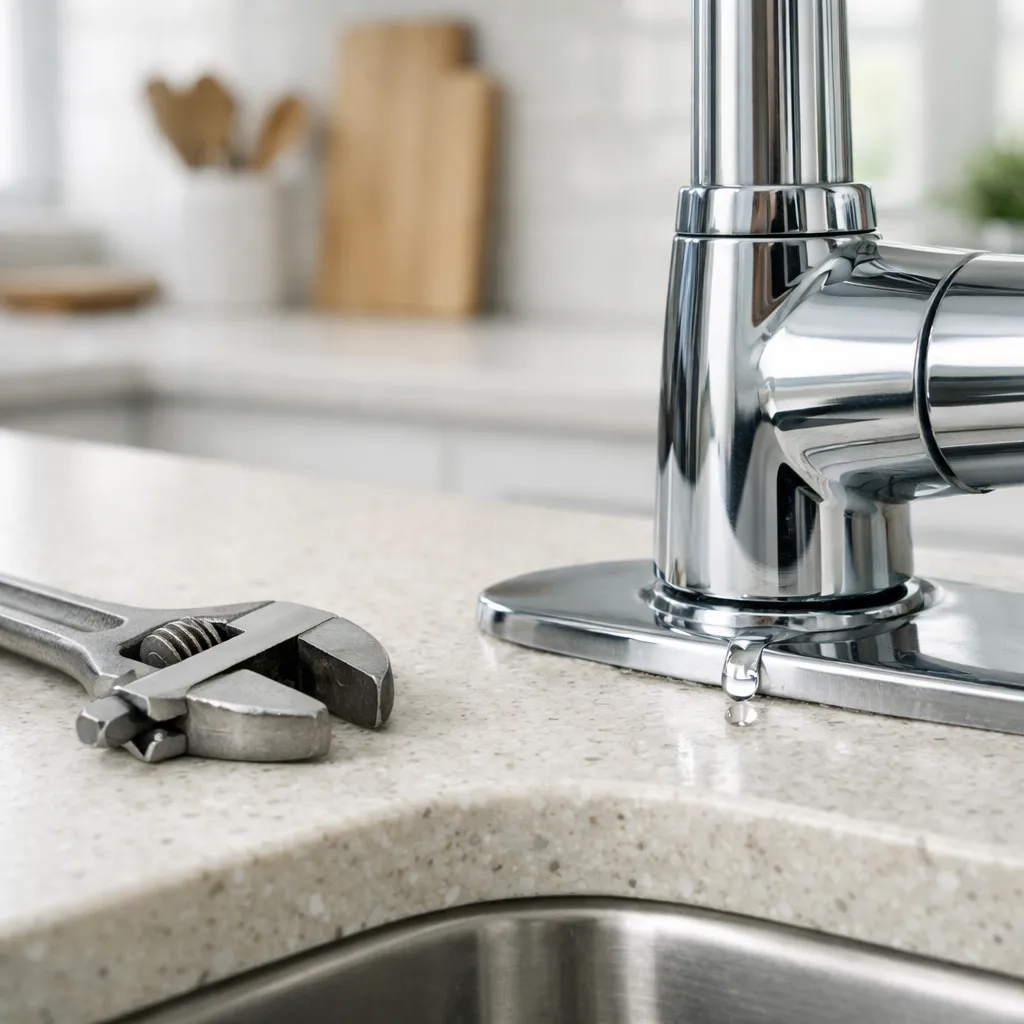
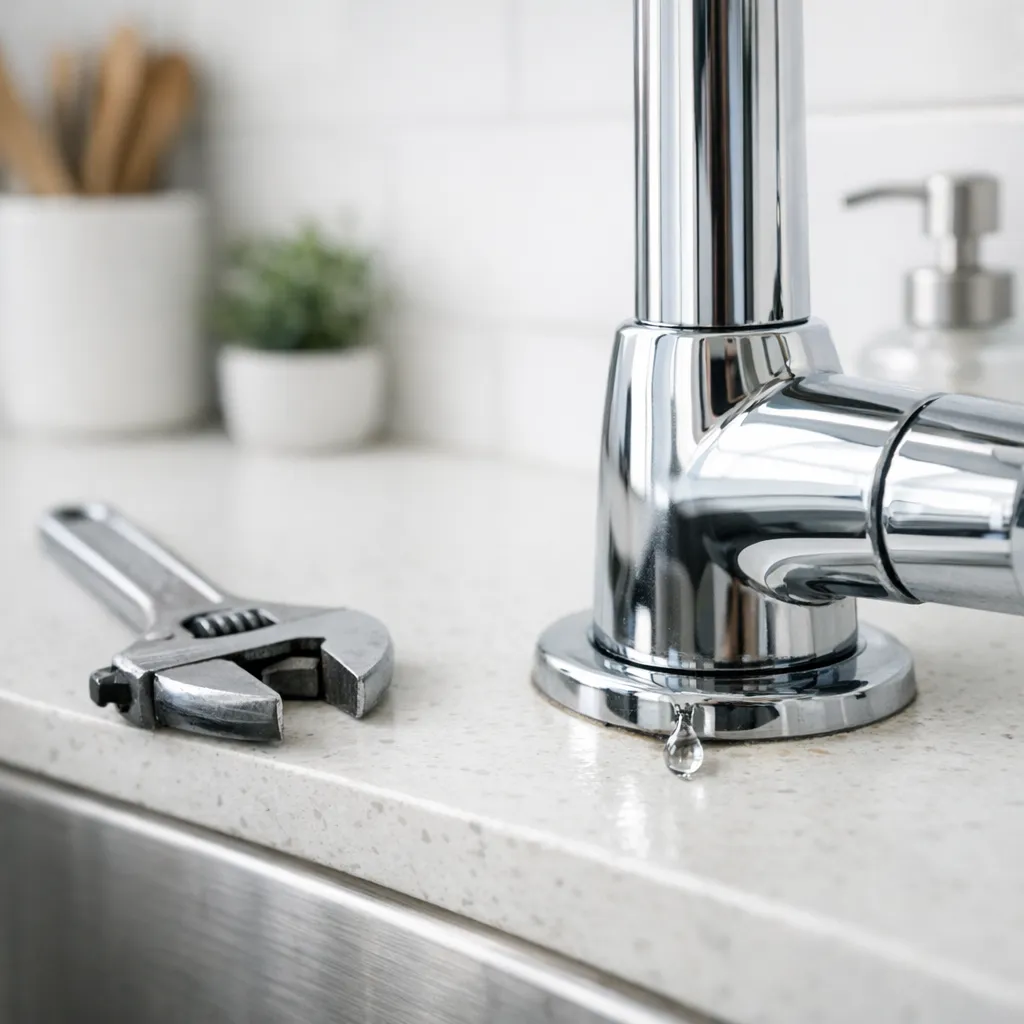
A homeowner in Stone Oak should be especially careful because 1990s and 2000s copper lines are a common place for pinhole leaks and scale-related fixture wear. If you are comparing advice from national repair guides, shorten the maintenance interval and inspect for white scale, crusted fittings, stiff shutoff valves, and early corrosion before assuming the part simply “got old.”
For budgeting, use local pricing instead of national averages: drain cleaning usually runs $150-$350, and a sewer camera inspection is commonly $200-$400. If the issue appears after a summer high-use period or after a rare freeze like Winter Storm Uri, treat it as a local risk signal and document what you see before calling a licensed plumber in Bexar County.
A kitchen sink that drains slowly is usually restricted by grease, food residue, or soap buildup in the stopper, disposal chamber, trap, or nearby branch pipe. To unclog a kitchen sink safely, stop adding water, inspect both basins, clean accessible parts, and progress from plunging to trap cleaning or a hand-operated drain snake. Use one method at a time and avoid chemical cocktails.
A backup becomes urgent when wastewater rises in another fixture, water leaks into the cabinet or floor, several drains slow at once, or electrical components near a disposal get wet. In those cases, stop using the sink and dishwasher. Shut off power or water only when you can do so without approaching wet electrical equipment, and call an appropriate professional.
Diagnose the Location Before Taking Anything Apart
First determine whether one bowl or the entire fixture is affected. In a double sink, water moving from one basin into the other often means the shared trap or branch line is restricted. If only the disposal side holds water, debris may be in the disposal chamber or its outlet. When the dishwasher causes the sink to rise, the same downstream restriction may be preventing discharge. A clogged sink drain is easier to solve when these patterns are recorded before parts are disturbed.
Run no more than a cup or two of water for diagnosis. Check the cabinet with a flashlight, feeling dry paper towels around slip joints rather than reaching into standing water. A wet cabinet base, swollen particleboard, or staining below indicates leakage. If several fixtures gurgle or back up, the problem may be beyond the kitchen branch. Repeatedly filling the sink will only increase overflow and hidden-damage risk.
Make the Sink and Work Area Safe
Remove standing water with a cup and bucket so tools are not submerged. Clear cleaners and stored items from the cabinet, protect the floor, and wear gloves and eye protection. If the sink has a garbage disposal, switch it off and turn off its circuit breaker before inspecting it. Never place fingers or tools into the grinding chamber, even when the wall switch is off; use the manufacturer's external wrench procedure only when appropriate.
Do not combine drain opener, bleach, vinegar, or other products. Reactions can release heat or toxic gas, and retained chemicals can splash during plunging or trap removal. If a cleaner has already been used, read its label, ventilate the room, and disclose it to the plumber. Stop for sewage, strong unexplained odors, active flooding, or water near outlets and appliance connections. A fuel-gas smell requires leaving the area and contacting emergency or utility services, not drain experimentation.
Choose Tools That Match a Local Clog
A practical kit includes a bucket, towels, flashlight, cup plunger, channel-lock pliers, bottle brush, and a small manual snake. A sink cup plunger is different from a toilet flange plunger and seals a flat drain opening. A manual drain auger can reach beyond the trap while giving the user tactile control.
Avoid compressed-air blasters, improvised wire, and powered cable machines. Sudden pressure can separate weak joints or drive water into appliance hoses. A powered snake can damage a disposal, thin metal trap, or plastic fitting and can injure an inexperienced operator. Keep every removed washer and nut in installation order; a cleared drain that leaks afterward is not a successful repair.
| Symptom | Likely area | Safe first action |
|---|---|---|
| One strainer blocked | Drain opening | Lift visible debris |
| Both bowls hold water | Shared trap or branch | Plunge, then inspect trap |
| Disposal hums | Disposal jam | Cut breaker; use maker's procedure |
| Dishwasher backs into sink | Shared discharge path | Stop dishwasher and clear sink line |
| Several home drains slow | Main or branch line | Limit water and call a plumber |
Remove Surface Debris and Check the Disposal
Lift the basket strainer and remove food fragments with tongs. Clean the rim and stopper with warm water and dish soap, but do not push scraps down. If a disposal is present and does not run, cut power at the breaker. Use a flashlight from above without inserting your hand. Some units accept a manufacturer-supplied hex key underneath; after freeing the mechanism, remove the key, restore power, and press the reset only as the manual directs.
A disposal that hums, trips repeatedly, leaks, or contains broken material needs appliance service or replacement rather than repeated switching. Never use caustic cleaner in a disposal unless its manufacturer explicitly permits it. If the chamber turns normally but water remains in both bowls, focus downstream. Restore the splash guard and components before testing with a small flow of cold water.

Plunge the Sink Without Creating a Mess
For a double sink, seal the second drain firmly with a stopper or wet cloth. Add enough water to cover the plunger cup, center it over the affected drain, and use a series of controlled vertical strokes. The goal is modest pressure and suction, not violent impact. Remove the plunger slowly and see whether the level drops. Repeat once if drainage improves.
Do not plunge if chemical cleaner is present because it can spray onto skin and eyes. Stop if a slip joint moves, the cabinet becomes wet, or water rises elsewhere. After successful plunging, flush with a moderate stream of hot tap water and a small amount of dish detergent. Do not pour boiling water into unknown plastic piping or a porcelain sink; temperature shock and softened joints can create new problems.
Clean the P-Trap Carefully
If plunging fails and the under-sink trap is accessible, photograph its orientation, place a wide bucket beneath it, and loosen the slip nuts by hand or gently with pliers. The trap will contain dirty water. Keep your face away and support the assembly so connected tubes are not twisted. Remove sludge with a brush, inspect washers for cracking or distortion, and check the trap for corrosion.
Reassemble each beveled washer in its original direction and tighten the nuts hand-snug, adding only slight tool pressure if needed. Over-tightening plastic fittings can crack them. Test first with a cup of water, dry every joint, then run a larger flow while checking for beads of moisture. If piping is glued, corroded, inaccessible, or misaligned, do not cut it casually; a plumber can correct it without turning a clog into a cabinet flood.

Snake the Branch Line Gently
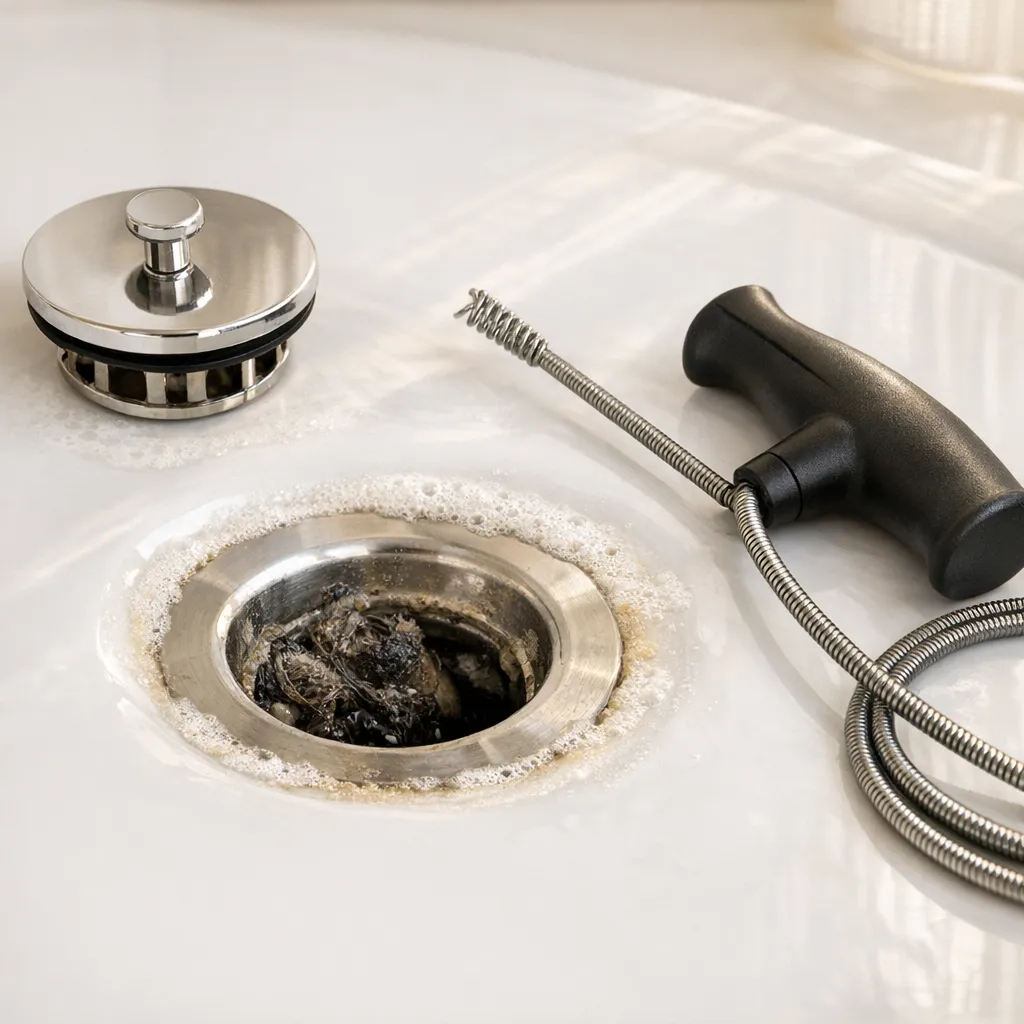
With the trap removed, a small hand snake may be fed into the wall pipe. Rotate while advancing slowly, keeping the cable close to the opening so it cannot whip. Soft resistance that yields may be grease or food buildup. Retrieve the cable periodically, clean it over the bucket, and make one or two measured passes. A hard stop may be a fitting, not an obstruction.
Never force the cable, and do not snake through a disposal. If the tool repeatedly stops at the same distance, comes back clean, or drainage returns only briefly, professional cabling or camera inspection may be warranted. Reassemble and leak-test the trap before flushing. Damage inside a wall can require water pipe repair, so persistent cabinet or wall moisture should never be dismissed as spilled sink water.
Avoid Fixes That Create Bigger Problems
Grease is not reliably removed by following it with hot water. It can cool farther along the line and combine with food particles into a larger plug. Chemical drain openers may damage finishes and vulnerable piping, remain trapped behind dense grease, and endanger whoever later opens the system. Baking soda and vinegar create visible foam but do not mechanically remove a substantial fat deposit.
Do not dismantle appliance connections without identifying them. Dishwasher hoses require a proper high loop or approved air gap, and incorrect reconnection can allow contaminated sink water into the appliance. Do not loosen supply valves while working on waste piping. If valves are corroded, hoses are bulging, or the cabinet contains mold or extensive swelling, stop and arrange repair.
Know When Professional Service Is Wiser
Call a licensed plumber when multiple fixtures are affected, wastewater appears, the blockage quickly returns, a cable reaches a hard stop, or pipes leak after reasonable tightening. Also call when plumbing is old, concealed, shared with another unit, or modified in a confusing way. Renters should notify the property manager before disassembling permanent plumbing.
A professional can choose the correct cable head and size, inspect a line with a camera when justified, and distinguish grease buildup from damaged or poorly sloped pipe. Emergency service is appropriate for uncontrolled leakage, sewage, or electrical exposure. For a merely slow but contained sink, stop using it and schedule ordinary service rather than continuing risky attempts.
Set Realistic Time and Cost Expectations
Surface cleaning or plunging may take 15 to 30 minutes. Trap cleaning and careful reassembly often takes an hour, including cleanup and leak testing. Basic hand tools are inexpensive and reusable, but buying several specialized products can approach the cost of a straightforward service call. Time spent protecting the cabinet and testing joints is part of the repair, not an optional extra.
Professional prices depend on access, region, timing, and whether the restriction is local or in a larger line. Ask whether the quoted visit includes cabling, disposal diagnosis, camera inspection, and cleanup. Work during normal hours is generally more economical than waiting for a complete overflow. Avoid any provider who proposes extensive replacement without explaining the diagnosis and alternatives.
Prevent Kitchen Sink Clogs
Scrape plates into trash or compost before washing. Use a basket strainer, empty it frequently, and collect cooking grease in a container for disposal according to local rules. Even with a disposal, feed small amounts with cold water and follow the appliance manual; fibrous peels, coffee grounds, bones, shells, and expanding starches can be troublesome.
Wipe oily pans before washing, clean the stopper and strainer weekly, and watch for gradually slower drainage. Check under the sink monthly for moisture, loose items pressing on pipes, and disposal leaks. Early attention to a slow drain is safer than waiting until the dishwasher empties into a full sink.
Frequently Asked Questions
What most commonly clogs a kitchen sink?
Fats, oils, food particles, detergent film, and fine debris accumulate together. The disposal does not eliminate waste; it only makes some material smaller, and that material still must pass through the drain.
Can I clear it myself?
Usually, if the clog affects only the sink and responds to surface cleaning, controlled plunging, trap cleaning, or a gentle hand snake. Stop for chemicals, leakage, electrical risk, sewage, or multiple affected fixtures.
How urgent is a slow sink?
A contained slow drain can wait for a planned repair, but stop running the dishwasher and large volumes of water. Overflow, cabinet leakage, sewage, or wet electrical components require immediate action.
Should I use boiling water or chemicals?
No as a default. Boiling water can stress some pipes and fixtures, while chemicals can remain trapped and create injury or material-damage risks. Mechanical removal is usually more predictable.
Why did the clog return?
Only a narrow path may have been opened through a larger deposit, or the branch line may be poorly sloped or damaged. Quick recurrence is a reason for diagnosis, not stronger chemicals.
A deliberate sequence—diagnose, make the area safe, remove accessible debris, plunge, clean the trap, and snake only within reasonable limits—restores many kitchen sinks without unnecessary damage.
Why This Is Different in San Antonio
At roughly 357 mg/L, or 21 gpg, local water leaves scale inside strainers, traps, and branch lines. That rough surface catches grease even when a disposal seems to grind food well. SAWS customers should scrape plates and collect cooking oil rather than relying on hot water to carry fat away. In Bexar County, inspect disposal seals and angle stops while the cabinet is empty. Winter Storm Uri is also a reminder that a cabinet leak can come from a supply connection, not only the drain, so identify whether the water is clean or wastewater before repairing anything.
What San Antonio Homeowners Pay (2026)
| Service | Typical 2026 range |
|---|---|
| Routine kitchen drain clearing | $150–$350 |
| Camera inspection | $200–$400 |
| P-trap/disposal connection repair | $175–$450 |
| After-hours emergency visit | $250–$500 |
These are planning ranges, not bids. Access, pipe condition, after-hours timing, and hidden water damage can change the total. Ask for diagnosis and approval before added work.
When to Call a San Antonio Plumber
Call a licensed plumber when both basins repeatedly back up, several fixtures are slow, wastewater appears, a disposal leaks, or cabinet piping is glued, corroded, or misaligned. Cut power at the breaker if water is near the disposal or outlet, but never reach into the chamber. Tell the plumber whether the dishwasher triggers the backup and whether chemicals were used. Ask for an itemized Bexar County scope before cabling or replacement.
San Antonio FAQ
Why does hot water not solve a grease clog?
It can move grease briefly, but the fat cools farther down the pipe and binds to food and mineral scale.
Can I remove the P-trap myself?
Yes when it is accessible, no chemicals are present, and you can reassemble and leak-test each washer. Stop for glued or corroded piping.
Does a disposal prevent clogs?
No. It makes some scraps smaller, but grease, starch, coffee grounds, and fibrous waste can still obstruct the drain.
For San Antonio households, a dated photo of the repair and the exact replacement part makes future troubleshooting faster.