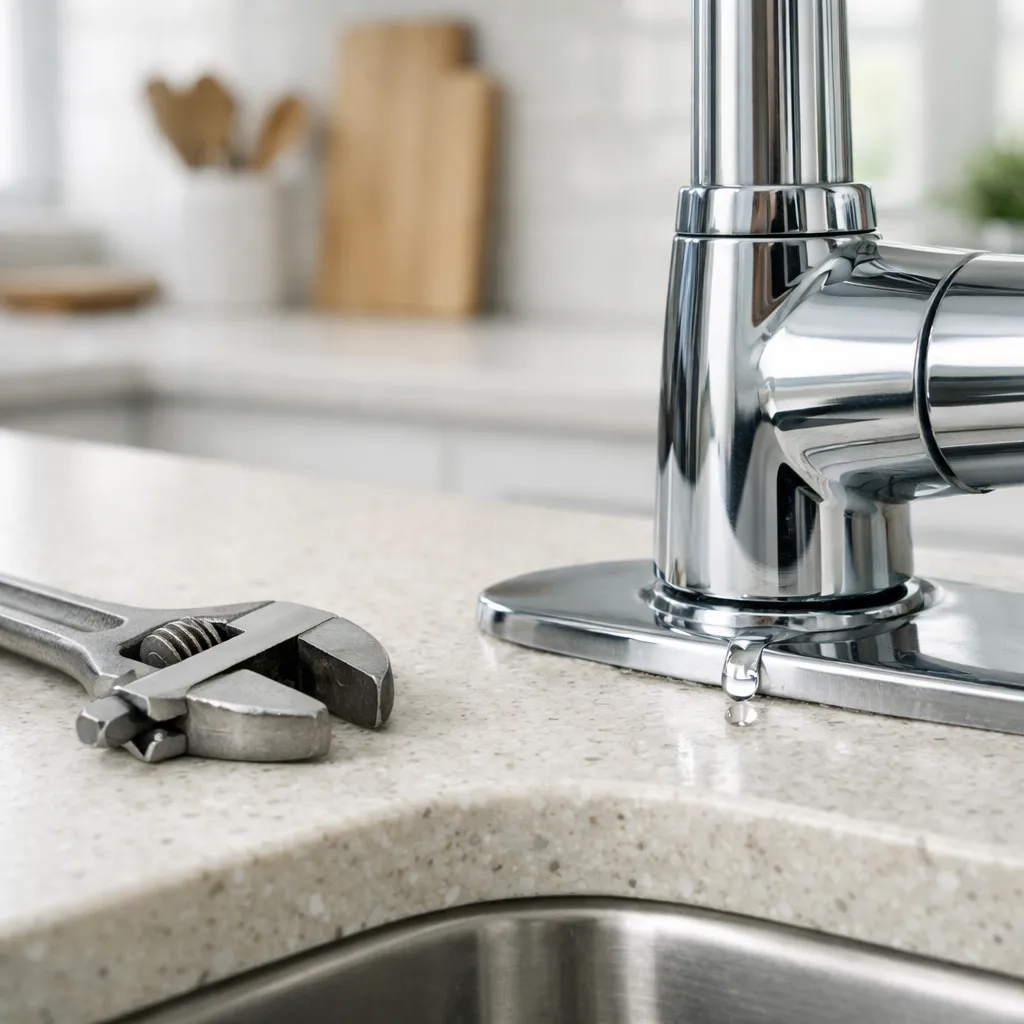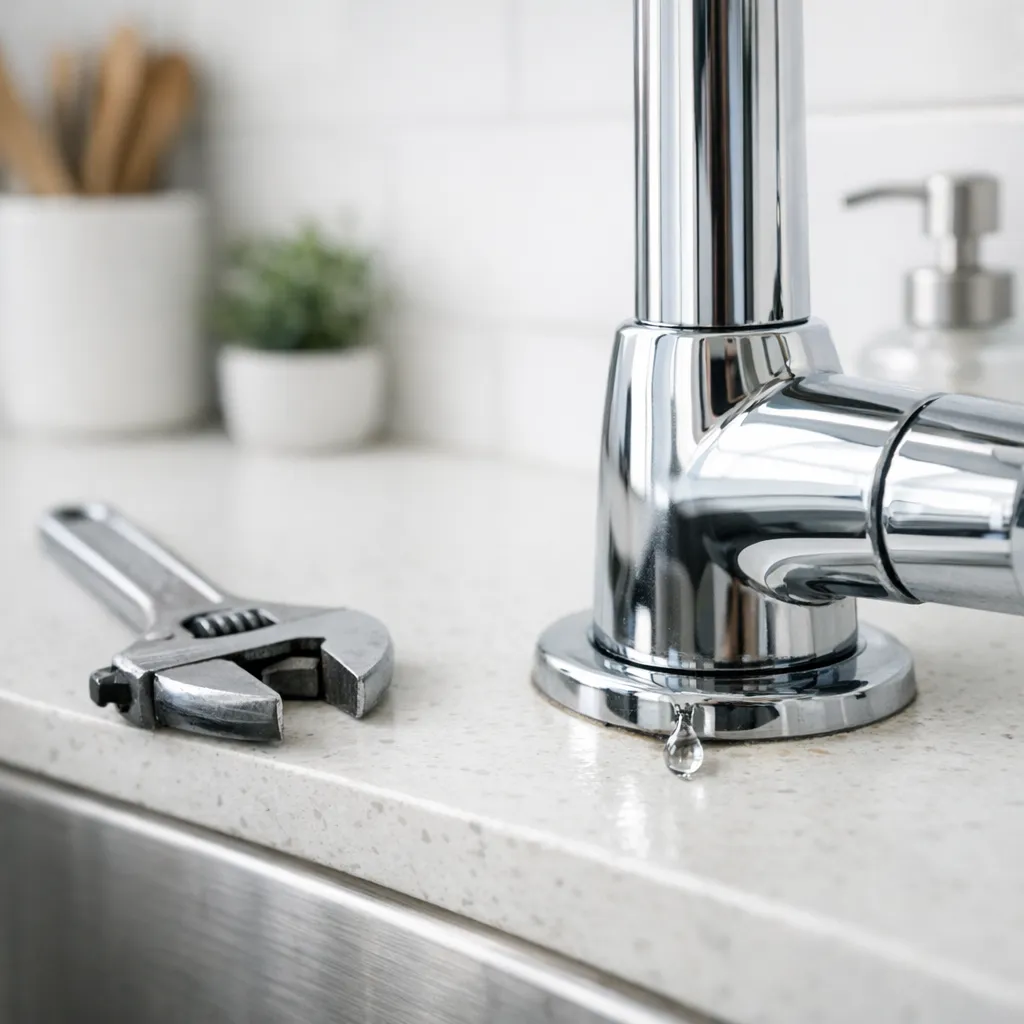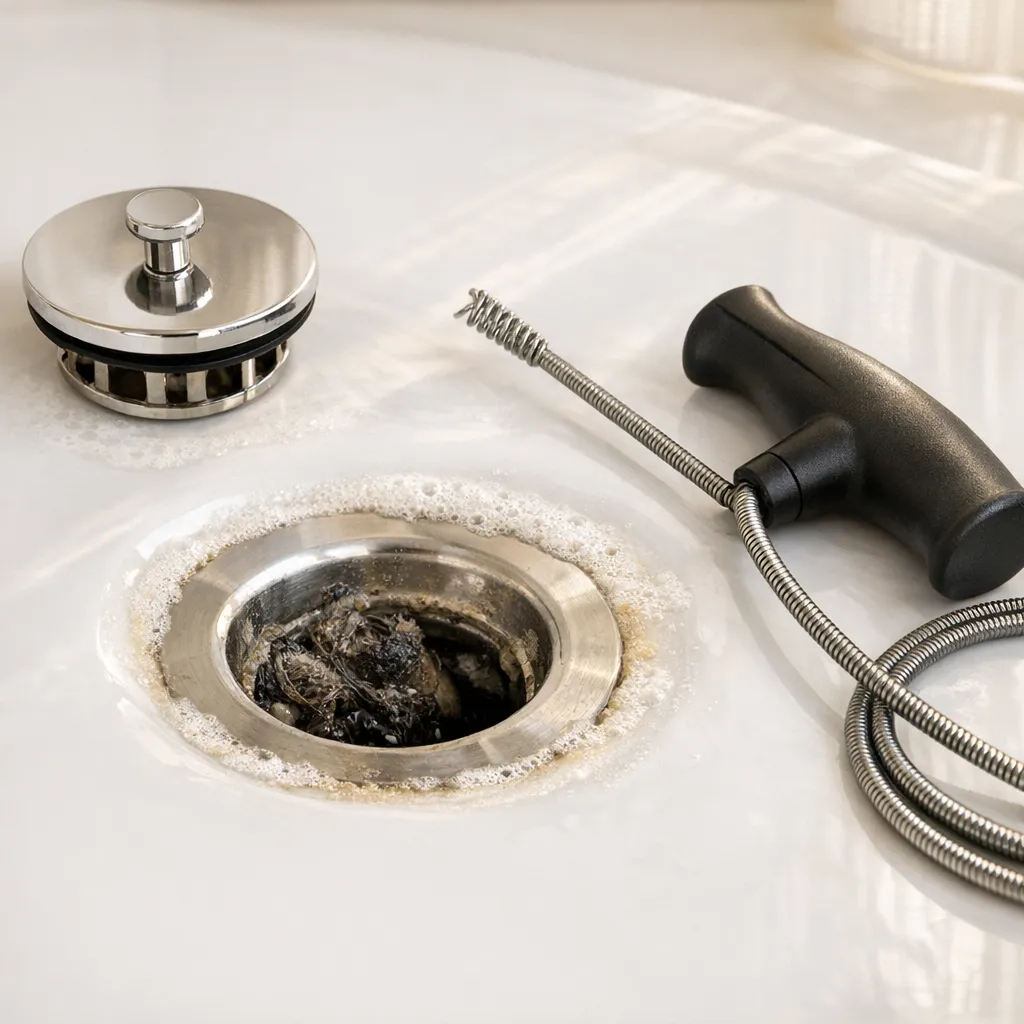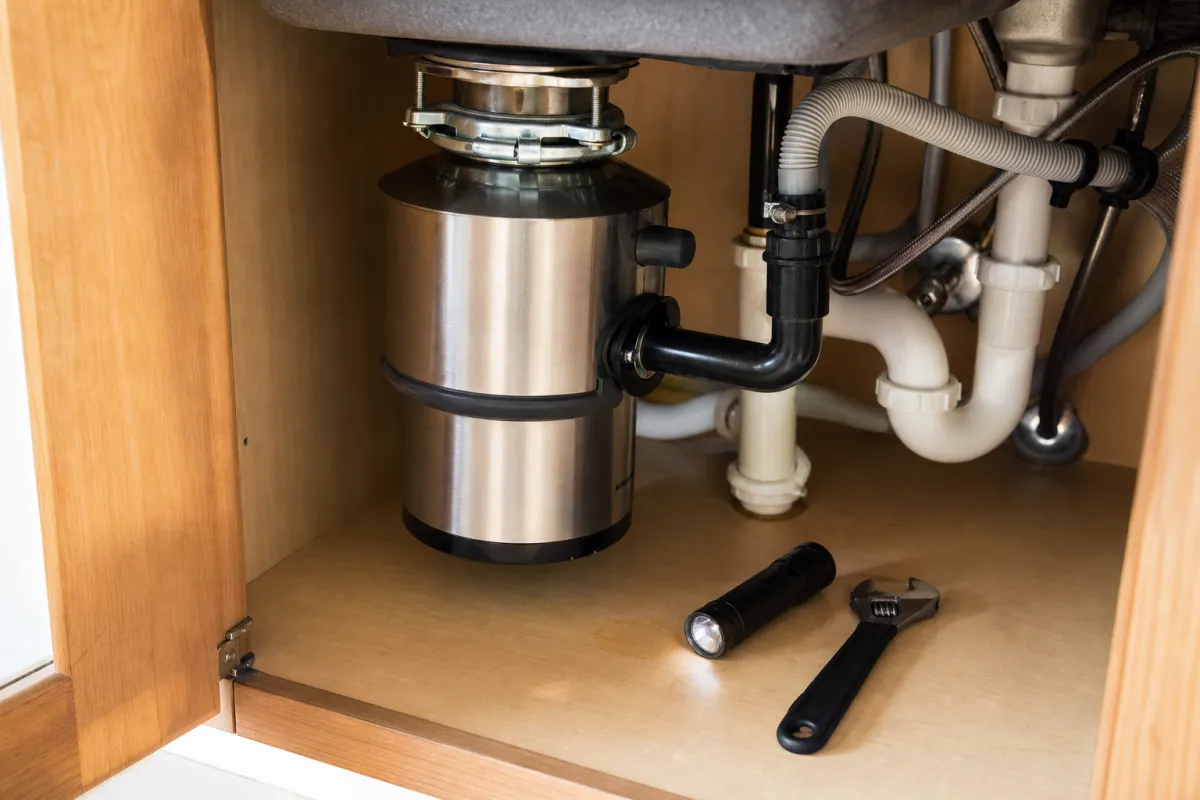
> San Antonio Local Insight: Hard water mineral deposits (21 gpg from Edwards Aquifer) affect toilet components, garbage disposals, and fixtures throughout local homes. Scale buildup causes premature wear, reduces performance, and creates problems that soft-water cities rarely see. Regular descaling maintenance is essential for San Antonio plumbing.
Garbage disposal care in San Antonio starts with keeping food waste out, not finding a stronger cleaning chemical. Edwards Aquifer water measures roughly 357 mg/L, or 21 gpg, and leaves calcium scale on the splash guard, chamber, discharge elbow, and nearby drain. That rough mineral film gives grease and food particles more surface to hold onto, so a monthly cabinet inspection is especially useful.
In a King William kitchen, older cast-iron or galvanized branches and tight retrofit plumbing make conservative habits more important. Run cold water, feed only small soft scraps, and clean the removable splash guard with the breaker off. A preventive plumber visit commonly starts around $85–$150 per hour; routine drain cleaning is often $150–$350. Those costs are avoidable when an odor or slower grind is handled before it becomes a jam or cabinet leak.
A homeowner in King William should be especially careful because historic cast iron, galvanized pipe, and tight retrofit spaces change what a safe repair looks like. If you are comparing advice from national repair guides, shorten the maintenance interval and inspect for white scale, crusted fittings, stiff shutoff valves, and early corrosion before assuming the part simply “got old.”
For budgeting, use local pricing instead of national averages: drain cleaning usually runs $150-$350, and a sewer camera inspection is commonly $200-$400. If the issue appears after a summer high-use period or after a rare freeze like Winter Storm Uri, treat it as a local risk signal and document what you see before calling a licensed plumber in Bexar County.
A garbage disposal does not need complicated care, but it does need consistent, sensible use. The most effective garbage disposal maintenance tips are simple: run plenty of cold water, feed scraps gradually, keep grease and fibrous waste out, clean the splash guard, and respond to a change in sound or drainage before it becomes a complete stoppage.
Maintenance cannot correct a cracked housing, failing motor, unsafe wiring, or badly clogged branch drain. It can, however, reduce odors, jams, corrosion, and unnecessary strain while helping you recognize when the problem belongs to a plumber or electrician.
Start with safe operation and a quick baseline check
Before inspecting a disposal, turn it off at the wall switch. If your hands, a tool, or a brush will pass through the splash guard, cut power at the circuit breaker or unplug the unit under the sink; a wall switch alone is not reliable protection. Never put a hand into the grinding chamber. Use a flashlight from above, and use tongs or pliers only after power is isolated. If the cabinet is wet, do not touch plugs, switches, or wiring until the electrical hazard has been addressed.
Establish what “normal” looks and sounds like. Water should drain promptly, the motor should reach a steady pitch, and the cabinet should remain dry. Check the sink flange, dishwasher hose, discharge elbow, P-trap, reset button area, and bottom seam for moisture. A slow sink may indicate a disposal blockage, but it can also be a downstream drain problem. This baseline makes future changes easier to identify without dismantling parts unnecessarily.
Use cold water before, during, and after grinding
Start a strong stream of cold water before switching on the disposal. Add small amounts of acceptable food waste, allowing the motor to return to its normal sound between additions. After grinding seems complete, leave the disposal and water running briefly, then switch off the motor while the water continues long enough to carry particles through the trap. This routine is more useful than pouring special products into the unit.
Cold water helps keep fats relatively firm so small traces can move through rather than coating the chamber immediately. It does not make grease disposal-safe: cooking oil, pan drippings, and fatty sauces should cool and go into an appropriate container or trash. Hot water is fine for ordinary sink washing when the disposal is not processing scraps, but using hot water to chase grease can move the problem farther into a cooler pipe where it solidifies.
Know what can go in—and what should stay out
A disposal is designed for modest, soft food remnants, not as a substitute for a trash can or compost bin. Scrape plates first. Feed only small quantities of ordinary scraps, and stop if the unit labors. Hard bones, shells, fruit pits, metal, glass, plastic, paper, and utensils can jam or damage components. Large volumes of potato peel, rice, pasta, flour, or coffee grounds can form dense sludge in the trap and drain.
Fibrous materials deserve particular caution. Corn husks, celery strings, artichoke leaves, onion skins, and similar fibers can wind around moving parts or collect in plumbing. Eggshell membranes may contribute to stubborn debris even though the shell itself seems brittle. Local plumbing conditions vary, so conservative use is safest—especially with older, narrow, poorly sloped, or frequently clogged drains. When uncertain, put the material in compost or trash instead.
Clean the splash guard and chamber without dangerous chemicals
Odor often comes from residue on the underside of the removable rubber splash guard, not from a mysterious failure deep in the machine. Isolate power, remove the guard only if its design permits, and scrub both sides with warm water, dish soap, and a small brush. Wipe the visible rim and accessible upper chamber without reaching past the opening. Rinse, reinstall correctly, restore power, and run cold water.
For routine freshening, a little dish soap with cold running water is usually enough. A small quantity of ice can help knock loose soft residue, but it will not sharpen components; many disposals use impellers rather than knife-like blades. Avoid mixing cleaners, and do not combine bleach with acids, ammonia, or unknown drain products. Caustic drain cleaner can splash during service, damage some components, and expose a plumber to chemical burns. Persistent sewage odor may indicate a trap, vent, seal, or drain issue that cleaning cannot solve.
Prevent jams and respond correctly when one occurs
A sudden hum with no grinding usually means the motor is energized but the mechanism cannot turn. Switch it off immediately; letting it hum can overheat the motor. Disconnect power at the breaker or plug, remove visible foreign objects with tongs, and use the manufacturer-specified wrench socket on the bottom if the model has one. Move it gently back and forth rather than forcing it. Consult the unit manual because procedures differ.
After the obstruction is removed and the mechanism turns freely, wait for any thermal overload to cool, press the reset button once if directed, restore power, and test with cold water. Repeated resets are not maintenance. Stop if the breaker trips, the plug or cable is damaged, there is a burning smell, the unit leaks through its body, or it immediately jams again. Those signs call for diagnosis or replacement rather than more force.
Protect the dishwasher connection, trap, and cabinet
Many dishwashers discharge through the disposal, making the inlet hose and connection part of the maintenance picture. Look for drips, a loose clamp, a kinked hose, or a missing high loop where local installation rules call for one. If a newly installed disposal causes dishwasher backup, the inlet knockout may not have been removed—but correcting that requires safe disconnection and confirmation against the manufacturer’s instructions.
Keep the under-sink cabinet uncluttered enough to inspect. Place dry paper beneath joints temporarily to reveal a slow drip, but do not treat a bucket as a repair. Water at the top flange may require resealing; water at the elbow may point to a gasket or alignment problem; water emerging from the disposal housing generally means replacement. Ongoing moisture can swell cabinetry and support hidden mold. If wastewater is present, use gloves, avoid spreading contamination, and sanitize appropriately after the leak is fixed.
Follow a realistic maintenance schedule
| Frequency | Practical task | What to watch for |
|---|---|---|
| Every use | Cold water, small batches, brief flush afterward | Laboring sound or slow drainage |
| Weekly | Wipe sink opening and inspect splash guard | Film, odor, or trapped scraps |
| Monthly | Inspect flange, elbow, hose, trap, cord, and cabinet | Drips, corrosion, heat, or damage |
| As needed | Power-isolated jam check and gentle manual freeing | Repeated jams or breaker trips |
| Annually | Review mounting, plumbing, and overall condition | Movement, rust, housing leaks |
A schedule should respond to use. A household that cooks daily may need splash-guard cleaning more often than an occasional-use kitchen. Maintenance should not mean unnecessary disassembly: repeatedly disturbing sound plumbing joints can create leaks. Record the model number and keep its manual accessible so reset, wrench, and replacement guidance matches the actual appliance.
Notice trends rather than isolated noises. Longer grinding times, recurring odor, frequent clogs, new vibration, or moisture after dishwasher cycles all provide useful diagnostic clues. Addressing a loose mounting or partial obstruction early is usually simpler than responding after water damages the cabinet.
Avoid maintenance myths that can cause damage
Do not use your disposal to grind large piles of citrus peel in hopes of cleaning it. A small piece may add temporary fragrance, but too much peel can overload the unit or block the drain, and fragrance can mask rather than remove residue. Ice is not a blade sharpener, boiling water does not cure grease buildup, and repeated baking-soda-and-vinegar foaming is not a substitute for mechanical drain correction.
Never retrieve an object while the unit merely appears off, and never use fingers to test whether it turns. Do not strike the housing, force an oversized wrench, or keep pressing reset. Also avoid diagnosing every slow sink as a disposal problem. If both bowls back up, another fixture gurgles, or wastewater returns when the dishwasher drains, the blockage or venting fault may be farther downstream. Guessing can turn a contained clog into a leak or electrical hazard.
Know when to stop DIY and call a professional
Call a plumber for a housing leak, recurring blockage, leaking flange that requires remounting, sewage odor, wastewater backup, damaged drain piping, or a jam that remains after the manual-approved procedure. A licensed electrician should investigate repeated breaker trips, sparking, shock sensation, heat-damaged outlets, an improper hardwired connection, or a wet electrical cabinet. Do not energize equipment in standing water.
Replacement may be more sensible when the motor is failing, internal seals leak, corrosion is extensive, or repair parts and labor approach the cost of a suitable new unit. A professional can also confirm horsepower, dimensions, drain alignment, septic-system considerations, and electrical compatibility. Stop using the sink if leakage could reach wiring or cabinets; protecting the home matters more than keeping the appliance available for one more meal.
Frequently asked questions
Can I put lemon peels in a garbage disposal?
A small piece may be tolerated by many units, but peel does not disinfect the chamber and a large quantity can jam plumbing. Remove residue directly from the splash guard instead.
Why does my disposal smell even after cleaning?
Residue may remain beneath the guard, in the trap, dishwasher hose, or drain. A dry or faulty trap and venting problems can also cause sewer odor and need plumbing attention.
Should I run hot or cold water?
Use cold water while grinding and during the follow-up flush. Keep grease out entirely rather than relying on water temperature to move it.
How long should I run the disposal?
Run it only until grinding is complete, then briefly continue water flow. Exact timing depends on the amount and model; extended empty running adds wear without cleaning benefit.
Is a humming disposal safe to reset?
Switch it off immediately, isolate power, and clear the jam according to the manual before one reset attempt. Repeated humming or resets require service.
Why This Is Different in San Antonio
The local issue is the combination of very hard Edwards Aquifer water, long cooling seasons, and plumbing that ranges from historic metal pipe to newer PEX installations. At 357 mg/L (21 gpg), mineral scale accumulates quickly on continuously wet surfaces. SAWS water-quality reporting is useful context, but scale does not prove that every failure was caused by water chemistry; diagnose the actual leak, restriction, or electrical symptom.
Season also matters. Summer cooking and heavy household use load kitchen drains, while a freeze event like Winter Storm Uri can expose already stressed fittings in an unconditioned cabinet or exterior wall. Bexar County homeowners should inspect after a hard freeze, but never energize a wet disposal or force a brittle connection.
What San Antonio Homeowners Pay (2026)
| Service | Typical local range |
|---|---|
| Preventive inspection | $85–$150 per hour |
| Drain or trap cleaning | $150–$350 |
| Jam or connection repair | $150–$325 |
| Installed disposal replacement | $250–$650 |
These are planning ranges, not quotes. Access, disposal model, corroded fittings, outlet condition, after-hours timing, and cabinet damage determine the final total. Ask for an itemized scope before approving work.
When to Call a San Antonio Plumber
Call a licensed plumber for recurring jams, odors, or unsafe connections, wastewater backup, a shutoff that will not close, or work that requires changing the flange, trap, or wall connection. Stop immediately and use a licensed electrician when water reaches wiring, a breaker trips repeatedly, the receptacle is scorched, or the unit is improperly hardwired. DIY cleaning is reasonable only while power is isolated and the work stays within the manufacturer’s instructions.
When booking service, describe when the symptom occurs, whether the dishwasher is involved, and what you already tested. Ask whether the technician regularly works with hard-water scale and older Bexar County plumbing. That information produces a more useful diagnosis than requesting a generic “tune-up.”
San Antonio FAQ
Does 21 gpg hard water automatically ruin a garbage disposal?
No. The minerals mainly create scale on wet surfaces and contribute to residue retention and corrosion around connected plumbing. Correct use, a dry cabinet, and prompt attention to slow drainage or leaks matter more than aggressive chemical treatment.
Should I install a water softener for this problem alone?
Not solely for one disposal symptom. A softener may make sense when the household also has repeated scale at faucets, valves, showers, and the water heater. Evaluate the full plumbing system and ongoing salt and maintenance costs; a typical whole-home installation can run about $1,500–$4,000.
Who should handle permits or code questions?
For altered plumbing or electrical work, use licensed trades who can confirm the current requirements that apply to the address. That is especially important when a direct appliance swap turns into drain relocation, receptacle work, or repair inside a wall.