> San Antonio Local Insight: Drain and sink clogs in San Antonio are different from other cities. Edwards Aquifer hard water (357 mg/L) deposits white calcium scale inside pipes that traps hair, grease, and soap more aggressively. Standard drain cleaners often fail because they dissolve organic matter but not mineral buildup. local homes need descaling-specific methods.
When a shower still holds water after snaking, stop treating it as a simple hair clog. The cable may have bored a temporary channel, missed the trap arm, or run into scale-coated cast iron. San Antonio water from the Edwards Aquifer averages about 357 mg/L, or 21 gpg, so soap film and hair can bind tightly to rough mineral deposits.
In a King William renovation, old cast iron may transition to PVC beneath a tight crawlspace or slab. That makes cable length and resistance useful diagnostic clues: note where the head stopped, what came back on it, and whether a nearby toilet or sink gurgles. Do not keep feeding a larger machine into an unknown fitting.
A careful second pass with a small hand cable costs little, but repeated blind attempts can turn a $150–$350 drain cleaning into a $200–$400 camera inspection plus pipe repair. This guide explains how to distinguish a local shower blockage from a shared branch or sewer problem and where DIY work should end.
Why Snaking the Drain May Not Have Solved the Problem
A drain snake does not always remove a clog. In many cases, the rotating cable simply creates a small passage through a mass of hair, soap residue, mineral deposits, and product buildup. Water may seem to drain for a few minutes before loose material collapses into the opening again. If the cable comes back clean, it may also have traveled past the obstruction without catching it.
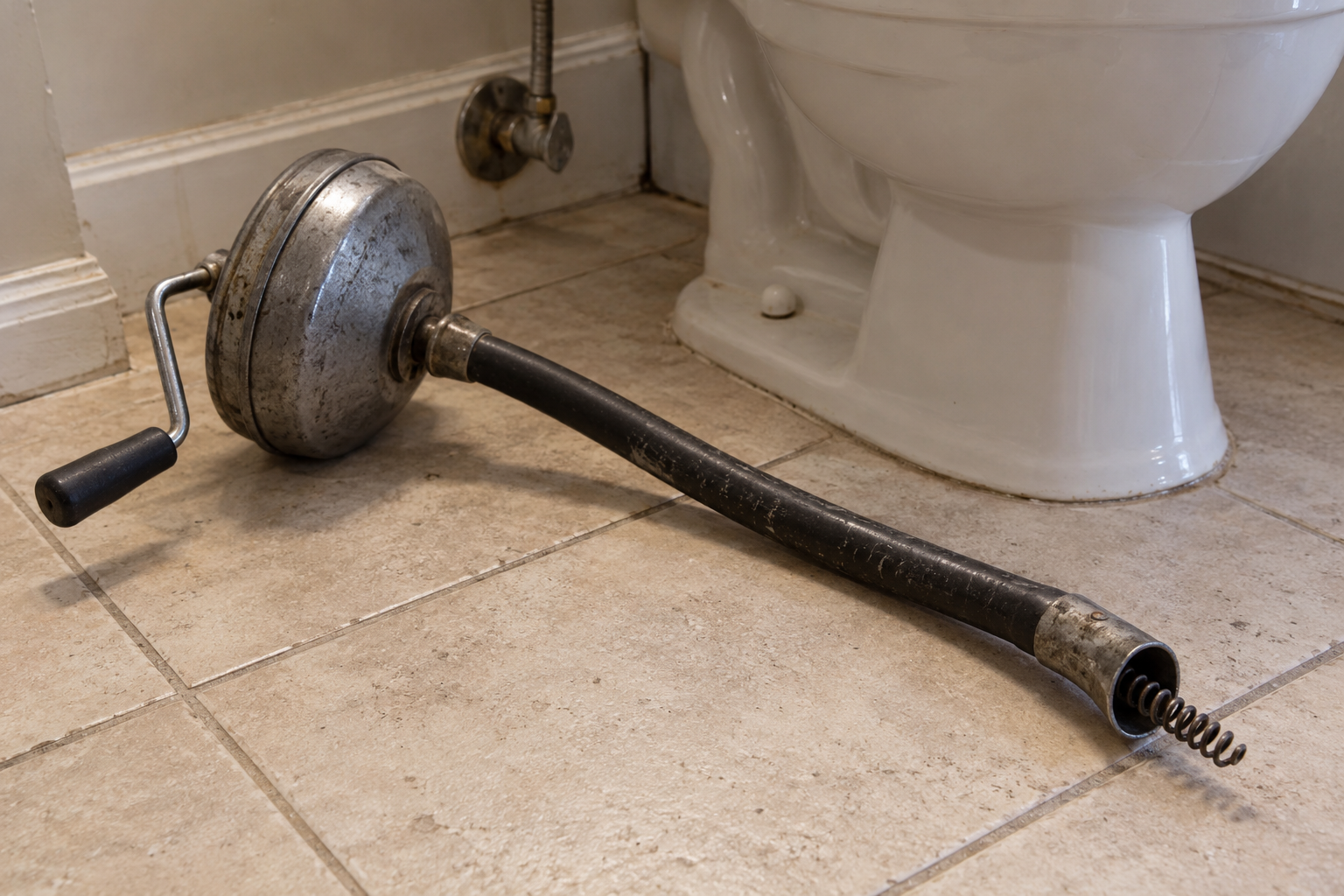
The length and design of the snake matter. A short plastic hair-removal tool is useful near the drain opening, but it cannot reach a blockage several feet down the trap arm. A small hand auger may travel farther, yet its head can still slip through soft buildup without retrieving much of it. Drum augers and powered machines offer greater reach, but they also introduce more risk in inexperienced hands.
The snake may also have entered the wrong path. Some shower drain assemblies have configurations that make it difficult to guide a cable through the trap. The cable can curl inside the drain body or repeatedly strike a fitting rather than continue down the waste line. Understanding this distinction prevents repeated snaking from becoming an unproductive—and potentially damaging—cycle.
What to Check Before Trying the Drain Again
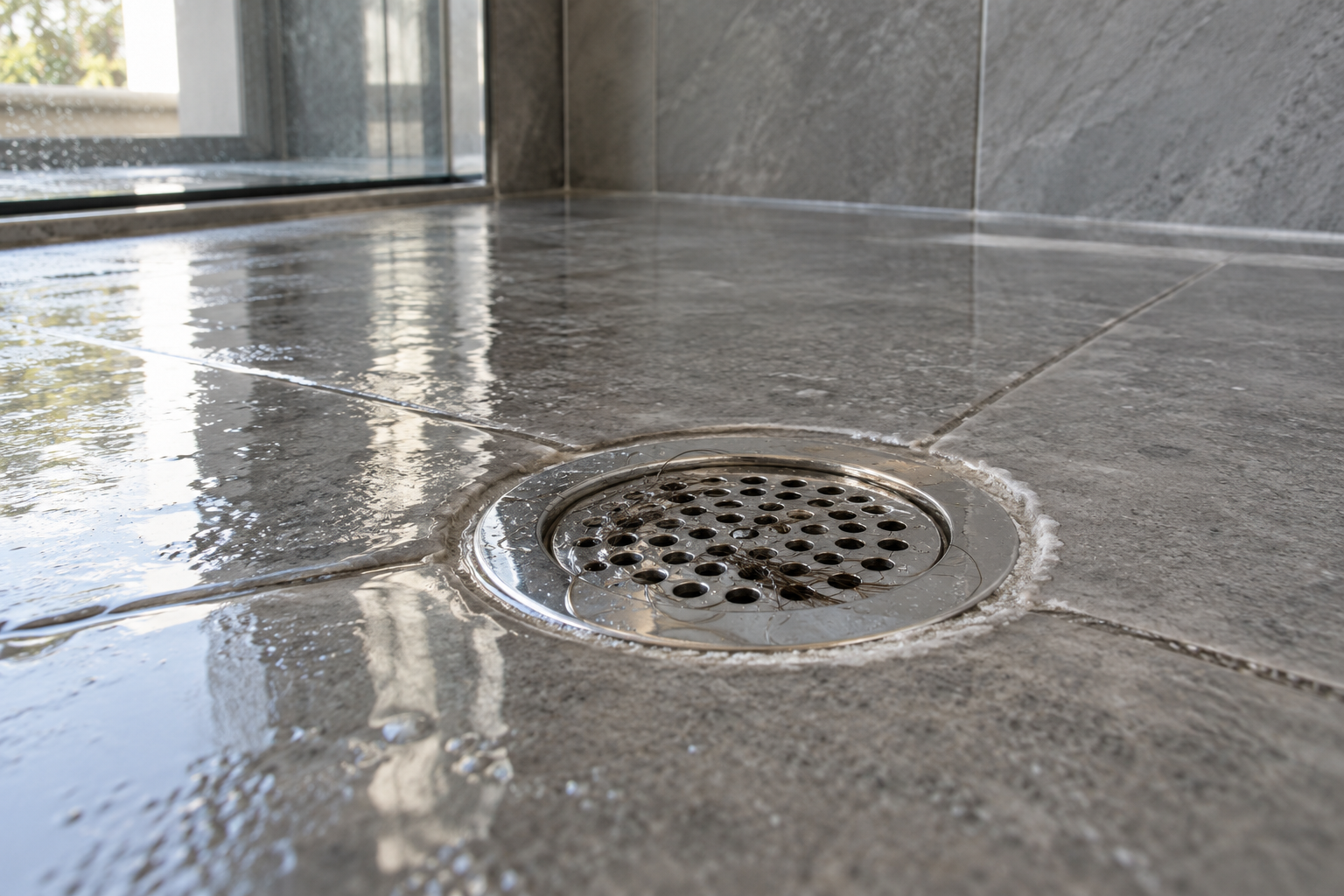
First, remove the drain cover and inspect the opening with a flashlight. Wear waterproof gloves and keep tools organized so nothing falls into the pipe. Look for hair wrapped around the crossbars, hardened soap residue, pieces of plastic, a loose drain component, or debris that the snake pulled close to the surface without fully extracting. Remove only material you can reach safely with pliers or a hooked plastic tool.
Next, note the drain’s behavior. A shower that drains slowly but steadily usually has a partial restriction. Water that remains almost completely still suggests a dense blockage, a cable lodged in the line, or a problem farther downstream. If the shower drains normally for a moment and then begins filling, the obstruction is likely beyond the immediate drain opening.
Test the bathroom sink and toilet without running large amounts of water. If the shower alone is affected, the clog is more likely in its trap or branch line. If flushing the toilet makes the shower gurgle, or if water rises in the shower when another fixture drains, stop adding water. Those symptoms can indicate a shared-line or main drain problem rather than an isolated shower clog.
Use the Snake’s Condition as a Diagnostic Clue
What comes back on the cable can help explain what happened. Hair and dark, greasy residue suggest that the snake reached at least part of a typical shower clog. If the cable returns with only a small tuft of hair and the drain remains blocked, a larger mass may still be wrapped around the trap or compressed farther down the pipe.
A cable that returns clean every time may not be reaching the clog. It could be curling inside the drain body, passing through a small opening in soft buildup, or stopping at a tight bend. Marking the cable with removable tape before insertion can help you estimate how far it traveled. Do not use permanent marks that could transfer ink or adhesive into the drain.
Pay attention to resistance. Soft, springy resistance often points to hair or sludge. A hard stop at the same distance may be a fitting, a solid object, mineral buildup, or pipe damage. Do not repeatedly force the cable against a hard obstruction. Kinking the snake can make it difficult to retrieve, while aggressive powered equipment can crack fragile metal, clay, or deteriorated plastic drainage components.
Safe Next Steps for a Shower Drain That Still Will Not Drain
Begin by physically cleaning the accessible portion of the drain. Remove the cover, pull out reachable hair, and wipe away soap buildup around the drain body. A barbed plastic drain tool can be effective for shallow clogs, but use it carefully around crossbars and seals. Retrieve the tool slowly so debris does not fall back into the trap.
If the drain is only partially blocked, add a modest amount of warm—not dangerously boiling—water mixed with a small quantity of dish soap. This may loosen soft soap residue, but it will not dissolve a dense hair clog. Avoid pouring boiling water into a shower base because it can stress some plastic piping, soften certain sealants, and potentially damage acrylic or fiberglass surfaces.
You can then try a manual hand auger once more, provided the first attempt did not reveal a hard obstruction. Feed the cable gradually, rotate it consistently, and withdraw it every few feet to clean the head. Do not run water deeply into the shower while working. For a broader comparison of safe methods, see the best way to unclog shower drain guide.
Quick-Reference Troubleshooting Table
Use the symptoms below to choose a next step rather than repeating the same method without new information.
| Symptom | Likely explanation | Safer next step |
|---|---|---|
| Cable returns with hair, but water still stands | Part of the clog remains in the trap or line | Clean the cable and make one controlled second pass |
| Cable returns clean | It may be missing the obstruction or curling | Check insertion depth and stop if it meets the same hard point |
| Drain improves briefly, then slows again | The snake opened only a narrow channel | Retrieve more debris rather than simply pushing through it |
| Shower gurgles when the toilet flushes | Shared branch or main drain restriction | Stop using affected fixtures and contact a plumber |
| Dirty water rises in the shower | Downstream blockage or sewage backup | Avoid contact, keep the area closed, and call a professional |
| Snake cannot be pulled out normally | Cable may be kinked or caught | Stop rotating and get professional help before it breaks |
| Repeated hard stop at the same distance | Fitting, solid object, scale, or damaged pipe | Do not force the cable; consider camera inspection |
| Water appears outside the shower area | Drain seal, trap, or concealed pipe may be leaking | Stop testing and inspect for hidden moisture |
This table is a starting point, not proof of a specific diagnosis. Drain layouts vary, especially in remodeled bathrooms and older homes. If the observed symptoms do not match a straightforward hair clog, additional snaking may create more uncertainty than progress.
How to Make One Careful Second Snaking Attempt
If the blockage appears isolated to the shower and the cable was easy to retrieve, one controlled second attempt may be reasonable. Remove standing water with a cup or wet/dry vacuum so you can see the drain opening. Never use a household vacuum for water. Place towels around the work area, wear eye protection and gloves, and keep the cable away from finished walls and fabrics.
Feed the manual cable slowly while rotating the drum in the direction specified by the manufacturer. When you feel soft resistance, continue rotating without forcing the cable forward. Pull back slightly, advance again, and then retrieve the cable to remove collected debris. Clean the head before repeating. This approach is more effective than pushing continuously, which can compact the clog farther down the line.
Stop after a limited number of controlled passes. If the cable reaches its full practical length without improving drainage, a longer DIY cable is not necessarily safer. The problem may be in a shared line, or the pipe may need inspection and professional cleaning. If you suspect a broader clogged drain pipe, compare symptoms across fixtures before choosing another tool.
Methods and Mistakes to Avoid
Do not pour chemical drain cleaner into a shower that you plan to snake. The chemical can remain trapped in standing water and splash onto skin or eyes when the cable is inserted or withdrawn. It can also expose a plumber to hazardous liquid later. If you have already used a drain chemical, stop and disclose the product and approximate amount to any professional who works on the line.
Avoid combining cleaners, including bleach, acids, alkaline drain openers, vinegar mixtures, or other household products. Mixing chemicals can release dangerous gases or cause a violent reaction. Ventilate the room if a product has already been used, keep people away from the shower, and follow the label’s emergency instructions. Contact local poison-control or emergency services if anyone experiences breathing difficulty, eye exposure, or other symptoms.
Other mistakes include using a powered auger without understanding the drain layout, forcing a cable past a hard stop, and repeatedly filling the shower to “pressure test” the clog. Excess water can overflow the pan or escape through a weakened connection. Never open walls or ceilings near electrical wiring while the area is wet, and do not continue if water is reaching outlets, lights, or other electrical equipment.
Could the Problem Be Beyond the Shower Trap?
Yes. The clog may be located in the branch line connecting the shower to other bathroom fixtures. This becomes more likely when the shower responds to toilet flushing or sink drainage. The shower is often the lowest open fixture in a bathroom, so a downstream backup may appear there first even when the shower drain itself is relatively clear.
A blockage farther away may consist of accumulated waste, scale, construction debris, roots entering an exterior sewer line, or a displaced or collapsed pipe. A handheld shower snake is not designed to diagnose those conditions. Longer professional cables, sectional machines, camera equipment, or hydro-jetting may be appropriate, but the correct method depends on pipe material and condition.
If several fixtures are slow, limit water use throughout the home. Do not run the washing machine or dishwasher, and avoid repeated toilet flushing. Every additional gallon has to go somewhere, and it may return through the shower. Sewage-contaminated water requires careful cleanup because it can affect flooring, walls, cabinetry, and concealed building materials.
Check for Leaks and Hidden Damage After Snaking
Once water begins moving, do not assume the repair is complete. Run a small, controlled amount of water and inspect the area around the shower. If the bathroom is above another room or an accessible basement, check the ceiling or piping below for dampness, discoloration, drips, or a musty odor. Stop the test immediately if moisture appears outside the shower.
Snaking can reveal a pre-existing weak connection rather than directly causing it. Older metal traps may be thin from corrosion, while plastic fittings can be loose, poorly supported, or damaged by previous work. Water that disappears from the shower but leaks into a wall or floor cavity is a more serious problem than a visible slow drain because hidden moisture can damage finishes and structural materials.
If water reaches electrical wiring, fixtures, receptacles, or the service area of an appliance, keep clear and shut off power only if you can do so safely from a dry location. Do not touch wet electrical equipment. Contact an electrician and plumber as appropriate. For a simple plumbing test, always begin with a small volume of water rather than filling the entire shower pan.
When It Is Time to Call a Plumber
Call a plumber when multiple fixtures are affected, dirty water rises through the shower, or the drain repeatedly backs up after apparently successful snaking. These symptoms suggest that the blockage is not a simple, accessible hair clog. Professional diagnosis can prevent unnecessary force from being applied to a compromised pipe.
You should also stop if the cable becomes stuck, kinks, repeatedly hits a hard obstruction, or produces metallic scraping in an older drain. A plumber may choose a different access point, such as a cleanout, rather than continuing through the shower. If the line has recurring problems, a camera inspection can identify scale, roots, offset joints, foreign objects, or a damaged section.
Pricing varies by location, access, urgency, equipment, and the condition of the plumbing. A straightforward branch-line cleaning is generally less involved than removing a trapped cable, opening a wall, inspecting a sewer, or replacing damaged pipe. Ask whether the estimate includes the service call, drain cleaning, camera inspection, cleanup, and any return visit. Request approval before additional work begins.
How to Reduce the Chance of Another Shower Clog
Install a removable hair catcher that fits the drain without interfering with water flow. Clean it frequently rather than waiting for a visible slowdown. The best design is one that can be lifted, emptied, and washed without tools. A poorly fitting screen can float, shift, or allow hair to collect underneath it.
Reduce the amount of heavy product residue entering the drain. Thick conditioners, shaving products, soap fragments, and body oils can bind hair into a dense mass. This does not mean avoiding normal shower products; it means removing loose hair from the shower before rinsing and keeping the drain cover clean. Periodically flushing a freely flowing drain with warm water can help move ordinary residue, but it is not a substitute for physical hair removal.
Treat recurring clogs as a symptom worth investigating. If the same shower blocks frequently despite a clean strainer, the pipe may have inadequate slope, internal scale, a rough damaged surface, or a partial obstruction that ordinary snaking never fully removes. Document when the problem happens and which fixtures are affected so a plumber has useful diagnostic information.
Frequently Asked Questions
Why is my shower drain worse after I snaked it?
The cable may have pushed a soft blockage into a tighter bend, compacted loose material, or disturbed debris that then settled into a denser mass. It may also have opened a narrow channel that quickly closed again. Remove accessible debris and make only one careful follow-up attempt if there are no signs of a shared-line problem.
Can I use a plunger after using a drain snake?
A plunger may help with a shallow, soft clog if the shower has enough water to cover the plunger cup. However, do not plunge if chemical cleaner is present because contaminated water may splash. Block any nearby overflow opening if the fixture has one, use controlled pressure, and stop if water appears around the drain fitting or outside the shower.
Should I pour baking soda and vinegar down the shower drain?
The foaming reaction may loosen light surface residue, but it is unlikely to remove a dense hair blockage. It can also create a false impression that vigorous bubbling equals effective cleaning. Physical removal is usually more useful for shower hair clogs. Never combine this mixture with commercial cleaners, bleach, or other chemicals.
How far should a shower drain snake go?
There is no universal distance because trap and branch-line layouts differ. A short tool may reach only the drain body, while a hand auger can extend beyond the trap. Distance alone does not prove that the cable reached the clog. Stop if you encounter a repeated hard obstruction or cannot retrieve the cable smoothly.
Why does my toilet make the shower drain gurgle?
Gurgling can occur when air is displaced by restricted flow in a shared drain or venting system. If flushing also changes the shower’s water level, a downstream blockage is more likely. Limit fixture use and contact a plumber, especially if wastewater rises in the shower or more than one drain is slow.
This pattern is common in San Antonio homes, but the repair still must match the pipe and fixture in front of you.
Why This Is Different in San Antonio
At 21 gpg, mineral scale gives hair and soap a rough surface to grip. A snake can pierce that mass without scraping the pipe clean, which explains why flow improves for an hour and then slows again. King William houses add another variable: old cast iron may be internally scaled or corroded even when newer PVC is visible near the shower.
SAWS water quality information helps explain the white deposits, but recurring backup in several fixtures points to drain geometry or sewer condition rather than hardness alone. After Winter Storm Uri, shifted soil and repaired pipe sections also left some properties with offsets that repeatedly catch debris.
What San Antonio Homeowners Pay (2026)
| Drain service | Typical homeowner range |
|---|---|
| Standard shower drain cleaning | $150–$350 |
| Camera inspection | $200–$400 |
| Hydro jetting, when pipe condition permits | $350–$900 |
| After-hours service call | $250–$500 |
Access, cable length, historic pipe material, and whether the blockage is on a shared branch drive the final price. A camera is most valuable after the line is open, when the lens can show the pipe wall rather than muddy standing water.
When to Call a San Antonio Plumber
Stop DIY work if the cable returns kinked, sewage appears in the shower, another fixture gurgles, or the same clog returns within days. Also stop if chemical cleaner is already in the trap; tell the plumber exactly what was used to prevent a splash injury.
A licensed Bexar County plumber can choose a cutter that matches the pipe, verify whether old cast iron can tolerate jetting, and inspect the branch after restoring flow. Ask for the camera footage when replacement is recommended.
San Antonio FAQ
Why did the snake make a hole but not clear the drain?
The head probably tunneled through soft material instead of removing the full diameter. Hair wrapped around scale can close that channel as soon as water moves the mass.
Can I descale a shower drain with acid?
Do not pour strong acid into an unknown drain. It can burn skin, react with other cleaners, and damage metal. Mechanical cleaning followed by inspection is safer.
Does one slow shower mean the sewer line is failing?
Usually not. A shower-only problem is often local. Toilet bubbling, multiple slow fixtures, or water rising at the lowest drain makes a shared-line problem more likely.