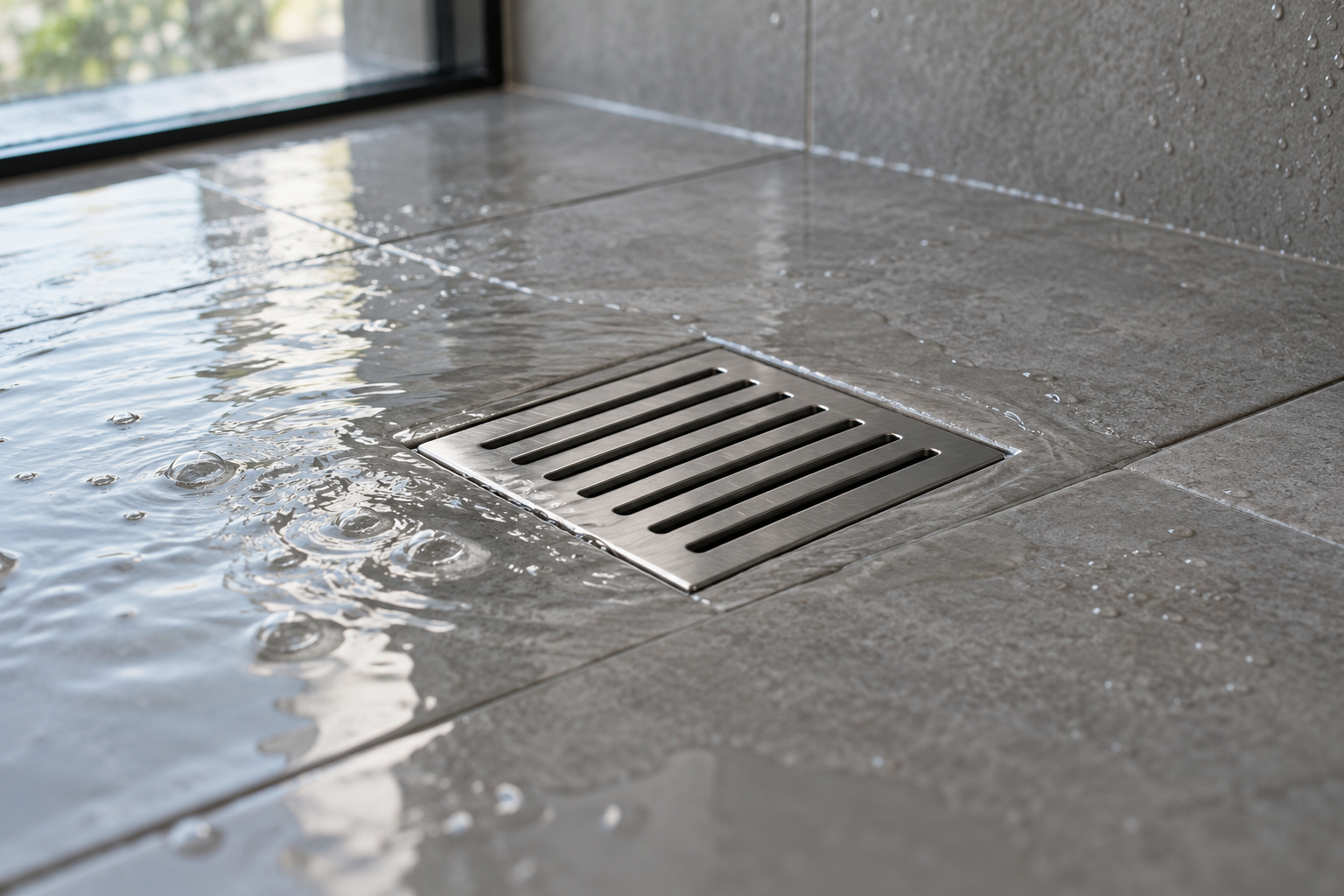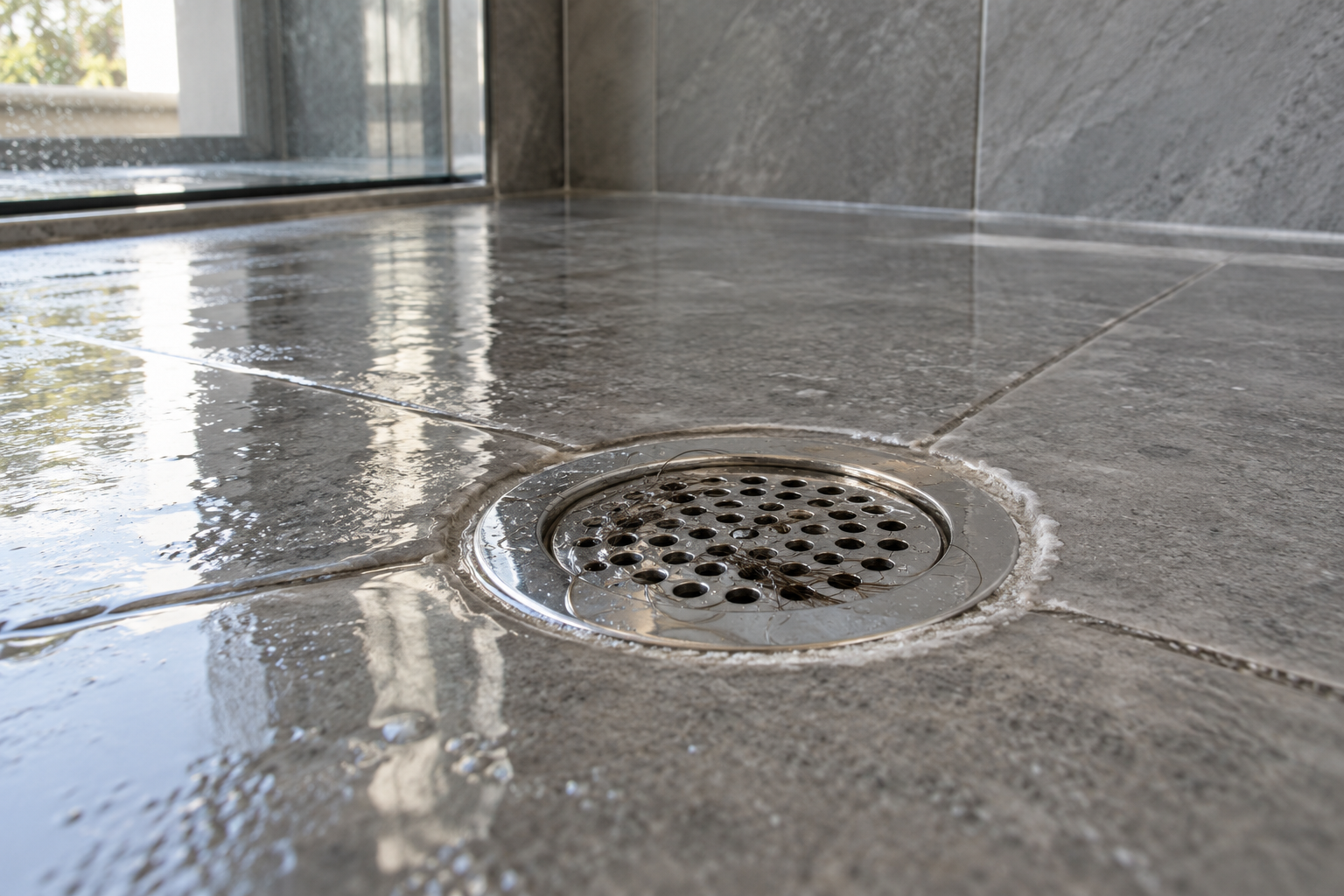
> San Antonio Local Insight: Drain and sink clogs in San Antonio are different from other cities. Edwards Aquifer hard water (357 mg/L) deposits white calcium scale inside pipes that traps hair, grease, and soap more aggressively. Standard drain cleaners often fail because they dissolve organic matter but not mineral buildup. local homes need descaling-specific methods.
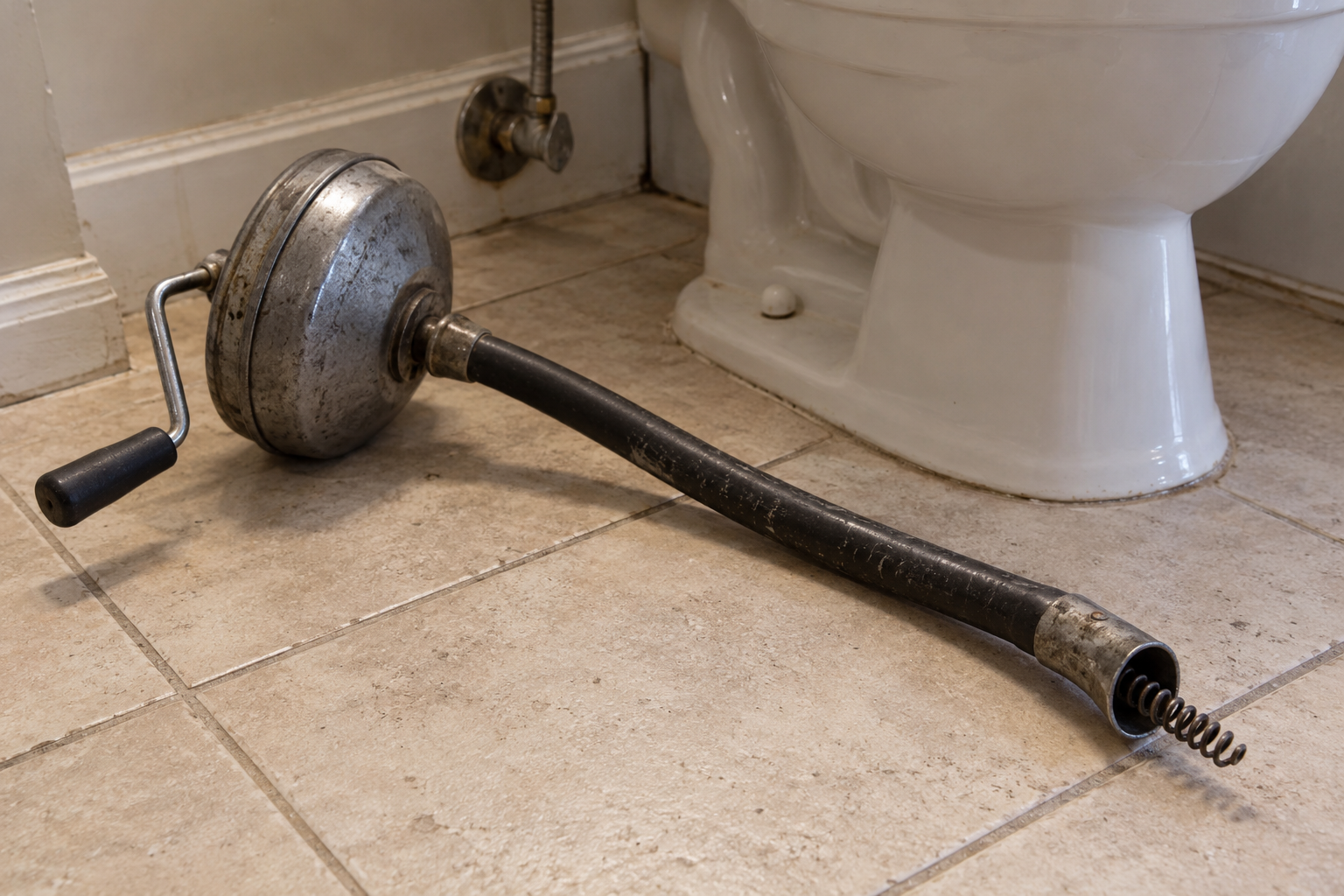
Yes—a toilet auger can clear many toilet clogs. A bare sink or drum snake should not be the first choice because exposed cable can scratch porcelain, snag in the trapway, or damage the wax seal if the operator forces it. The right tool has a protective guide tube and a short cable designed for the toilet's curves.
In Westover Hills and Alamo Ranch, even newer fixtures contend with Edwards Aquifer water near 357 mg/L, or 21 gpg. Mineral deposits can narrow rim jets and make a weak flush look like a drain obstruction. Before augering, check the tank water level and compare the bowl's flush with a bucket test; that separates a true trapway clog from poor water delivery.
A quality hand auger usually costs $40–$80. Professional toilet clearing commonly runs $150–$300, while pulling and resetting the fixture or replacing it can reach $300–$800. The safe goal is one controlled clearing attempt—not proving how much force the porcelain can take.
What a Toilet Snake Can—and Cannot—Clear
A toilet auger works best on a localized obstruction in the toilet’s built-in trap or immediately beyond it. Its rotating cable can break through a compacted mass of toilet paper and waste, loosen some soft material, or hook a small obstruction close enough to retrieve. Most homeowner augers have limited cable length, which is useful for control but means they cannot reach a distant branch drain or sewer line.
The tool is less reliable on wipes, menstrual products, paper towels, cloth, toys, air freshener holders, and other objects that do not readily break apart. It also cannot repair a collapsed pipe, remove tree roots, correct inadequate drain slope, or solve a full septic tank. If several drains are slow, sewage appears in a tub or shower, or flushing one fixture affects another, treat the symptom as a larger drainage problem rather than repeatedly snaking the toilet.
Choose a Toilet Auger, Not a Bare Drain Cable
A closet auger normally has a vinyl- or rubber-sleeved guide tube, a crank, and a cable sized to navigate a toilet trap. The guide tube protects the visible porcelain while the handle lets you apply controlled rotation. A three- to six-foot model is adequate for many fixture-level clogs. Longer professional versions provide more reach but also require more care to avoid cable kinks.
Avoid feeding a bare metal drum snake across the bowl unless its manufacturer specifically rates it for toilets and provides a bowl guard. Exposed cable can leave permanent gray scratches, chip glaze, loop inside the trap, or bind around an object. Do not substitute a coat hanger; it has little ability to follow the trap and can score the bowl. Chemical drain cleaner is also a poor companion to mechanical clearing because splashes can cause burns and some products can damage components.
Check the Toilet Before You Start
First, prevent an overflow. If the water is rising, remove the tank lid and press the flapper closed, then turn the shutoff valve clockwise without forcing it. Do not flush again as a test. Give the bowl time to drain, or remove excess water with a disposable cup and bucket until there is enough room to work without splashing. Protect the floor with old towels and keep children and pets away from the work area.
Ask what went down the toilet. A known toy, cap, or toiletry container changes the strategy: pushing it deeper may turn an easy retrieval into a pipe excavation. Look for warning signs elsewhere. A nearby clogged sink drain, a gurgling tub, or wastewater rising from a low drain suggests the restriction may not be in the toilet. If the bowl is full of sewage or chemical cleaner, wear splash protection and chemical-resistant gloves and consider stopping rather than exposing yourself.
Try a Plunger Before the Auger
Use a toilet plunger with a fold-out flange, not a flat sink plunger. The bowl needs enough water to cover the rubber cup. Seat the flange in the outlet, begin with a gentle push to release trapped air, and then use several controlled push-pull strokes while maintaining the seal. Pulling can be as important as pushing because it moves the obstruction in both directions.
After several rounds, wait for the water level to settle. If it drains, pour a modest bucket of plain water into the bowl to confirm flow before flushing. Do not dump a full bucket quickly, since a partial clog can still overflow. If the level remains high or falls extremely slowly, the auger is the logical next tool. Repeated violent plunging is unlikely to help and can splash contaminated water or stress a weak wax seal.
How to Snake the Toilet Step by Step
Retract the cable so its head sits at the end of the guide tube. Place the curved tube into the bowl outlet with the protective sleeve touching the porcelain. Hold the tube steady, then crank in the direction specified by the tool while applying light forward pressure. Rotation helps the head negotiate the toilet’s tight bends; force alone encourages kinking.
When you feel resistance, stop advancing and crank slowly. The cable may be meeting the normal bend rather than the clog, so alternate small forward and backward movements. If resistance changes and the cable advances, continue carefully. If the head appears to hook something, withdraw it while rotating and inspect what comes out. Never use a drill on a hand auger unless the tool is explicitly designed for powered operation.
Retract the cable into the tube before lifting the tool out so dirty metal does not drag over the rim. Set the auger in a bucket. Add water to the bowl gradually; if it drains normally, restore the shutoff valve and make one supervised test flush. Watch the toilet base and nearby fixtures for leaks or backup.
Quick Reference: What the Resistance May Mean
| What you notice | Likely explanation | Safest next move |
|---|---|---|
| Cable advances after gentle cranking | Normal trap bend or soft clog | Continue slowly, then test with water |
| Springy resistance that returns | Compressed paper or soft material | Work in short rotations; do not ram |
| Hard stop at the same depth | Solid object or damaged fitting | Withdraw and consider toilet removal or a plumber |
| Cable will not retract | Cable kinked or hooked | Stop pulling hard; reverse gently and call for help if needed |
| Toilet clears, then clogs again | Object remains or downstream restriction | Avoid repeated flushing and diagnose farther downstream |
| Other fixtures gurgle or back up | Branch or main drain obstruction | Stop fixture-level work and call a drain professional |
Feel is not a precise diagnosis. An auger can seem to pass through a clog while leaving wipes or an object in place. A successful result means the bowl accepts water quickly, flushes normally, refills to its usual level, and does not disturb another fixture. Anything less is a reason to continue diagnosis rather than assume the line is clear.
Mistakes That Damage Toilets or Make Clogs Worse
The most common mistake is pushing aggressively. A cable forced against a hard object can wedge it beyond the toilet, kink inside the trap, or damage an older fixture. Another is repeatedly flushing a clogged bowl. Each flush adds more water and can send contaminated overflow beneath flooring, where moisture may remain hidden. Never reach into the trap with an unprotected hand; broken glass or sharp plastic may be present.
Do not mix cleaning chemicals, and do not snake through a bowl containing chemical drain opener. Even if the product has not worked, it remains capable of splashing onto skin and eyes. Avoid boiling water, which can cause thermal shock in porcelain and may soften a wax seal. If you used any chemical, tell the plumber exactly what it was. The same caution applies when moving from a toilet issue to a broader clogged drain pipe: use the access point and equipment intended for that pipe.
When Removing the Toilet May Be Necessary
If a solid object is lodged in the trap, removing the toilet may provide access from the outlet side and prevent the object from being driven farther into the drain. This job requires shutting off and disconnecting the supply, emptying the fixture, breaking the base seal, lifting a heavy and awkward object, and installing a new wax or wax-free seal. Two people may be safer for lifting, especially with a one-piece toilet.
Removal is not a casual next step when the shutoff leaks, the floor feels soft, the flange is corroded, or the toilet is caulked and difficult to free. A poor reset can create a slow leak that damages the subfloor. If you do proceed, never reuse a compressed wax ring, keep the open drain temporarily covered without dropping material into it, and do not overtighten the closet bolts; porcelain can crack suddenly.
When to Stop DIY and Call a Plumber
Call a plumber or drain specialist when the auger meets an immovable stop, the cable becomes trapped, the same clog returns, or a known solid object is involved. Professional retrieval tools and cameras can locate an obstruction without relying solely on cable feel. Prompt help is also sensible if sewage has overflowed into porous flooring or wall cavities, since cleanup and moisture damage can extend beyond clearing the line.
Stop using water when multiple fixtures back up, a lower-level drain receives sewage, or there is a sewer odor with an unexplained loss of water from traps. Those signs may indicate a branch, main sewer, vent, or septic issue. Keep electrical cords and powered tools away from wet floors, and do not open a sewer cleanout under pressure unless you understand the release risk. The cost of a service visit is usually smaller than the cost of a flooded room or broken fixture.
Frequently Asked Questions
Can I use a regular sink snake in a toilet?
It may physically enter the bowl, but it is not the best choice. An exposed cable can scratch porcelain and is more likely to kink in the toilet’s tight trap. A closet auger provides a protective guide and better control.
How far should a toilet auger go?
Feed only the available cable length and stop if moderate pressure cannot move it. A homeowner auger is meant for the fixture trap and nearby drain, not a distant main line. Never add leverage to force more cable.
Will a snake clear flushable wipes?
It may pierce or move a small mass, but wipes do not break down like toilet paper and can remain in the pipe. A recurring clog after apparent clearing warrants professional removal and downstream inspection.
Can I snake a toilet after using drain cleaner?
Do not do so while corrosive cleaner remains in the bowl. Mechanical action can splash it. Follow the product’s emergency guidance, ventilate the room, use appropriate protection, and tell any plumber what was added.
Why does the toilet still drain slowly after snaking?
The obstruction may be only partly opened, farther downstream, or caused by an object the cable passed around. Mineral buildup, a poorly vented drain, or a low-flow flush issue can also mimic a clog. Test cautiously and seek diagnosis if the symptom persists.
A drain snake can unclog a toilet when the blockage is local and the tool is a proper toilet auger. The safest approach is progressive: prevent overflow, inspect other fixtures, plunge first, auger with gentle rotation, and verify with controlled water. When the evidence points beyond the fixture—or the cable and clog stop behaving predictably—stop before a simple blockage becomes a damaged pipe or contaminated room.
This pattern is common in San Antonio homes, but the repair still must match the pipe and fixture in front of you.
Why This Is Different in San Antonio
Edwards Aquifer hardness can coat rim jets and the siphon opening, reducing flush energy even when the trapway is clear. That is why Westover Hills and Alamo Ranch homeowners should perform the bucket test before forcing a cable. If a bucket produces a strong flush but the tank does not, service the fill level or mineral-clogged jets instead.
SAWS conservation fixtures also use less water than older toilets, so the bowl and tank components must match the manufacturer's design. Do not raise the water above the marked line. After a freeze such as Winter Storm Uri, inspect the supply stop and connector for damage before leaning over the fixture.
What San Antonio Homeowners Pay (2026)
| Toilet work | Typical homeowner range |
|---|---|
| Homeowner-grade closet auger | $40–$80 |
| Professional toilet clearing | $150–$300 |
| Pull and reset toilet | $250–$500 |
| Replacement toilet, installed | $300–$800 |
A lodged object, damaged flange, after-hours visit, or inaccessible shutoff can increase the quote. Ask whether removal is necessary and whether the wax ring and closet bolts are included.
When to Call a San Antonio Plumber
Stop if the auger cannot pass the first bend, the porcelain cracks, water leaks at the base, or other drains react when the toilet flushes. Call immediately when sewage rises in a tub or shower; that suggests a shared branch or main-line blockage.
A licensed Bexar County plumber can pull the bowl without damaging the flange, retrieve toys or wipes from below, and inspect the line if the obstruction keeps returning. Never use a powered cable through the bowl unless you are trained and have the correct protective guide.
San Antonio FAQ
Can mineral scale clog the toilet trapway?
It can narrow jets and roughen passages, but sudden clogs are more often paper, wipes, or objects. Diagnose flush strength before assuming the trapway needs snaking.
Can I auger after using chemical cleaner?
No. The cable can splash caustic liquid. Tell the plumber what product entered the bowl and when.
Should I replace a toilet that clogs repeatedly?
Not until the branch drain and flush components are checked. Replacement helps a poorly performing fixture, but it will not fix roots or a downstream restriction.