> San Antonio Local Insight: Drain and sink clogs in San Antonio are different from other cities. Edwards Aquifer hard water (357 mg/L) deposits white calcium scale inside pipes that traps hair, grease, and soap more aggressively. Standard drain cleaners often fail because they dissolve organic matter but not mineral buildup. local homes need descaling-specific methods.
A shower drain that gurgles when the toilet flushes is an air-pressure warning. The toilet's discharge is pulling or pushing air through the shower trap because a shared branch is restricted, a vent cannot breathe, or the building drain is beginning to back up. It is not normally a loose shower strainer.
That warning deserves extra attention in the Medical Center area, where 1970s and 1980s houses may combine aging cast iron with later PVC remodel work. Edwards Aquifer water at about 357 mg/L, or 21 gpg, does not by itself block a vent, but scale roughens drain walls and helps soap and waste collect at already narrow points.
Start with observation, not chemicals. A local drain cleaning commonly costs $150–$350; a camera inspection is often $200–$400. Spending that money early is sensible when more than one fixture reacts, because a main-line stoppage can create a sewage cleanup that costs far more.
Why one fixture can make another fixture gurgle
Your toilet and shower may look separate, but their drain pipes often join a larger branch line before reaching the building sewer. Every flush sends a fast-moving volume of water into that system. Air has to enter behind the water and leave ahead of it. The plumbing vent, which usually exits through the roof, provides that pressure balance. Water held in the shower's P-trap blocks sewer gases from entering the room.
If a restriction narrows the shared pipe, the flush can push and pull air through the easiest available opening. That opening may be the shower drain. Bubbles passing through the trap create the gurgling sound, and a strong pressure change may disturb some of the trap water. One quiet gurgle is not proof of a collapsed sewer, but repeated noise tied to every flush is not normal. It indicates that the drain-and-vent system needs attention before the restriction becomes complete.
What to check before reaching for tools
Start by watching how the fixtures behave without repeatedly adding water. Does the toilet bowl rise unusually high before falling? Does the shower drain slowly during normal use? Do nearby sinks bubble, or does a basement floor drain show moisture? A problem limited to one shower may be close to that fixture. Gurgling in several rooms, especially on the lowest level, points more strongly to a main drain or building sewer restriction.
Use the quick-reference table to sort the symptoms. These are clues, not a substitute for a camera inspection or pressure testing. If wastewater appears, stop the checks. Do not touch it without suitable protective equipment, and do not run a wet/dry vacuum that is not specifically rated and handled for contaminated water. Keep electrical cords, fans, heaters, and other powered equipment away from wet floors.
| What you notice | More likely explanation | Safest next move |
|---|---|---|
| Shower gurgles only when the nearby toilet flushes | Partial blockage in a shared branch or local vent issue | Limit water use and try basic fixture-level checks |
| Shower drains slowly even without a toilet flush | Hair and soap buildup near the shower, possibly combined with a deeper clog | Remove an accessible strainer clog; reassess before using chemicals |
| Several drains gurgle or run slowly | Main drain or sewer-line restriction | Stop heavy water use and arrange professional diagnosis |
| Dirty water rises in the shower after flushing | Active sewage backup downstream of both fixtures | Stop using plumbing and call a plumber promptly |
| Gurgling follows heavy rain and affects a low drain | Overloaded sewer, root intrusion, or damaged private lateral may be involved | Document timing and contact a plumber; follow local utility guidance |
The most likely causes, from local to serious
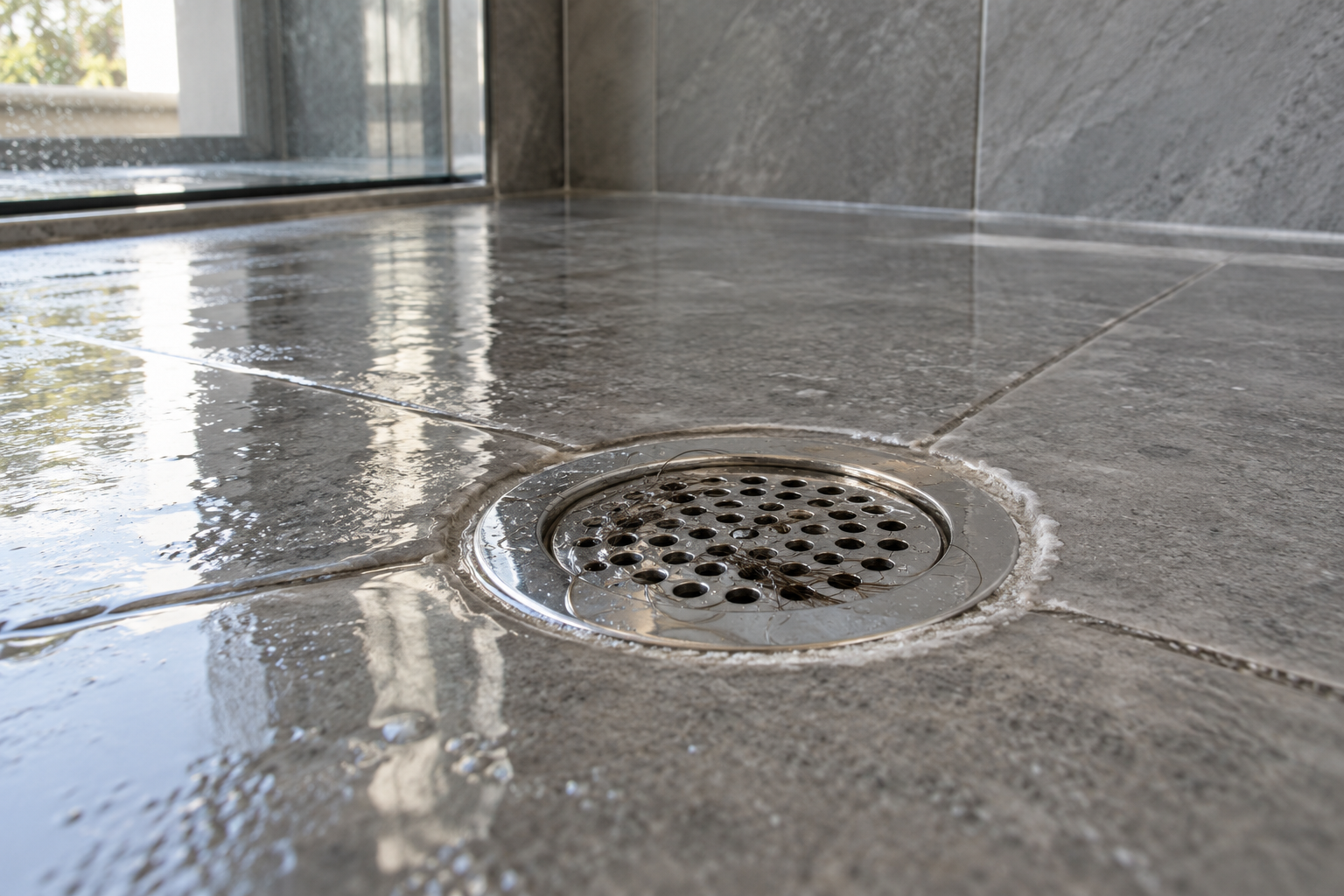
A local shower clog is the easiest possibility to inspect. Hair, soap residue, and mineral deposits can narrow the trap or the short run behind it. On its own, that usually makes the shower slow rather than causing a toilet-triggered gurgle. Still, a local restriction can make pressure noise more noticeable. If the strainer holds visible debris or the shower pools during use, follow a safe best way to unclog shower drain before assuming the sewer line has failed.
A partial blockage farther downstream is often a better match when flushing the toilet triggers the noise. Toilet paper, wipes labeled "flushable," hygiene products, grease entering through a connected kitchen branch, or accumulated scale can reduce the open area inside a shared pipe. The line may pass some water while trapping air. That is why the system can gurgle for days before it backs up. A clogged drain pipe also tends to produce changing symptoms as material shifts inside the pipe.
The vent system is another possibility. Leaves, nesting material, ice in cold climates, or a poor vent installation can restrict airflow. Less commonly, old cast-iron piping may be heavily scaled, roots may have entered a sewer lateral, or a pipe may have sagged or broken. Those conditions cannot be identified from the sound alone. A drain camera, cleanout inspection, and an assessment of which fixtures share the affected line are more useful than guessing based on one symptom.
Safe steps you can take at home
First, remove the shower strainer if it is designed to come off without damaging the finish. Pull out visible hair and soap buildup with a plastic drain tool, then clean and reinstall the strainer. Wear gloves and avoid forcing a tool past a bend you cannot see. If the shower was draining slowly, test it with a modest amount of water. Do not flush the toilet repeatedly during the test, and stop immediately if water rises in the shower.
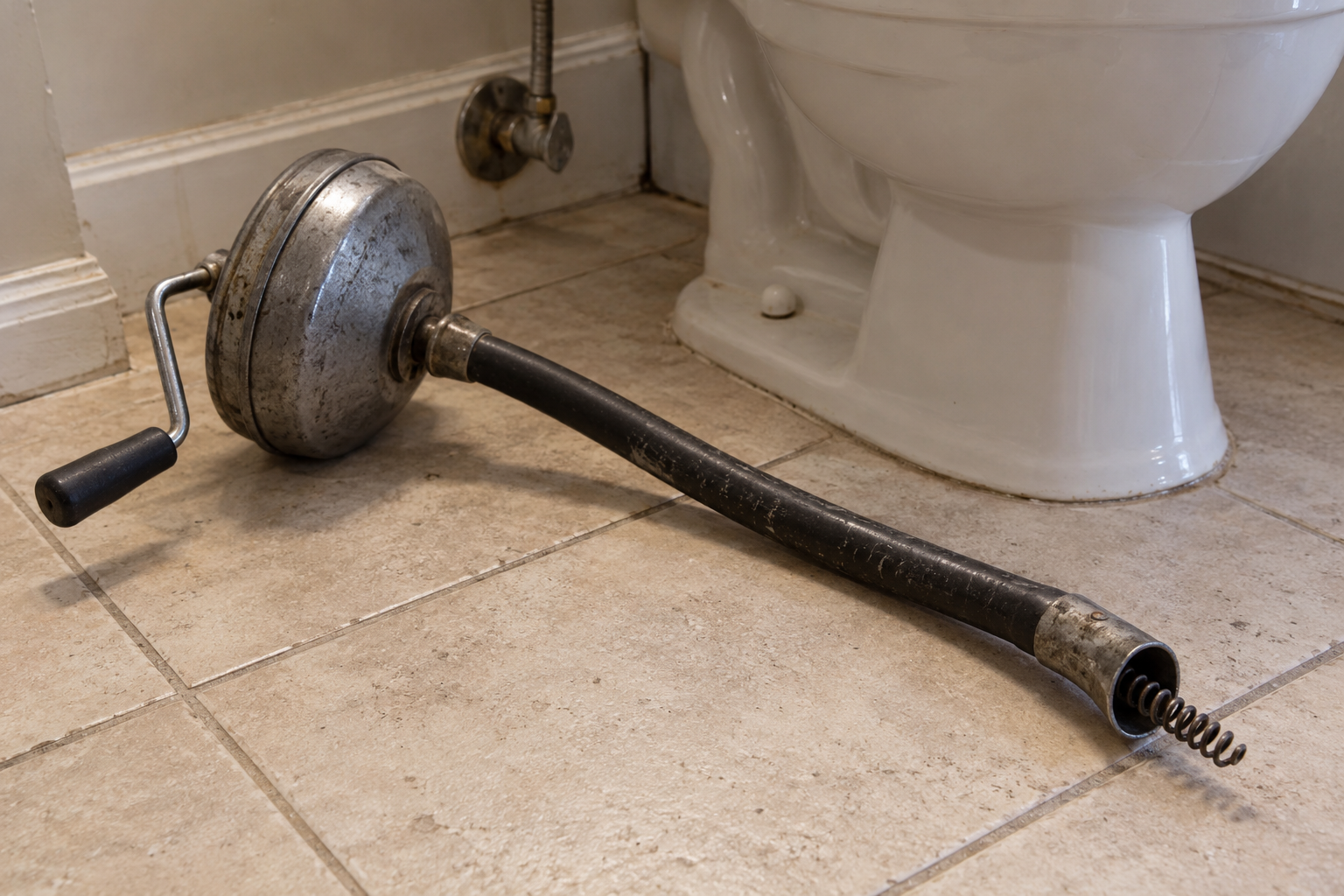
Second, use a toilet plunger only if the toilet itself appears sluggish and there is no sewage already backing into another fixture. A flange-style plunger can seal the toilet outlet better than a flat sink plunger. Use controlled strokes so dirty water does not splash. If plunging makes the shower bubble, brings water into the shower, or fails after several attempts, stop. The blockage may be beyond the toilet trap, where a closet auger or drain-machine cable should be selected and operated by someone who understands the pipe layout.
Third, check accessible cleanouts and vent-related clues without opening a pressurized or wastewater-filled system. A securely capped cleanout that is wet around the threads can suggest a backed-up line, but loosening it may release sewage. Leave it closed unless a qualified person can control the spill. Do not climb onto a roof to inspect a vent unless you have proper access, fall protection, and suitable conditions. For most homeowners, observing the vent outlet from the ground and reporting possible debris to a plumber is the safer choice.
Drain-cleaning mistakes that can make the problem worse
Avoid pouring one chemical drain cleaner after another into the shower. A caustic or acidic product may sit in the trap, damage some finishes or older piping, and expose the next person who opens the drain or uses a cable. Never mix drain cleaner with bleach, ammonia, vinegar, or another cleaner. The reaction can produce heat, splashing, or toxic gas. If any chemical has already been used, tell the plumber exactly what it was and when it went into the drain.
Do not assume that louder gurgling means you should run more water to push the clog through. A partially open line can become fully blocked under the volume from a bath, laundry cycle, or repeated flushes. Avoid improvising with compressed air, pressure bladders, or an oversized power auger. Pressure can separate weak joints, while a cable can scratch fixtures, become trapped, or damage a corroded pipe. Also skip the temptation to open an outdoor cleanout casually; a backed-up system may be holding a column of wastewater behind the cap.
How a plumber narrows down the source
A useful service call starts with fixture mapping. The plumber will ask which drains make noise, which floor they are on, whether the problem changes during rain, and whether the property has a septic system. They may test fixtures in a controlled order, inspect an accessible cleanout, or run a camera through the drain. Smoke testing or a focused vent inspection may be appropriate when the drainage path is open but airflow still appears restricted.
The repair and cost depend on access and cause, so a quote for "a gurgle" without diagnosis is not very meaningful. Clearing a reachable branch clog is usually a smaller job than removing roots, repairing a buried sewer lateral, replacing scaled cast iron, or correcting an undersized vent. Ask what the quoted work includes: cable cleaning or hydro jetting, camera footage, cleanout access, cleanup, and any warranty. If excavation or pipe replacement is proposed, ask to see the camera evidence and the marked location of the defect before approving major work.
When to stop DIY and call a plumber
Call promptly if flushing sends water or waste into the shower, more than one drain is slow, the lowest drain in the house is wet, or you hear gurgling throughout the building. The same applies when the problem returns soon after basic cleaning. Homes with septic systems need extra caution: a full tank, blocked outlet, saturated drain field, or pump failure can mimic an indoor drain clog. Reduce water use and contact a septic professional rather than opening the tank yourself. Septic tanks can contain lethal gases and unsafe openings.
Treat strong odors carefully. Sewer gas can enter if trap water is siphoned or a seal has failed, and prolonged exposure is not something to ignore. Ventilate the room if it is safe, avoid flames and sparks, and leave if anyone feels dizzy, nauseated, or develops a headache. If the odor could be fuel gas rather than a drain smell, leave the building without operating switches and contact the gas utility or emergency service from outside. Standing water near outlets, powered pumps, or appliances also creates an electrical risk; keep out of the area and have the power made safe by a qualified person.
What happens if you ignore the gurgling
A recurring gurgle can remain an annoyance for a while, but the underlying restriction usually does not improve by itself. Debris catches more debris, roots continue growing, and pipe scale reduces the passage available for both water and air. The next high-volume event, such as a washing machine discharge or several toilet flushes close together, may push the system from slow drainage into a backup. Because the shower is low, it can become the first place contaminated water appears.
Waiting can also hide damage. Water escaping from a loose joint may wet framing or a ceiling without showing immediately, while repeated trap siphoning can allow sewer odors indoors. Early diagnosis gives you more control over scheduling and repair options. It may also separate a routine cleaning job from an emergency visit with sanitation cleanup. Document when the sound happens, which fixtures were operating, and whether weather affects it. That short record can save diagnostic time without requiring you to dismantle anything.
How to reduce the chance of another blockage
Keep hair out of the shower drain with a removable strainer that you can clean regularly. Put only human waste and ordinary toilet paper in the toilet; wipes, cotton products, floss, and hygiene items belong in the trash even when packaging suggests they can be flushed. Keep cooking grease out of sinks because connected branches eventually feed the same drainage system. If another fixture begins slowing, deal with it before several drains are affected. A clogged sink drain can provide an early clue about a shared branch.
Older homes or properties with mature trees may benefit from a camera inspection when symptoms recur, but routine aggressive jetting is not automatically right for every pipe. Fragile, badly corroded, or poorly supported lines need an assessment first. After a repair, ask the plumber what was removed or found, where the affected section sits, and whether the camera showed cracks, roots, scale, or a sag. That information helps you choose sensible maintenance instead of paying for the same generic treatment every year.
FAQ about a shower drain that gurgles after flushing
The answers below cover the questions homeowners most often need resolved before deciding whether to keep troubleshooting. A sound by itself cannot identify the exact defect, so weigh it together with drainage speed, odors, water movement, and how many fixtures are involved.
| Reader question | Practical answer |
|---|---|
| Can a clogged toilet make the shower gurgle? | Yes. If the restriction is in the toilet trap or a shared branch, flushing can displace air through the shower trap. If plunging the toilet makes water rise in the shower, stop and arrange drain service. |
| Does gurgling always mean the plumbing vent is blocked? | No. A blocked vent is possible, but a partial drain or sewer clog can create the same pressure symptoms. The pattern across multiple fixtures helps a plumber distinguish them. |
| Can I still use the shower if it only gurgles once? | Check whether it drains normally and whether any other fixture is slow. One brief sound may not be an emergency, but repeated gurgling warrants limited water use and investigation. Do not use it if wastewater has appeared. |
| Will baking soda and vinegar fix the problem? | They may loosen light residue near a fixture, but they will not remove roots, repair a broken pipe, or reliably clear a deep shared-line blockage. They also should never be combined with commercial drain chemicals. |
| Why does the problem seem worse after heavy rain? | Rain can expose an already compromised sewer lateral, overwhelm some municipal systems, or saturate a septic drain field. Record the timing and seek professional diagnosis, especially if a low-level drain backs up. |
A dry shower trap may gurgle differently and may also allow odor into a rarely used bathroom. If the drain has not been used for weeks, adding water can restore the trap seal, but that does not explain dirty water, widespread slow drains, or a noise that reliably follows every toilet flush. Those symptoms still call for investigation of the shared drainage and vent system.
This pattern is common in San Antonio homes, but the repair still must match the pipe and fixture in front of you.
Why This Is Different in San Antonio
Hard water does not directly cause every gurgle, but 21 gpg mineral content can accelerate buildup on already rough cast iron. In Medical Center area homes with mixed-age plumbing, the restriction may sit where a remodel branch joins the original line. SAWS water data explains scale; it does not rule out roots, a belly, or a blocked roof vent.
Season matters too. Summer guest loads can reveal a marginal branch, while freeze repairs after Winter Storm Uri may have changed vent or drain connections. Map which fixtures react before opening anything: that evidence tells a plumber far more than pouring cleaner down the shower.
What San Antonio Homeowners Pay (2026)
| Diagnostic or repair step | Typical homeowner range |
|---|---|
| Branch drain cleaning | $150–$350 |
| Sewer camera inspection | $200–$400 |
| Roof-vent diagnosis/clearing | $200–$600 |
| Main-line jetting, if appropriate | $350–$900 |
Roof pitch, cleanout access, pipe material, and after-hours timing affect the quote. Camera work should follow basic fixture tests so you do not pay to inspect the wrong branch.
When to Call a San Antonio Plumber
Call promptly when flushing makes water rise in the shower, more than one bathroom is affected, sewage odor persists, or the lowest fixture backs up. Those signs move the problem beyond a safe homeowner auger job. Do not climb onto a steep roof to inspect a vent, and never mix drain chemicals.
A licensed Bexar County plumber should test the nearest fixtures, locate the cleanout, clear the line with equipment suited to its material, and show camera evidence before proposing excavation.
San Antonio FAQ
Can a clogged vent make only one shower gurgle?
Yes, but a partial shared-drain restriction is at least as plausible. The pattern of affected fixtures and whether water levels move helps separate them.
Why does the shower smell after the toilet flushes?
Pressure changes may be disturbing the trap seal. Keep water in the trap and arrange diagnosis if the odor returns; sewer gas should not be ignored.
Is hard water the whole cause?
No. Scale can worsen a restriction, but wipes, roots, pipe settlement, and vent blockage require different repairs.