> San Antonio Local Insight: Pipe problems in San Antonio are driven by hard water corrosion from the Edwards Aquifer (357 mg/L). High calcium content eats through copper from inside, causes pinhole leaks, and builds deposits that restrict flow. local plumbers increasingly recommend PEX over copper for repiping because it resists mineral corrosion.
For a San Antonio home in the Medical Center area, inspect valves and transitions before covering the pipe. A small professional insulation job may run $250–$800; rerouting a repeatedly frozen line can start around $800.
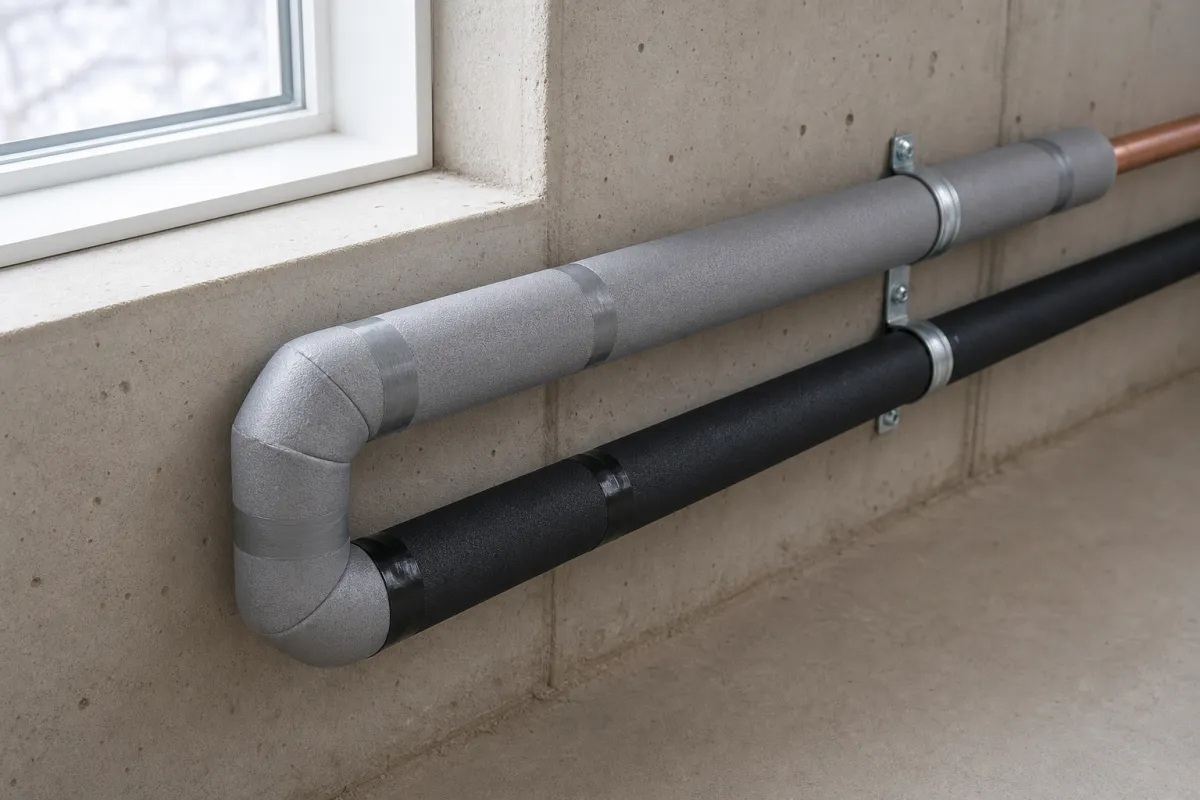
The best pipe insulation to prevent freezing is usually a correctly sized, closed-cell foam or rubber sleeve installed continuously on a pipe that has first been protected from cold air leaks. Fiberglass wrap can work well on hot pipes and in larger, dry spaces, while listed heat cable may add active protection in specific exposed locations. No insulation makes a pipe freeze-proof: it only slows heat loss.
Choose by pipe diameter, location, moisture exposure, temperature rating, and local code—not by thickness alone. A pipe in a windy crawlspace can freeze despite a thick sleeve, while a modestly insulated pipe inside the thermal envelope may remain safe. Fix the building conditions, then add the insulation.
Start With the Pipe's Location and Risk
Walk the route before buying material. Supply lines near rim joists, exterior walls, vented crawlspaces, attics, garages, and outdoor hose connections face the greatest risk. Note where a line crosses from heated to unheated space, touches cold masonry, or sits beside a vent. A short exposed elbow or valve can undermine an otherwise insulated run.
Look for air movement with your hand on a cold, windy day, without reaching into unsafe electrical or mechanical areas. Gaps around utility penetrations, loose crawlspace doors, missing weatherstripping, and displaced wall insulation often explain repeat freezes. Air sealing should use products suitable for the substrate and required fire rating. Never block combustion air, furnace clearances, drainage paths, or required foundation ventilation without professional guidance.
Closed-Cell Foam Sleeves: The Useful Default
Pre-slit polyethylene or elastomeric foam sleeves are accessible, clean, and easy to fit on straight runs. Closed-cell products resist moisture better than open, absorbent materials, an advantage on cold-water lines where condensation can occur. The inside diameter should match the pipe's outside diameter so the insulation closes without a large gap or excessive compression.
Foam quality and temperature ratings vary. Basic polyethylene may be economical for interior cold-water lines, while elastomeric rubber is generally more flexible around bends and performs well where condensation control matters. Check whether the product is approved for the service temperature, pipe material, indoor-air requirements, and exposed location. Seal longitudinal seams and butt joints with the system's compatible adhesive or tape rather than ordinary household tape that may loosen.
Fiberglass Pipe Wrap and Tubular Sections
Fiberglass offers good thermal resistance and is often used around hot-water or heating pipes. Preformed fiberglass sections with an all-service jacket can produce neat, durable coverage on accessible straight runs when installed correctly. Wrap products are more adaptable around irregular shapes, but inconsistent overlap can create thin spots. Fibers and jacket seams must stay dry because wet insulation performs poorly and can hide corrosion or leaks.
Wear the protective equipment recommended by the manufacturer, avoid compressing the fibers, and keep the jacket continuous. Fiberglass is not the best first choice in a damp crawlspace without a robust vapor-retarding jacket. It also should not be placed against flues, recessed fixtures, or other heat sources unless the complete assembly is approved for that clearance. Follow appliance and building-code requirements rather than improvising.
Rubber Insulation for Damp or Irregular Areas
Flexible elastomeric rubber insulation is a strong option for condensation-prone cold lines, refrigerant-style applications where approved, and runs with many bends. Its closed-cell structure and flexible seams can form a continuous vapor-resistant layer. It is typically more expensive than basic foam, but the easier fit around fittings may reduce gaps that compromise performance.
Use compatible adhesive at seams, and fit elbows with manufactured pieces or carefully cut segments. Do not stretch insulation so tightly that it thins at the outside of a bend. Outdoors, verify ultraviolet and weather resistance or add the specified protective jacket. Some products have use restrictions in plenums or other code-regulated spaces; the data sheet matters more than a generic material label.
Quick-Reference Buying Table
| Insulation type | Best suited to | Main advantage | Watch for |
|---|---|---|---|
| Polyethylene foam sleeve | Accessible interior cold and hot lines within its rating | Affordable and simple | Gaps at elbows, seams, and valves |
| Elastomeric rubber sleeve | Damp areas and condensation-prone lines | Flexible, closed-cell coverage | Higher cost; compatible adhesive needed |
| Jacketed fiberglass section | Dry, straight hot-water runs and larger pipe | Good thermal performance | Moisture, fiber compression, open jacket seams |
| Fiberglass wrap | Irregular dry shapes where approved | Adaptable | Uneven thickness and exposed fibers |
| Listed heat cable plus insulation | Specific high-risk accessible runs | Adds controlled heat | Compatibility, electrical safety, inspections |
Compare products using declared thermal performance, wall thickness, service-temperature range, flame/smoke classification where relevant, and installation instructions. A thicker product can help, but only if it fits the available cavity without being crushed and remains continuous around the pipe.
How Much Thickness Is Enough?
There is no single thickness that guarantees freeze prevention. Climate, pipe size, water temperature, exposure time, air leakage, and surrounding heat all matter. Common residential sleeves come in several wall thicknesses; choosing the thicker compatible option can slow heat loss, but doubling insulation is not a substitute for moving the pipe or heating the space.
In a wall, preserve insulation between the pipe and exterior sheathing while allowing indoor warmth to reach the pipe. Packing batt insulation on the room side of plumbing can isolate it in a cold pocket. In a crawlspace, an energy or building professional may need to decide whether the floor or foundation walls form the thermal boundary. That broader decision affects moisture and mechanical systems as well as pipes.
Installing Pipe Sleeves Without Weak Spots
Turn off water if you will work around vulnerable valves or if the pipe shows corrosion or damage. Clean and dry the pipe, measure its outside diameter, and inspect for active leaks. Fit the sleeve over straight sections without crushing it. Close the slit fully, seal the seam as specified, and butt adjacent pieces together tightly. Stagger seams where the manufacturer recommends it.
Elbows, tees, hangers, valves, and wall penetrations need deliberate treatment. Use compatible formed fittings or mitered cuts, then seal every joint. Do not bury shutoffs that need access, cover safety labels, or force insulation against sharp hanger edges. Support the insulated pipe using saddles or methods that preserve thickness. After installation, photograph or map concealed shutoffs so they can be found later.
When Heat Cable Is Appropriate
A listed self-regulating cable can provide supplemental protection for a recurring cold spot when rerouting is impractical. The cable must be approved for the pipe material—especially plastic pipe—and for the exact indoor, outdoor, wet, or dry location. Install it only in the configuration shown by the manufacturer, with required ground-fault protection and thermostatic controls. Some systems go beneath insulation; others have specific spacing and maximum insulation limits.
Never overlap a cable unless its listing explicitly permits it, and never use an extension cord as permanent wiring. Do not install damaged cable, conceal an unapproved system inside a wall, or wrap generic resistance wire around plumbing. Keep combustible materials and pipe temperature limits in mind. If a new receptacle or circuit is needed, have a licensed electrician handle the electrical work.
Mistakes That Defeat Good Insulation
Leaving a one-inch gap at every coupling can erase much of the benefit of a continuous sleeve. Other common problems include buying the wrong internal diameter, compressing thick insulation into a narrow cavity, using absorbent wrap in a wet location, and closing a wall before checking for leaks. Outdoor foam can degrade quickly when it lacks the required weather jacket.
It is also a mistake to insulate over a known leak or corroded copper. Trapped moisture can conceal damage and stain surrounding materials. Do not place insulation over heat cable unless the cable instructions permit that material and thickness. Finally, avoid sealing crawlspaces or attics piecemeal; moisture, radon, combustion appliances, and ventilation rules make those building systems interdependent.
A Cold-Weather Protection Checklist
- Locate and test the main water shutoff without forcing a stuck valve.
- Disconnect hoses and winterize exterior faucets for their specific design.
- Seal safe air leaks before insulating pipes.
- Cover the full run, including elbows and fittings, while keeping valves accessible.
- Keep garage doors closed when plumbing passes through the garage.
- During severe cold, maintain dependable indoor heat and open sink cabinets on exterior walls.
- Move hazardous cleaners before opening cabinets around children or pets.
- If flow stops, open the faucet, prepare to shut off the main, and use gentle thawing only.
A dripping faucet may offer temporary help during exceptional cold, but it is not a permanent freeze-prevention system and can create drainage problems. Follow local utility guidance during emergencies and correct the exposure afterward.
When Rerouting or Professional Help Is Better
If a pipe freezes repeatedly, rerouting it through conditioned space often provides a more reliable solution than adding another layer of insulation. A plumber can assess whether the line can move inward, whether a manifold branch can be isolated, and whether previous freezes have damaged tubing or fittings. Concealed leaks, swollen copper, cracked valves, and inaccessible exterior-wall plumbing also warrant professional attention.
Call an electrician if heat cable requires new permanent wiring or if water has reached outlets, fixtures, panels, or appliances. Stop work and seek appropriate help for gas odor, sewage, structural damage, or major water intrusion. Never use a torch to thaw plumbing. Warm towels, a moderate hair dryer kept dry, or a listed thawing device are safer, but only where the pipe is accessible and not visibly ruptured.
Frequently Asked Questions
Is foam or fiberglass better for preventing frozen pipes?
Foam is often easier for residential cold-water lines and handles condensation well. Jacketed fiberglass can provide strong thermal performance in dry, accessible locations. Correct fit and continuous coverage matter more than the label alone.
Can pipes freeze even with insulation?
Yes. Insulation slows heat transfer but supplies no heat. Long cold exposure, drafts, or a heating failure can still freeze the water.
Should I insulate PEX?
Yes. PEX may tolerate some expansion better than rigid copper, but it and its fittings can still fail. Insulation and proper routing reduce the risk.
Can I put pipe insulation over heat tape?
Only if the heat-cable manufacturer explicitly allows the insulation type and thickness. An incompatible assembly can overheat or create a fire risk.
Does thicker insulation always work better?
Added thickness generally slows heat loss, but crushed, gapped, wet, or poorly located insulation may perform badly. Air sealing and keeping the pipe within conditioned space can be more important.
Why This Is Different in San Antonio
Pipe insulation is unusually important here because homes were not always detailed for prolonged hard freezes. Winter Storm Uri exposed short attic, garage, hose-bib, and exterior-wall runs that had been trouble-free for decades. The correct order is to repair leaks, stop cold-air movement, keep the pipe on the warm side of the envelope, and then add a continuous sleeve.
In the Medical Center area, 1970s and 1980s homes often combine original valves with later remodel plumbing. Inspect every transition before covering it. Edwards Aquifer water—about 357 mg/L, or 21 gpg—can leave shutoffs crusted and copper fittings stained; insulation must never hide an active leak or a valve that cannot operate.
SAWS severe-weather guidance can help with temporary precautions, but a permanent drip is not a winterization plan. For recurring trouble, reroute the line into conditioned space or use listed heat cable designed for the exact pipe and location.
What San Antonio Homeowners Pay (2026)
| Work | Typical 2026 range |
|---|---|
| DIY foam sleeves for a small accessible run | $25–$100 |
| Professional air sealing and pipe insulation | $250–$800 |
| Listed heat-cable installation | $300–$900 |
| Targeted plumbing reroute | $800–$2,500 |
| Emergency freeze repair | $250–$1,500+ |
Attic access, electrical work, wet insulation, wall repair, and concealed freeze damage change the total. Cheap sleeves with open seams are not a bargain if the vulnerable elbow remains exposed.
When to Call a San Antonio Plumber
Call a plumber if a line has frozen before, shows corrosion, runs through an inaccessible cavity, or needs rerouting. Call before insulating when the meter moves with fixtures off, a valve will not close, or stains suggest a concealed leak.
Use an electrician for any new heat-cable circuit or water near electrical equipment. Typical licensed plumbing labor is $85–$150 per hour in Bexar County. DIY is appropriate for measuring and fitting sleeves on sound, accessible pipe—not for concealing damage or improvising powered heat.
San Antonio FAQ
Is foam or fiberglass better for local homes?
Closed-cell foam or elastomeric sleeves are a practical default for accessible residential water lines. Jacketed fiberglass can work in dry, suitable locations.
Can an insulated pipe still freeze?
Yes. Insulation slows heat loss but creates no heat, so drafts and long outages can defeat it.
Should PEX be insulated too?
Yes. PEX may expand more than copper, but it and its fittings are not freeze-proof.
Is heat cable safe under insulation?
Only when the cable listing permits that pipe material, installation pattern, and insulation thickness. Follow the manufacturer exactly.