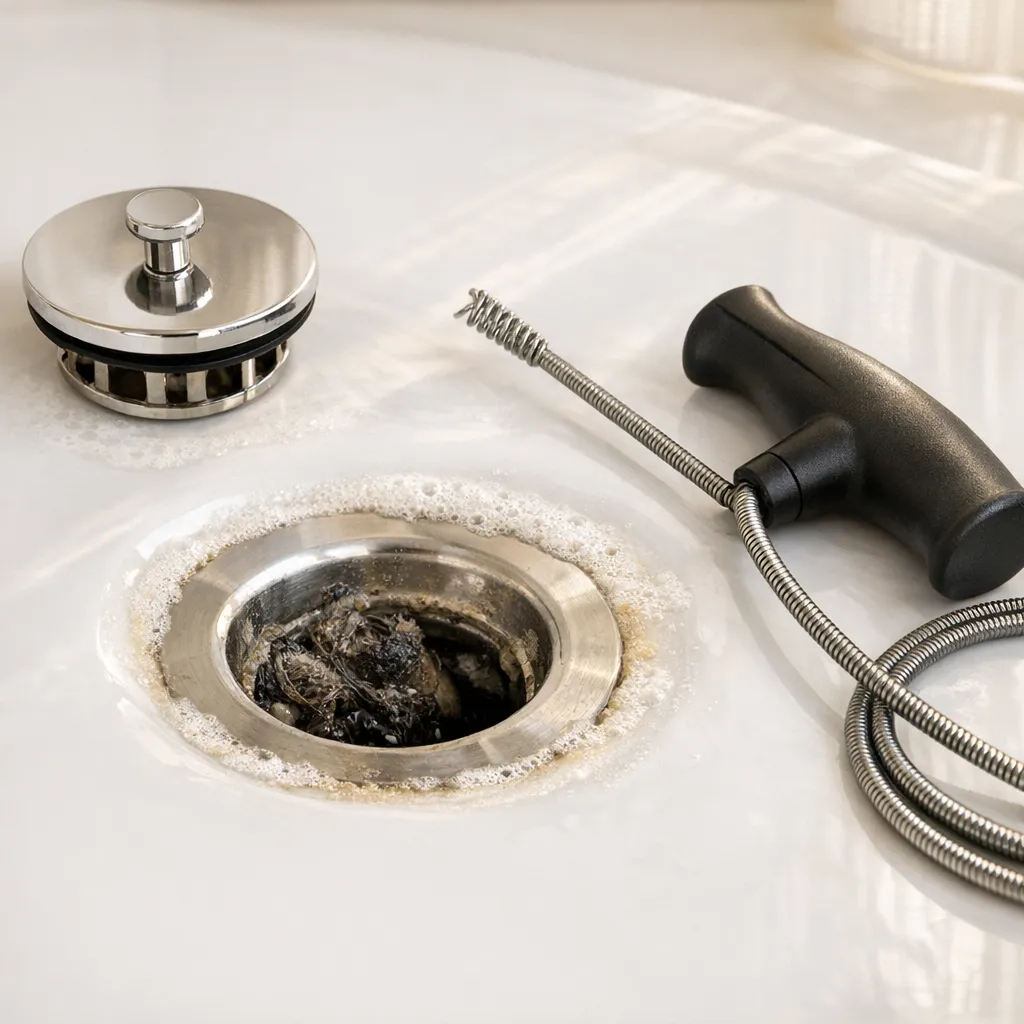
> San Antonio Local Insight: Drain and sink clogs in San Antonio are different from other cities. Edwards Aquifer hard water (357 mg/L) deposits white calcium scale inside pipes that traps hair, grease, and soap more aggressively. Standard drain cleaners often fail because they dissolve organic matter but not mineral buildup. local homes need descaling-specific methods.
Diagnose the Leak Before Buying a Sink Part
A sink is a group of systems—the faucet, supply tubes, shutoff stops, basin seal, drain flange, trap, and branch drain. Edwards Aquifer water at about 357 mg/L, or 21 gpg leaves scale on several of those joints, so the wet spot in the cabinet may be inches away from the actual failure. In Westover Hills and Alamo Ranch, newer PEX supply plumbing does not prevent mineral wear at the metal stops, faucet cartridges, and appliance connections.
Dry the cabinet, place paper towels under each connection, then run cold water, hot water, a full-basin drain test, and the disposal or dishwasher separately. That sequence costs nothing and gives a plumber useful evidence. A cartridge or supply tube may cost $15–$80; typical fixture labor is $150–$300, while a Bexar County emergency visit can start around $150–$350.
Do not force a crusted shutoff valve. If it will not close smoothly, shut water off at the house and call for help. Winter Storm Uri showed how brittle fittings can fail after unusual cold, and a small twist at an already weakened stop can turn a cabinet drip into a room-level leak.
Diagnose the symptom before buying parts
Dry every accessible surface, then use a flashlight and paper towel to locate fresh moisture. Run controlled tests one at a time: first inspect with no water running, then operate the faucet, fill the basin, and finally release the water. Moisture that appears while the faucet runs points toward the faucet body, supply connections, or spout. A leak that begins only when the basin drains usually involves the strainer, stopper, tailpiece, trap, or drain joints.
A slow drain, gurgling, or backup is a different problem from a pressurized leak. One slow sink often has a local clog; several slow fixtures may indicate a blocked branch or main drain. Record where and when the symptom appears. Photos, a short video, and notes about affected fixtures help a plumber estimate the likely scope without guessing.
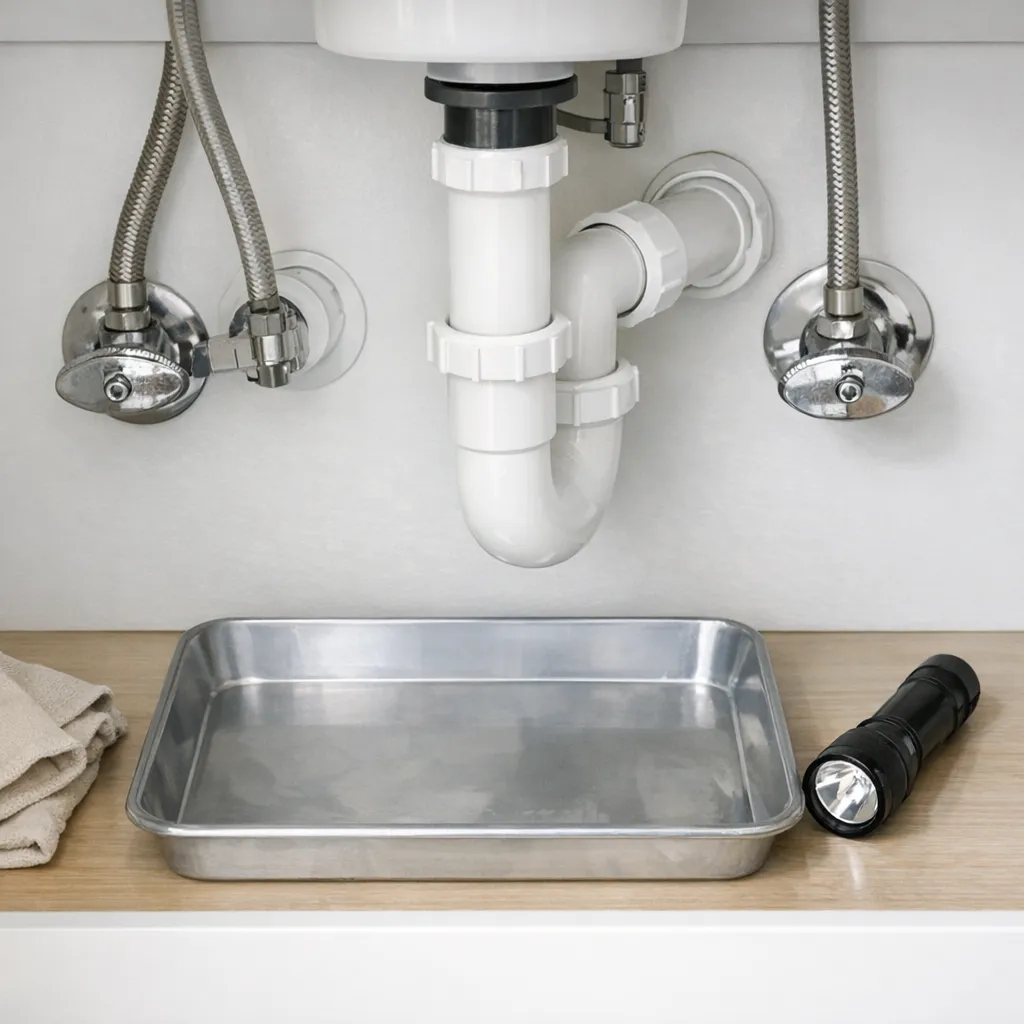
Make the area safe before sink repair
Water and electricity are the most immediate hazards. If leaking water has reached an outlet, disposal, dishwasher connection, or powered appliance, do not touch wet wiring or switches. Shut off the relevant circuit only if you can reach the electrical panel safely from a dry location. Otherwise, leave the area and call an electrician or plumber as appropriate.
Wear eye protection when working beneath a sink because dirty water and loosened debris can fall. Never mix drain cleaners, and do not disassemble a trap that may contain chemical cleaner. Stop if you smell sewage persistently, see widespread mold-like growth, find rotten cabinet material, or cannot operate the shutoff valves. A sewage backup requires sanitation precautions beyond an ordinary household repair.
Check the faucet and handles
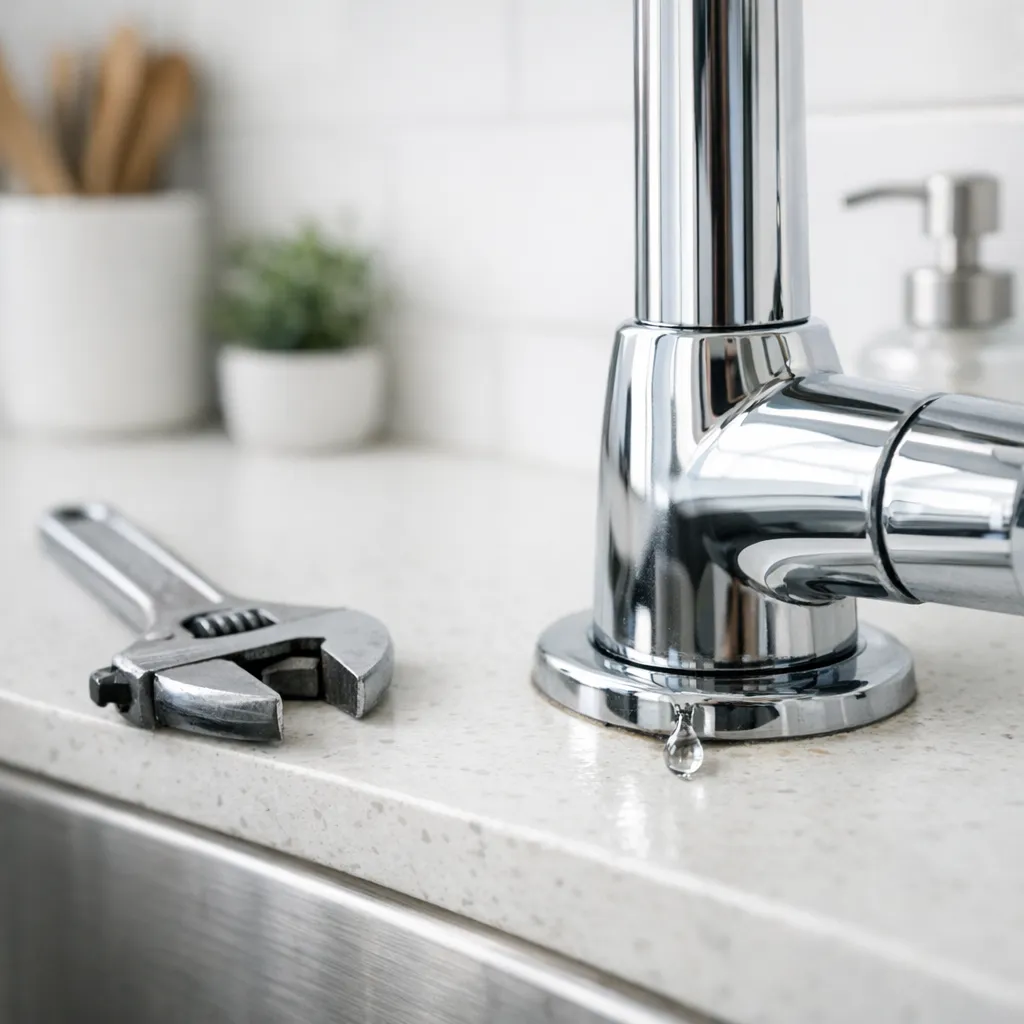
Water around a handle may come from a worn cartridge, stem seal, or O-ring. A spout that drips after the handle is fully closed commonly points to an internal valve component. Identify the faucet brand and model before ordering parts; cartridges that look similar may not seal correctly. Close both fixture shutoffs, open the faucet to relieve pressure, cover the drain, and arrange removed pieces in order.
Mineral buildup can make old fasteners brittle or difficult to move. Do not apply excessive force to a corroded faucet attached to a thin sink deck. If the faucet body itself is cracked, heavily corroded, or supported by deteriorated material, replacement may be more reliable than rebuilding it. After reassembly, restore water slowly and inspect every disturbed connection for several minutes.
Inspect supply lines and shutoff valves
Flexible supply lines should be dry, unkinked, and free of bulges, rust, fraying, or greenish corrosion. Blot the connection at the faucet and the connection at the shutoff valve with a paper towel. A loose compression or threaded connection may need careful tightening, but overtightening can crush a washer, distort a fitting, or break an old valve.
Replace a visibly damaged connector rather than trying to patch it. Match its length and connection sizes, and avoid stretching a short line into place. If a shutoff valve leaks around its stem, will not close, or begins turning in the wall, stop. Valve replacement can involve the household water supply and hidden pipe; it is often a sensible professional repair, especially in older plumbing.
Test the sink rim, strainer, and drain seal
A leak around the sink rim can imitate a plumbing leak. Splash a small amount of water around the faucet base and rim without sending it down the drain. If moisture appears below, the failed seal may be at the faucet gasket, accessory opening, countertop seam, or sink mounting edge. Repair depends on the sink material and mounting method; indiscriminate caulk can conceal rather than correct movement or rot.
To test the drain seal, plug the basin and add a few inches of water. Inspect beneath the strainer or drain flange while the water is standing, then release it and watch the tailpiece. Leakage at the flange often requires removal, cleaning, and a new gasket or approved sealant. Follow the fixture manufacturer's instructions because some materials require a specific sealant and can be stained by plumber's putty.
Examine the trap and slip joints
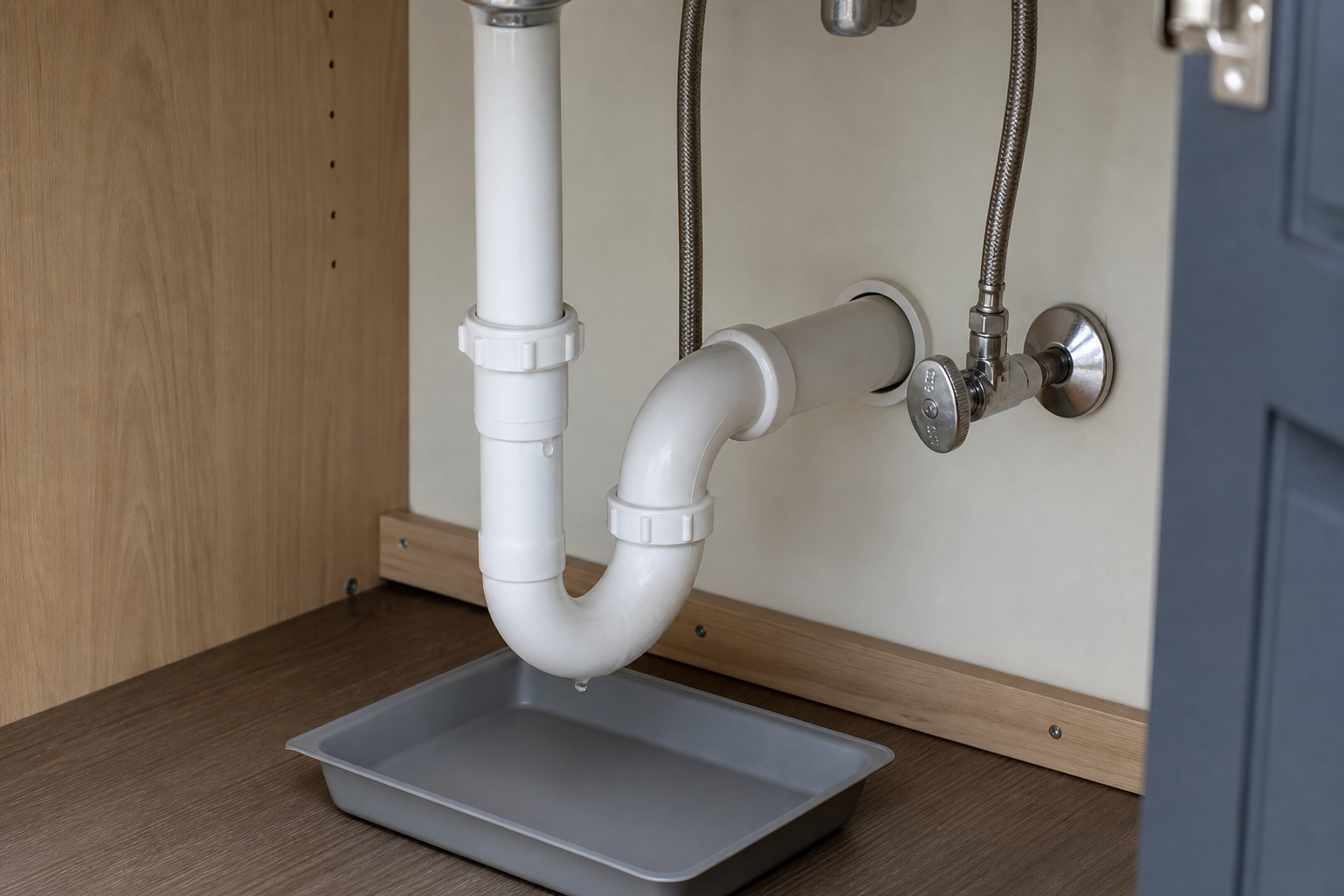
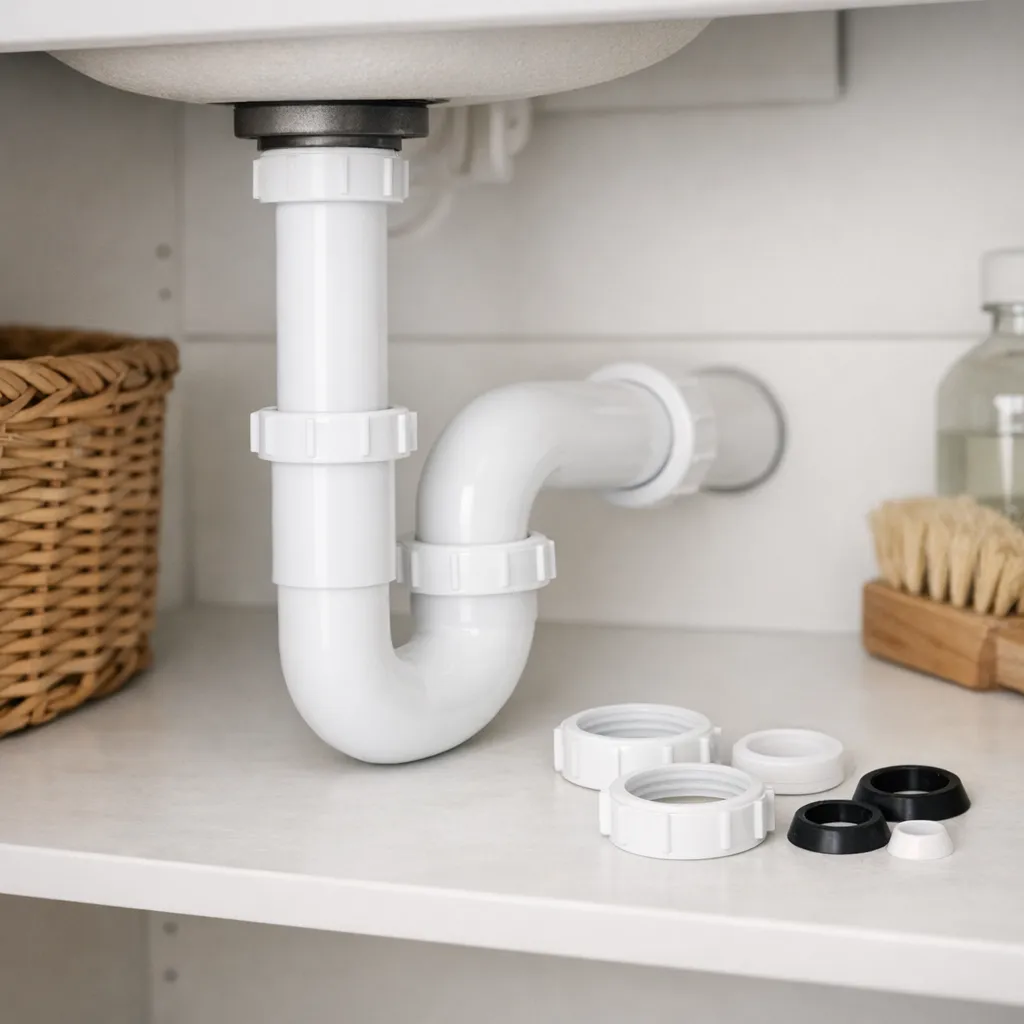
The curved trap holds water to block sewer gases. Put a bucket underneath before touching it. Plastic slip-joint nuts are generally hand-tightened and then adjusted only enough to stop seepage. Washers must face the correct direction and sit squarely. Misalignment is common when a disposal, new sink, or drain parts have shifted the piping out of line.
Remove a trap only when no chemical cleaner is present. Clean it mechanically, inspect for cracks, and reassemble without forcing components together. A trap that needs tension to reach the wall tube is likely to leak again. Do not improvise with flexible accordion drain pipe; its ridges collect debris and it may not meet local code. Have a plumber correct poor alignment or inaccessible piping.
Clear a simple clog without damaging plumbing
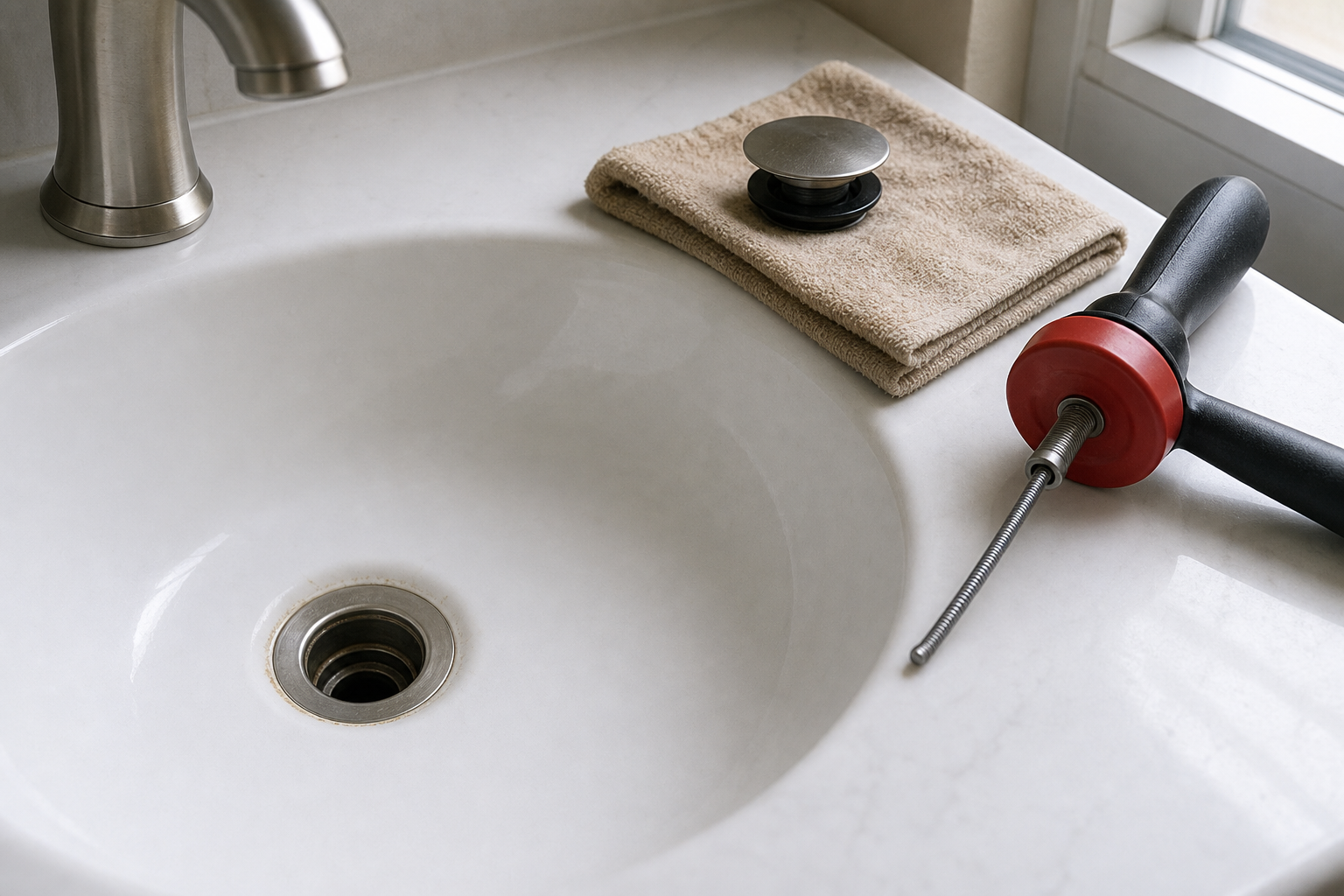
First remove the stopper and lift out visible hair or debris. A small sink plunger can help when the overflow opening is sealed with a damp cloth. Use moderate strokes and avoid plunging if chemical cleaner has been added, because it can splash back. For a removable trap, manual cleaning is often more predictable than pouring harsh chemicals into unknown pipework.
A hand-operated drain auger may clear a nearby obstruction, but forcing it can damage old, thin, or incorrectly assembled piping. Stop if the cable will not advance, repeatedly catches, or returns with mud, roots, or unusual material. Multiple affected fixtures, wastewater rising in another drain, or recurring clogs call for professional diagnosis rather than repeated chemical treatments.
Decide whether to repair or replace
A cartridge, gasket, supply connector, or tubular trap can be an economical repair when the surrounding fixture is sound. Replacement becomes more reasonable when a faucet is severely corroded, parts are unavailable, the basin is cracked, or repeated leaks have damaged its mounting surface. Consider access and risk, not just the price of the visible component.
Ask what the quote includes: diagnosis, parts, labor, new shutoff valves, disposal work, drain cleaning, cabinet access, testing, cleanup, and warranty. A low initial quote can change if corroded valves or hidden damage appear. Written scope makes competing estimates easier to compare and reduces confusion about drywall, cabinetry, or electrical work excluded from plumbing service.
Typical cost factors and warning signs
Prices vary by region, fixture, access, and urgency, so a site-specific estimate is more useful than a universal number. A straightforward gasket or trap replacement generally requires less labor than replacing seized valves, opening a wall, correcting an improperly routed drain, or tracing a concealed leak. Premium fixtures and proprietary cartridges can also increase material cost and lead time.
Use this quick reference before approving work:
| Finding | Sensible next step | Urgency |
|---|---|---|
| Drip from spout | Identify cartridge and confirm shutoffs work | Soon |
| Wet supply line or bulge | Close water and replace connector | High |
| Leak only while draining | Test flange, tailpiece, and trap | Prompt |
| Several fixtures backing up | Stop water use and call a plumber | Urgent |
| Water near wiring | Avoid area and isolate power safely | Urgent |
| Swollen cabinet or stained wall | Investigate hidden moisture | High |
Red flags include a spinning valve, cracked pipe, persistent sewer odor, hot water where it should not be, unexplained water-meter movement, or moisture that returns despite a dry drain test. These signs move the project beyond routine sink repair.
Prevent repeat sink problems
Inspect beneath the sink monthly and keep the cabinet uncluttered enough to see the piping. Do not store chemicals where they can corrode metal fittings. Wipe connectors and cabinet surfaces with a dry tissue to reveal small leaks. Operate fixture shutoffs occasionally only if they are in good condition; if they feel stuck, do not force them.
Keep grease, coffee grounds, fibrous scraps, paint, and hardening compounds out of drains. Use a removable strainer and clean the stopper regularly. After any repair, test with the basin empty, partly full, and draining while checking with a dry paper towel. Recheck later the same day and the next morning, because a slow seep may not appear immediately.
Frequently asked questions
Can I use tape to stop a leaking sink pipe?
Tape is not a durable repair for a pressurized line, cracked trap, or failed joint. It may hide the leak while water continues damaging the cabinet. Replace the defective component or have it repaired correctly.
Why does the cabinet get wet only when the sink is full?
Standing water may expose a failed drain flange or basin defect, while releasing a full basin places more flow through tailpiece and trap joints. Test these stages separately to identify the source.
Should I use a chemical drain cleaner?
Mechanical removal is usually safer for a simple local clog. Chemical cleaners can injure users, damage some plumbing, complicate disassembly, and create a hazard for the next person working on the drain. Never mix products.
When is a sink leak an emergency?
Treat uncontrolled flow, water near electricity, sewage backup, a failed shutoff, or rapidly spreading damage as urgent. Close the main water supply when safe and contact the appropriate professional.
How can I know whether a plumber's estimate is fair?
Compare written estimates with the same scope, parts, access work, cleanup, and warranty. Ask how the diagnosis was confirmed and what conditions could change the price. The clearest quote is often more valuable than the lowest headline figure.
The practical bottom line
Successful sink repair begins with isolation and evidence. Dry the area, test one condition at a time, identify the exact joint or component, and respect the boundary between a replaceable household part and aging infrastructure. Simple work is worthwhile only when shutoffs function, parts match, access is safe, and the completed assembly can be thoroughly tested.
Call a licensed plumber when the source is concealed, the valves fail, several drains are affected, piping is corroded or misaligned, or water threatens electrical systems and building materials. Acting early protects more than the sink: it limits cabinet, flooring, wall, and indoor-air problems that make a small leak expensive.
Why This Is Different in San Antonio
With Edwards Aquifer water near 357 mg/L (21 gpg), scale can bind a faucet cartridge, stiffen a stop valve, and keep a drain gasket from reseating cleanly. SAWS reports describe the water supply; at the sink, homeowners should look for white deposits, green staining on copper, swollen cabinet panels, and corrosion on braided hoses.
In Westover Hills and Alamo Ranch, newer plumbing may still connect to builder-grade fixtures that have reached the end of their service life. Diagnose each wet joint rather than replacing the whole sink. That keeps a small Bexar County repair focused and makes estimates easier to compare.
What San Antonio Homeowners Pay (2026)
| Sink repair | Typical homeowner range |
|---|---|
| Cartridge, supply tube, or drain parts | $15–$100 |
| Faucet or supply-line labor | $150–$300 |
| Drain cleaning | $150–$350 |
| After-hours visit | $250–$500 |
Brand-specific cartridges, seized shutoffs, cabinet damage, and difficult access can increase the total. Request separate line items for parts, labor, and restoration.
When to Call a San Antonio Plumber
Call if a shutoff will not close, a supply tube is bulging or corroded, water enters the wall or floor, several fixtures drain slowly, or the repair requires altering permanent supply or drain piping. For a Bexar County estimate, describe exactly which test produced water and provide photos. A careful plumber should isolate the failed system before quoting a broad replacement.
San Antonio FAQ
Why is the cabinet wet only after draining a full basin?
That pattern points toward the drain flange, tailpiece, trap, or branch—not usually the pressurized supply.
Should I replace both supply tubes?
If they are the same age and one is corroded, kinked, or leaking, replacing the pair is often sensible. Use correctly sized, listed connectors without stretching them.
Can hard water cause every sink leak?
No. Installation errors, worn seals, impact, and age also matter. Hard water accelerates some wear but does not replace diagnosis.
For a San Antonio homeowner, a documented diagnosis is safer than guessing.