> San Antonio Local Insight: Fixture and faucet leaks in San Antonio happen faster because hard water minerals (21 gpg from Edwards Aquifer) grind down valve seats, corrode cartridges, and prevent proper sealing. A faucet that lasts 15 years in soft-water cities often starts leaking within 5–8 years in San Antonio without a water softener.
Treat a Suspected Slab Leak as a Water-Damage Problem
A slab leak is not confirmed by one warm tile or one high bill. Check the SAWS meter with every fixture and irrigation zone off, compare recent bills, listen near manifolds, and map warm or damp flooring. If the meter still moves, close the house-side shutoff; movement that stops points toward the building plumbing. Do not break concrete based on a guess.
Edwards Aquifer water is roughly 357 mg/L, or 21 gpg. That mineral load can contribute to deposits and corrosion, but pressure, pipe material, soil movement, installation quality, and freeze stress also matter. Homes toward New Braunfels and Boerne face similarly hard Hill Country water, while expansive soils and long hot periods can add movement around a slab. Winter Storm Uri is relevant when symptoms began after frozen-line repairs.
Professional electronic/acoustic detection commonly costs $250–$500. A straightforward local repair may be $2,000–$5,000, but rerouting, flooring restoration, drying, and mold remediation can move the total higher. Photograph the meter and damage, call SAWS if a utility-side leak is possible, and use a licensed Bexar County plumber for any pressurized line under concrete.
Signs that justify prompt investigation
Common clues include an unexplained rise in water use, the sound of running water when fixtures are closed, a warm patch on the floor, damp carpet, discolored flooring, baseboard swelling, or recurring mildew odors. Hot spots can suggest a hot-water line leak, but radiant heat, sunlight, and appliance lines can produce similar symptoms. A cold-water leak may have no obvious temperature signal.
Cracks in finishes or foundation movement do not automatically prove a slab leak, and a slab leak does not always create visible cracking. Water can travel along pipe sleeves, joints, and soil before appearing far from the break. The most useful first observations are meter movement, pressure changes, affected areas, and whether closing a particular isolation valve stops the symptom.

Make the situation safe first
Water can reach outlets, in-floor electrical systems, appliances, and damaged extension cords. Stay off saturated flooring near electrical equipment, and do not operate switches in a wet area. If power must be isolated, use the electrical panel only from a dry, safe position. Call an electrician when water has entered wiring, panels, or energized equipment.
A domestic water-line leak is different from a sewer leak. Sewage odor, wastewater, or contamination requires additional protective measures and professional cleanup. Avoid opening concrete yourself: slabs may contain post-tension cables, reinforcement, plumbing, conduits, or radiant systems. Cutting a tensioned cable or electrical conduit can cause severe injury and structural damage.
What slab leak repair cost can include
The plumber's invoice may include an initial visit, pressure testing, acoustic or thermal detection, line tracing, isolation, access, pipe repair, testing, and permits. It may not include floor removal, concrete restoration, cabinets, paint, mold remediation, temporary lodging, or replacement flooring. Ask for inclusions and exclusions in writing before comparing bids.
Emergency timing, San Antonio metro labor rates, slab thickness, pipe depth, and accessibility all matter. So do the pipe material and condition. One isolated failure in otherwise sound piping supports a different solution from repeated pinhole leaks in an aging system. Any price range offered without inspection should be treated as a planning allowance rather than a guaranteed quote.
How professionals locate the leak
A careful diagnosis begins by confirming water loss. The plumber may check the meter, isolate hot and cold systems, pressure-test sections, trace piping, listen for leak noise, or use thermal and moisture instruments. No single instrument is infallible. Results are interpreted together, especially when flooring, insulation, soil conditions, or nearby mechanical equipment distort readings.
Ask how the location was confirmed and what uncertainty remains. Precision matters because direct access requires opening the floor. Sometimes additional confirmation holes or isolation tests are justified before demolition. Be cautious of anyone recommending broad concrete removal without first establishing that the leak is on a pressurized line beneath that area.
Direct access and spot repair
A spot repair opens the finish and concrete above the suspected break, exposes the pipe, removes the failed section, and reconnects sound material. It can make sense for a single accessible failure when the rest of the system tests well. Its apparent simplicity is attractive, but access conditions can dominate cost if the leak lies beneath stone flooring, built-ins, a shower, or a kitchen island.
This method also requires safe concrete scanning and dust control. The opening must be restored after the pipe passes a pressure test. A spot repair fixes the discovered defect, not the causes of widespread pipe deterioration. If inspection suggests multiple weak areas, spending heavily to restore a premium floor over one patch may not be the best long-term value.
Rerouting or repiping
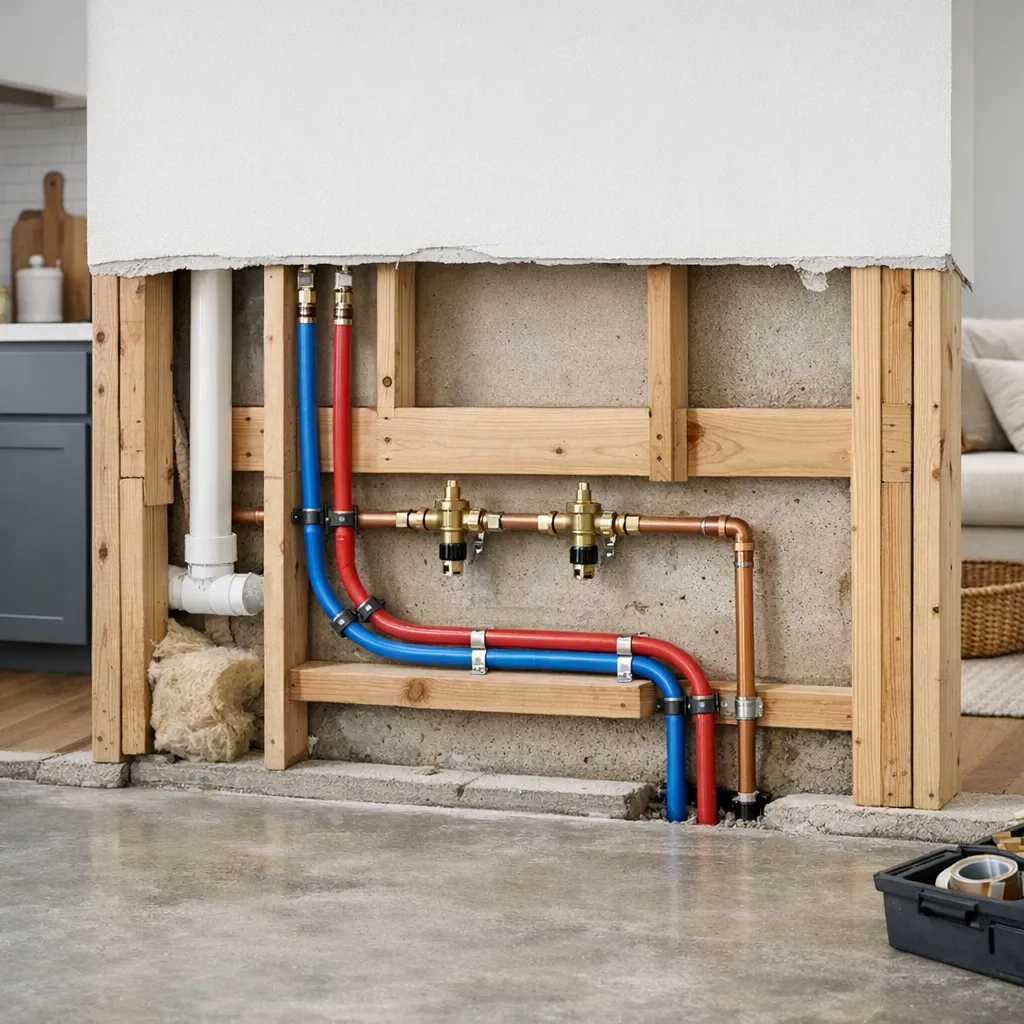
Rerouting abandons the leaking underground section and installs a new route through walls, ceilings, attics, or other accessible spaces. It avoids opening the slab at the leak, though it creates drywall and finish work elsewhere. Climate matters: pipes in attics or exterior walls need appropriate freeze and heat protection, and all work must follow local plumbing codes.
A broader repipe may be recommended when failures recur or the under-slab system is generally unreliable. Its initial cost is higher than a small spot repair, but it can reduce the risk of paying repeatedly for detection, demolition, and floor restoration. Ask which lines are included, what material will be used, how valves and fixtures reconnect, and which finishes will be restored.
Other repair approaches and their limits
In some situations, qualified contractors offer pipe lining or other minimally invasive systems. Suitability depends on pipe diameter, material, condition, water quality, local approval, and the product's intended use. This is not a universal solution, and homeowners should request code acceptance, preparation details, warranty terms, and documentation for potable-water applications.
Sometimes the apparent slab leak is actually a drain leak, irrigation line, failed appliance connection, or water entering from outdoors. Those problems require different methods. Paying for disciplined diagnosis protects against choosing an impressive technology for the wrong system. A contractor should be able to explain what failed, how that conclusion was reached, and why the proposed method fits.
Major factors that change the final bill
Access is often the largest variable. Removing ordinary carpet is different from matching discontinued tile or lifting a stone slab. A leak beneath an open room is different from one under cabinetry or a load-bearing partition. The amount of demolition, containment, debris handling, concrete work, and finish restoration changes accordingly.
These factors are useful when reviewing an estimate:
| Cost factor | Why it matters | Question to ask |
|---|---|---|
| Leak detection | Reduces unnecessary demolition | Is detection included and documented? |
| Repair method | Spot repair, reroute, and repipe have different scopes | Why is this method best for the whole system? |
| Pipe condition | Multiple failures may change long-term value | Were other sections pressure-tested? |
| Floor and cabinet access | Finish removal can exceed plumbing labor | Who removes and restores finishes? |
| Water damage | Drying and remediation are separate trades | Has moisture spread been mapped? |
| Permits and inspection | Requirements vary locally | Who obtains and closes the permit? |
| Warranty | Coverage may differ for pipe and finishes | What is covered, for how long, and by whom? |
The final cost can also change if demolition reveals post-tension construction, unexpected depth, corrosion beyond the exposed section, or inaccessible manifolds. A good contract explains allowances and change-order procedures before work starts.
Hidden damage, drying, and insurance
Stopping the leak is only the first half of recovery. Concrete, underlayment, wood, drywall, insulation, and cabinets may retain moisture. Drying professionals can map affected materials and monitor them over time. Covering a damp assembly too soon can trap moisture and lead to odor, finish failure, or microbial growth.
Insurance treatment varies by policy and cause. Some policies may address sudden resulting damage while excluding the failed pipe, long-term seepage, or certain foundation work. Notify the insurer promptly when damage is significant, photograph conditions before demolition when safe, save invoices, and ask what emergency mitigation is authorized. Do not delay necessary steps to prevent further damage while waiting for a coverage decision.
How to compare repair estimates
Request a written scope from appropriately licensed and insured contractors. Each estimate should describe diagnostic findings, the line involved, repair route, materials, access openings, testing, permits, cleanup, restoration, and warranty. Compare equivalent scopes rather than headline totals. One bid may include drywall and flooring while another ends after the pipe is pressurized.
Ask what happens if the leak is not found at the marked location or the exposed pipe shows broader deterioration. Clarify who scans the slab, who protects the occupied area from dust, and whether plumbing will remain usable during work. For a large repipe or structurally sensitive access, an independent second opinion can be worth the added diagnostic fee.
What homeowners can check without demolition
Confirm that toilets, irrigation, water softeners, ice makers, and appliances are not consuming water, then observe the meter. Photograph the reading and check it again after a no-use period. Note whether the water heater runs unexpectedly, whether the symptom changes when its supply is closed, and where moisture first appeared. Do not operate questionable valves forcefully.
Create a simple timeline and gather past plumbing invoices, pipe-material information, foundation plans, and insurance details. Move dry possessions away from affected areas and use pans or towels only for minor, controllable moisture. Do not drill test holes, apply sealant to the floor, or keep refilling a system that is losing water rapidly. Those actions can increase damage without identifying the source.
Reducing the chance of another failure
Excessive water pressure can stress piping, valves, and appliance connections. Have pressure tested if you notice banging, frequent fixture failures, or unusually strong flow. A malfunctioning pressure-reducing valve or thermal expansion issue should be evaluated as part of the plumbing system rather than treated as an isolated symptom.
Water chemistry, pipe material, installation quality, soil movement, and electrical conditions can also contribute to deterioration. Avoid miracle devices or additives sold without a diagnosis. After repair, keep records of pressure tests, photographs, routes, materials, permits, and warranties. That documentation helps future maintenance and prevents another contractor from searching blindly.
Frequently asked questions
Is a warm floor always a slab leak?
No. Sun exposure, heating ducts, radiant systems, and nearby appliances can warm flooring. A warm area combined with unexplained meter movement or constant water-heater activity deserves professional testing.
Can I keep the water on until the appointment?
Only if loss is minor and controlled. Shut off the main supply when water is spreading, the meter indicates rapid flow, pressure is falling, or electrical and structural materials are threatened. Ask the plumber whether intermittent use is safe.
Does the concrete need to be opened?
Not always. Rerouting can avoid the leak location, and some systems may qualify for other approaches. Even when spot access is selected, accurate detection should minimize the opening.
Is spot repair cheaper than repiping?
It often has a lower initial plumbing scope, but floor restoration and the condition of remaining pipes matter. Repeated failures can make a reroute or repipe better long-term value. Compare total project cost and recurrence risk.
How long does slab leak repair take?
Diagnosis and a straightforward repair may be relatively quick, while permits, extensive rerouting, drying, and custom finish replacement can extend the project. Ask for separate plumbing, drying, and restoration timelines.
The bottom line on slab leak repair cost
There is no responsible single price for every slab leak. The meaningful number comes after the system is tested, the leak is located, the pipe condition is assessed, and restoration responsibilities are defined. Diagnosis may feel like an added expense, but it is what protects the homeowner from paying for unnecessary demolition or the wrong repair.
Respond quickly to active water loss, keep clear records, and insist on a written, comparable scope. A safe project accounts for electrical hazards, slab construction, permits, pressure testing, drying, and finish restoration—not merely the short piece of pipe that failed.
Why This Is Different in San Antonio
Local slab-leak decisions sit at the intersection of Edwards Aquifer water—about 357 mg/L (21 gpg)—slab foundations, expansive soils, long cooling seasons, and mixed pipe ages. SAWS can help distinguish utility-side concerns and provides meter/billing information, but the homeowner owns diagnosis on the house side of the meter.
Near New Braunfels and Boerne, hard Hill Country water creates similar scale concerns. Yet a responsible diagnosis also considers pressure, copper condition, prior repairs, and Winter Storm Uri freeze history. Mineral content alone does not prove causation or justify opening a floor.
What San Antonio Homeowners Pay (2026)
| Slab-leak service | Typical homeowner range |
|---|---|
| Electronic/acoustic detection | $250–$500 |
| Localized under-slab repair | $2,000–$5,000 |
| Reroute or partial repipe | $3,500–$12,000+ |
| Drying/restoration | Project-specific |
Flooring, cabinets, access, number of failures, and hotel or drying costs belong in the comparison. Ask each bidder to state the repair path and restoration exclusions.
When to Call a San Antonio Plumber
Treat unexplained meter movement, hot flooring, foundation-edge moisture, hissing, or a sudden bill increase as same-day investigation. Shut off water for active flooding or ceiling/electrical risk. Use a licensed Bexar County plumber with non-destructive leak-location equipment; get a second opinion before demolition when the location or repair strategy is uncertain.
San Antonio FAQ
Will SAWS repair a leak under my slab?
Usually not when the leak is on private plumbing after the meter. Contact the utility when the meter box, service side, or billing evidence suggests a utility issue.
Is spot repair always the cheapest choice?
It may have the lowest initial invoice, but repeated failures can make a reroute more economical. Compare pipe history, warranty, restoration, and disruption.
Should I file an insurance claim first?
Document the damage promptly and read the policy. Coverage may distinguish resulting water damage from the failed pipe itself; ask the carrier before destructive work when conditions are stable.