> San Antonio Local Insight: San Antonio's hard water from the Edwards Aquifer affects every plumbing system in your home. With 357 mg/L mineral content (21 grains per gallon), our water causes faster corrosion, heavier scale buildup, and more frequent repairs than most US cities. Understanding this local factor helps you make better decisions about maintenance, repair, and prevention.
Local San Antonio Field Notes Before You Start
Before following any generic plumbing checklist, adjust it for our Edwards Aquifer water. At roughly 357 mg/L, or 21 grains per gallon, the calcium carbonate and magnesium in the water can turn a small maintenance issue into repeat wear on valves, seals, drains, heaters, and appliance connections. That means national advice needs a local filter before a homeowner decides whether to DIY, maintain, or call a pro.
A homeowner in Helotes should be especially careful because well-water and edge-of-system supply can make mineral scale show up even faster. If you are comparing advice from national repair guides, shorten the maintenance interval and inspect for white scale, crusted fittings, stiff shutoff valves, and early corrosion before assuming the part simply “got old.”
For budgeting, use local pricing instead of national averages: licensed plumber labor commonly runs $85-$150 per hour, with emergency visits costing more. If the issue appears after a summer high-use period or after a rare freeze like Winter Storm Uri, treat it as a local risk signal and document what you see before calling a licensed plumber in Bexar County.
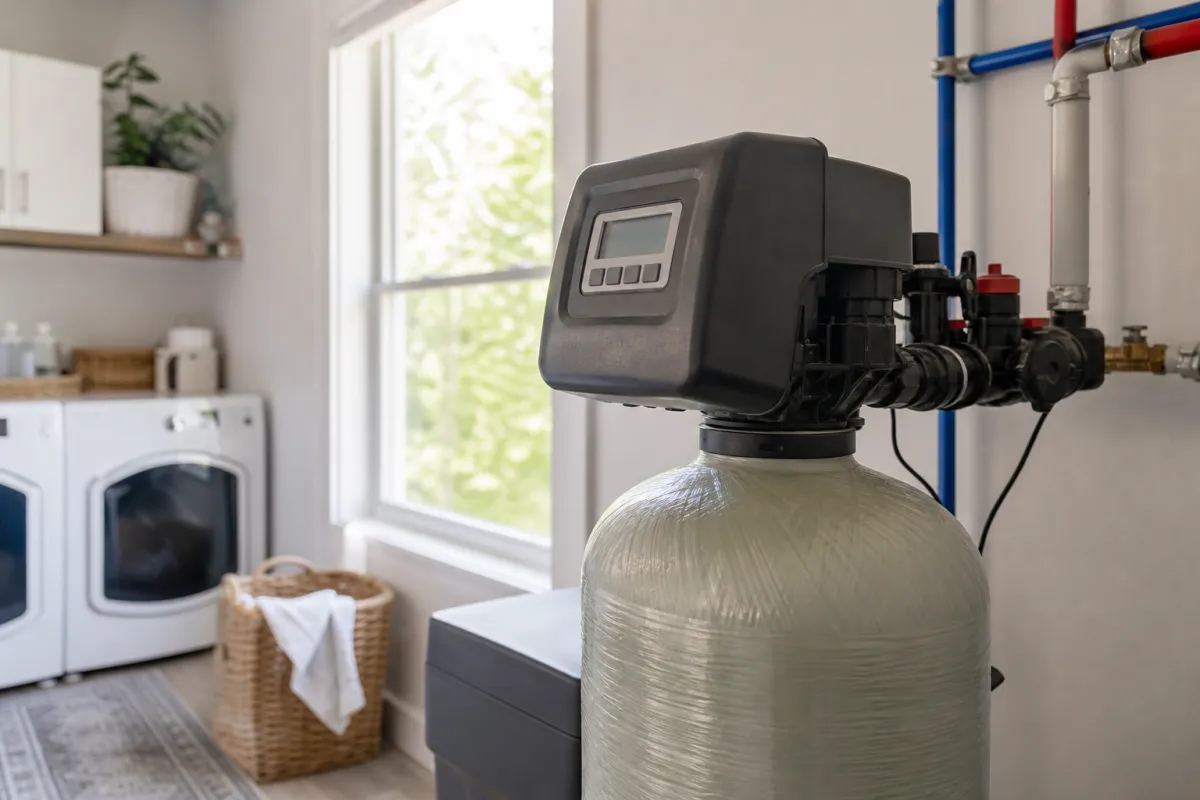
When it comes to maintaining a healthy home, the quality of your water is paramount. For homeowners relying on well water, the presence of iron can cause a myriad of issues, from unsightly stains to unpleasant tastes. Choosing the best water softener for well water with iron is crucial for ensuring not only the aesthetic quality of your water but also its safety. This guide will walk you through the necessary steps, considerations, and options available to help you make an informed decision.
Why Choosing the Right Water Softener Matters
Using well water with a high iron content can lead to various problems, including staining of fixtures, laundry, and even the water heater. Iron can also impact the taste and smell of your water, making it less appealing for drinking and cooking. A good water softener can mitigate these issues, improving your water quality and extending the lifespan of your plumbing and appliances.
However, not all water softeners are created equal, especially when it comes to addressing iron in well water. Understanding your specific needs and the characteristics of your water is essential for selecting the best system for your home.
What to Check First
Before diving into the world of water softeners, it's essential to conduct a thorough assessment of your well water. Here are some critical first steps:
1. Water Testing
Testing your water is the first and most vital step. You can either purchase a water testing kit or contact a local lab for a comprehensive analysis. Look for key indicators such as:
- Iron Levels: Ideally, iron concentrations should be below 0.3 mg/L for optimal water quality. Anything above this may require specialized treatment.
- Hardness Levels: Knowing your water hardness (measured in grains per gallon) will help you choose the right softener.
- pH Levels: The pH level can influence the effectiveness of the water softener. Ideally, it should be between 6.5 and 8.5.
2. Identify the Type of Iron
There are different types of iron that can be present in well water:
- Ferrous Iron (Dissolved): This type is typically clear when drawn from the tap and can be removed by standard water softeners.
- Ferric Iron (Oxidized): This type is visible and can cause staining. It often requires a different treatment approach, such as oxidation or filtration.
3. Assess Your Household Needs
Consider your household’s water usage. Larger households will require a water softener with a higher capacity to ensure it can handle the demand. Evaluate your daily water consumption to determine the appropriate size and flow rate you need.
Best Options for Water Softeners
Once you have a clear understanding of your water quality and household needs, you can explore the best options available. Here are some types of water softeners that are particularly effective for well water with iron:
1. Ion Exchange Water Softeners
These are the most common type of water softeners. They work by exchanging hard minerals (calcium and magnesium) with sodium or potassium ions. Some models are specifically designed to handle iron, making them suitable for well water.
Advantages:
- Effective for both hardness and low levels of dissolved iron.
- Generally affordable and widely available.
Disadvantages:
- May not be effective for high levels of ferric iron without additional filtration.
2. Dual-Tank Water Softeners
For households with high water consumption, dual-tank systems can be beneficial. These systems allow for continuous soft water availability, as one tank can regenerate while the other is in use.
Advantages:
- Ideal for larger households or homes with high water usage.
- Ensures a consistent supply of soft water.
Disadvantages:
- Higher initial cost and installation complexity.
3. Oxidizing Filters
If your well water contains significant amounts of ferric iron, an oxidizing filter may be necessary. This system oxidizes the iron, converting it into a solid form that can be filtered out.
Advantages:
- Effectively removes high levels of ferric iron.
- Can also address manganese and sulfur odors.
Disadvantages:
- Requires regular maintenance and replacement of filter media.
4. Salt-Free Water Softeners
These systems use a different technology to condition water without the use of salt. They are effective in preventing scale buildup but may not be suitable for high iron concentrations.
Advantages:
- No salt or chemicals required, making it more environmentally friendly.
- Reduces scale buildup on plumbing and appliances.
Disadvantages:
- May not effectively soften water with high iron content.
Mistakes to Avoid
Choosing the wrong water softener can lead to ineffective treatment and wasted resources. Here are common pitfalls to avoid:
1. Ignoring Water Quality Tests
Neglecting to conduct a water test can result in selecting a system that doesn’t address your specific needs. Always start with a thorough analysis of your water.
2. Underestimating Iron Levels
Assuming that any water softener will work for high levels of iron can lead to disappointment. Ensure that the system you choose is designed to handle the specific iron content in your water.
3. Overlooking Maintenance Requirements
Different systems come with varying maintenance needs. Be sure to understand what is required for the system you choose to avoid future issues.
4. DIY Installation Without Research
While some homeowners may feel confident in their DIY abilities, improper installation can lead to system failure. If you're unsure, it's better to consult a professional.
When to Escalate Beyond DIY
While some homeowners may be comfortable tackling the installation and maintenance of a water softener themselves, certain situations warrant professional assistance:
1. High Iron Levels
If your water test reveals high levels of iron, especially ferric iron, it's wise to consult a water treatment specialist. They can recommend the best solutions tailored to your water quality.
2. Complex Plumbing Systems
If your plumbing setup is complicated or if you have multiple water sources, a professional can ensure that your water softener integrates seamlessly into your system.
3. Installation Concerns
If you're unsure about the installation process, hiring a professional can save you time and potential headaches. Incorrect installation can lead to inefficiencies and additional costs.
4. System Maintenance
If you’re uncomfortable performing routine maintenance on your water softener, enlisting the help of a professional can help keep your system running optimally.
FAQ
1. How do I know if my well water has iron?
You can test your well water using a home testing kit or by sending a sample to a lab for analysis. Look for iron concentrations above 0.3 mg/L.
2. Can I use a regular water softener for well water?
Not all water softeners are designed for well water, especially if it contains high levels of iron. Choose a system specifically designed for well water treatment.
3. How often do I need to maintain my water softener?
Maintenance frequency varies by system type but generally includes salt replenishment, filter changes, and cleaning every 6 to 12 months.
4. What is the average cost of a water softener?
The cost can range from $400 to $2,500 or more, depending on the type and capacity of the system. Installation fees should also be considered.
5. Will a water softener remove iron completely?
Some systems can effectively remove low levels of dissolved iron, but high levels of ferric iron may require additional filtration methods.
Quick Reference Table: Water Softener Comparison
| Type | Best For | Advantages | Disadvantages |
|---|---|---|---|
| Ion Exchange | Low levels of dissolved iron | Affordable, effective for hardness | Limited for high ferric iron levels |
| Dual-Tank | High water usage | Continuous soft water supply | Higher cost and complexity |
| Oxidizing Filter | High ferric iron levels | Effective iron removal | Requires maintenance |
| Salt-Free | Environmentally conscious users | No salt needed | May not handle high iron content |
Conclusion
Finding the best water softener for well water with iron is essential for maintaining the quality of your water and protecting your home from the adverse effects of iron. By understanding your water's specific characteristics, evaluating your household needs, and considering the advantages and disadvantages of different systems, you can make an informed choice. Remember that while DIY options are available, consulting with a professional can save you time and ensure your system operates effectively.
Why This Is Different in San Antonio
A private well near Helotes, Boerne, or the Bexar County edge is not the same as SAWS municipal water. The familiar Edwards Aquifer benchmark—about 357 mg/L or 21 gpg—explains the regional scale burden, but a well can also carry dissolved iron, oxidized iron, manganese, sulfur odor, sediment, low pH, or bacteria. A softener treats hardness and limited dissolved iron; it is not a universal well-water purifier.
Start with a certified-lab panel before shopping. Record total and dissolved iron, manganese, hardness, pH, turbidity, bacteria, nitrates, and any local concern identified for the well. Clear water that turns orange after standing suggests ferrous iron; orange particles at the tap suggest ferric iron that should usually be filtered before the resin. Slime in a toilet tank may indicate iron bacteria and calls for a different sanitation plan.
Treatment order matters. A common train is sediment prefiltration, oxidation and backwashing filtration for significant iron, then a correctly sized softener. UV, carbon, or point-of-use reverse osmosis belongs only where test results justify it. Make sure the well pump can supply the backwash rate; an impressive filter that cannot backwash properly will foul quickly.
What San Antonio Homeowners Pay (2026)
| Scope | Typical homeowner range |
|---|---|
| Certified well-water lab panel | $150–$450 |
| Iron-capable softener for low dissolved iron | $1,800–$3,500 |
| Oxidizing/backwashing iron filter | $1,500–$3,500 |
| Multi-stage treatment with plumbing and startup | $3,500–$7,500+ |
| Annual media, salt, testing, and service | $250–$700 |
Prices depend on the laboratory result, peak flow, well-pump capacity, drain access, and whether disinfection or pressure-tank work is needed. Require itemized equipment, media, control valve, labor, startup tests, and maintenance frequency.
When to Call a San Antonio Plumber
Homeowners can collect a lab sample exactly as instructed, inspect for staining, and log pressure and odor. Do not taste-test suspicious water, pour chemicals into a well, or assume a softener makes bacterially unsafe water potable. Call a licensed plumber or qualified water-treatment professional when iron exceeds a unit's rated limit, bacteria are detected, pressure is unstable, the pump cycles rapidly, or treatment needs a new drain or electrical circuit. Well disinfection and retesting should follow a documented procedure.
San Antonio FAQ
Can a normal softener remove iron?
It can remove a limited amount of dissolved ferrous iron if the manufacturer rates it for that concentration. Ferric particles and iron bacteria can foul resin and usually need pretreatment.
Why does the water look clear and later turn orange?
Dissolved iron oxidizes when exposed to air. That observation is useful, but only a lab test can establish concentration and treatment design.
Does SAWS test my private well?
Private-well owners are responsible for testing and maintenance. Use an accredited laboratory and follow public-health guidance after flooding, repairs, loss of pressure, or a positive bacteria result.
How often should a well be retested?
At minimum, follow local health guidance for annual bacteria and nitrate testing, plus testing after repairs, flooding, a sudden taste or odor change, or a treatment failure. Retest treated water to prove the system works.