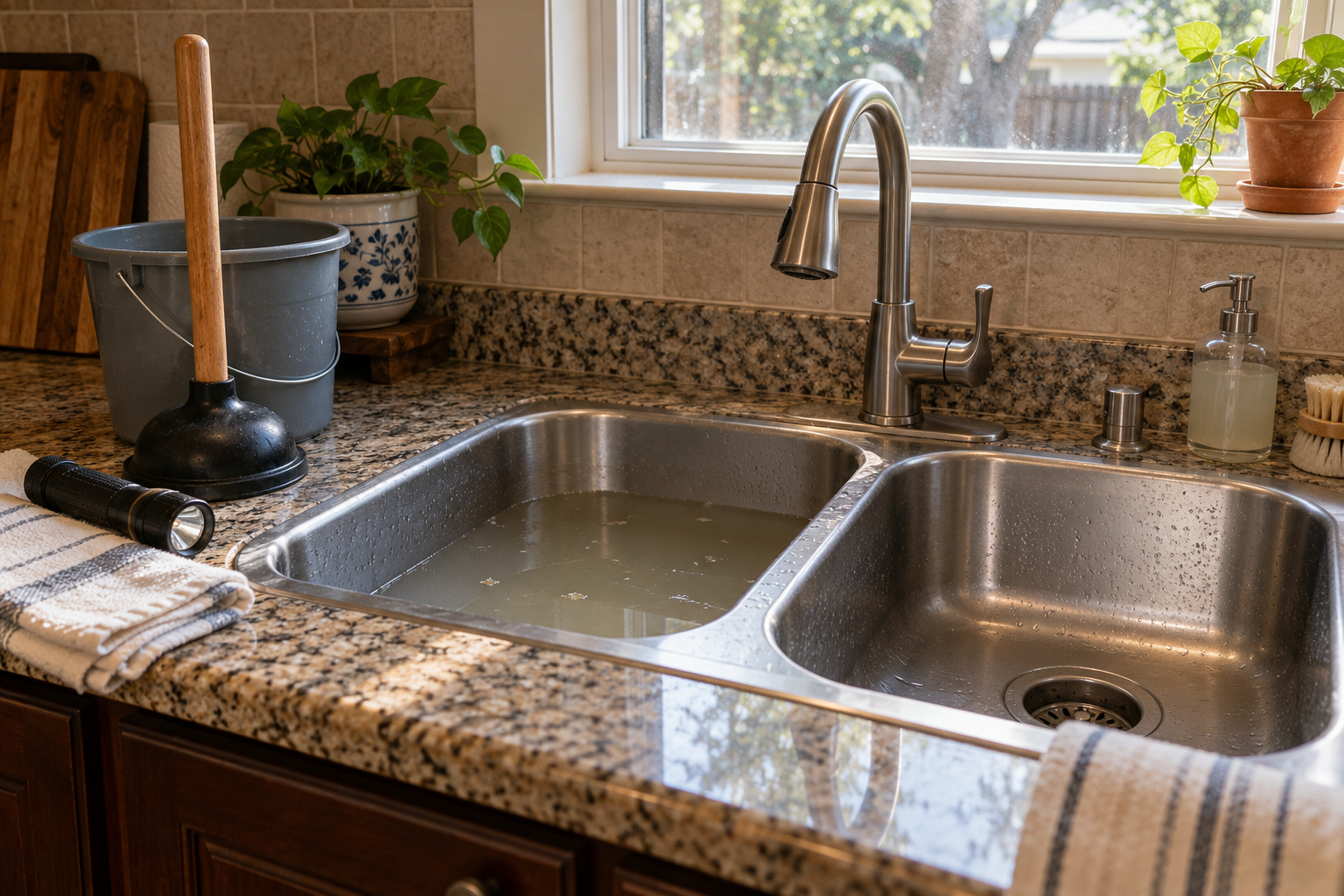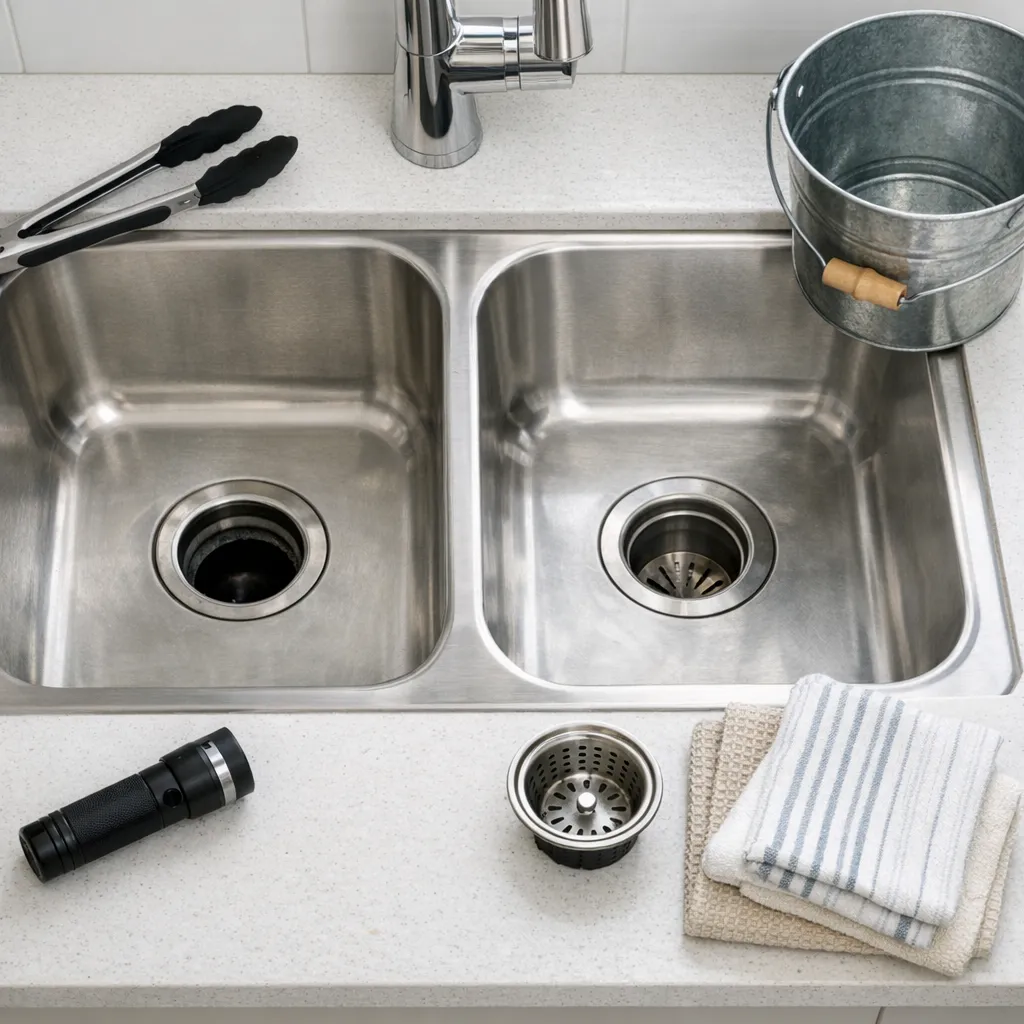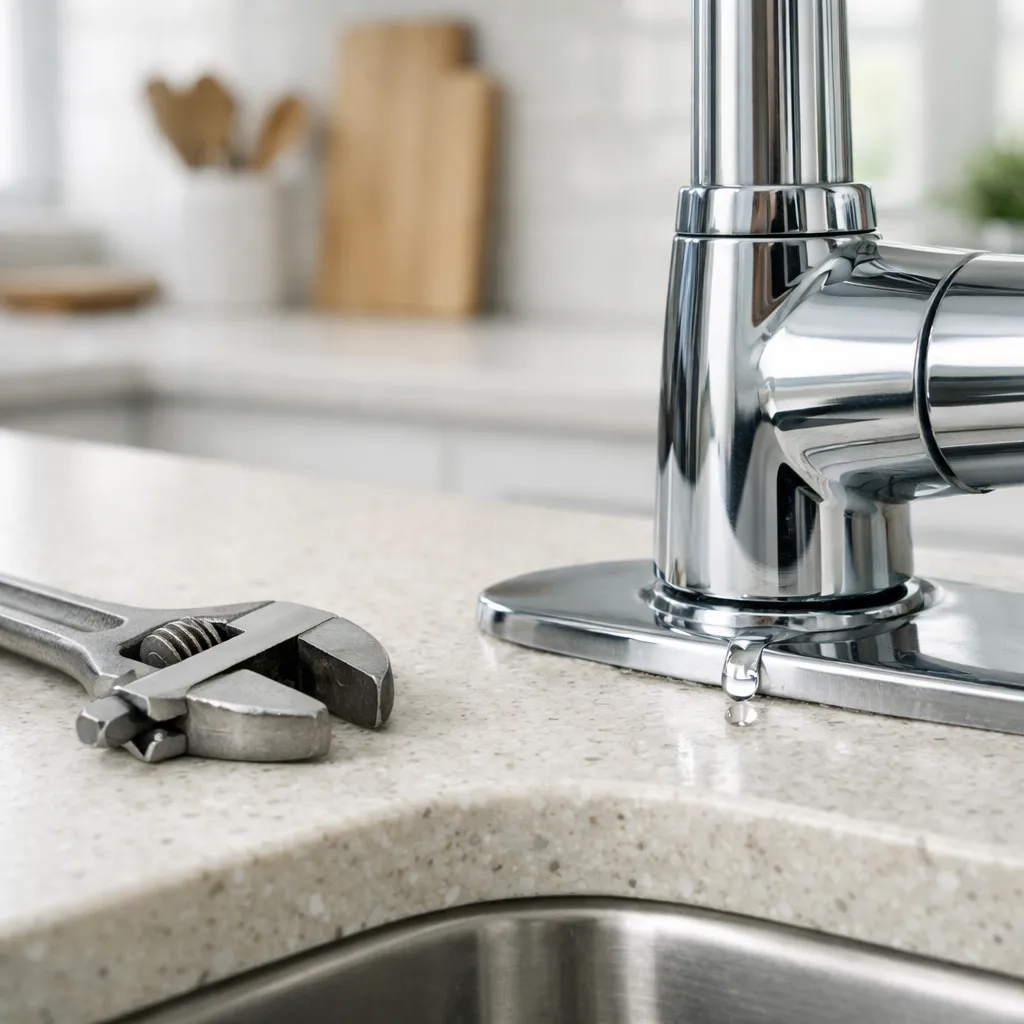
> San Antonio Local Insight: Fixture and faucet leaks in San Antonio happen faster because hard water minerals (21 gpg from Edwards Aquifer) grind down valve seats, corrode cartridges, and prevent proper sealing. A faucet that lasts 15 years in soft-water cities often starts leaking within 5–8 years in San Antonio without a water softener.
Start With the Leak You Actually Need to Catch
A detector is useful only when its sensor, shutoff method, and placement match the leak risk. In a King William renovation, a puck under a washing machine may catch a failed hose but cannot see a slow galvanized-line leak inside a wall. A whole-home flow monitor can flag unusual use, yet even that system needs correctly placed point sensors near water heaters, toilets, icemakers, and under-sink supplies.
San Antonio water comes from the Edwards Aquifer at about 357 mg/L, or 21 gpg. That hardness leaves scale on shutoff valves and appliance connectors, so a small seep can begin where a fitting looks merely crusty. Walk the house before buying hardware: note every fixture, the main shutoff, Wi-Fi coverage, floor drains, and whether an automatic valve has enough straight pipe and service access.
Budget about $30–$80 per point sensor, $200–$700 for a connected kit, or roughly $700–$1,800 installed for a whole-home monitor with automatic shutoff. Those numbers are more useful than a national average because Bexar County homes range from historic mixed-pipe systems to newer slab-on-grade construction. The goal is early warning and controlled water flow—not a promise that electronics can prevent every loss.
How Water Leak Detectors Work
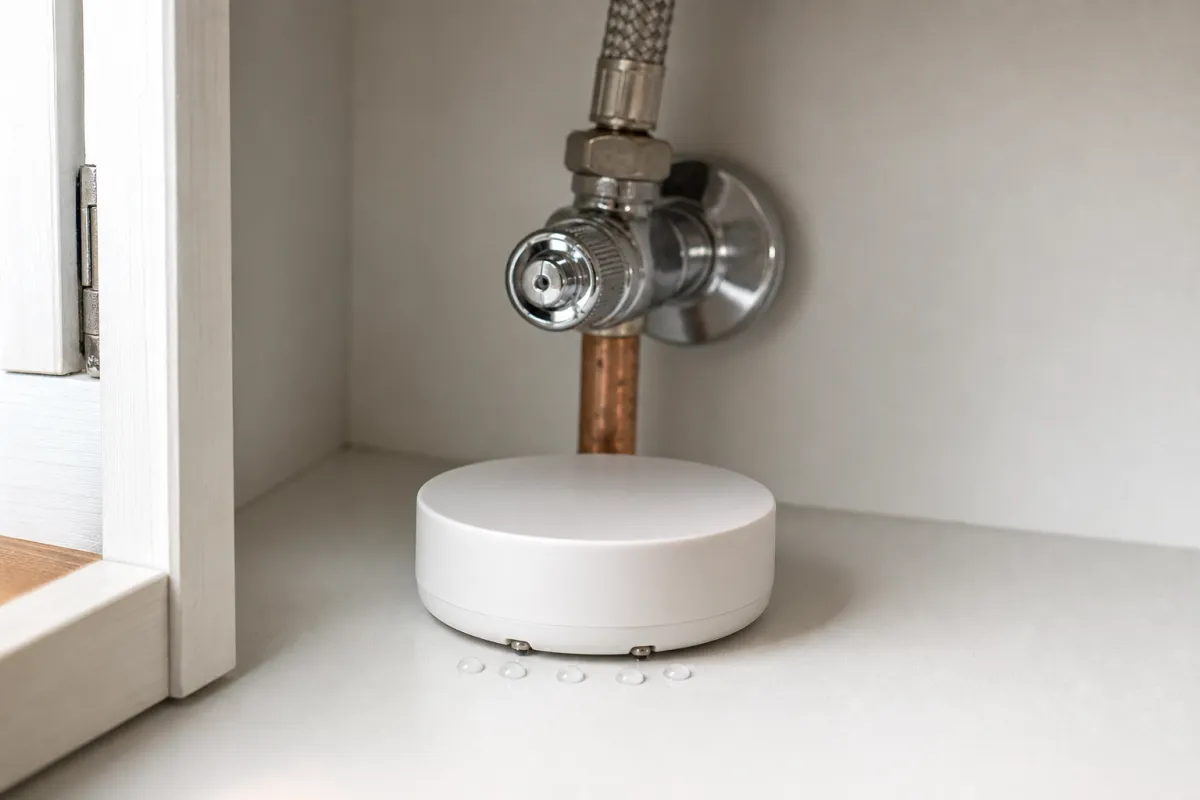
The simplest water leak detectors use metal contacts on the bottom of the device. When water bridges those contacts, the detector triggers an audible alarm. These compact, battery-powered units are commonly placed beside washing machines, beneath sinks, behind toilets, near water heaters, and under other fixtures. They are inexpensive and easy to move, but someone must be close enough to hear the alarm unless the device also has wireless connectivity.
Smart spot detectors use the same basic sensing method but connect through Wi-Fi, Bluetooth, or a dedicated hub. When the sensor becomes wet, the system can send a push notification, text, email, or app alert. Some models also monitor temperature and humidity, which may help identify freezing conditions or a persistently damp area before visible water accumulates.
Whole-home monitors work differently. They are installed on or near the main water line and watch flow, pressure, or acoustic patterns. The system learns or records how water is normally used and looks for suspicious activity, such as continuous flow when the home should be inactive. Models with an automatic shutoff valve can close the supply when a likely leak is detected, reducing the amount of water that escapes while the homeowner is away.
What Leak Detectors Can—and Cannot—Protect Against
Water leak detectors are most effective against leaks that happen near a sensor or create an unusual water-flow pattern. A spot detector may provide an early warning when a water heater begins dripping, a washing-machine hose fails, a refrigerator supply line leaks, or water collects beneath a vanity. A whole-home monitor may recognize a running toilet, a damaged supply pipe, or sustained water use caused by a major break.
Detection becomes less certain when water travels somewhere the device cannot sense. A slow roof leak, seepage through a foundation wall, condensation inside an HVAC system, or water entering around a window may not involve the plumbing supply at all. A flow-based detector cannot identify water that comes from rain, groundwater, a leaking drainpipe, or an overflowing appliance after its water supply has already stopped.
Even automatic shutoff systems have limits. Closing the main line can stop additional pressurized water from entering the home, but it cannot remove water already inside a failed tank or pipe. It also cannot stop sewage backups, storm flooding, or water from a neighboring unit. Homeowners should treat leak detection as one part of a broader plan that includes maintained hoses, accessible shutoff valves, sound drainage, and periodic inspection of vulnerable areas.
The Main Types of Water Leak Detectors
Standalone spot alarms are the most affordable option. They typically run on replaceable batteries and sound a loud alarm when their contacts become wet. These units make sense for occupied homes where someone is likely to hear them. They are also useful for covering several small risk areas without committing to a larger smart-home system. Their main weakness is that they cannot help much when everyone is away.
Smart spot sensors add remote notifications and, in some cases, temperature or humidity monitoring. They are a strong middle-ground choice for homeowners who travel, manage a second property, or want an alert before a small leak becomes obvious. Before buying, check whether the product requires a hub, paid subscription, specific smart-home platform, or permanent internet connection. A Wi-Fi sensor that goes offline without warning offers less protection than its feature list suggests.
Whole-home flow monitors and automatic shutoff systems provide the broadest plumbing-related coverage. Some attach externally to a pipe, while others require the water line to be cut so a valve or meter can be installed. These systems are generally more expensive, but they can respond to leaks that occur far from any individual spot sensor. They work best when combined with several local sensors in high-risk areas, particularly where non-plumbing water sources or very slow drips may be involved.
What to Check Before Buying a System
Start by identifying the most expensive or disruptive leak scenarios in your home. Look at the age and condition of the water heater, washing-machine hoses, refrigerator line, dishwasher connection, toilets, sump pump, basement plumbing, and supply lines beneath sinks. In a multi-story home, prioritize fixtures located above finished rooms because a relatively small leak can damage ceilings, insulation, flooring, and electrical components below.
Next, confirm how the detector communicates and what happens during a power or internet outage. Battery-powered local alarms can continue sounding without household power, while some connected systems may lose remote alerts if the router or hub is offline. Check whether the app reports low batteries, disconnected sensors, valve errors, and loss of communication. A system should make failures visible rather than quietly appearing online while a sensor is no longer functioning.
Finally, inspect the main shutoff arrangement before considering automatic valve control. Determine where the valve is located, whether it turns freely, and whether the nearby pipe is accessible. Do not force a corroded or seized valve; it can break and create the exact emergency you are trying to prevent. If the main valve is difficult to reach, heavily corroded, or connected to old piping, have a licensed plumber assess it before installing a shutoff device.
Features That Matter Most
The best detector is not necessarily the one with the longest feature list. Reliable sensing, clear alerts, battery reporting, and practical placement matter more than decorative app screens. Automatic shutoff can be valuable in an unoccupied property, but it should include manual override controls and adjustable sensitivity so normal activities do not repeatedly interrupt the water supply.
Use this quick-reference table to compare the most common options:
| Detector type | Best suited for | Main advantage | Important limitation |
|---|---|---|---|
| Basic spot alarm | Occupied homes and individual fixtures | Low cost and simple setup | No remote notification |
| Smart spot sensor | Kitchens, bathrooms, laundry rooms, and second homes | Phone alerts and device-status reporting | Only detects water near the sensor |
| Cable-style sensor | Long areas beside appliances or around equipment | Covers more floor area than one small sensor | Cable must remain positioned correctly |
| Flow monitor | Whole-home plumbing surveillance | Can identify unusual or continuous water use | May not detect rain, drain, or groundwater leaks |
| Automatic shutoff system | High-value, vacant, or leak-sensitive homes | Can stop additional supply water | Higher cost and possible professional installation |
| Temperature-enabled sensor | Basements, crawl spaces, and cold utility areas | Can warn about freezing conditions | Temperature warning does not confirm a pipe leak |
Also consider alarm volume, battery life, sensor-extension cables, app quality, household sharing, and whether alerts can reach more than one person. If the system depends on a subscription, compare the ongoing fee with the features that disappear when the subscription ends. A detector that becomes a basic local alarm after a canceled service plan may still be useful, but that limitation should be understood before purchase.
Where and How to Install Leak Detectors
Place spot sensors where water is likely to collect first, not simply where there is open floor space. Good locations include beside the water heater’s drain pan, beneath sink supply connections, behind toilets, near washing-machine hoses, under the dishwasher’s front edge, below refrigerator supply tubing, beside a sump pit, and near a basement floor drain. Keep the contacts against the surface, and do not place the device on a shelf unless it uses a separate sensing cable that reaches the floor.
Avoid pushing a sensor so far behind an appliance that it cannot be tested, heard, or retrieved. Water can also run along grout lines, sloped floors, framing, or cabinet edges before reaching the lowest point. If an area is large, use a cable-style sensor or multiple devices rather than assuming one small alarm will cover the entire room. Do not place electronics where they may be submerged beyond their rated protection.
After installation, test each detector according to the manufacturer’s instructions. A small amount of clean water on the sensing contacts is usually enough for a spot detector, but follow the product documentation rather than soaking the unit. Confirm the audible alarm, phone notification, household sharing, and automatic valve response if applicable. Dry the sensor completely, reset it, and schedule battery and connectivity checks several times a year.
Typical Costs and Whether the Upgrade Is Worth It
Basic standalone alarms commonly cost roughly $10 to $30 each, depending on alarm volume, sensor design, and battery features. Smart spot sensors often fall around $30 to $100 per unit, although systems that require a hub can cost more initially. Multi-sensor kits may offer better value when covering a kitchen, laundry room, basement, and several bathrooms.
Whole-home flow monitors and shutoff systems can range from a few hundred dollars to well over $1,000 before installation. Professional installation adds cost when the main line must be cut, a valve replaced, electrical power added, or plumbing brought up to suitable condition. Prices vary by pipe material, accessibility, San Antonio metro labor rates, and whether the home already has a compatible shutoff valve, so obtain a written estimate for the actual installation.
Whether the expense is worthwhile depends on the property. A few inexpensive sensors may be enough for a small, regularly occupied home with accessible plumbing. A connected shutoff system may make more sense for a vacation property, finished basement, high-value interior, rental home, or residence that remains empty for long periods. Some insurers offer incentives for approved systems, but homeowners should verify eligibility directly rather than assuming a device will reduce premiums.
Common Mistakes That Reduce Protection
The most common mistake is buying one detector and expecting it to protect the entire house. Spot sensors have a limited physical range, and water may travel in an unexpected direction. A sensor beside the washing machine will not detect a leak under an upstairs bathroom vanity. Build coverage around specific risks, starting with fixtures that have pressurized supply lines or large stored volumes of water.
Another mistake is ignoring maintenance after installation. Batteries expire, sensors get moved during cleaning, Wi-Fi settings change, and shutoff valves can become stiff. Smart devices may appear normal in an app even though notifications are disabled at the phone level. Test the full alert path, including sound, app permissions, household recipients, and valve operation—not just the sensor’s indicator light.
Homeowners should also avoid assuming that every alert is a device error. Repeated alarms may indicate condensation, a pinhole leak, a failing appliance seal, intermittent drain overflow, or water migrating from another location. Silence and dry the detector, but investigate the source before returning it to service. Covering the contacts, removing the batteries, or increasing sensitivity thresholds without understanding the cause defeats the purpose of the system.
Safety Boundaries and When to Escalate Beyond DIY repair
If a leak is active and safe access is available, shut off the fixture valve or main water supply. Do not step into standing water when electrical outlets, appliances, extension cords, wiring, or a service panel may be energized. Leave the area and contact emergency services or a qualified electrician if there is an immediate electrical hazard. Do not touch a wet water heater, boiler, or powered appliance merely to reach a nearby valve.
Stop DIY work when water is contaminated, sewage is backing up, a ceiling is sagging, a wall feels structurally unstable, or gas odor is present. Leave the building if you smell gas, avoid operating switches or creating sparks, and contact the gas utility or emergency services from a safe location. Water from a clean supply line can also become hazardous after contacting insulation, flooring, chemicals, or contaminated cavities.
Call a plumber when the leak is concealed, the main valve does not operate safely, water pressure drops without explanation, or a whole-home shutoff requires cutting into the supply line. A water-damage restoration specialist may be needed when materials remain wet, moisture has spread behind walls, or flooring and insulation cannot be dried promptly. A detector can limit the incident, but it cannot determine whether concealed materials are fully dry or structurally sound.
Frequently Asked Questions
Can a water leak detector identify a leak behind a wall?
A basic spot detector cannot sense through a wall. It may eventually alarm if water reaches the floor near the sensor. A whole-home flow monitor may recognize unexplained water use, but it usually cannot identify the exact location. Moisture meters, thermal imaging, pressure testing, or selective access may be needed to locate a concealed leak.
Will a leak detector shut off my water automatically?
Only systems designed with an automatic shutoff valve can close the supply. Standard alarms and many smart sensors merely send notifications. Some smart spot sensors can communicate with a separate compatible valve controller, so confirm that all required components are included and work together before buying.
Can these devices detect a slow drip?
Spot sensors can detect a slow drip once enough water reaches their contacts. Flow monitors vary: some recognize very small continuous flow, while others need a larger or longer event before issuing an alert. Very slow seepage, condensation, and intermittent drips remain difficult to identify, making strategic sensor placement important.
Do water leak detectors work if the Wi-Fi goes down?
Many smart detectors can still sound a local alarm, but remote notifications may stop when Wi-Fi or internet service fails. Hub-based systems may retain some local functions. Review the product’s offline behavior and choose a model that provides both an audible alarm and a visible connectivity warning.
How many leak detectors does a typical home need?
There is no universal number. Count high-risk locations rather than rooms: water heater, washing machine, dishwasher, refrigerator supply, sump area, toilets, and sink cabinets. Begin with the locations where a leak would remain hidden or damage finished rooms, then add coverage based on the home’s layout and plumbing condition.
Why This Is Different in San Antonio
San Antonio's Edwards Aquifer supplies some of the hardest municipal water in the United States: about 357 mg/L, or 21 grains per gallon. That limestone-filtered groundwater carries calcium carbonate and magnesium into our fixtures, valves, drains, heaters, and supply lines. For do water leak detectors work, that matters because mineral deposits grind down seals, cartridges, fill valves, supply stops, spray arms, and small water passages faster than many generic guides assume.
- Scale buildup makes small restrictions worse, especially at cartridges, aerators, shutoff valves, drains, and heater connections.
- Fixtures, pipes, and appliances in our area can wear out 30-50% faster than in soft-water cities when maintenance is delayed.
- SAWS publishes annual water quality reports, but the practical homeowner takeaway is simple: maintenance intervals here should be shorter than national advice suggests.
Homes in King William are particularly affected because historic homes may still have cast iron, galvanized pipe, and tight retrofit spaces. Unlike cities with naturally soft water, local homeowners should treat hard-water maintenance as normal prevention, not an upsell.
> "When I see early leaks in San Antonio, I always look for hard-water scale, corrosion, and older neighborhood pipe materials before blaming one bad fixture." — Licensed local plumber
What San Antonio Homeowners Pay (2026)
| Service | Typical Cost in San Antonio |
|---|---|
| Emergency plumber call | $150–$350; after hours $250–$500 |
| Faucet replacement labor | $150–$300 |
| Plumber hourly rate | $85–$150/hr |
Prices are based on local metro area ranges for 2026. Costs may vary by neighborhood, access, pipe material, after-hours timing, and whether the plumber finds hard-water damage beyond the visible problem.
When to Call a San Antonio Plumber
Call a licensed local plumber if the problem involves active leaking, a shutoff valve that will not close, sewer smell, recurring clogs, water near electrical components, a water heater leak, or any pipe inside a wall, ceiling, or slab. Locally, expect many licensed plumbers to charge roughly $85-$150 per hour, with emergency visits commonly around $150-$350 and after-hours calls closer to $250-$500.
When you call, ask three local questions:
1. Are you licensed and insured for work in Bexar County or the surrounding local metro?
2. Have you dealt with Edwards Aquifer hard-water scale on this type of repair?
3. Should I also check the water heater, shutoff valves, or water softener while you are there?
local plumbers see hard-water issues every week, so a good pro should be able to explain whether the failure is normal wear, mineral damage, freeze damage from a cold snap like Winter Storm Uri, or a sign of a larger plumbing system problem.
San Antonio FAQ
Is local water hard?
Yes. local water is very hard at about 357 mg/L, or 21 grains per gallon, because much of it comes from the Edwards Aquifer and passes through limestone. That mineral content is why scale shows up quickly on faucets, showerheads, valves, drains, and water heaters.
Do local homes need a water softener?
A water softener is recommended for many local homes, especially if you see white scale, repeated faucet or valve problems, short water-heater life, or cloudy spots on dishes. A typical whole-home water softener installation in San Antonio runs about $1,500-$4,000.