> San Antonio Local Insight: Fixture and faucet leaks in San Antonio happen faster because hard water minerals (21 gpg from Edwards Aquifer) grind down valve seats, corrode cartridges, and prevent proper sealing. A faucet that lasts 15 years in soft-water cities often starts leaking within 5–8 years in San Antonio without a water softener.
Local San Antonio Field Notes Before You Start
Before following any generic plumbing checklist, adjust it for our Edwards Aquifer water. At roughly 357 mg/L, or 21 grains per gallon, the calcium carbonate and magnesium in the water can turn a small maintenance issue into repeat wear on valves, seals, drains, heaters, and appliance connections. That means a visible drip may be the symptom, while the real risk is scale, corrosion, freeze stress, or an older pipe material failing behind the wall or under the slab.
A homeowner in Stone Oak should be especially careful because 1990s and 2000s copper lines are a common place for pinhole leaks and scale-related fixture wear. If you are comparing advice from national repair guides, shorten the maintenance interval and inspect for white scale, crusted fittings, stiff shutoff valves, and early corrosion before assuming the part simply “got old.”
For budgeting, use local pricing instead of national averages: emergency plumber calls often run $150-$350, after-hours visits $250-$500, and slab leak repair can reach $2,000-$5,000. If the issue appears after a summer high-use period or after a rare freeze like Winter Storm Uri, treat it as a local risk signal and document what you see before calling a licensed plumber in Bexar County.
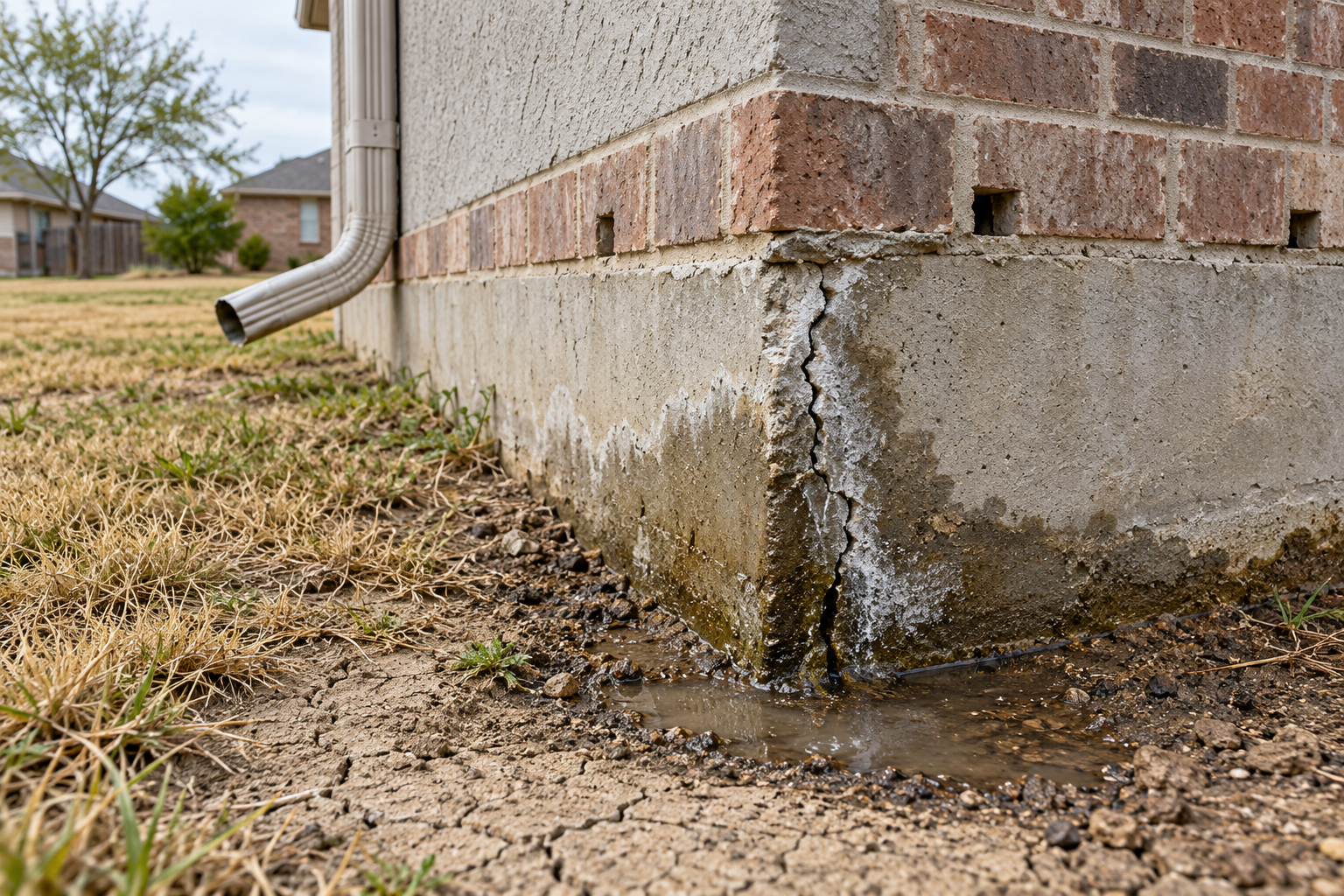
Water appearing along a foundation wall or basement floor needs attention, but it does not automatically mean the foundation has failed. The moisture may come from surface runoff, a plumbing supply line, a drain, groundwater pressure, condensation, or a crack that provides an entry path. Effective foundation leak repair starts by identifying which source is active rather than applying sealant to the first damp spot you see.
If water is spreading toward outlets, a breaker panel, appliances, or extension cords, stay out of the wet area and shut off power only from a dry, safely accessible location. A rapidly rising water level, sewage odor, suspected gas leak, or active structural movement requires professional help. For a clean-water leak from household plumbing, close the nearest fixture valve or the main water shutoff while you investigate.
Why Foundation Leaks Happen
The most common cause is poor control of rainwater outside. Clogged gutters overflow beside the house, short downspouts discharge at the footing, and soil that slopes toward the wall funnels water into the backfill. That disturbed soil is often more permeable than the surrounding ground, so it can act like a trench leading directly to the foundation. Water then enters through a crack, an unsealed utility penetration, the wall-to-floor joint, or porous masonry.
Groundwater creates a different problem. After prolonged rain or snowmelt, the water table can rise beneath a basement slab. Hydrostatic pressure may force moisture through floor cracks or the cove joint where the slab meets the wall. Plumbing leaks can imitate either pattern. A pinhole in a buried supply line, failed drain, leaking hose bib, or broken sprinkler pipe may keep an area wet even during dry weather. Condensation on cold pipes and walls is another possibility, especially when humid indoor air enters a cool basement.
Read the Clues Before Choosing a Repair
Timing is one of the best diagnostic tools. Moisture that appears during wind-driven rain near one wall suggests exterior drainage, grading, or an above-grade opening. Water that emerges at the wall-floor joint after several wet days points more strongly toward saturated soil and groundwater pressure. A wet area that grows when no rain has fallen deserves a plumbing check. Record weather, water-meter readings, and the location of dampness instead of relying on memory.
The material left behind also matters. White, powdery efflorescence indicates that moisture has moved through masonry and deposited salts, though it does not identify the current source. Rust stains around form ties can mark seepage paths in poured concrete. Musty odors, peeling paint, softened drywall, or darkened framing indicate that moisture has persisted long enough to affect finishes. A horizontal crack, bowed wall, displaced block, or crack that is visibly widening is a structural warning—not merely a waterproofing task.

Safety Steps Before You Inspect
Do not walk through standing water when electrical equipment may be energized. If the service panel is in the wet area, do not approach it to switch breakers; contact the utility or an electrician. Keep fuel-burning appliances in mind as well. Floodwater can damage controls or venting, and a suspected gas odor calls for immediate evacuation and a call from outside to the gas utility or emergency services. Never test for gas with a flame.
Treat sewage-contaminated water as a health hazard. Avoid skin contact, keep children and pets away, and use a qualified cleanup service for extensive contamination. For a likely clean-water plumbing leak, turn off the main valve and open a low faucet to relieve pressure if it is safe. Do not excavate beside a foundation without understanding utility locations and soil stability. Deep trenches can collapse, and careless digging can damage gas, electrical, water, or communication lines.
Step-by-Step Homeowner Checks
Begin outside during or soon after rain. From stable ground, inspect gutters, downspouts, window wells, exterior faucets, and visible grading. Clear an accessible gutter only with safe ladder practices; otherwise hire the work out. Downspout extensions should carry water to a lawful discharge point where it flows away from the house rather than toward a neighbor, sidewalk hazard, or septic component. Look for settled soil beside the wall and puddles that remain after the rest of the yard drains.
Inside, outline the wet area with painter’s tape and note the time. Check nearby supply valves, appliance hoses, drain traps, and exposed pipes with a dry paper towel. With every fixture off, record the water meter, avoid using water for a set period, and check it again. Movement can indicate a leak, although some meters show small changes from ice makers, softeners, or other automatic devices. A plumber can isolate lines and perform pressure or drain testing without destructive guesswork.
Use a hygrometer to compare basement humidity over several days. Condensation typically forms broadly on cool surfaces, while infiltration follows joints and cracks. A moisture meter can help map damp finishes, but readings vary by material and should not be treated as proof of the source. Avoid opening walls that may contain mold, asbestos-containing materials, or concealed wiring until risks are assessed.
Repairs Homeowners Can Often Handle
Simple water-management corrections are often the best first move. Clean gutters, repair disconnected downspouts, extend discharge away from the foundation, and correct small areas of settled topsoil so the finished surface slopes away without covering siding, weep holes, or the top of the foundation. Keep mulch from forming a dam. Seal obvious above-grade gaps around suitable penetrations with a compatible exterior sealant after the area is clean and dry.
A non-moving, accessible crack in poured concrete may be a candidate for a purpose-designed injection repair. Epoxy primarily bonds and restores continuity in a dry structural crack; polyurethane formulations can better tolerate some moisture and expand to seal a seepage path. Product suitability depends on crack condition and wall construction. Injection does not relieve exterior water pressure or correct movement, so follow the manufacturer’s preparation instructions and obtain professional evaluation if the crack changes, branches, or accompanies displacement.
Interior masonry waterproofing coatings can reduce minor dampness but are rarely a complete answer to active pressure. Paint over a wet wall may blister and conceal worsening damage. Likewise, caulk pressed into the wall-floor joint can redirect water rather than solve it. Start with source control and use interior products only as one part of a system suited to the actual cause.
Professional Foundation Leak Repair Options
Exterior waterproofing is the most direct but disruptive approach when water is entering through a buried wall. A contractor may excavate safely, repair cracks, apply a waterproof membrane, add protection or drainage board, verify footing-drain function, and backfill with proper grading. This can be effective because it stops water before it crosses the wall. Constraints include decks, utilities, property lines, landscaping, soil conditions, and the need to avoid undermining the footing.
An interior perimeter drainage system manages water after it reaches the foundation. A channel near the slab edge directs water to a sump basin, where a pump discharges it to an approved location. This can be practical where exterior access is limited or groundwater pressure is the main issue. It must include a reliable discharge route, check valve, sealed details where appropriate, maintenance access, and consideration of backup power. It manages water; it does not repair a structurally unstable wall.
Plumbing-related leakage needs a plumber’s diagnosis. Depending on the source, repair may involve replacing an exposed section, rerouting a failed buried line, repairing a sewer lateral, or addressing an exterior service connection. Structural cracks or bowing should be evaluated by a qualified structural engineer or appropriately licensed foundation specialist before waterproofing hides the evidence.

Comparing Repair Approaches
The following guide helps organize decisions, but local construction, codes, access, and diagnosis can change the appropriate scope and price. Obtain written estimates that describe preparation, drainage, disposal, restoration, warranty exclusions, and who handles permits.
| Finding | Sensible first action | Possible lasting repair | Call promptly when |
|---|---|---|---|
| Overflow beside wall | Clean and test gutters | Resize/repair gutters and extend drainage | Roof access is unsafe or overflow persists |
| Damp spot after rain | Correct grading and inspect penetrations | Exterior membrane or targeted crack repair | Wall bows, crack grows, or water streams in |
| Water at wall-floor joint | Check discharge and groundwater pattern | Interior perimeter drain and sump, or exterior drainage | Water rises quickly or reaches electrical equipment |
| Wet area in dry weather | Check meter and fixtures | Plumbing line or drain repair | Meter moves, pressure drops, or sewage is suspected |
| Broad surface moisture | Measure humidity and temperature | Dehumidification, air sealing, insulation strategy | Hidden mold or damaged finishes are extensive |
Costs vary widely because a tube of sealant, crack injection, sump installation, excavation, and structural stabilization are fundamentally different projects. Instead of accepting a price based only on visible water, ask each bidder to name the source, explain how the proposal controls it, and identify what happens if the diagnosis is wrong. Comparing equivalent scopes is more useful than comparing bottom-line totals.
Drying, Cleanup, and Mold Prevention
After stopping the source, remove standing water with equipment appropriate to the hazard. Do not use ordinary electrical appliances in wet conditions. Move dry belongings away, discard materials that cannot be safely cleaned, and increase dehumidification and air movement only when doing so will not spread contamination. Wet drywall, insulation, carpet pad, and composite wood may trap moisture even when the surface feels dry.
Document damage with photographs for insurance before disposal when it is safe to do so. Coverage varies according to cause and policy, so contact the insurer promptly without assuming that seepage, flooding, or plumbing discharge is covered. Persistent odor or visible growth across a large area warrants professional assessment. Fixing the leak is essential; simply spraying or painting over growth does not address wet material behind the finish.
Preventing the Next Leak
Inspect the water path around the house at least seasonally and after major storms. Keep gutters and drains clear, confirm that extensions remain connected, and watch for settlement in recently placed soil. Maintain window-well covers and drains where installed, while preserving emergency-egress function. Avoid concentrating irrigation near the foundation, and repair outdoor faucets or sprinkler lines that create chronic saturation.
Test a sump pump according to its manufacturer’s instructions, clean accessible components, and verify that discharge piping is not frozen, blocked, or recirculating beside the house. Consider a high-water alarm and a suitable battery or water-powered backup where outages coincide with storms. Monitor known cracks with dated photographs or simple reference marks, but do not postpone evaluation when movement is visible.
When DIY Must Stop
Call urgently for rapidly entering water, sewage, electrical exposure, suspected gas, loss of water pressure with unexplained meter movement, or a wall that is bowing or shifting. A wide horizontal crack, stair-step cracking with displacement, doors suddenly binding, or a foundation crack that changes over a short period deserves structural evaluation. Emergency stabilization and source control come before cosmetic repair.
Professional help is also sensible when repeated surface fixes fail, the leak is concealed, excavation would be deep, or the repair affects a sewer, service line, footing drain, or sump discharge governed by local rules. Ask for licensing and insurance appropriate to the trade, diagnostic evidence, itemized scope, permit responsibility, and a written explanation of warranties. Be cautious of anyone who promises that one coating solves every wet basement.
Frequently Asked Questions
Can I seal a foundation leak from the inside?
Sometimes. A stable crack in poured concrete may be injected from inside, and an interior drainage system can reliably manage groundwater. However, an interior patch alone may fail when exterior water pressure, poor grading, or structural movement remains. Diagnosis determines whether inside access is a practical repair or only a temporary barrier.
How can I tell whether the water is plumbing or rainwater?
Compare timing, location, and meter behavior. Rain-related seepage usually follows storms or saturated-soil periods. Plumbing leakage may continue in dry weather, correspond with fixture use, or register on the meter when all intended use is off. Automatic appliances can complicate the test, so professional isolation may be needed.
Is a leaking foundation always a structural problem?
No. Water commonly passes through stable cracks, joints, and penetrations without indicating failure. Still, bowing, displacement, a widening horizontal crack, or coordinated changes elsewhere in the house can signal movement. Have those conditions assessed before covering them.
Will a dehumidifier fix basement seepage?
A dehumidifier controls airborne moisture and can help dry materials after the source is stopped. It cannot prevent liquid water from crossing a wall or rising through a joint. Use it as moisture management, not as a substitute for drainage or plumbing repair.
How long should I monitor after repair?
Check during several significant rain events and through the season that previously triggered leakage. Continue watching humidity, sump operation, stains, and crack condition. A dry week is encouraging, but it may not reproduce the groundwater level or wind direction that caused the original leak.
Foundation leak repair succeeds when the repair matches the water source. Make the area safe, document the pattern, control roof and surface water, rule out plumbing, and escalate structural or hazardous conditions promptly. That methodical sequence protects the house better than repeatedly hiding the symptom.
Why This Is Different in San Antonio
Foundation moisture here is often misdiagnosed because slab plumbing, limestone-rich soil, irrigation, and intense thunderstorms can produce similar symptoms. Edwards Aquifer water measures about 357 mg/L, or 21 gpg; scale can narrow copper lines and accelerate pinhole failures beneath a slab. In Stone Oak, a dry-weather warm spot or a meter that moves with every fixture off points toward supply plumbing, while seepage that follows a downpour points toward grading or drainage.
SAWS meter data is useful evidence, but it cannot locate the break. Record the meter, isolate irrigation and softener cycles, and have a Bexar County plumber perform line isolation before anyone cuts flooring. Winter Storm Uri also taught homeowners to mention prior freeze damage: a weakened line may leak months or years after the original cold snap.
What San Antonio Homeowners Pay (2026)
| Foundation-water service | Typical local range |
|---|---|
| Leak detection and line isolation | $250–$600 |
| Targeted slab leak repair | $2,000–$5,000 |
| Reroute around a failed under-slab branch | $2,500–$7,500 |
| Interior drainage or sump project | $3,000–$10,000+ |
| Structural engineer assessment | $500–$1,200 |
Access, flooring restoration, trenching, and whether the source is plumbing or stormwater drive the final price. Require separate line items for diagnosis, plumbing, concrete/floor repair, and drying.
When to Call a San Antonio Plumber
Call promptly when the meter moves during a controlled no-use test, water appears in dry weather, pressure falls, or a warm slab area suggests a hot-water leak. Use emergency service for uncontrolled flow, sewage, electrical exposure, or visible structural movement. A licensed plumber should explain the test result before proposing demolition; foundation movement belongs with a structural engineer, not a waterproofing sales pitch.
DIY is appropriate for documenting the pattern, clearing safe gutters, and correcting minor surface drainage. Do not jackhammer a slab, excavate beside a footing, or open a wet wall near wiring. Those steps can create a larger structural or electrical hazard.
San Antonio Foundation Leak FAQ
Does hard water directly crack a foundation?
No. Mineral-heavy water does not crack concrete by itself, but it can contribute to corrosion and restriction in buried plumbing. Escaping water can then wash soil or keep expansive soil unevenly wet.
Should I call SAWS first?
Call SAWS if the suspected leak may be on the utility side of the meter or if you need account and meter guidance. The homeowner normally handles the private service line and interior plumbing.
Is one dry week proof the repair worked?
No. Verify a plumbing repair with pressure or isolation testing, and verify a drainage repair through several meaningful rain events. Keep dated meter readings and photos.