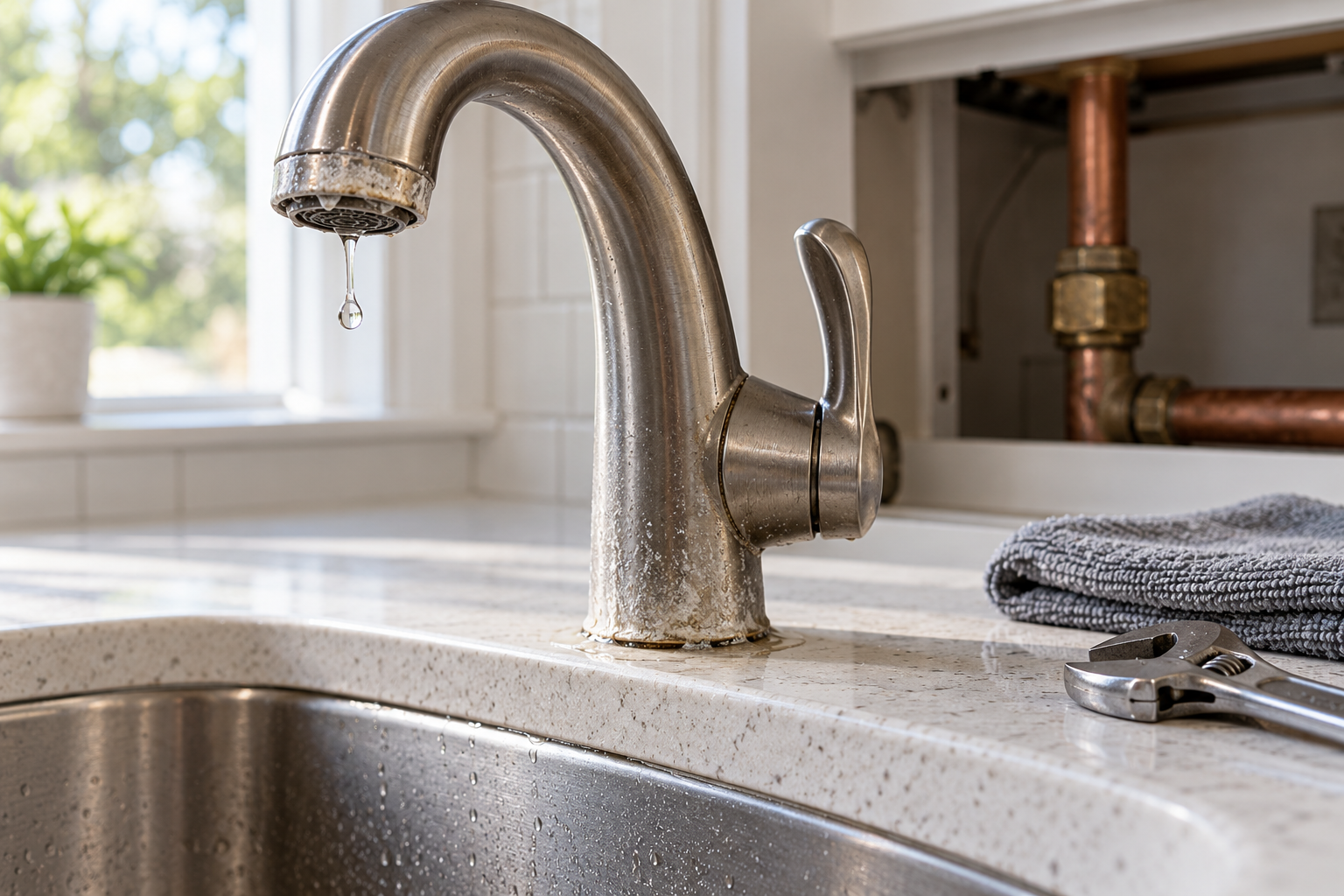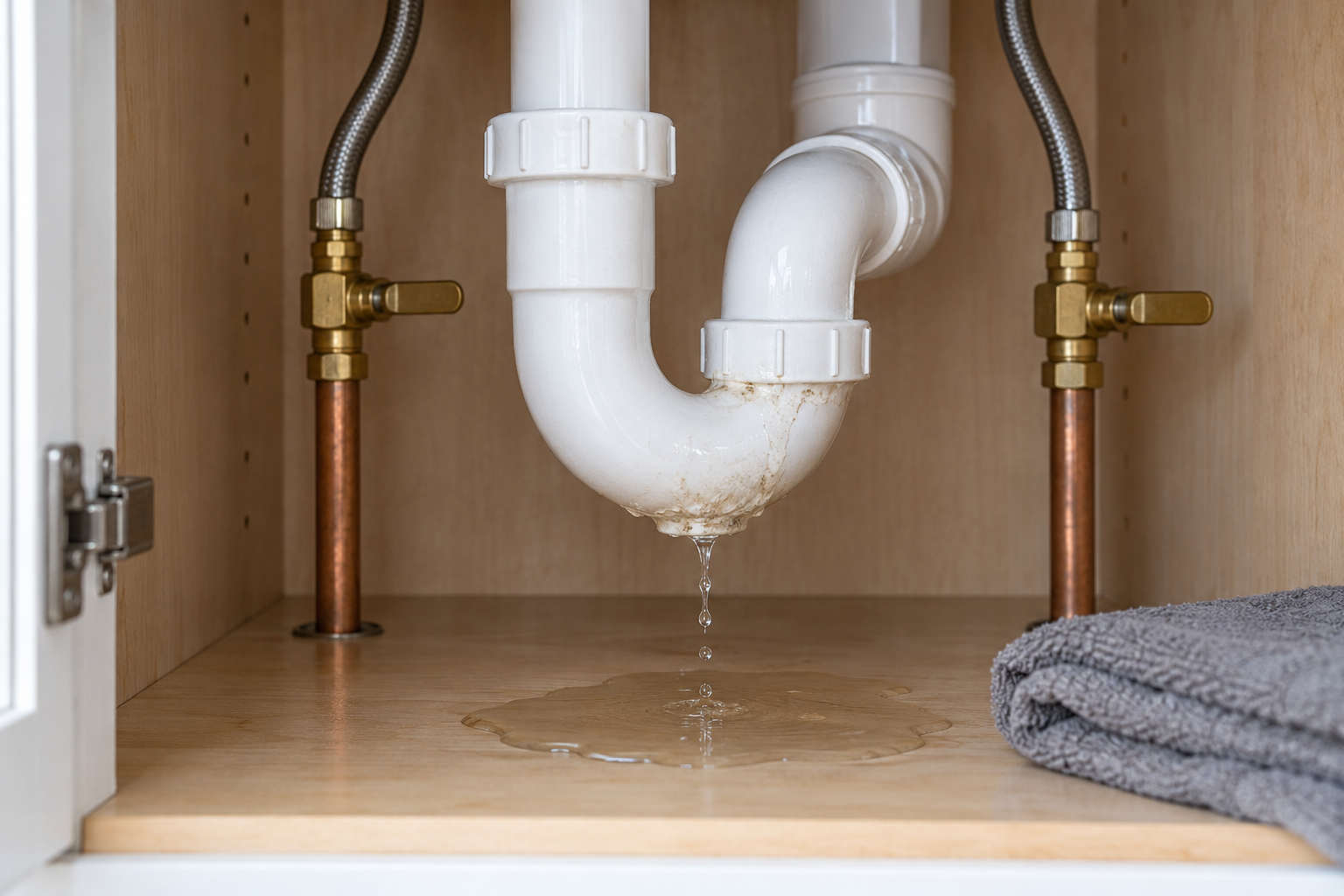
> San Antonio Local Insight: Drain and sink clogs in San Antonio are different from other cities. Edwards Aquifer hard water (357 mg/L) deposits white calcium scale inside pipes that traps hair, grease, and soap more aggressively. Standard drain cleaners often fail because they dissolve organic matter but not mineral buildup. Local homes need descaling-specific methods.
Local San Antonio Field Notes Before You Start
Before following any generic plumbing checklist, adjust it for our Edwards Aquifer water. At roughly 357 mg/L, or 21 grains per gallon, the calcium carbonate and magnesium in the water can turn a small maintenance issue into repeat wear on valves, seals, drains, heaters, and appliance connections. That means a clog should be treated as hair, grease, food waste, and mineral scale working together, not as a simple one-cause blockage.
A homeowner in Alamo Heights should be especially careful because older galvanized and mixed-metal lines make small leaks more urgent than they look. If you are comparing advice from national repair guides, shorten the maintenance interval and inspect for white scale, crusted fittings, stiff shutoff valves, and early corrosion before assuming the part simply “got old.”
For budgeting, use local pricing instead of national averages: drain cleaning usually runs $150-$350, and a sewer camera inspection is commonly $200-$400. If the issue appears after a summer high-use period or after a rare freeze like Winter Storm Uri, treat it as a local risk signal and document what you see before calling a licensed plumber in Bexar County.
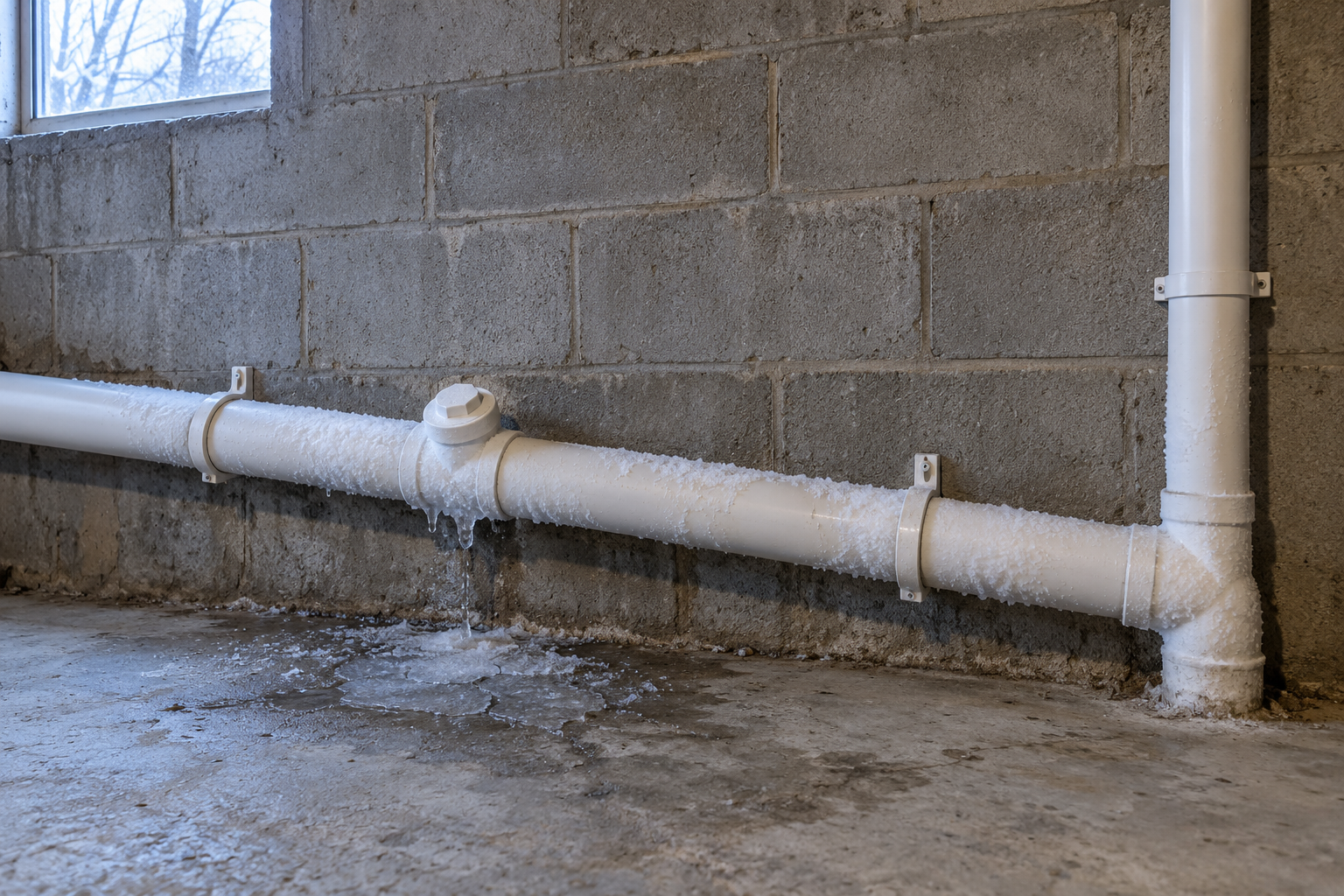
A frozen drain pipe needs a different response from a frozen water-supply line. A drain normally contains little standing water, so freezing often means water has collected behind a clog, in a poorly sloped section, or inside a trap exposed to severe cold. Stop using the connected fixture, locate the cold section if it is safely accessible, and warm it gradually—never with flame or extreme heat.
Treat backups seriously. A sink, shower, or toilet can overflow as more wastewater enters a blocked branch, and a split pipe may begin leaking as ice melts. If multiple fixtures are backing up, sewage is present, the pipe is concealed, or you cannot control the water safely, call a licensed plumber rather than experimenting.
Confirm That the Drain Is Actually Frozen
A slow or stopped drain during a cold snap is suggestive, but ordinary clogs are much more common. Think about timing and location. A fixture that drained normally before temperatures plunged, especially one above an unheated crawlspace or near an exterior wall, may have a frozen trap or branch. Frost on accessible piping, a distinctly cold pipe section, and gurgling without drainage support that diagnosis.
Compare nearby fixtures without adding much water. If one bathroom sink is affected but its shower and toilet work, a local hair or soap clog is more likely. If several fixtures on the same cold branch stop together, the blockage may be farther downstream. Whole-house backup at the lowest drain points can indicate a sewer-line obstruction, not ice. Do not keep “testing” by filling basins; every added gallon increases overflow risk.
| Symptom | More likely explanation | Best next step |
|---|---|---|
| One slow sink, no severe cold exposure | Local clog | Inspect stopper and trap |
| Fixture stopped during hard freeze | Frozen trap or branch | Stop use and inspect accessible cold areas |
| Several fixtures gurgle or back up | Branch/main obstruction | Call a drain professional |
| Sewage at floor drain | Main sewer problem | Avoid contact and call promptly |
| Water appears during thawing | Split or disconnected pipe | Stop water use and arrange repair |
Understand Why Drain Pipes Freeze
Drain piping is designed to empty by gravity, but traps intentionally retain water to block sewer gases. That standing water can freeze when a trap sits in an unheated cabinet, crawlspace, garage, or seasonal building. A sagging horizontal run can also hold water. Poor slope, an inadequate support, or accumulated grease and debris may leave enough liquid in the pipe to create an ice plug.
Cold air leaks are often the hidden trigger. A small opening around a wall penetration can direct outdoor air onto the trap or branch even when the room feels warm. Exterior vents can frost in unusual weather, while rarely used drains may freeze because there is no periodic warm flow. Repeated freezing is therefore a building or drainage defect to correct—not merely bad luck to thaw each winter.
Make the Area Safe Before Applying Heat
Stop using every fixture that feeds the suspected frozen section. Place towels and a shallow pan beneath accessible piping, clear stored items from the cabinet, and identify the nearest water shutoff in case a fitting has cracked. If water is already leaking, shut off the relevant fixture supplies or the main supply if necessary. Keep water away from receptacles, power strips, appliances, and exposed wiring.
Do not enter a wet crawlspace with electrical equipment. Do not touch wastewater with bare skin, and keep the area isolated if sewage is present. A sewer-gas odor may come through an emptied or damaged trap; ventilate if it can be done safely, avoid ignition sources, and leave if the odor is strong or accompanied by dizziness. A suspected natural-gas odor requires immediate evacuation and a call to the gas utility—not drain troubleshooting.
Locate the Frozen Section Without Damaging the Pipe
Start at the fixture trap, which is the U- or P-shaped section directly below a sink and the most obvious reservoir of standing water. Feel for temperature differences with your hand only if the pipe is dry and safe to touch. Look for frost, bulging, split seams, or displaced slip-joint nuts. Follow the branch toward the wall or floor where it remains visible, paying attention to exterior-wall and unheated areas.
An inexpensive infrared thermometer can help compare surface temperatures, but shiny metal can produce misleading readings. Do not drill walls or floors simply to hunt for ice. If the suspected section is concealed, opening the building assembly without understanding plumbing and wiring locations can cause more damage than the freeze itself. A plumber may use inspection equipment and controlled access.

Thaw an Accessible Frozen Drain Gradually
Warm the surrounding room first. Open the sink cabinet, raise normal indoor heat, and block obvious drafts without covering required vents or combustion-air openings. Wrap the accessible pipe with towels dampened in warm—not boiling—water, replacing them as they cool. A hair dryer on low can be used on dry piping while you remain present, keep the cord and appliance away from water, and move the airflow continuously.
Work from the fixture side toward the colder downstream section so meltwater has somewhere to move. Never use a propane torch, open flame, heat gun, charcoal device, or boiling water. Extreme localized heat can deform plastic, damage seals, crack cold material, ignite cabinetry, or turn trapped water into pressure. Do not leave a portable heater unattended or aim one into a closed cabinet. If gentle warming produces no change, stop rather than escalating.
Test the Drain Carefully After Thawing
Once the frost disappears and the pipe warms, inspect every visible joint before adding water. Run only a small amount—about a cup—into the fixture and watch the trap, branch, floor, and ceiling below. If it drains normally and stays dry, repeat with a slightly larger amount. A paper towel wiped around joints reveals moisture that is hard to see.
If water drains slowly, the original problem may include a clog. Use ordinary mechanical cleaning appropriate to the fixture rather than chemical drain cleaner; residual chemicals create a splash hazard for anyone who later opens the trap. Guidance for a clogged sink drain can help distinguish stopper debris from a deeper obstruction. Stop testing immediately if water leaks, backs up elsewhere, or produces strong sewer odor.

Handle Clogs Without Making the Freeze Worse
For a sink, remove visible debris from the stopper after protecting yourself from dirty water. A small cup plunger may help a simple local clog if the overflow opening is sealed, but avoid forceful plunging on brittle, frozen, or visibly damaged piping. A hand-operated drain snake can be appropriate for an accessible branch when used gently, yet it should not be forced through resistance or used where chemical cleaner has already been poured.
Shower drains commonly collect hair and soap close to the opening; review the best way to unclog a shower drain before reaching for harsh products. Grease in kitchen branches can combine with cold temperatures to create a stubborn restriction. Pouring boiling water or caustic cleaner into a fully blocked, frozen pipe is unsafe: it can sit in the fixture, harm piping, and expose the eventual repair technician to chemicals.
Recognize Damage and Know When to Call a Plumber
Call a licensed plumber if the frozen area is inside a wall, below a slab, in an inaccessible crawlspace, or part of a main sewer line. Professional help is also warranted for multiple backed-up fixtures, sewage, recurring freeze-ups, damaged supports, or no improvement after gradual room heating. A plumber can separate a clog from a slope or vent problem and recommend a durable correction.
Leaks that appear during thawing require immediate action. Stop using connected fixtures and, if supply water is contributing, close the appropriate shutoff. Photograph visible damage and protect nearby finishes without concealing the pipe before inspection. A split branch or failed joint needs proper pipe leak repair; tape and sealant are not reliable substitutes for replacing damaged drain components.
Prevent the Drain From Freezing Again
Seal air leaks around pipe penetrations with materials appropriate to the assembly and fire-safety requirements. Insulate vulnerable drain piping with correctly sized pipe insulation, but remember that insulation slows heat loss—it does not create heat. Keep conditioned air reaching sink cabinets on very cold nights, maintain safe indoor temperatures, and repair broken crawlspace vents or insulation according to local climate practice.
Correct the reason water remains in the line. A plumber should fix sagging runs, inadequate slope, poor supports, or chronic restrictions. Seasonal buildings need a proper winterization plan that addresses traps and appliances; simply shutting off the water does not empty drain traps. Use only plumbing antifreeze specifically approved for the application and follow local rules—never use automotive antifreeze, which is toxic and inappropriate for household drains.
Tools, Time, and Cost Expectations
Low-risk thawing requires little equipment: towels, a shallow pan, flashlight, and perhaps a low-setting hair dryer or foam pipe insulation. The process may take from minutes to several hours depending on pipe material, room temperature, and how much of the line is frozen. Slow progress is safer than aggressive heat.
Professional cost varies widely. An exposed frozen trap that needs no repair is a smaller service than locating a concealed branch, clearing a main-line obstruction, replacing split pipe, or opening and restoring finishes. Emergency timing, access, pipe diameter, sewage cleanup, and code upgrades affect the total. Ask for diagnosis and repair scope separately when possible, and prioritize correcting slope, insulation, or air leakage so the bill does not repeat next winter.
Frequently Asked Questions
What causes a frozen drain pipe?
Usually, water is standing in an exposed trap, sagging branch, or partially clogged pipe during sustained cold. Air leaks, missing insulation, poor slope, and unheated spaces increase the risk. A drain that freezes repeatedly should be inspected for an underlying defect.
Can I thaw it myself?
You may gently warm a dry, fully accessible trap or branch using normal room heat, warm towels, or carefully supervised low heat. Concealed piping, sewage backup, electrical exposure, visible damage, and main-line problems require professional help.
How urgent is a frozen drain?
It becomes urgent when connected fixtures are still being used, because wastewater can overflow or leak through a split pipe. Stop adding water immediately. Sewage, leaking, or multiple-fixture backup deserves a prompt service call.
Should I pour boiling water down the drain?
No. Boiling water can damage cold plastic components, stress joints, and pool in a blocked fixture. It also does not solve poor slope or a deep freeze. Gradual external warming is more controlled and lets you inspect for leakage.
Can I use chemical drain cleaner?
Avoid it. A frozen line will not carry the chemical away, and the product can remain in the fixture or pipe where it threatens you or a plumber during disassembly. Mechanical cleaning after safe thawing is generally the better approach.
A Practical Final Check
Before returning the fixture to normal use, confirm that the line drains repeatedly without gurgling, leakage, or backup at another fixture. Dry the area completely, inspect it again later, and monitor the ceiling or floor below. Keep the cabinet warm during the next cold period and schedule corrective work if the drain remains sluggish.
The key is restraint: stop water use, diagnose before treating, warm gradually, and expect damage to reveal itself during thawing. Those steps protect the home while distinguishing a one-time cold-weather problem from the clog, slope, or exposure issue that caused the pipe to freeze.
Why This Is Different in San Antonio
San Antonio drain freezes usually indicate more than cold weather. A properly sloped drain holds little water, so ice often forms where a trap or low spot is exposed, insulation is missing, or a partial clog retains water. Winter Storm Uri made these weak points visible across the region. Edwards Aquifer water at about 357 mg/L, or 21 gpg can add a rough layer of scale that catches debris and helps create the standing-water pocket that eventually freezes.
An Alamo Heights home with older mixed-metal or cast-iron branches needs a gentler approach than new plastic piping. Warm the room and any accessible pipe gradually; never use flame, boiling water, or an unattended space heater. If multiple drains are slow after thawing, the problem may be farther downstream. SAWS alerts can confirm broader water-service conditions, but a frozen private drain remains the homeowner's responsibility.
What San Antonio Homeowners Pay (2026)
| Frozen-drain service | Typical local range |
|---|---|
| Diagnostic or drain-clearing visit | $150–$350 |
| Camera inspection | $200–$400 |
| After-hours response | $250–$500 |
| Accessible damaged-section repair | $300–$1,200+ |
Concealed piping, excavation, wall access, and water-damage restoration can raise the total. Ask whether the quote corrects the low spot or insulation defect, not merely the immediate blockage.
When to Call a San Antonio Plumber
Stop and call a licensed plumber if the frozen section is concealed, the pipe is split or deformed, sewage odor appears, several fixtures back up, or gentle warming produces leakage. In Bexar County, a recurring freeze at the same location deserves slope and insulation diagnosis before the next cold snap. Do not run a powered snake into a line that may still contain ice; the cable can damage brittle pipe and will not correct the exposure that caused the freeze.
San Antonio FAQ
Can I pour antifreeze into a frozen drain?
No. Automotive antifreeze is toxic and does not belong in household drains. RV antifreeze has limited winterizing uses in vacant systems, but it is not a repair for an occupied home's frozen drain.
How do I prevent another frozen drain?
Correct the clog or low spot, insulate exposed piping, seal air leaks, and keep conditioned air moving around vulnerable traps. A plumber should evaluate any branch that froze despite normal indoor heat.