> San Antonio Local Insight: San Antonio's extremely hard water from the Edwards Aquifer (357 mg/L, 21 gpg) shortens water heater lifespan by 2–4 years. Sediment buildup forces heating elements to overwork, causes popping/rumbling noises, and leads to premature tank failure. Local plumbers recommend flushing every 6 months — double the national frequency.
Local San Antonio Field Notes Before You Start
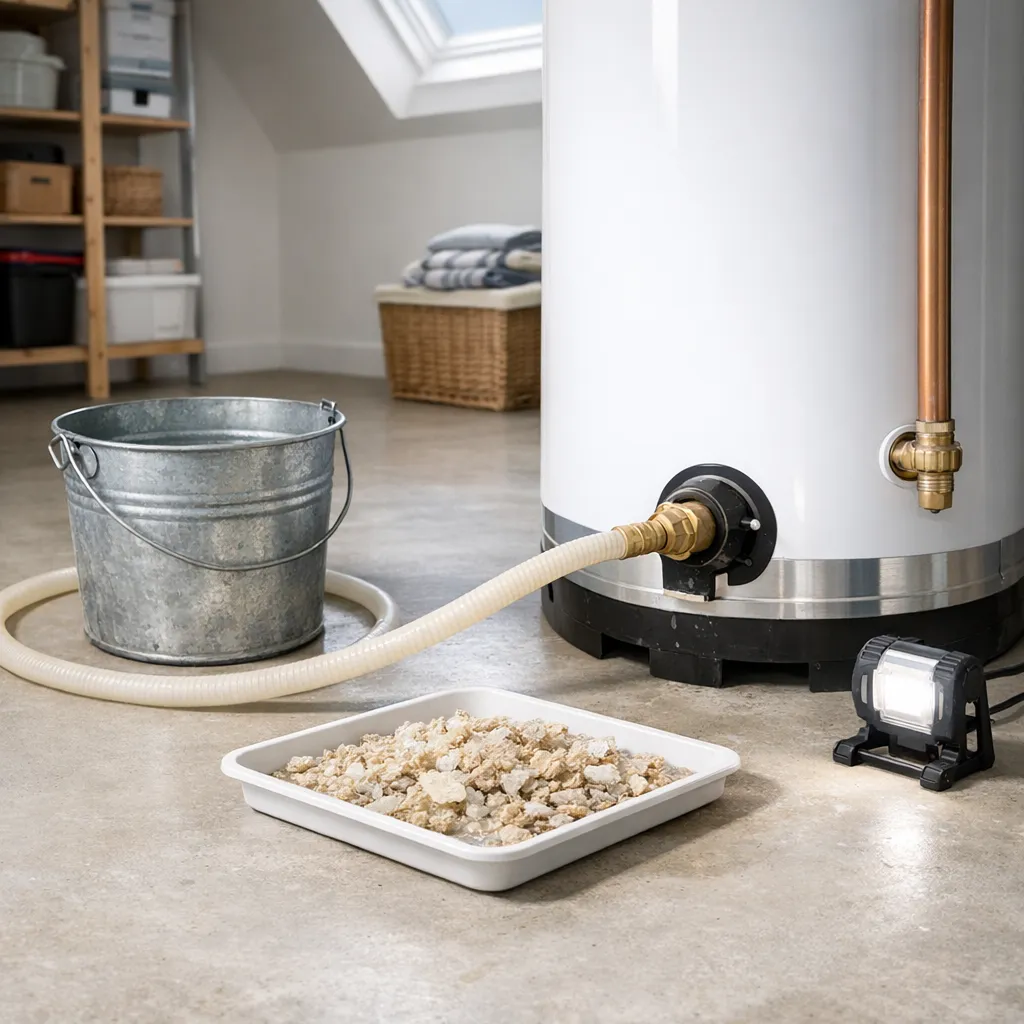
A noisy tank is giving useful evidence. In Westover Hills and Alamo Ranch, hard-water sediment often sounds like popping as trapped water flashes beneath a mineral layer. Check the manufacture date, look for moisture at the drain valve and base, and compare hot-water recovery with the unit's normal performance. Do not remove electrical covers, test live terminals, or operate a gas control if you smell gas. A valve or thermostat repair may land around $200–$600, while a leaking tank generally makes replacement the safer decision. Ask whether the estimate includes haul-away, expansion control, drain-pan work, and permit-related items—not just the appliance.
Quick answer: match the symptom to the risk
No hot water may be caused by a tripped breaker, interrupted fuel supply, failed heating element, thermostat fault, or extinguished pilot, depending on the equipment. Lukewarm or quickly depleted water may reflect heavy demand, sediment, a failed element, control problems, or a tank that is too small for the household. Water around the base can come from piping above, the temperature-and-pressure relief system, the drain valve, condensation, or the tank shell itself.
Begin with observation, not disassembly. Read the manufacturer label and model information, note any error code, and inspect from a dry position. Do not remove electrical covers, defeat safety controls, cap a relief discharge pipe, or repeatedly reset a breaker. If there is scorching, persistent breaker tripping, gas odor, a rumbling tank with discharge, or uncontrolled leakage, stop and call the appropriate professional.
Understand the basic parts of a tank water heater
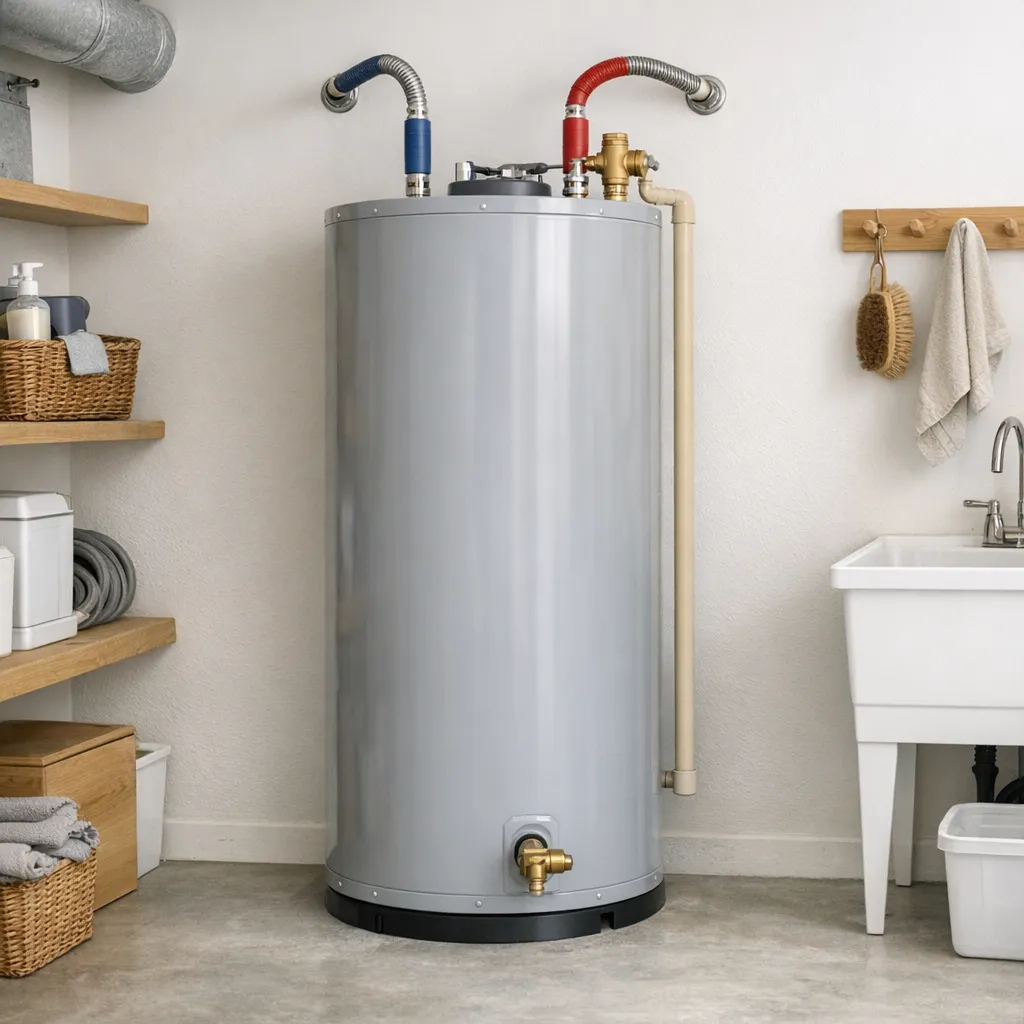
A conventional tank stores heated water under pressure. The cold inlet typically enters near the top and sends cold water toward the bottom through a dip tube; hot water leaves from the upper area. Electric models commonly use thermostats and one or two heating elements. Gas models use a burner and venting system. Both types rely on temperature control and a temperature-and-pressure relief valve as critical safeguards.
Connections at the top, the drain valve near the bottom, and the relief valve and discharge pipe are common places to find moisture. Water that appears at the base may have traveled down the jacket from above. Conversely, water emerging from beneath the jacket or a corroded seam can indicate internal tank failure. Knowing that distinction prevents paying for a minor fitting repair when the tank needs replacement—or replacing a tank because of a repairable connection.
Common reasons hot water becomes unreliable
For electric heaters, loss of power or a failed heating element can produce no hot water or a reduced usable volume. A tripped breaker should be treated as a symptom: one reset may be reasonable only when the unit and surrounding area are completely dry and the manufacturer permits it. If it trips again, leave it off and call a qualified technician because a shorted element or damaged wiring may be present.
For gas heaters, ignition, thermocouple or flame-sensing, gas-control, combustion-air, or venting problems may interrupt heating. Do not attempt combustion adjustments without training and proper instruments. Across both types, sediment can contribute to popping noises and reduced efficiency, while a broken dip tube can mix incoming cold water too quickly. Very high household demand and changed thermostat settings should also be considered before assuming a component has failed.
Diagnose where leaking water starts
Dry the accessible exterior and place separate paper towels beneath the top connections, relief discharge termination, drain valve, and tank edge. Observe without touching hot piping. A leak from the top may involve connectors, nipples, valves, or nearby plumbing; this guide to a water heater leaking from the top explains those distinctions. Moisture only during burner operation may be condensation, especially on a newly started gas unit, but persistent water still needs evaluation.
Water from the relief discharge is not something to plug or ignore. It may result from thermal expansion, excessive pressure, elevated temperature, or a defective valve, and the underlying condition must be diagnosed. A dripping drain valve might be repairable, but forcing an old valve can worsen it. Water seeping from the jacket, bottom seam, or internal tank usually signals corrosion and replacement. Shut off the water and energy source if this can be done safely.
Safety first: electricity, gas, pressure, and scalding
Electric water heaters use high-voltage circuits. Their access panels can conceal live terminals even when a thermostat has stopped calling for heat. Never remove a panel until power is disconnected and absence of voltage is verified with appropriate equipment and skill. Water near the unit increases shock risk. If the breaker panel itself is wet or inaccessible through standing water, do not approach it.
Gas appliances add combustion and carbon-monoxide hazards. Soot, melted plastic, rollout marks, unusual flame behavior, exhaust odor, headaches in the home, or a damaged vent require immediate professional attention and fresh air as appropriate. Install and maintain carbon-monoxide alarms according to local requirements and manufacturer guidance. Hot water can also scald; do not raise the thermostat as a casual fix for low capacity, especially where children, older adults, or vulnerable people use the fixtures.
Step-by-step checks that do not require opening the unit
First, check whether the problem affects every hot-water fixture. If one faucet is affected, its cartridge, aerator, or local mixing valve may be responsible. If all fixtures have the same problem, note whether water is fully cold, merely lukewarm, discolored, odorous, or depleted unusually fast. Compare the timing with laundry, showers, dishwasher cycles, or recent guests.
Second, look for an error display or status light and consult the exact manufacturer manual. Verify that the water supply valve appears open, but do not force a stiff or corroded valve. Check the electrical panel from a dry location or observe the gas unit without removing covers. Never use a match to test for gas, and never relight a pilot when gas odor is present.
Third, inspect ceilings, walls, and plumbing above the tank. A nearby pipe leak repair may be the real need. Record the model, serial number, installation date if available, symptoms, error codes, and when the problem began. This information lets a service company bring more appropriate diagnostic tools and parts.
Quick-reference symptom table
| Symptom | Safe homeowner check | When to stop |
|---|---|---|
| No hot water anywhere | Check other fixtures and read error display | Repeated breaker trip, gas odor, or electrical damage |
| Hot water runs out quickly | Note household demand and recovery time | Scalding fluctuations or recurring fault code |
| Water at top of tank | Dry and trace visible connections | Spraying water or severe corrosion |
| Water from relief pipe | Keep discharge path clear | Continuous flow, very hot discharge, or pressure concern |
| Water from beneath jacket | Shut down safely and contain spread | Assume tank failure until professionally assessed |
| Rumbling or popping | Note when it occurs | Violent noise, movement, steam, or relief discharge |
| Soot or vent damage | Leave controls alone and ventilate as appropriate | Arrange urgent gas-appliance service |
Do not rely on a single symptom to order a part. For example, lukewarm water can come from an electric element, a thermostat, a mixing valve, demand, or plumbing crossover. Diagnosis should confirm the failure before replacement. This is particularly important when work involves live voltage, gas pressure, combustion, or the relief system.
Useful tools—and what they cannot tell you
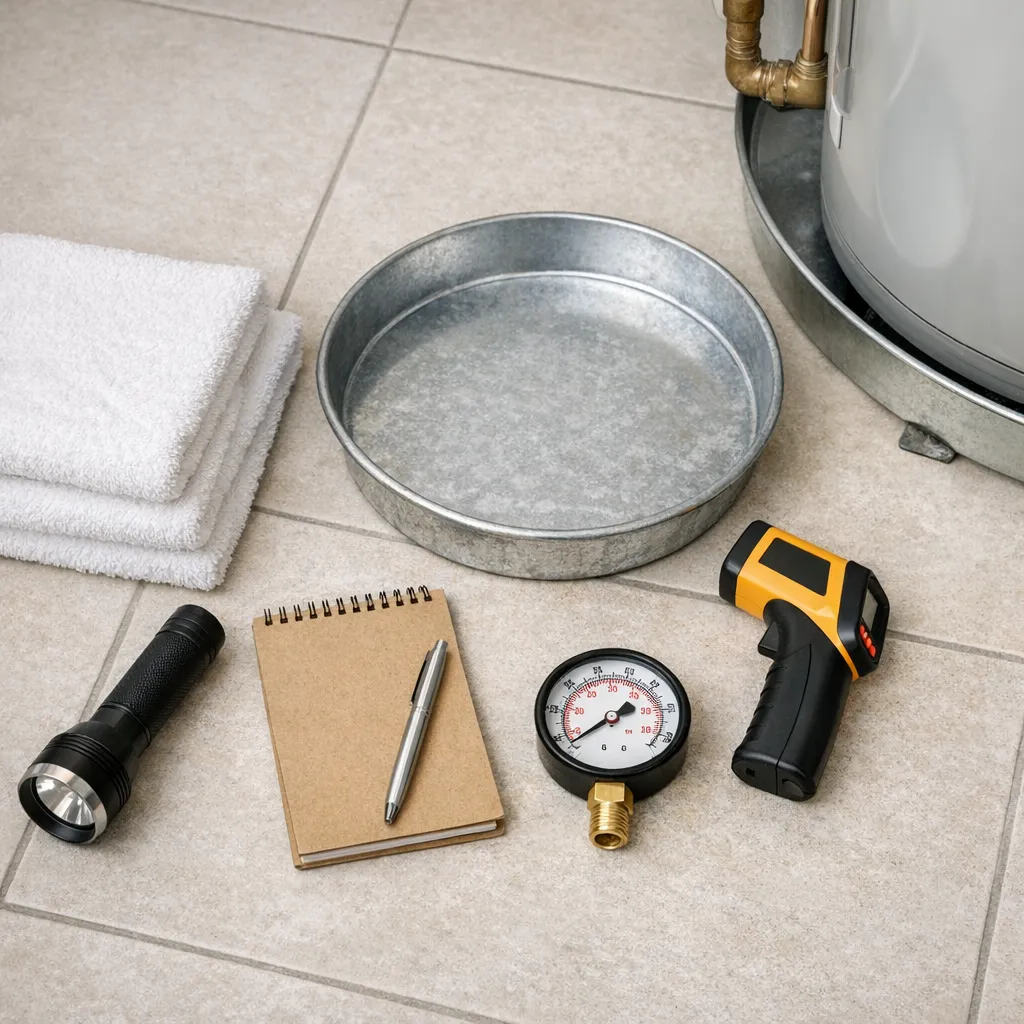
A flashlight, absorbent towels, shallow pan, notebook, and phone camera are enough for basic observation. A non-contact infrared thermometer can compare pipe or fixture temperatures, but shiny metal affects readings and the tool does not prove the internal water temperature. A simple water-pressure gauge can be useful when installed correctly on a suitable connection, although interpreting thermal expansion may require readings over a full heating cycle.
Electrical meters, combustion analyzers, gas manometers, and specialty element tools belong in trained hands unless the homeowner has the required expertise. Buying a component because it is inexpensive does not make diagnosis safe. Before authorizing work, provide the technician with clear observations rather than your best guess at the failed part.
Low-risk actions a homeowner can take
You can reduce hot-water demand, check multiple fixtures, read the unit’s display, locate the manual, and clear stored belongings away from the heater without obstructing required combustion air. You can also place a pan or towels to contain a small leak while monitoring it, provided there is no contact with electrical components and the water is not dangerously hot. Documenting the leak path after drying the exterior is especially useful.
If a gas utility has interrupted service, follow the utility’s instructions rather than attempting repeated ignition. If an electric breaker has tripped, avoid cycling it repeatedly; repeated operation can worsen damage. Flushing a tank is often described as routine DIY maintenance, but an old drain valve may fail to reseal and disturbed sediment can create complications. Follow the manufacturer’s procedure and consider professional service if the tank has not been maintained or the valve is deteriorated.
Repairs that require a professional
Call a licensed plumber or qualified water-heater technician for internal tank leakage, relief-valve discharge, badly corroded connections, failed shutoffs, concealed water damage, pressure abnormalities, or component replacement beyond your training. Electrical faults may require a licensed electrician, while gas-supply and venting concerns may involve the gas utility or a qualified gas technician. Local licensing boundaries vary.
A service visit should establish whether the tank is structurally sound and whether repair is economically sensible. Heating elements, thermostats, certain valves, connectors, and some ignition components may be replaceable. A corroded pressure vessel is not a patch candidate. Ask whether the quote includes diagnosis, parts, labor, permits, disposal, code upgrades, expansion control, drain pan or discharge improvements, and warranty.
Repair versus replacement: how to decide
Age matters, but condition, failure type, maintenance history, energy source, efficiency, and local code matter more than a simple cutoff. A relatively recent tank with a confirmed replaceable component may justify repair. A leaking tank shell, repeated breakdowns, extensive corrosion, unavailable parts, or a repair approaching a substantial share of replacement cost points toward replacement.
Compare full project scopes rather than headline prices. Replacement may require connection changes, venting work, seismic restraint, expansion control, a drain pan, electrical updates, or permit and inspection fees. Review this explanation of water heater replacement cost before comparing bids. Ask each contractor to state why repair or replacement is recommended and what evidence supports that conclusion.
Cost and time expectations
A diagnostic visit and accessible component repair may be completed in one appointment when the correct part is available. Specialty or older parts can add time. Emergency service, difficult access, code corrections, water-damage mitigation, and gas or electrical coordination increase cost. Internal tank failure usually shifts the project from repair to replacement and may require several trades if surrounding materials were damaged.
Request an itemized written estimate when conditions are stable. It should distinguish the service call, parts, labor, permits, ancillary upgrades, and restoration. Ask whether diagnostic charges apply to the repair and how the warranty differs between a repaired component and a new unit. Do not select a bid that proposes capping a relief line, bypassing controls, or performing unpermitted work where permits are required.
Preventing repeat problems
Follow the manufacturer’s maintenance schedule rather than a generic internet interval. Periodic inspection should include visible connections, the drain area, venting on fuel-fired units, the surrounding floor, and the condition of required safety devices. Relief-valve testing can release very hot water and an old valve may not reseal, so follow local and manufacturer guidance or have a professional perform it.
Control excessive water pressure and thermal expansion with properly designed equipment. Keep the heater area dry and accessible, protect piping from freezing, and avoid storing combustibles near a fuel-fired appliance. Water treatment and anode-rod decisions should be based on the model and local water conditions. Maintain smoke and carbon-monoxide alarms, and know how to shut off water and energy before an emergency occurs.
Frequently asked questions
What most commonly causes no hot water?
The likely cause depends on the heater type. Electric units may lose power or have a failed element or control. Gas units may have ignition, sensing, gas-control, combustion-air, or venting trouble. Confirm the equipment type and symptoms before ordering parts.
Can I repair a leaking hot water tank myself?
You may be able to contain water and identify an external connection, but leakage from the pressure vessel generally requires replacement. Gas, high voltage, hot water, and stored pressure make internal repair unsuitable for casual DIY work.
How urgent is water around the heater?
Treat it as urgent until the source is known. A small connection drip can damage floors and accelerate corrosion, while a leaking tank can worsen quickly. Water near electrical parts or continuous relief discharge requires immediate shutdown and professional help.
What should I never do to a water heater?
Never cap the relief discharge, bypass a safety control, repeatedly reset a tripping breaker, work on gas components while gas odor is present, or energize a unit that is not properly filled. Do not raise temperature excessively to compensate for poor capacity.
Is noisy operation always a sign the tank must be replaced?
No. Popping or rumbling may be associated with sediment or operating conditions, but noise combined with leakage, movement, steam, or relief discharge is more serious. A technician should assess persistent or worsening noise.
The practical bottom line
A good hot water tank repair decision begins with safe observation and an accurate source diagnosis. Separate a house-plumbing leak from a tank leak, document error codes and timing, and respect the hazards of electricity, fuel gas, pressure, hot surfaces, and scalding water. Low-risk checks can narrow the possibilities, but they should not cross into defeating safety devices or opening energized equipment.
When paying for service, ask for the failed component, the evidence behind the diagnosis, the complete scope, and the warranty in writing. Repair makes sense for a sound tank with a confirmed serviceable fault. Leakage from the tank body, widespread corrosion, or repeated expensive failures usually makes replacement the safer long-term choice.
Why This Is Different in San Antonio
Edwards Aquifer water is about 357 mg/L, or 21 gpg. That sediment settles in a tank, insulates the burner or element from the water, and can accelerate noisy operation and poor recovery. SAWS information confirms the water chemistry; the practical response is to discuss a six-month inspection or flushing interval when the tank condition allows it. In Bexar County garages and attics, also check the drain pan and discharge route before a leak damages finished space.
What San Antonio Homeowners Pay (2026)
| Tank-heater service | Typical 2026 range |
|---|---|
| Diagnostic/service call | $85–$200 |
| Element, thermostat, or valve repair | $200–$600 |
| Conventional tank replacement | $1,200–$2,800 |
| Expansion, pan, or connection upgrades | $150–$650 additional |
Age, fuel type, access, venting, permit work, and after-hours response affect the quote. A low appliance-only price is not the installed total.
When to Call a San Antonio Plumber
Stop and call for gas odor, scorching, a tripped breaker that will not reset, water from the tank shell, an active relief valve, or a failed shutoff. Homeowners can check the label, temperature setting, visible connections, and leak location; combustion, live-voltage, pressure-control, and tank-opening work belong to qualified technicians.
San Antonio FAQ
Can I flush a neglected old tank?
Not automatically. Disturbing heavy sediment in an old, corroded tank can expose a weak drain valve or existing leak. Ask for an inspection first.
Is rumbling an emergency?
Rumbling usually indicates sediment, but combine it with age, leakage, overheating, or poor recovery when deciding how quickly to book service.