> San Antonio Local Insight: San Antonio's hard water from the Edwards Aquifer affects every plumbing system in your home. With 357 mg/L mineral content (21 grains per gallon), our water causes faster corrosion, heavier scale buildup, and more frequent repairs than most US cities. Understanding this local factor helps you make better decisions about maintenance, repair, and prevention.
Start With the Local Risk, Not the Age Sticker
A sump pump in the Hill Country is usually an occasional-use appliance, which makes neglect more likely than wear from continuous running. In New Braunfels and Boerne, verify the discharge route before spring storms: limestone sediment, insects, and mineral crust can restrict a check valve or exposed outlet while the pump still sounds normal. Put $20–$45 into a replacement check valve or $30–$80 into a high-water alarm before assuming an older pump needs wholesale replacement.
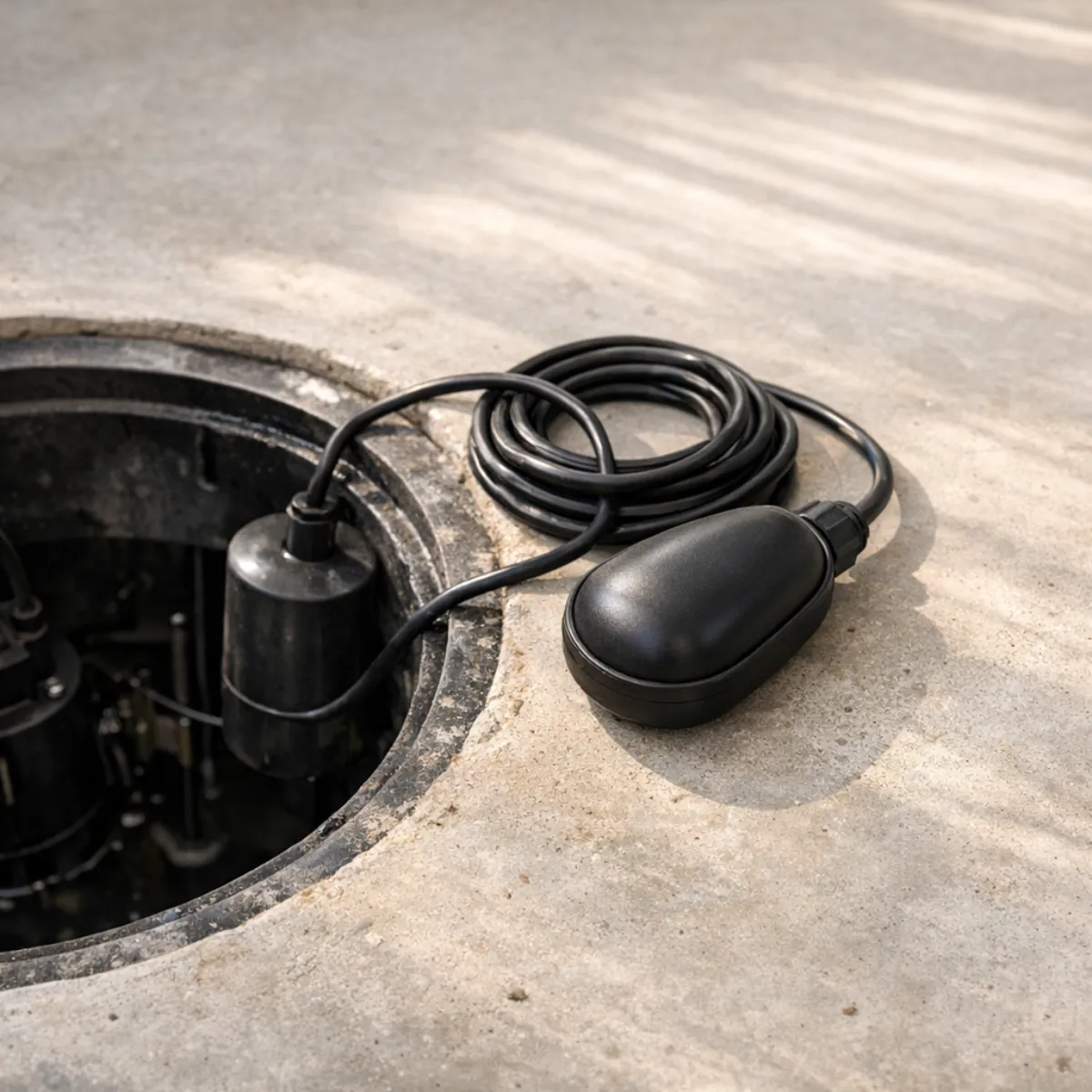
Test with clean water poured slowly into the basin; do not reach into a powered pit. Confirm that the float rises freely, the motor starts promptly, and water exits away from the foundation. If the receptacle, cord, or basin contains damaged electrical parts, stop. After Winter Storm Uri, cracked discharge fittings and failed backup batteries became a useful reminder that freeze protection and backup power matter even here.
A typical sump pump may provide roughly seven to ten years of service, but that range is a planning estimate, not an expiration date. A lightly used, well-installed pump can last longer, while a pump that cycles constantly, handles sediment, runs against a restricted discharge, or operates in frequent storms may wear out much sooner. The better question is not only “how long does a sump pump last?” but also whether your specific pump starts reliably, moves water at the expected rate, and has a backup when conditions are worst.
Do not wait for a flooded basement to evaluate an aging system. Record the pump’s installation date if known, observe a normal test cycle, inspect accessible components, and treat changes in sound, run time, or water level as useful evidence. Because the basin combines electricity and water, keep hands out while the pump is powered. A hot plug, damaged cord, burning odor, repeated breaker trip, or pump that hums without removing water requires power shutoff and professional help.
What Determines a Sump Pump’s Service Life
Runtime is usually more meaningful than calendar age. Two identical pumps installed on the same day can age very differently if one activates a few times each season and the other starts every few minutes whenever it rains. Frequent starts stress switches and motors, while unusually long runs create heat and can reveal an undersized pump or difficult discharge route. Groundwater conditions, basin size, and drainage design all influence that workload.
Installation quality matters too. A pump that sits level on a stable base, has an unobstructed intake and float, and discharges through correctly sized, supported piping is more likely to work predictably. Sediment, corrosion, a failed check valve, freezing, improper electrical supply, or excessive vertical lift can shorten useful life. Brand and construction affect durability, but no label compensates for a blocked outlet, undersized basin, or installation that forces the motor outside its intended performance range.
Check the Age Without Relying on Guesswork
Look for a model and serial label where it can be read without entering the basin or disturbing wiring. A receipt, permit, home-maintenance record, or date written on the lid may be more reliable than a previous owner’s memory. The serial number may encode a manufacturing date, although that date is not necessarily the installation date. Keep a photo of the label and note the pump type, horsepower, discharge diameter, and backup equipment for future service.
If the age is unknown, treat condition and performance as the deciding factors. An undocumented pump in an area with a history of water intrusion deserves a more conservative replacement plan than a similar pump protecting an unfinished crawlspace with little inflow. Do not assume a clean exterior means the motor and switch are healthy. Conversely, surface staining alone does not prove failure. Combine age clues with repeatable testing, cycling behavior, noise, flow, and the consequences of a missed start.
Use This Replacement-Risk Checklist
A pump need not show every warning before replacement makes sense. One serious electrical or performance problem can be enough to stop relying on it.
| Observation | What it may mean | Recommended response |
|---|---|---|
| Installation is near or beyond the usual planning range | Wear risk is increasing | Schedule assessment or planned replacement before wet season |
| Starts and stops repeatedly in short intervals | Float, check valve, basin, or inflow problem | Diagnose promptly; cycling accelerates wear |
| Hums but moves little or no water | Obstruction, seized impeller, or motor failure | Cut power and call for service |
| New grinding, scraping, or harsh vibration | Debris or internal mechanical wear | Stop the unit and inspect professionally |
| Runs continuously while water stays high | Insufficient capacity or blocked discharge | Arrange urgent help and safe backup pumping |
| Corroded plug, damaged cable, heat, or breaker trips | Electrical hazard or motor fault | Leave power off; contact an electrician or pump specialist |
| Musty basement or past water line around the pit | Prior overflow or hidden moisture | Check system capacity and inspect for damage |
| No alarm or backup in a high-consequence basement | Single point of failure | Add appropriately designed secondary protection |
Test under controlled conditions only if the area and equipment are safe. Follow the manufacturer’s instructions; do not reach into a powered pit, bypass a switch, or pour an uncontrolled volume of water into a basin with uncertain capacity.
Test Performance, Not Just Whether It Makes Noise
A basic test should show that the float moves freely, the pump starts before the basin reaches an unsafe level, water exits through the outdoor discharge, and the pump shuts off without running dry. Observe from a dry position. If the manual permits a water test, add clean water gradually while keeping cords and plugs dry. Stop if the pump does not start, the level approaches overflow, a fitting leaks, or the breaker trips.
Listen for changes rather than expecting silence. A single check-valve thump or moderate motor sound may be an installation issue, while grinding, stalled humming, or erratic starts suggest a more urgent problem. Note how quickly the water level falls and whether much water drains back after shutoff. A pump that passes one test can still fail later, so combine testing with routine inspection, a high-water alarm, and a replacement plan appropriate to the basement’s flood risk.
Recognize Signs That Age Has Become Failure Risk
Delayed starts, intermittent operation, reduced flow, and a float that sticks are stronger reasons for action than age by itself. A pump that needs tapping, cord movement, repeated resetting, or manual float manipulation is not reliable. Water rising higher than it used to can indicate declining output, heavier inflow, a restricted pipe, or a changed float setting. Each deserves diagnosis before the next major storm.
Physical warning signs include cracked housings, severe corrosion, loose fittings, damaged cords, and persistent oil-like residue from equipment not designed to release it. New odors, unusual heat, or repeated protective-device trips require immediate shutdown. Do not install a higher-rated breaker, bypass a GFCI where one is required, or run the pump on an ordinary extension cord. Those actions hide symptoms and create shock or fire hazards rather than extending service life.
Decide Between Repair and Replacement
Small external problems may be repairable: a correctly identified check valve can be replaced, accessible pipe supports can be improved, and a lid or float obstruction can be corrected. Some pump models offer replaceable switches. Repair is most attractive when the pump is relatively young, parts are available, the motor remains sound, and the cause is clearly isolated. Any work must preserve electrical listing, discharge capacity, and manufacturer requirements.
Replacement is usually the lower-risk choice when an older pump has motor or bearing wear, intermittent starts, extensive corrosion, repeated repairs, or insufficient output. Labor to remove and reinstall equipment can make a major repair poor value, especially when basement contents are costly. Ask for the old unit’s failure mode and the new pump’s performance at your actual vertical lift rather than choosing solely by horsepower or purchase price.
Choose the Right Replacement Pump
Match the pump to the system. A contractor should consider the vertical distance from the basin to the highest discharge point, total pipe length, diameter, elbows, check valve, outdoor route, and estimated inflow. Pump performance decreases as head pressure increases, so the largest horsepower number on a shelf is not automatically the best fit. An oversized unit can short-cycle and create pipe shock; an undersized one may run continuously and lose ground.
Submersible pumps sit in the basin and often pair well with fitted covers. Pedestal pumps keep the motor above the water and can suit certain pits, though they may be more audible and require clear float movement. Also compare switch design, solids handling, housing material, service access, warranty terms, and local parts support. Preserve any required relief opening or venting exactly as specified; improvised drilling or pipe changes can reduce reliability.
Plan Backup Power and Secondary Protection
A new primary pump still cannot operate through every outage or mechanical failure. A battery-backup pump, properly designed water-powered backup where local rules and water conditions allow, or a generator connection installed for the load can add resilience. Backup capacity should reflect the likely inflow and discharge head. A tiny backup may provide reassurance without keeping pace during a severe event.
Install a separate high-water alarm where it can warn you before overflow. Test batteries and alarms on a schedule, keep discharge outlets clear, and label circuits. Backup systems also need check valves, maintenance, and replacement planning; they are not “set and forget.” If the basement contains finished rooms, electrical panels, stored documents, or mechanical equipment, redundant protection may cost less than recovering from one missed pump cycle.
Maintain the Pump Without Creating Hazards
Inspect the system before the wettest season and after major storms. Confirm that the exterior outlet remains open, directs water away from the foundation, and has not been buried by landscaping, snow, or ice. Check for visible leaks, loose supports, an obstructed float, and unusual cycling. Keep storage away from the basin so service access is immediate.
With power disconnected and according to the manual, qualified homeowners may clean accessible basin debris and inspect the intake. Never use drain cleaner, bleach, oil, or household lubricant in the pit. Do not enter a confined crawlspace with standing water or handle a sewage ejector as though it were a groundwater pump. If contamination, mold, sewage, damaged wiring, or structural water intrusion is present, use the appropriate professional rather than focusing only on the pump.
Avoid Common Replacement Mistakes
The first mistake is waiting for complete failure because the pump worked during a quick test. Switches can be intermittent, discharge lines can freeze, and power can fail during the same storm that raises groundwater. The second is replacing only the motor unit while ignoring a failed check valve, restrictive piping, undersized basin, or drainage problem that caused premature wear.
Other mistakes include buying by horsepower alone, using an extension cord as permanent wiring, sharing an overloaded circuit, concealing the pit behind built-ins, or installing a cover that traps the float. Do not discharge beside the foundation where water can cycle back into the footing drains. Verify local requirements for electrical protection and discharge location. A successful replacement is a complete, testable system—not merely a new appliance at the bottom of the pit.
Know When to Escalate Beyond DIYfessional
Call urgently if the water level is rising, the pump runs without lowering it, the discharge is frozen or blocked, sewage is present, or water is approaching electrical equipment. A plumber or sump specialist can evaluate flow, piping, valve function, basin size, and pump selection. An electrician should handle damaged wiring, hot outlets, recurring breaker or GFCI trips, or uncertain circuit capacity.
For planned replacement, ask the installer to document the model, performance at estimated head, check-valve arrangement, alarm, backup capacity, test results, and installation date. If water still enters despite reliable pumping, a drainage or waterproofing specialist may need to assess grading, gutters, foundation drains, or cracks. Stop DIY work whenever it requires handling energized wet equipment, opening contaminated basins, or modifying structural and concealed drainage components.
Frequently Asked Questions
Can a sump pump last 15 years?
It can, particularly with light duty and good conditions, but age alone cannot confirm reliability. A fifteen-year-old primary pump protecting a valuable finished basement warrants a proactive assessment and strong backup even if it starts during a test.
Should I replace a working pump after ten years?
Not as an automatic rule, but ten years is a reasonable point for closer evaluation. Consider workload, condition, test results, flood consequences, service history, and whether a backup can carry the load if the primary fails.
How often should I test my sump pump?
Follow the manufacturer’s maintenance schedule and test before predictable wet seasons or extended travel. High-risk systems may justify more frequent checks. Include the alarm and backup rather than testing only the primary pump.
Does frequent cycling shorten pump life?
Yes, frequent starts add wear and may reveal drain-back, a small basin, float problems, or high inflow. Diagnose the cause instead of accepting short cycling as normal or simply installing a more powerful pump.
Is a battery backup the same as a replacement pump?
No. It is secondary protection with its own pump, battery, capacity limits, and maintenance needs. The primary should still be correctly sized and dependable, while the backup is tested to handle realistic outage conditions.
Why This Is Different in San Antonio
Most local houses do not need a basement sump pump, but low lots, additions, elevator pits, crawlspaces, and drainage retrofits can still depend on one. Water from the Edwards Aquifer measures about 357 mg/L (21 gpg), so evaporation leaves scale on floats and check valves. Bexar County cloudbursts also ask an idle pump to move a lot of water without warning. Test before the wet season, clear the outlet, and ask SAWS about water-service concerns rather than sending pump discharge into a sanitary cleanout.
What San Antonio Homeowners Pay (2026)
| Sump-pump work | Typical local range |
|---|---|
| Inspection and functional test | $95–$175 |
| Check valve or discharge correction | $150–$375 |
| Standard pump replacement | $550–$1,200 |
| Battery-backup system | $900–$2,000 |
Access, electrical correction, basin work, and after-hours storm demand can raise the quote. For San Antonio homes, get a written scope that separates pump, plumbing, and electrical work.
When to Call a San Antonio Plumber
Call when the pump trips a breaker, hums without moving water, cycles every few minutes, has a cracked basin or discharge line, or protects finished space you cannot afford to flood. Keep hands out of the pit and never bypass a GFCI. A plumber can diagnose the hydraulic side; damaged wiring or a new circuit belongs to a licensed electrician.
San Antonio FAQ
How often should I test an idle pump?
Test every three months and before forecast heavy rain. Replace an aging backup battery on its manufacturer’s schedule.
Does hard water shorten pump life?
Groundwater entering a pit is not identical to tap water, but local limestone sediment and Edwards Aquifer mineral scale can still foul moving parts. Condition and test history are better guides than age alone.