> San Antonio Local Insight: San Antonio's hard water from the Edwards Aquifer affects every plumbing system in your home. With 357 mg/L mineral content (21 grains per gallon), our water causes faster corrosion, heavier scale buildup, and more frequent repairs than most US cities. Understanding this local factor helps you make better decisions about maintenance, repair, and prevention.
Let Salt Use Follow Metered Demand
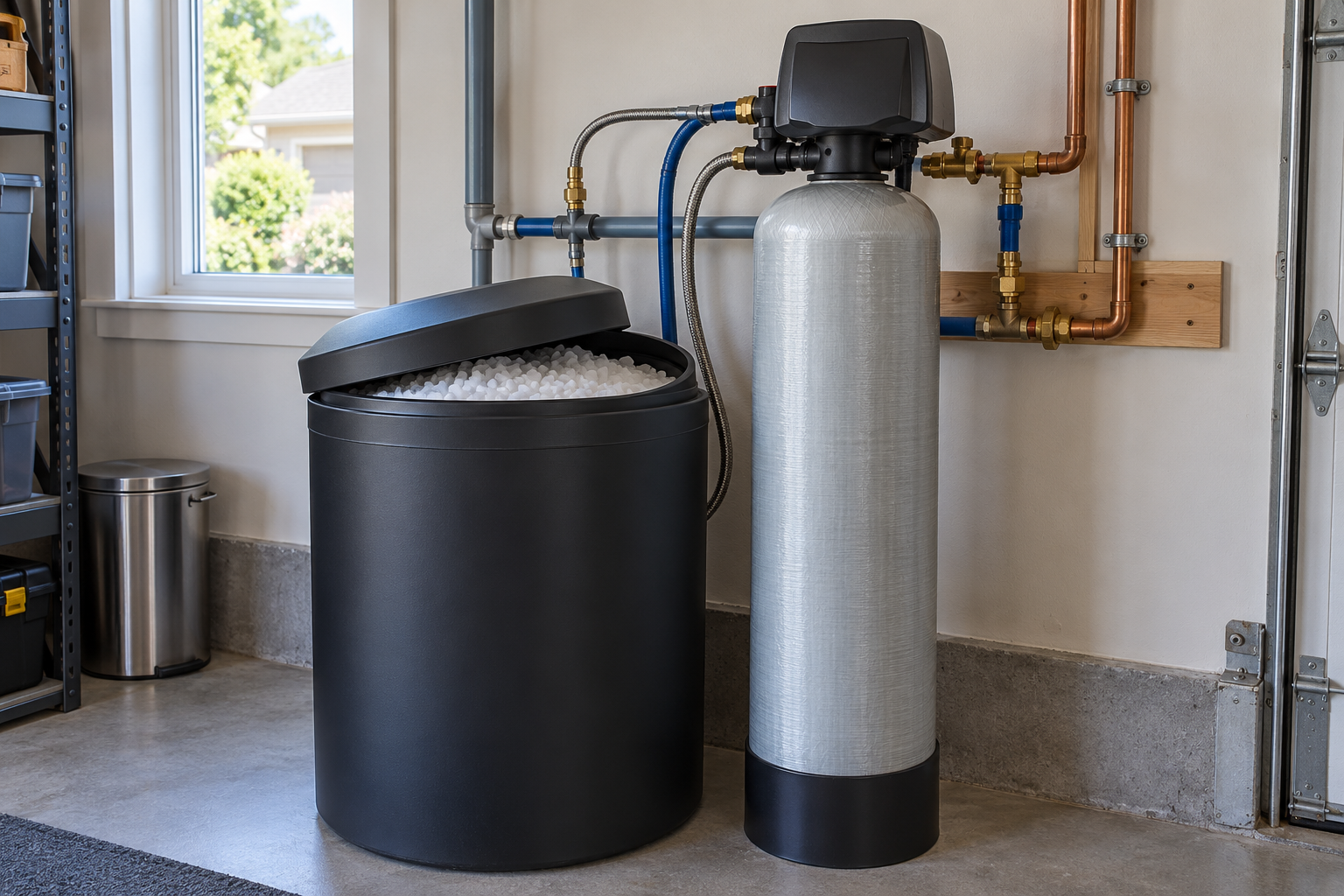
The useful habit is to inspect the brine tank monthly, not to dump in a bag on a fixed date. Salt consumption should track gallons treated, measured hardness, and regeneration settings. A sudden increase often points to a leak, changed programming, or inefficient regeneration; a sudden decrease can mean a salt bridge or failed brine draw.
Homes toward New Braunfels and Boerne face similar Hill Country mineral loading, so an online “average household” schedule may be far too relaxed. Edwards Aquifer water around 357 mg/L, or 21 gpg, gives a four-person household a substantial daily grain load. Bags of softener salt commonly cost about $8-$15 locally; unusually high monthly use is worth diagnosing before it becomes a recurring expense.
Check the SAWS meter or household usage history when consumption changes unexpectedly. Hot summers raise outdoor use, although irrigation should normally bypass softened water. Homeowners can break a light salt bridge with the proper nonsharp tool and clean an accessible tank, but should stop for standing-water electrical hazards, damaged valves, or repeated regeneration failure.
A homeowner in New Braunfels and Boerne should be especially careful because nearby Hill Country systems have similar hard-water pressure on heaters and fixtures. If you are comparing advice from national repair guides, shorten the maintenance interval and inspect for white scale, crusted fittings, stiff shutoff valves, and early corrosion before assuming the part simply “got old.”
For budgeting, use local pricing instead of national averages: licensed plumber labor commonly runs $85-$150 per hour, with emergency visits costing more. If the issue appears after a summer high-use period or after a rare freeze like Winter Storm Uri, treat it as a local risk signal and document what you see before calling a licensed plumber in Bexar County.
Most households need to check their water softener salt about once a month and add a bag when the brine tank falls below roughly one-quarter full. That is a check-and-refill rhythm, not a fixed replacement schedule: the right interval may be every three or four weeks in a busy home, or every two to three months in a small household with moderately hard water.
The softener does not normally discard all its salt at once. It dissolves salt gradually to make brine, which regenerates the resin that removes hardness minerals. Water use, hardness, unit capacity, and regeneration settings therefore matter more than the calendar. A quick monthly look inside the brine tank is the most dependable habit.
The practical answer: check monthly, refill before it runs low
Open the brine tank once every four weeks, using the manufacturer’s instructions, and note both the salt level and its condition. Many systems work best with the tank kept between about one-quarter and one-half full. Avoid filling to the lid unless the manual specifically recommends it; a constantly overfilled tank can hide salt bridges and makes inspection harder. If the level is near one-quarter, add enough approved softener salt to restore a reasonable reserve.
The first few months after installation are a learning period. Write the refill date and number of bags on a note near the unit or in your phone. If the system uses one 40-pound bag every six weeks under normal household conditions, that becomes a useful baseline. A sudden change from that pattern deserves investigation, but seasonal changes are normal: guests, extra laundry, irrigation supplied by softened water, or a leaking fixture can all increase consumption.
Why no single salt schedule works for every home
A family’s daily water demand has a direct effect on regeneration frequency. Four people will usually use more treated water than one, but even equally sized households can differ substantially because of shower habits, laundry loads, dishwasher use, and plumbing leaks. The amount of hardness entering the home also matters. A system treating very hard well water exhausts its resin capacity faster than one treating mildly hard municipal water.
The softener itself adds another variable. A demand-initiated unit regenerates after a calculated volume of water, while an older timer-based unit may regenerate on preset days even when little water was used. Capacity, resin condition, iron in the source water, and the programmed hardness setting influence how much salt each cycle consumes. That is why “add one bag every month” is only a starting estimate, not a universal rule.
Quick-reference salt check table
Use the tank and the water quality—not just elapsed time—to decide what to do.
| What you find | Sensible next step |
|---|---|
| Salt above one-half and loose | Close the lid and check again next month |
| Salt near one-quarter | Add approved salt without overfilling |
| Tank nearly empty | Refill, then follow the manual for regeneration |
| High level but hard water returns | Check for a salt bridge or system fault |
| Mushy paste at the bottom | Arrange cleaning according to the manual |
| Consumption suddenly doubles | Check leaks, settings, and regeneration history |
Never reach into moving equipment or force control valves. Keep the lid area dry and clean, use a stable scoop if one is recommended, and do not mix household table salt, deicing salt, or pool chemicals into the brine tank. Softener pellets, crystals, or block salt should only be used when the equipment manufacturer approves that form.
How to inspect the brine tank correctly
Start by checking the unit’s display for an error, low-salt warning, or unusual regeneration history. Make sure the floor is dry and there is no active leak. Lift or remove the brine-tank lid as designed, then look at the salt without leaning your full weight on the tank. Loose pellets or crystals should settle naturally; a hard crust that appears full while leaving an empty space beneath may be a salt bridge.
A clean wooden or plastic handle can sometimes be used to gently test the surface, but only if the manual permits it. Do not hammer the tank, use sharp metal tools, or puncture internal parts. If you cannot identify the brine well, float assembly, or other components, stop rather than probing blindly. Salt dust and moisture can be irritating, so wash your hands afterward and keep bags stored dry, off the floor, and away from children and pets.
Safety steps before checking or refilling the softener
Before opening the tank, confirm the floor and nearby electrical area are dry. A routine salt check normally does not require disassembling plumbing or the powered control head. If maintenance requires opening a water connection, shut off the home’s water at a known working valve, operate a faucet to relieve pressure, and follow the manufacturer’s isolation procedure. Never loosen a pressurized fitting or defeat a safety interlock.
Stop DIY work and call a licensed plumber or water-treatment professional if a shutoff will not close, water is spraying, the tank or valve is cracked, or plumbing must be cut or reconfigured. Water near an outlet, damaged cable, hot-plastic odor, sparks, or a wet control creates an electrical risk. Do not stand in water or touch the plug; disconnect power only from a dry, safe upstream breaker location if you can identify it confidently, then keep clear and call qualified help.
Signs the softener needs salt sooner than expected
The most obvious sign is a visible low level, but household symptoms can appear first. Soap may stop lathering easily, mineral spots may return to faucets and glassware, and laundry may feel less clean. Those symptoms are not proof of an empty brine tank—water-heater sediment, detergent changes, and supply-water variations can feel similar—but they justify an inspection and a simple hardness test.
If salt use rises sharply, look for increased water demand. A running toilet or hidden supply leak can send treated water to the drain around the clock. Check the water meter with all fixtures off and listen for unexpected flow. Also review whether the hardness setting was changed or the unit is regenerating every night. Persistent dampness around plumbing requires prompt attention; a guide to whether plumbing tape stops leaks can clarify why tape is not a substitute for repairing a defective fitting.
What to do if the tank is completely empty
Add the type and amount of salt specified by the manufacturer. Some units also need water added to the brine tank after it has run completely dry, while others refill automatically; do not guess. Consult the manual before adding water or initiating a cycle. Once the correct salt reserve is restored, run a manual regeneration only if the instructions call for one, recognizing that the cycle may take more than an hour and will discharge water to a drain.
During regeneration, avoid disconnecting drain tubing, changing valve positions, or cutting power unless the manual directs it. Confirm that the drain path is secure and not backing up. The first treated water after regeneration may not immediately feel different throughout the house because hard water remains in the water heater and piping. If performance does not recover after a full cycle and normal flushing, test hardness before assuming more salt is the answer.
Salt bridges, salt mushing, and other false “full tank” problems
A salt bridge is a hardened shell suspended above the water. From the top, the tank can look full even though no salt reaches the brine below. Humidity, certain salt forms, and repeated overfilling can contribute. Gentle investigation and careful breakup may be allowed by the manual, but aggressive force can crack the tank or damage the brine well. If the crust is substantial or inaccessible, a service technician is the safer choice.
Salt mushing is different: dissolved and recrystallized salt forms a dense sludge at the bottom, interfering with brine production. Simply pouring more salt on top will not fix it. The tank may need to be emptied and cleaned, which is messy and requires correct handling of salty water. Do not dump concentrated brine onto soil, into a storm drain, or into a septic system without checking local requirements and the equipment instructions.
How settings and water hardness change salt use
The programmed hardness should reflect a current test of the incoming untreated water. Setting it far too high can cause unnecessary regeneration and salt waste; setting it too low can allow hardness breakthrough. Well water may also contain iron or manganese that changes the effective setting and may require specialized treatment. Do not apply an internet formula without confirming what the control manufacturer expects and what your water test actually reports.
Efficiency also depends on capacity programming and salt dose per regeneration. A larger dose does not always provide proportionally more usable capacity. Modern demand-based controls can often be optimized, but menus and terminology vary. Record existing settings before making any permitted adjustment, change only one variable at a time, and monitor hardness. If the system shares tight utility space with a water heater, keep required clearances; plumbing concerns such as a water heater leaking from the top should be addressed separately and urgently.
Common refill mistakes to avoid
Do not wait for hard water symptoms every time. Running the tank empty can leave the household with hard water for days and may require a recovery regeneration. At the other extreme, continually topping the tank to the brim makes bridges harder to see and may leave old salt sitting for long periods. A moderate reserve and regular inspection are easier to manage.
Avoid switching among random salt products based only on price. High-purity pellets often leave less insoluble residue, while some crystal products may be appropriate for particular equipment; the manual should decide. Never use rock salt intended for roads. Also avoid treating salt consumption as the only measure of health. A unit that uses almost no salt could have a failed meter, blocked injector, bypassed valve, or incorrect programming rather than exceptional efficiency.
When to stop DIY and call a water-treatment professional
Call for service when the tank repeatedly bridges or mushes, the control shows recurring errors, regeneration does not restore soft water, the unit continuously sends water to the drain, or salt usage changes dramatically without an obvious household cause. A technician can test untreated and softened water, verify flow and pressure, inspect the injector and valve, and determine whether resin is fouled or exhausted.
Stop immediately if there is flooding, damaged wiring, a hot electrical smell, or water near an outlet or powered control. Do not stand in water to unplug equipment; shut power off at a safe upstream location only if you can do so without entering the wet area, and call qualified help. If the installation itself restricts flow or needs repiping, compare appropriate materials and methods rather than improvising; this overview of PEX versus copper repiping explains some practical tradeoffs.
Frequently asked questions
How often do you change water softener salt rather than just add it?
In normal operation, you add fresh salt as the unit consumes it; you do not routinely remove and replace all usable salt. Emptying is appropriate when the product is contaminated, a thick mush has formed, the wrong material was added, or the manufacturer calls for tank cleaning.
How many bags should a softener use each month?
There is no reliable universal number. Household water use, incoming hardness, capacity, and settings control consumption. Track your own baseline for several months and investigate a persistent, unexplained change rather than comparing one month to another household.
Is it bad to let the brine tank run out?
It usually will not destroy the system immediately, but the resin cannot regenerate properly without brine, so hard water will pass through. Refill with approved salt and follow the manual’s recovery instructions.
Can I mix pellets and crystals?
Some manufacturers allow both, but mixing can contribute to uneven dissolving or bridging in certain tanks. Use the specified product and avoid changing forms until the existing supply is low.
Why is my tank full of salt but my water is hard?
A bridge, mush, bypass position, blocked injector, failed meter, depleted resin, or incorrect setting may be responsible. Confirm the apparent salt is loose, check the bypass and display without dismantling the valve, then arrange testing if regeneration does not restore performance.
A monthly inspection is the simplest answer to how often you should manage softener salt. Keep a modest reserve, learn your household’s normal consumption, and respond to changes in water quality or regeneration behavior instead of blindly following a date on the calendar.
Why This Is Different in San Antonio
San Antonio's Edwards Aquifer supplies some of the hardest municipal water in the United States: about 357 mg/L, or 21 grains per gallon. That limestone-filtered groundwater carries calcium carbonate and magnesium into our fixtures, valves, drains, heaters, and supply lines. For how often do you change water softener salt, that matters because mineral scale changes the maintenance schedule, failure signs, and realistic repair costs for local homeowners.
- Scale buildup makes small restrictions worse, especially at cartridges, aerators, shutoff valves, drains, and heater connections.
- Fixtures, pipes, and appliances in our area can wear out 30-50% faster than in soft-water cities when maintenance is delayed.
- SAWS publishes annual water quality reports, but the practical homeowner takeaway is simple: maintenance intervals here should be shorter than national advice suggests.
Homes in New Braunfels and Boerne are particularly affected because nearby Hill Country water systems are also very hard and create similar maintenance pressure. Unlike cities with naturally soft water, local homeowners should treat hard-water maintenance as normal prevention, not an upsell.
> "In my 20 years working in San Antonio, I would say most surprise plumbing failures I see start with homeowners following soft-water maintenance advice in a hard-water city." — Licensed local plumber
What San Antonio Homeowners Pay (2026)
| Service | Typical Cost in San Antonio |
|---|---|
| Emergency plumber call | $150–$350; after hours $250–$500 |
| Plumber hourly rate | $85–$150/hr |
| Water softener installation | $1,500–$4,000 |
Prices are based on local metro area ranges for 2026. Costs may vary by neighborhood, access, pipe material, after-hours timing, and whether the plumber finds hard-water damage beyond the visible problem.
When to Call a San Antonio Plumber
Call a licensed local plumber if the problem involves active leaking, a shutoff valve that will not close, sewer smell, recurring clogs, water near electrical components, a water heater leak, or any pipe inside a wall, ceiling, or slab. Locally, expect many licensed plumbers to charge roughly $85-$150 per hour, with emergency visits commonly around $150-$350 and after-hours calls closer to $250-$500.
When you call, ask three local questions:
1. Are you licensed and insured for work in Bexar County or the surrounding local metro?
2. Have you dealt with Edwards Aquifer hard-water scale on this type of repair?
3. Should I also check the water heater, shutoff valves, or water softener while you are there?
local plumbers see hard-water issues every week, so a good pro should be able to explain whether the failure is normal wear, mineral damage, freeze damage from a cold snap like Winter Storm Uri, or a sign of a larger plumbing system problem.
San Antonio FAQ
Is San Antonio water hard?
Yes. San Antonio water is very hard at about 357 mg/L, or 21 grains per gallon, because much of it comes from the Edwards Aquifer and passes through limestone. That mineral content is why scale shows up quickly on faucets, showerheads, valves, drains, and water heaters.
Do local homes need a water softener?
A water softener is recommended for many local homes, especially if you see white scale, repeated faucet or valve problems, short water-heater life, or cloudy spots on dishes. A typical whole-home water softener installation in San Antonio runs about $1,500-$4,000.