> San Antonio Local Insight: San Antonio's extremely hard water from the Edwards Aquifer (357 mg/L, 21 gpg) shortens water heater lifespan by 2–4 years. Sediment buildup forces heating elements to overwork, causes popping/rumbling noises, and leads to premature tank failure. local plumbers recommend flushing every 6 months — double the national frequency.
In Westover Hills and Alamo Ranch, the first useful anode check is often earlier than a national maintenance chart suggests because 357 mg/L (about 21 gpg) Edwards Aquifer hardness accelerates deposits and changes corrosion behavior. An inspection or straightforward rod service may cost roughly $200–$500 when access is clear; a seized rod, low ceiling, or corroded nipple can change the scope.
Maintaining your water heater is crucial for ensuring its longevity and efficiency. One often-overlooked component is the anode rod, which plays a vital role in preventing corrosion. So, how often should you replace the water heater anode rod? Generally, it's recommended to inspect it every 1 to 3 years and replace it every 3 to 5 years, depending on your water quality and usage. Neglecting this simple maintenance task can lead to costly repairs or even the need for a full water heater replacement.
Why It Matters
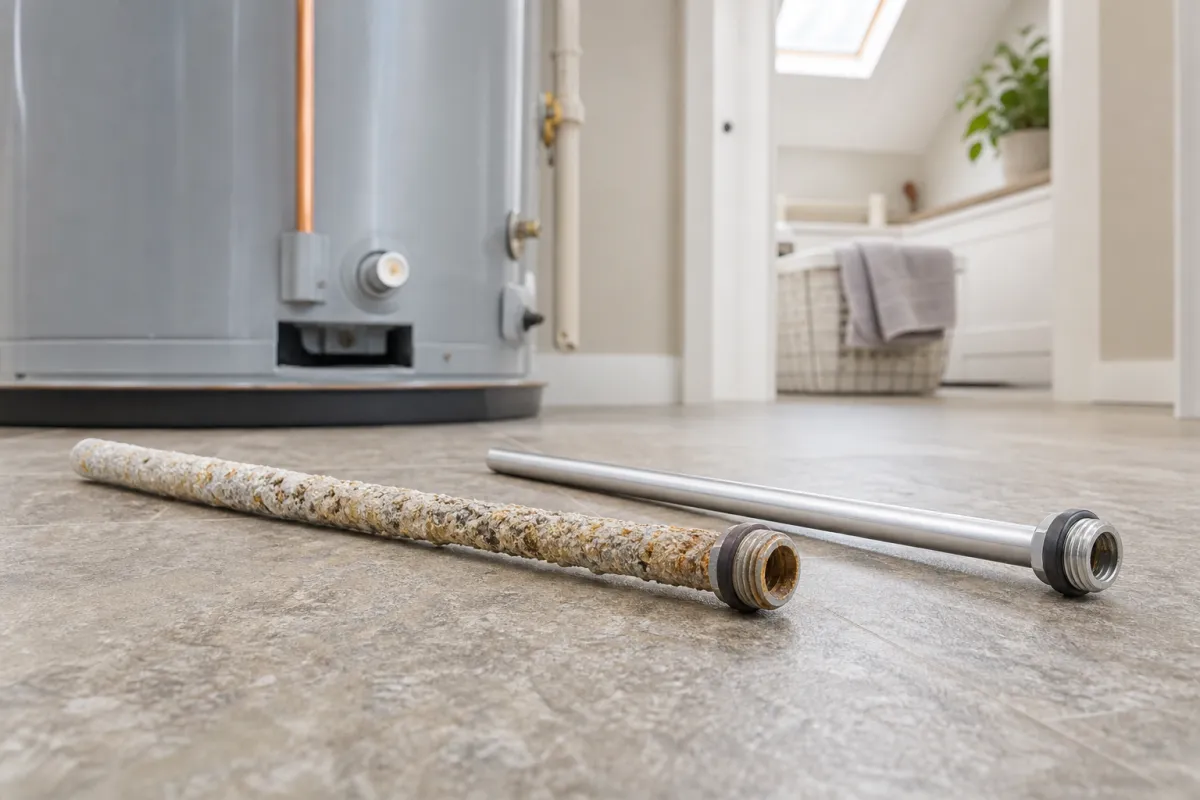
The anode rod is a sacrificial component made typically of magnesium, aluminum, or zinc, designed to attract corrosive elements in the water. This means that the anode rod deteriorates over time instead of the metal tank itself. If the rod becomes too corroded, the tank can start to rust, leading to leaks and ultimately a complete failure of the water heater. Regularly replacing the anode rod can extend the life of your water heater by several years and save you from expensive repairs down the line.
Understanding how often to replace the anode rod and recognizing the signs of wear can help you maintain your water heater effectively. This guide will provide practical steps, common pitfalls, and advice on Signs That Require Licensed Helpfessional.
What to Check First
Before diving into the replacement process, it's essential to perform some preliminary checks:
1. Inspect Water Quality
Water quality can significantly affect the lifespan of your anode rod. If you notice a metallic taste or smell in your water, it could indicate that your anode rod is deteriorating. Similarly, if your water appears cloudy or has rust particles, these are signs that the rod may need replacement.
2. Check for Signs of Corrosion
A visual inspection can reveal a lot about the condition of your anode rod. If you have access to the rod, look for significant corrosion or a buildup of sediment. If the rod is less than ½ inch thick, it may need replacement soon.
3. Know Your Water Heater’s Age
The age of your water heater is a crucial factor in determining when to replace the anode rod. Most water heaters last about 8 to 12 years, and if your unit is nearing the end of its life cycle, it might be more cost-effective to consider a full replacement rather than just changing the anode rod.
A Safe Anode-Rod Replacement Plan
If you've determined that your anode rod needs replacement, here are the steps to follow:
1. Gather Necessary Tools and Materials
Before starting, ensure you have the right tools:
- Adjustable wrench
- Socket set
- Teflon tape
- Replacement anode rod (make sure it’s compatible with your water heater)
2. Shut Off Water and Power Supply
Safety first. Turn off the water supply to the heater and disconnect the power. For electric heaters, switch off the circuit breaker; for gas heaters, turn off the gas supply.
3. Drain the Water Heater
To access the anode rod, you’ll need to drain a portion of the tank. Attach a garden hose to the drain valve and direct it to a suitable drainage area. Open the valve and let a few gallons of water out to lower the water level below the anode rod's location.
4. Remove the Old Anode Rod
Using your adjustable wrench or socket set, loosen and remove the old anode rod. It may require some force, especially if it hasn’t been replaced in a while. Be prepared for some water spillage.
5. Install the New Anode Rod
Wrap Teflon tape around the threads of the new anode rod to ensure a watertight seal. Screw it into place and tighten it securely, but avoid over-tightening, as this can damage the threads.
6. Refill and Restore Power
Close the drain valve and refill the tank by turning on the water supply. Once the tank is full, restore the power supply to your water heater.
7. Monitor Performance
After replacing the anode rod, keep an eye on your water heater's performance. Check for leaks and listen for unusual noises that might indicate a problem.
Mistakes to Avoid
1. Ignoring Signs of Deterioration
One of the most common mistakes homeowners make is ignoring the signs of anode rod deterioration. Regularly inspect your water heater and replace the anode rod at the first signs of wear.
2. Skipping Safety Procedures
Always prioritize safety when working on your water heater. Failing to turn off the water supply and power can lead to serious injuries or damage to your home.
3. Using the Wrong Replacement Rod
Not all anode rods are created equal. Ensure that the replacement rod is compatible with your specific water heater model to avoid complications.
4. Overlooking Local Water Quality
If you live in an area with hard water, you may need to replace your anode rod more frequently. Be aware of your local water quality and adjust your maintenance schedule accordingly.
Signs That Require Licensed Help
While replacing an anode rod is a manageable DIY task for many homeowners, there are situations where calling a professional is the best option:
1. Complex Water Heater Systems
If you have a more complex water heater setup, such as a tankless system or a hybrid model, it may be better to consult a professional to avoid damaging your unit.
2. Issues Beyond the Anode Rod
If you notice leaks, strange noises, or fluctuating water temperatures, it may indicate deeper issues within the water heater that require professional assessment.
3. Lack of Experience
If you’re uncomfortable performing maintenance tasks or lack the necessary tools, it’s wise to hire a professional. The cost of a service call is often less than the expense of fixing mistakes made during a DIY attempt.
FAQ
How do I know if my anode rod needs replacing?
Inspect the rod visually for significant corrosion or if it’s less than ½ inch thick. Also, monitor your water quality for any unusual tastes or smells.
Can I replace the anode rod myself?
Yes, replacing the anode rod is a task many homeowners can do with some basic tools and safety precautions.
How often should I check my anode rod?
It’s advisable to inspect your anode rod every 1 to 3 years, depending on your water quality and usage.
What happens if I don’t replace the anode rod?
Neglecting to replace a corroded anode rod can lead to tank rusting and eventually a leak, requiring a costly water heater replacement.
Is it worth replacing the anode rod in an old water heater?
If your water heater is nearing the end of its life, it may not be worth replacing the anode rod. However, if it’s relatively new, replacing the rod can extend its life significantly.
Quick Reference Checklist
| Task | Frequency |
|---|---|
| Inspect anode rod | Every 1-3 years |
| Replace anode rod | Every 3-5 years |
| Check water quality | Annually |
| Inspect for leaks/noises | Monthly |
Conclusion
Replacing your water heater anode rod is a simple yet essential maintenance task that can save you money and extend the life of your water heater. By following the steps outlined in this guide and being aware of the common pitfalls, you can ensure your water heater operates efficiently for years to come.
Why This Is Different in San Antonio
San Antonio's Edwards Aquifer supplies some of the hardest municipal water in the United States: about 357 mg/L, or 21 grains per gallon. That limestone-filtered groundwater carries calcium carbonate and magnesium into our fixtures, valves, drains, heaters, and supply lines. For how often should you replace water heater anode rod, that matters because sediment collects in the tank or heat exchanger faster, so local water heaters commonly last 6-8 years instead of the 10-12 years often quoted nationally.
- Scale buildup makes small restrictions worse, especially at cartridges, aerators, shutoff valves, drains, and heater connections.
- Fixtures, pipes, and appliances in our area can wear out 30-50% faster than in soft-water cities when maintenance is delayed.
- SAWS publishes annual water quality reports, but the practical homeowner takeaway is simple: maintenance intervals here should be shorter than national advice suggests.
Homes in Stone Oak are particularly affected because many 1990s-2000s homes have copper lines where hard-water scale and pinhole leaks show up sooner than owners expect. Unlike cities with naturally soft water, local homeowners should treat hard-water maintenance as normal prevention, not an upsell.
> "In my 20 years working in San Antonio, I would say 70% of the water heater calls I get trace back to sediment buildup from our hard water." — Licensed San Antonio plumber
What San Antonio Homeowners Pay (2026)
| Service | Typical Cost in San Antonio |
|---|---|
| Tank water heater replacement | $1,200–$2,800 installed |
| Tankless water heater replacement | $2,500–$5,500 installed |
| Water softener installation | $1,500–$4,000 |
| Plumber hourly rate | $85–$150/hr |
Prices are based on local metro area ranges for 2026. Costs may vary by neighborhood, access, pipe material, after-hours timing, and whether the plumber finds hard-water damage beyond the visible problem.
When to Call a San Antonio Plumber
Call a licensed San Antonio plumber if the problem involves active leaking, a shutoff valve that will not close, sewer smell, recurring clogs, water near electrical components, a water heater leak, or any pipe inside a wall, ceiling, or slab. Locally, expect many licensed plumbers to charge roughly $85-$150 per hour, with emergency visits commonly around $150-$350 and after-hours calls closer to $250-$500.
When you call, ask three local questions:
1. Are you licensed and insured for work in Bexar County or the surrounding local metro?
2. Have you dealt with Edwards Aquifer hard-water scale on this type of repair?
3. Should I also check the water heater, shutoff valves, or water softener while you are there?
local plumbers see hard-water issues every week, so a good pro should be able to explain whether the failure is normal wear, mineral damage, freeze damage from a cold snap like Winter Storm Uri, or a sign of a larger plumbing system problem.
San Antonio FAQ
Is San Antonio water hard?
Yes. San Antonio water is very hard at about 357 mg/L, or 21 grains per gallon, because much of it comes from the Edwards Aquifer and passes through limestone. That mineral content is why scale shows up quickly on faucets, showerheads, valves, drains, and water heaters.
Do local homes need a water softener?
A water softener is recommended for many local homes, especially if you see white scale, repeated faucet or valve problems, short water-heater life, or cloudy spots on dishes. A typical whole-home water softener installation in San Antonio runs about $1,500-$4,000.