> San Antonio Local Insight: San Antonio's hard water from the Edwards Aquifer affects every plumbing system in your home. With 357 mg/L mineral content (21 grains per gallon), our water causes faster corrosion, heavier scale buildup, and more frequent repairs than most US cities. Understanding this local factor helps you make better decisions about maintenance, repair, and prevention.
Local San Antonio Field Notes Before You Start
Before following any generic plumbing checklist, adjust it for our Edwards Aquifer water. At roughly 357 mg/L, or 21 grains per gallon, the calcium carbonate and magnesium in the water can turn a small maintenance issue into repeat wear on valves, seals, drains, heaters, and appliance connections. That means national advice needs a local filter before a homeowner decides whether to DIY, maintain, or call a pro.
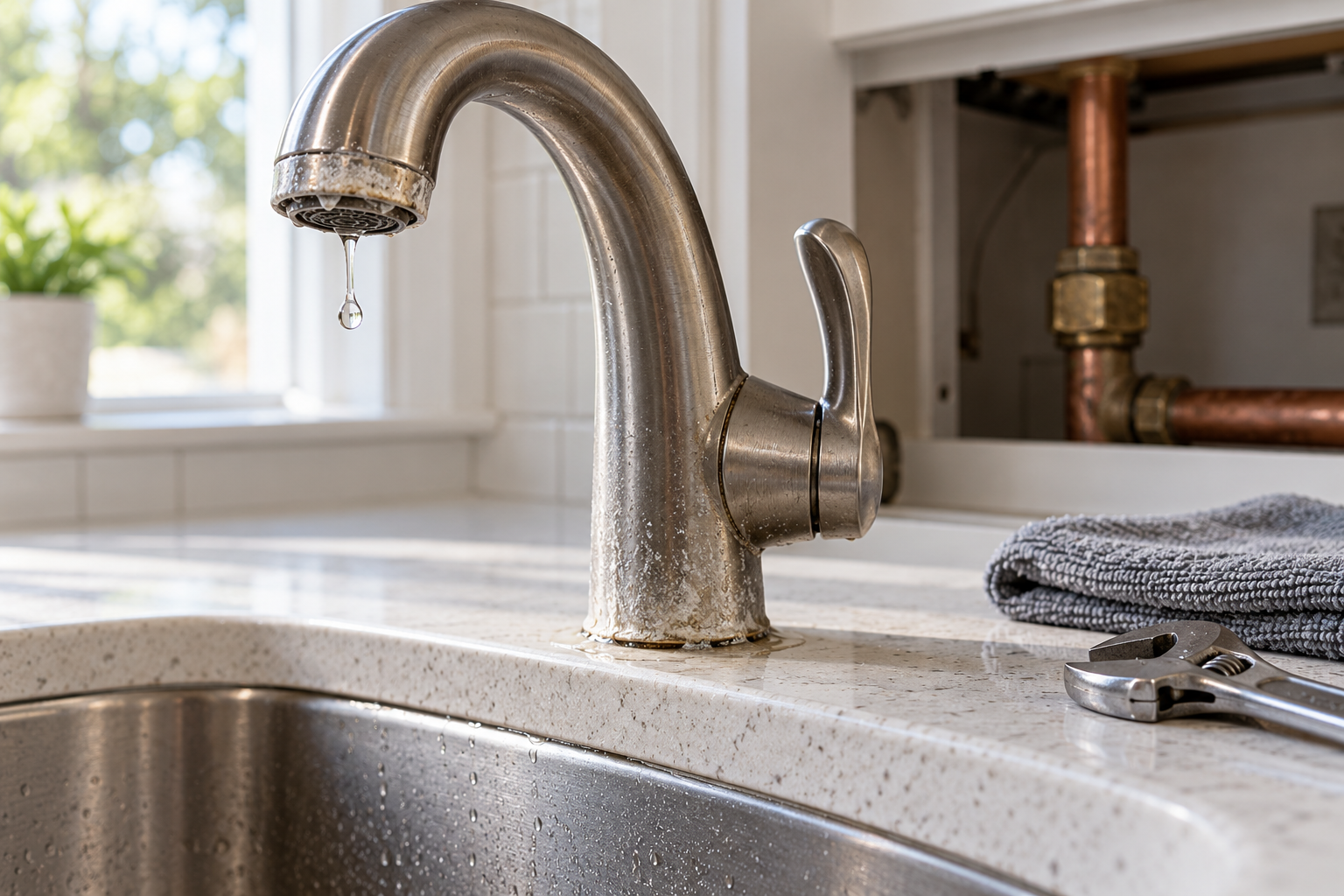
A homeowner in New Braunfels and Boerne should be especially careful because nearby Hill Country systems have similar hard-water pressure on heaters and fixtures. If you are comparing advice from national repair guides, shorten the maintenance interval and inspect for white scale, crusted fittings, stiff shutoff valves, and early corrosion before assuming the part simply “got old.”
For budgeting, use local pricing instead of national averages: licensed plumber labor commonly runs $85-$150 per hour, with emergency visits costing more. If the issue appears after a summer high-use period or after a rare freeze like Winter Storm Uri, treat it as a local risk signal and document what you see before calling a licensed plumber in Bexar County.
Plumbing repair tape can be useful, but the name covers several different products that do very different jobs. PTFE thread-seal tape helps seal suitable threaded fittings. Self-fusing silicone tape can form a temporary wrap around some accessible low-risk pipes or hoses. Epoxy-style repair wraps may be sold as emergency patches. None of them turns a cracked, corroded, incorrectly assembled, or concealed pipe into a reliably permanent installation.
If water is escaping now, protect the building first. Close the fixture shutoff or main water valve, keep water away from electricity, relieve pressure by opening a lower faucet, and dry the area. A temporary wrap may buy time on an accessible water line, but active flooding, sewage, gas odor, wet electrical equipment, a bulging ceiling, or a failed water heater requires professional help. Never use ordinary repair tape on fuel gas piping or fire-sprinkler systems.
Identify the Tape Before Using It
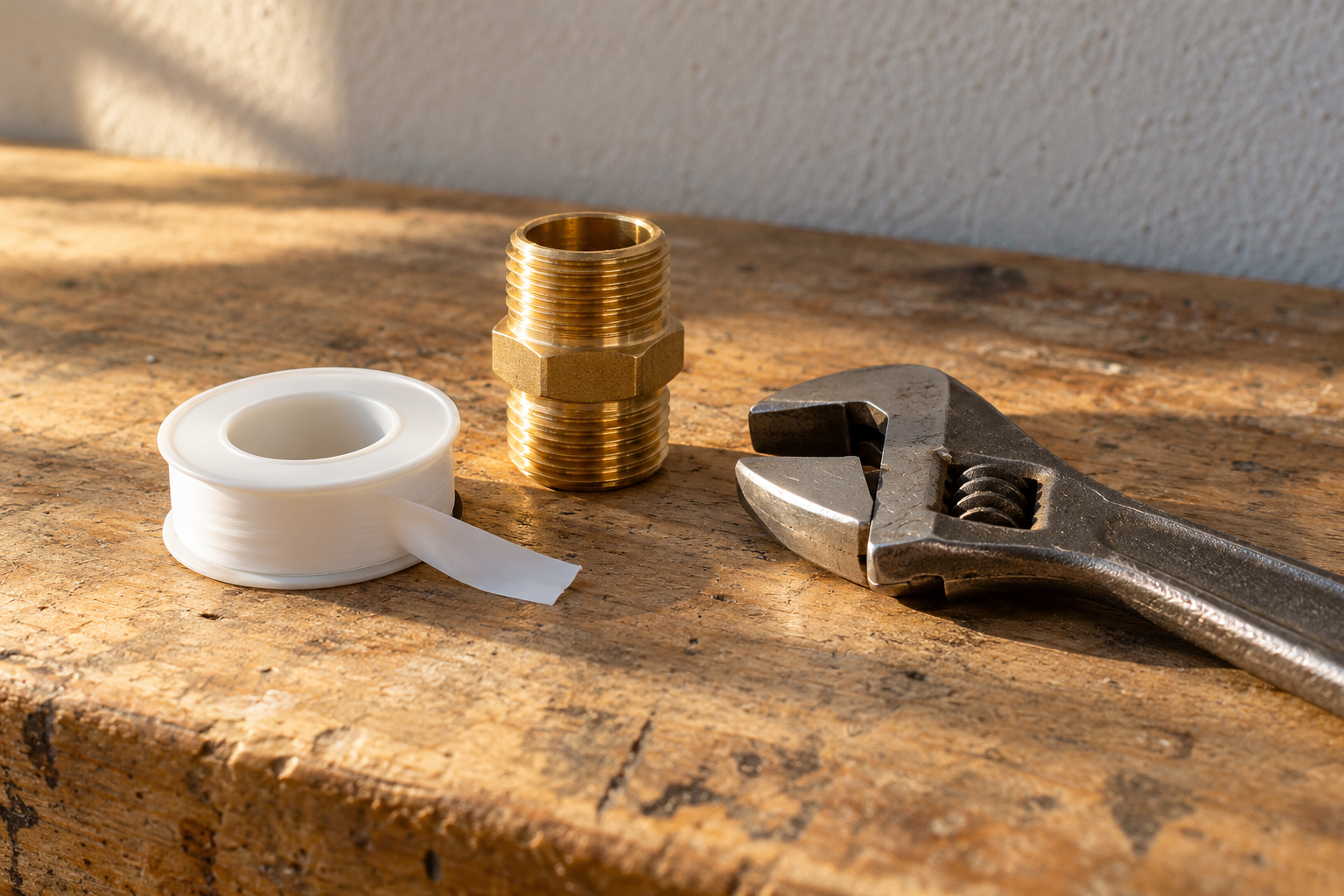
White or colored PTFE tape is thin and non-adhesive. It conforms to tapered pipe threads as a fitting is assembled, helping lubricate the joint and fill microscopic spaces. It does not belong on the outside of a leaking pipe. It also is not normally used on compression joints, flare fittings, gasketed connectors, or drain slip joints because those connections seal at a ferrule, flare, washer, or gasket rather than at the threads.
Self-fusing silicone tape is thicker and bonds to itself when stretched and overlapped. It may slow a small leak on a smooth, clean, accessible pipe after pressure is removed. Fiberglass-and-resin wraps or pipe-repair kits cure into a rigid shell and often have strict surface-preparation, temperature, material, and pressure limits. Read the entire label. A product marketed for “plumbing” may be suitable only for drainage, irrigation, or a narrow range of potable-water applications.
| Product | Appropriate role | Not a sound use |
|---|---|---|
| PTFE thread-seal tape | Compatible tapered threaded water fittings | Wrapping the exterior of split pipe |
| Self-fusing silicone tape | Short-term mitigation on accessible, compatible lines | Concealed permanent repair |
| Pipe repair clamp | Temporary or sometimes specified repair on sound, round pipe | Badly pitted, crushed, or irregular pipe |
| Resin repair wrap | Product-specific emergency repair | Gas, unknown pressure, or unapproved potable use |
| Vinyl electrical/duct tape | Bundling or non-plumbing tasks | Pressurized leak repair |
Determine Why the Connection Leaks
A threaded joint can leak because it lacks suitable sealant, was assembled crooked, has damaged threads, uses mismatched thread standards, or was tightened too little or too much. Simply adding tape without finding the cause can hide a cracked fitting. If the leak comes from a compression nut, faucet supply connection, trap, or garden-hose washer, tape on the threads will not repair the sealing surface. The correct fix may be a new ferrule, gasket, washer, connector, or fitting.
A leak through the pipe wall points to corrosion, freezing, impact, abrasion, or material failure. Look beyond the single hole. Green deposits, flaking metal, deep pitting, longitudinal cracks, or several previous patches suggest a larger section is unreliable. If freezing caused the split, inspect other exposed sections and address insulation or heat loss. Guidance for frozen water pipes can help you prevent a repeat, but do not use a torch or open flame to thaw plumbing.
Make the Area Safe First
Shut off water upstream and confirm flow has stopped. If the local valve is seized, leaking around its stem, or difficult to identify, use the main valve if it is safe and accessible. Do not force a corroded handle. Open a faucet below the damaged section to relieve pressure and catch drainage in a pan. On a hot-water line, allow the pipe to cool. Follow the water heater manufacturer’s shutdown instructions when isolating its supply could affect the unit.
Do not work in standing water near outlets, appliances, wiring, or the service panel. Never reach a breaker by crossing a wet floor. Sewage requires isolation and sanitation rather than a tape patch. A sulfur or gas odor is not a cue to inspect pipe threads: leave without operating electrical switches and call the gas utility or emergency service from outside. A sagging ceiling can collapse even after the supply is off, so stay clear and obtain help.

Inspect the Pipe and Choose the Correct Repair
Clean and dry the accessible area so you can pinpoint the first place water appears. Water often runs along a pipe and drips at an elbow even though the failure is farther upstream. Use a flashlight and plain paper towel to trace moisture. Check whether leakage occurs constantly under pressure, only while a drain is used, or only when a fixture moves. Photograph the condition before cleaning if insurance or a landlord may need documentation.
Confirm pipe material, outside diameter, temperature, pressure, and service. Copper, galvanized steel, PEX, CPVC, PVC, and flexible connectors require different repair methods. Read printed markings where available. A repair product must explicitly support that material and application, including potable water if relevant. When the correct method is replacement, consult a broader water pipe repair guide or hire a licensed plumber rather than adapting a tape intended for another system.
How to Use PTFE Tape on a Threaded Fitting
PTFE tape is used during assembly, not wrapped over a completed joint. After shutting off and draining the line, disassemble the fitting with the correct wrenches while supporting the fixed pipe so it does not twist inside a wall. Inspect both sets of threads. Replace cracked fittings or components with rounded, severely damaged, or mismatched threads. Remove old tape without pushing fragments into the line, then clean and dry the threads.
Wrap tape in the direction that lets tightening lay the tape down rather than unwind it—typically clockwise when looking at the male threaded end. Start back from the first thread so scraps do not enter the waterway. Follow the tape and fitting manufacturer’s guidance for wrap count; more is not automatically better. Thread the fitting by hand first to avoid cross-threading, then tighten appropriately without forcing plastic or brittle fittings. Some systems require approved pipe-joint compound instead of, or in addition to, tape.

A PTFE thread-seal tape should be selected for the actual service. Color alone does not establish suitability, and rules vary by jurisdiction and manufacturer. Never assume water-service tape is approved for oxygen, fuel gas, high temperature, or industrial chemicals. If the application involves regulated gas piping, use a qualified professional.
Using Self-Fusing Tape as Temporary Mitigation
For a small accessible leak where the product label permits use, shut off and fully depressurize the pipe. Clean away grease and loose corrosion, dry the surface, and smooth sharp edges without thinning the pipe further. Begin on sound material before the damaged spot, stretch and overlap the tape exactly as directed, and continue onto sound material beyond it. The layers must fuse to one another; folds, wet surfaces, and irregular fittings can prevent a seal.
Restore pressure slowly while watching from a safe position. If moisture appears, shut the water off again—do not keep stacking random materials over a failed patch. Mark the repair date and arrange a permanent correction. A temporary patch should remain visible and routinely checked, not buried in a wall or covered with insulation. For a more complete comparison of products and limitations, see does plumbing tape stop leaks.
When a Clamp or Replacement Is Better
A properly sized repair clamp distributes pressure more evenly than a narrow tape wrap and may be a better emergency option for a small hole on a straight, round, structurally sound pipe. The rubber gasket must be compatible with the pipe, temperature, and fluid. A clamp cannot rebuild metal that is deeply pitted, and it may not seal near an elbow, coupling, or distorted surface. Follow the clamp maker’s torque instructions instead of overtightening it.
Permanent repair often means cutting out damaged material and installing an approved coupling or rerouting a vulnerable section. That work can require permits, code-compliant supports, bonding considerations, specialty tools, and reliable access. PEX connections need the correct fitting system and calibrated tool; solvent-welded plastic requires compatible cement, preparation, and curing; copper soldering introduces fire risk. If you cannot identify the pipe or isolate it confidently, a plumber is the safer choice.
Common Repair-Tape Mistakes
The most common error is using PTFE tape where threads do not create the seal. Compression fittings seal when a ferrule seats against the fitting body; faucet connectors often seal with a captive washer; tubular drain fittings use slip-joint washers. Tape can interfere with alignment, encourage overtightening, and make the actual defect harder to diagnose. Replace the sealing component and damaged connector instead.
Other mistakes include wrapping over active pressure, applying tape to wet or dirty surfaces, mixing incompatible products, hiding a temporary patch, and assuming a dry exterior proves the surrounding structure is dry. Do not use repair tape to restrain a pipe that moves or to compensate for missing supports. Avoid chemical drain cleaner around an unknown leak because trapped corrosive liquid creates a hazard for anyone opening the line later.
Cost, Time, and Expectations
A roll of thread-seal or silicone tape usually costs under $20, and a careful repair on an accessible compatible fitting may take less than an hour after shutdown and drainage. In a King William renovation, old galvanized transitions and tight cabinet access can turn a visible pinhole into a larger section replacement. The real cost rises when a valve will not close, the pipe is concealed, finishes need removal, or corrosion extends beyond the visible spot. Emergency and after-hours service generally costs more than a scheduled repair. Ask whether a quote includes diagnosis, parts, access, testing, and finish restoration.
Do not let the low price of tape determine the repair strategy. Repeated patches can exceed the cost of replacing a deteriorated section and can allow hidden water damage to continue. A plumber may recommend a spot repair for isolated damage or partial repiping where failures are widespread. Get the reasoning in writing, ask about warranty and code requirements, and verify the line under normal operating conditions before closing access.
Preventing the Next Leak
Inspect visible connections and flexible hoses periodically. Look for corrosion, discoloration, abrasion, bulging, drips, and valves that no longer operate smoothly. Keep household water pressure within the limits specified for your plumbing and fixtures; persistently excessive pressure deserves professional evaluation. Protect pipes from freezing, support them correctly, and avoid hanging objects from plumbing. Replace appliance connectors with listed manufacturer-compatible parts when damaged or due under the maker’s guidance.
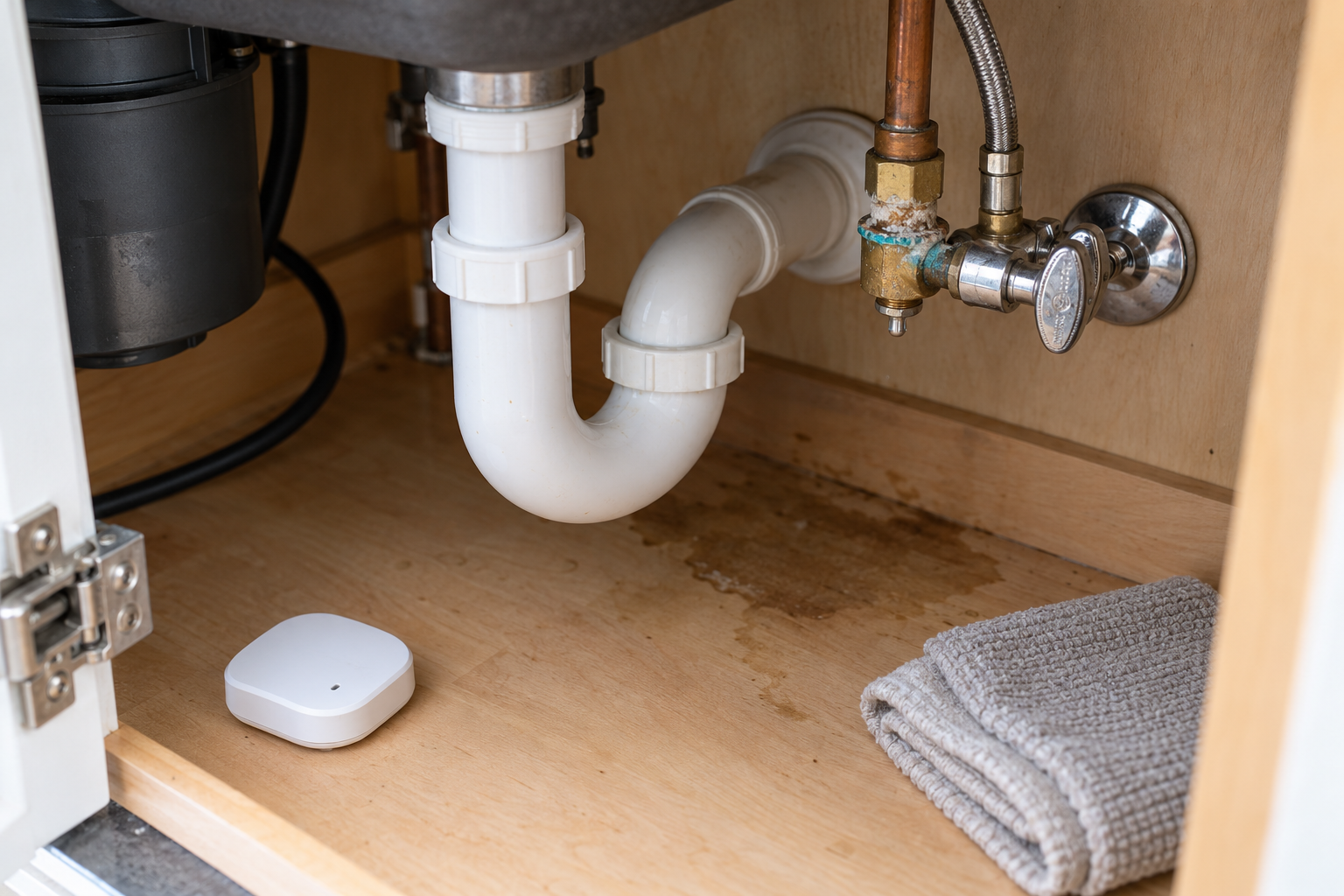
Keep the main shutoff accessible and label branch valves. Small leak alarms near water heaters, washing machines, dishwashers, and sinks can provide early warning. After any repair, dry cabinets, insulation, subflooring, and wall cavities as appropriate, and monitor for renewed moisture. A repair is not complete if the pipe stops dripping but trapped water continues to damage the building.
Frequently Asked Questions
Can plumbing repair tape permanently stop a pressurized leak?
Sometimes a manufacturer-approved wrap is rated as a lasting repair under tightly defined conditions, but many consumer tape repairs are temporary. Pipe condition, material, pressure, temperature, preparation, and accessibility all matter. Replacement of failed material is usually more dependable.
Why does my threaded connection still leak after adding PTFE tape?
The fitting may be cross-threaded, cracked, mismatched, or overtightened, or it may seal with a washer rather than threads. Shut the water off, disassemble it, identify the sealing method, and replace damaged parts. Do not keep adding layers blindly.
Can I put tape on a leaking drain pipe?
A temporary exterior wrap may catch a minor drip on an accessible low-pressure drain if the product allows it, but the correct fix is usually a new washer, gasket, trap component, or section of pipe. Stop using the fixture if sewage or contaminated water is escaping.
How urgent is a pinhole leak?
A pressurized pinhole can enlarge and can wet a large hidden area over time. Shut off or isolate the line, protect electricity and finishes, and arrange a permanent repair promptly. Multiple pinholes indicate that more piping may need evaluation.
What should never be repaired with ordinary tape?
Do not tape fuel-gas piping, fire-sprinkler lines, badly corroded pipe, wet electrical components, structural cracks, or unknown high-pressure systems. Do not conceal an unverified temporary patch. Those conditions require qualified assessment and an approved repair method.
Why This Is Different in San Antonio
San Antonio's Edwards Aquifer supplies some of the hardest municipal water in the United States: about 357 mg/L, or 21 grains per gallon. That limestone-filtered groundwater carries calcium carbonate and magnesium into our fixtures, valves, drains, heaters, and supply lines. For plumbing repair tape, that matters because mineral scale changes the maintenance schedule, failure signs, and realistic repair costs for local homeowners.
- Scale buildup makes small restrictions worse, especially at cartridges, aerators, shutoff valves, drains, and heater connections.
- Fixtures, pipes, and appliances in our area can wear out 30-50% faster than in soft-water cities when maintenance is delayed.
- SAWS publishes annual water quality reports, but the practical homeowner takeaway is simple: maintenance intervals here should be shorter than national advice suggests.
Homes in New Braunfels and Boerne are particularly affected because nearby Hill Country water systems are also very hard and create similar maintenance pressure. Unlike cities with naturally soft water, local homeowners should treat hard-water maintenance as normal prevention, not an upsell.
> "In my 20 years working in San Antonio, I would say most surprise plumbing failures I see start with homeowners following soft-water maintenance advice in a hard-water city." — Licensed local plumber
What San Antonio Homeowners Pay (2026)
| Service | Typical Cost in San Antonio |
|---|---|
| Emergency plumber call | $150–$350; after hours $250–$500 |
| Plumber hourly rate | $85–$150/hr |
| Water softener installation | $1,500–$4,000 |
Prices are based on local metro area ranges for 2026. Costs may vary by neighborhood, access, pipe material, after-hours timing, and whether the plumber finds hard-water damage beyond the visible problem.
When to Call a San Antonio Plumber
Call a licensed local plumber if the problem involves active leaking, a shutoff valve that will not close, sewer smell, recurring clogs, water near electrical components, a water heater leak, or any pipe inside a wall, ceiling, or slab. Locally, expect many licensed plumbers to charge roughly $85-$150 per hour, with emergency visits commonly around $150-$350 and after-hours calls closer to $250-$500.
When you call, ask three local questions:
1. Are you licensed and insured for work in Bexar County or the surrounding local metro?
2. Have you dealt with Edwards Aquifer hard-water scale on this type of repair?
3. Should I also check the water heater, shutoff valves, or water softener while you are there?
local plumbers see hard-water issues every week, so a good pro should be able to explain whether the failure is normal wear, mineral damage, freeze damage from a cold snap like Winter Storm Uri, or a sign of a larger plumbing system problem.
San Antonio FAQ
Is San Antonio water hard?
Yes. San Antonio water is very hard at about 357 mg/L, or 21 grains per gallon, because much of it comes from the Edwards Aquifer and passes through limestone. That mineral content is why scale shows up quickly on faucets, showerheads, valves, drains, and water heaters.
Do local homes need a water softener?
A water softener is recommended for many local homes, especially if you see white scale, repeated faucet or valve problems, short water-heater life, or cloudy spots on dishes. A typical whole-home water softener installation in San Antonio runs about $1,500-$4,000.