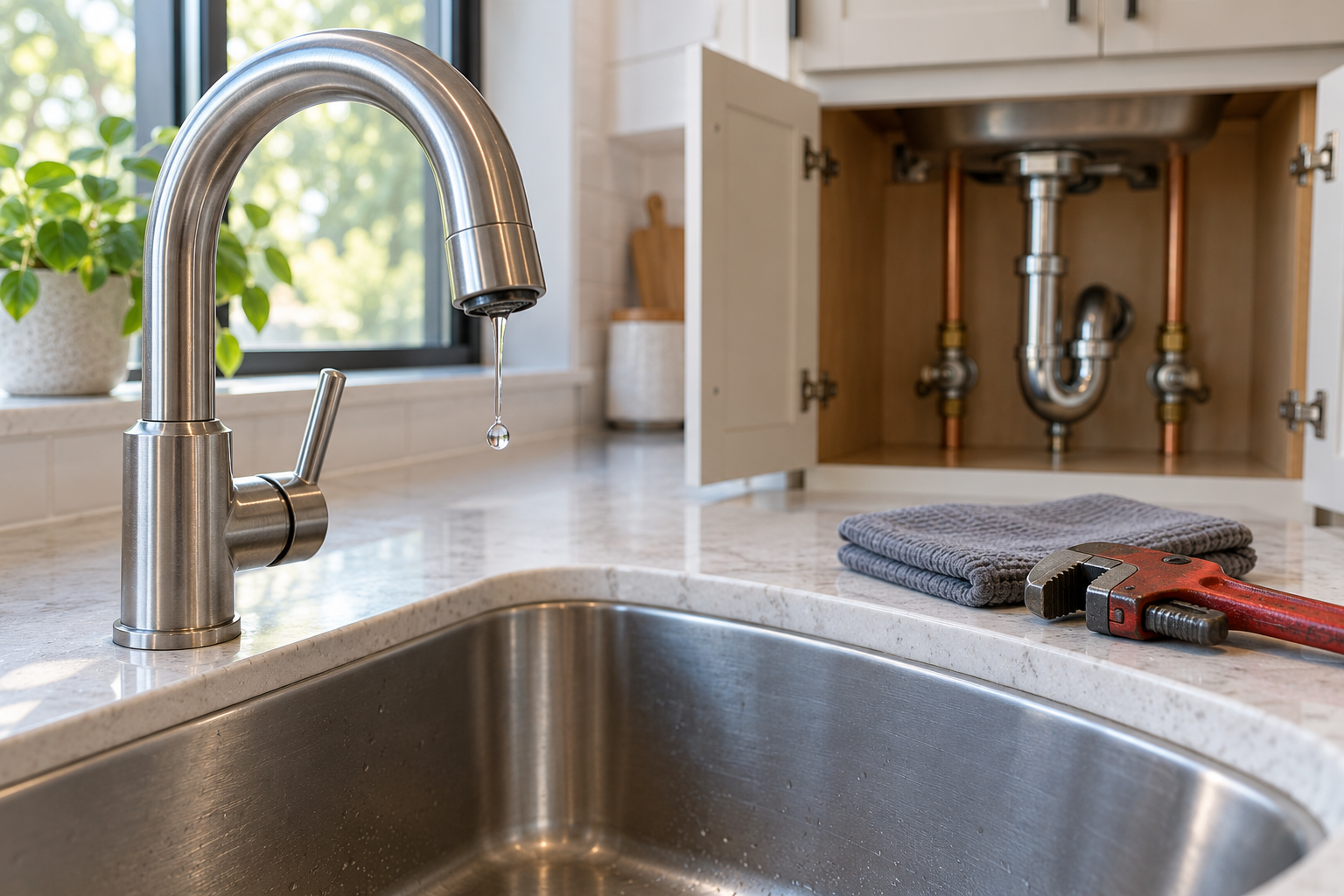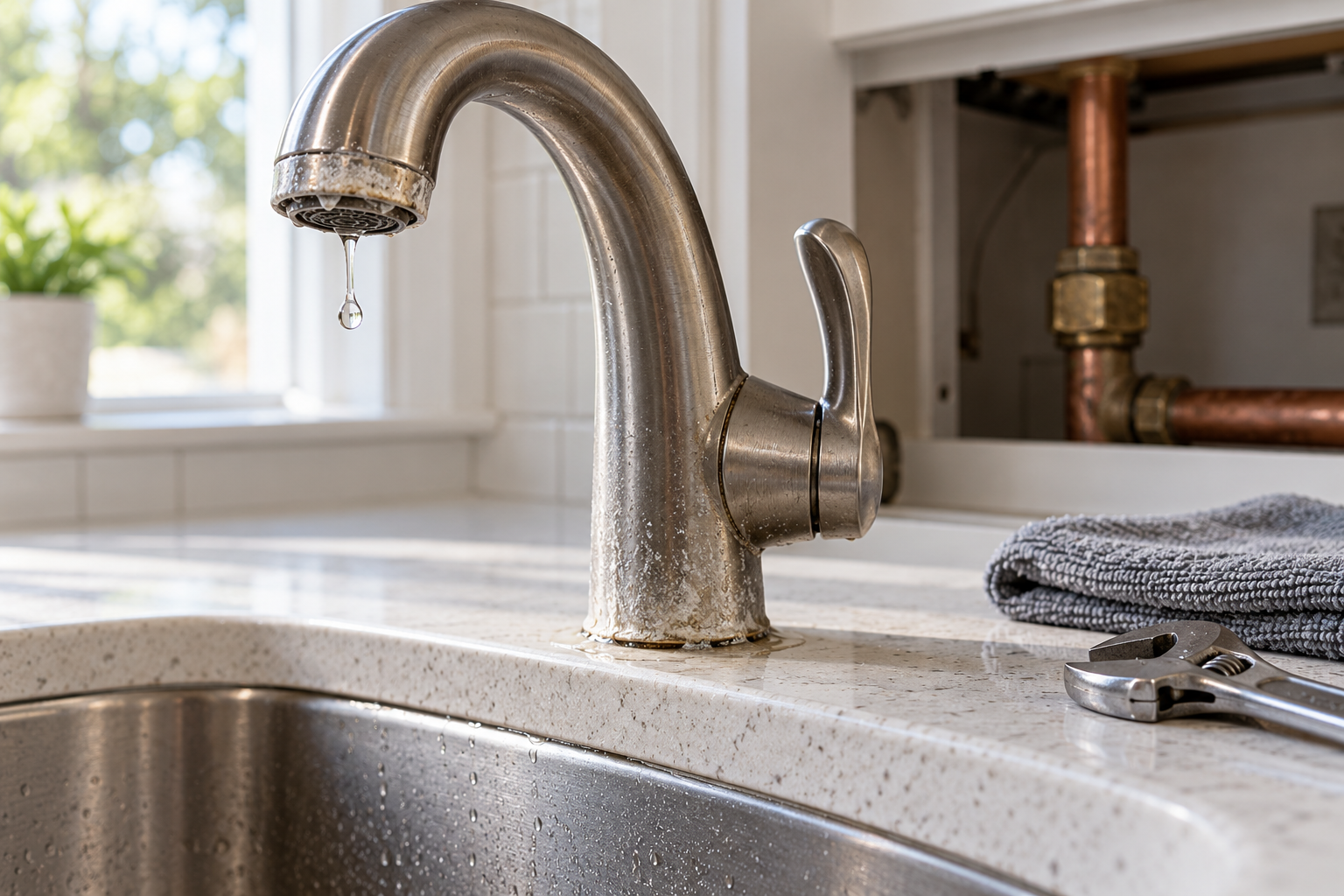
> San Antonio Local Insight: Fixture and faucet leaks in San Antonio happen faster because hard water minerals (21 gpg from Edwards Aquifer) grind down valve seats, corrode cartridges, and prevent proper sealing. A faucet that lasts 15 years in soft-water cities often starts leaking within 5–8 years in San Antonio without a water softener.
Local San Antonio Field Notes Before You Start
Before following any generic plumbing checklist, adjust it for our Edwards Aquifer water. At roughly 357 mg/L, or 21 grains per gallon, the calcium carbonate and magnesium in the water can turn a small maintenance issue into repeat wear on valves, seals, drains, heaters, and appliance connections. That means a visible drip may be the symptom, while the real risk is scale, corrosion, freeze stress, or an older pipe material failing behind the wall or under the slab.
A homeowner in Westover Hills and Alamo Ranch should be especially careful because newer PEX-heavy homes still get hard-water damage at fixtures, cartridges, and appliances. If you are comparing advice from national repair guides, shorten the maintenance interval and inspect for white scale, crusted fittings, stiff shutoff valves, and early corrosion before assuming the part simply “got old.”
For budgeting, use local pricing instead of national averages: emergency plumber calls often run $150-$350, after-hours visits $250-$500, and slab leak repair can reach $2,000-$5,000. If the issue appears after a summer high-use period or after a rare freeze like Winter Storm Uri, treat it as a local risk signal and document what you see before calling a licensed plumber in Bexar County.
A damp patch, unexplained water bill, or sound of running water can indicate a leak, but it does not tell you where the failure is. A leak detection specialist uses non-destructive diagnostic methods to narrow down the source before walls, floors, or landscaping are opened. That can be especially valuable when the visible symptom appears far from the damaged pipe.
Start by protecting people and property. If water is flowing rapidly, close the nearest fixture valve or the home’s main water shutoff. Keep away from wet outlets, appliances, and electrical panels; shut off the affected circuit only if you can reach the breaker without entering water. Sewage, a gas odor, a bulging ceiling, or water near energized equipment calls for immediate professional help rather than investigation.
What a Leak Detection Specialist Actually Does
A specialist begins by gathering evidence: when the symptom occurs, whether the water meter moves with fixtures off, which rooms are affected, and whether the home has a slab, crawlspace, or basement. The goal is not merely to confirm that water exists. It is to distinguish a supply leak from a drain, roof, appliance, irrigation, condensation, or waterproofing problem. A plumber may provide leak detection as part of a repair service, while some detection companies focus on locating and documenting the source.
Methods may include acoustic listening, thermal imaging, moisture mapping, pressure testing, tracer gas, and small inspection cameras. No single instrument can “see through” every material, and a responsible technician compares several clues before marking an access point. Detection identifies the probable location and system; repair may be a separate scope. Ask whether the quoted visit includes diagnosis only, minor repair, a written report, and post-repair confirmation.
Common Signs of a Hidden Water Leak
The clearest clue is a water meter that records use while every faucet, appliance, toilet, irrigation zone, and automatic device is off. Other signs include a warm spot on a slab, paint that bubbles repeatedly, swollen trim, musty odors, damp flooring, reduced pressure, or the sound of water when the house is quiet. A suddenly higher bill matters, but seasonal irrigation and guests should be ruled out before assuming a concealed pipe has failed.
Symptoms can mislead. A ceiling stain may come from a shower drain used only occasionally, flashing around a roof penetration, or supply tubing one room away. Condensation on a cold pipe can imitate a pinhole leak. A toilet flapper can waste substantial water without leaving a puddle. Record when each symptom appears: continuously, after rain, after a shower, only while a fixture drains, or only when irrigation runs. Timing often narrows the system faster than the stain’s location.
| Observation | More likely source | Safe next check |
|---|---|---|
| Meter moves with all use off | Pressurized supply or toilet leak | Isolate toilets and main branches if labeled |
| Stain appears after showering | Drain, supply, grout, or enclosure | Stop using shower and inspect accessible areas |
| Dampness follows rain | Roof, siding, window, or drainage | Photograph conditions; inspect from ground level |
| Warm slab area | Hot-water line beneath slab | Turn off water heater supply if safe; call a pro |
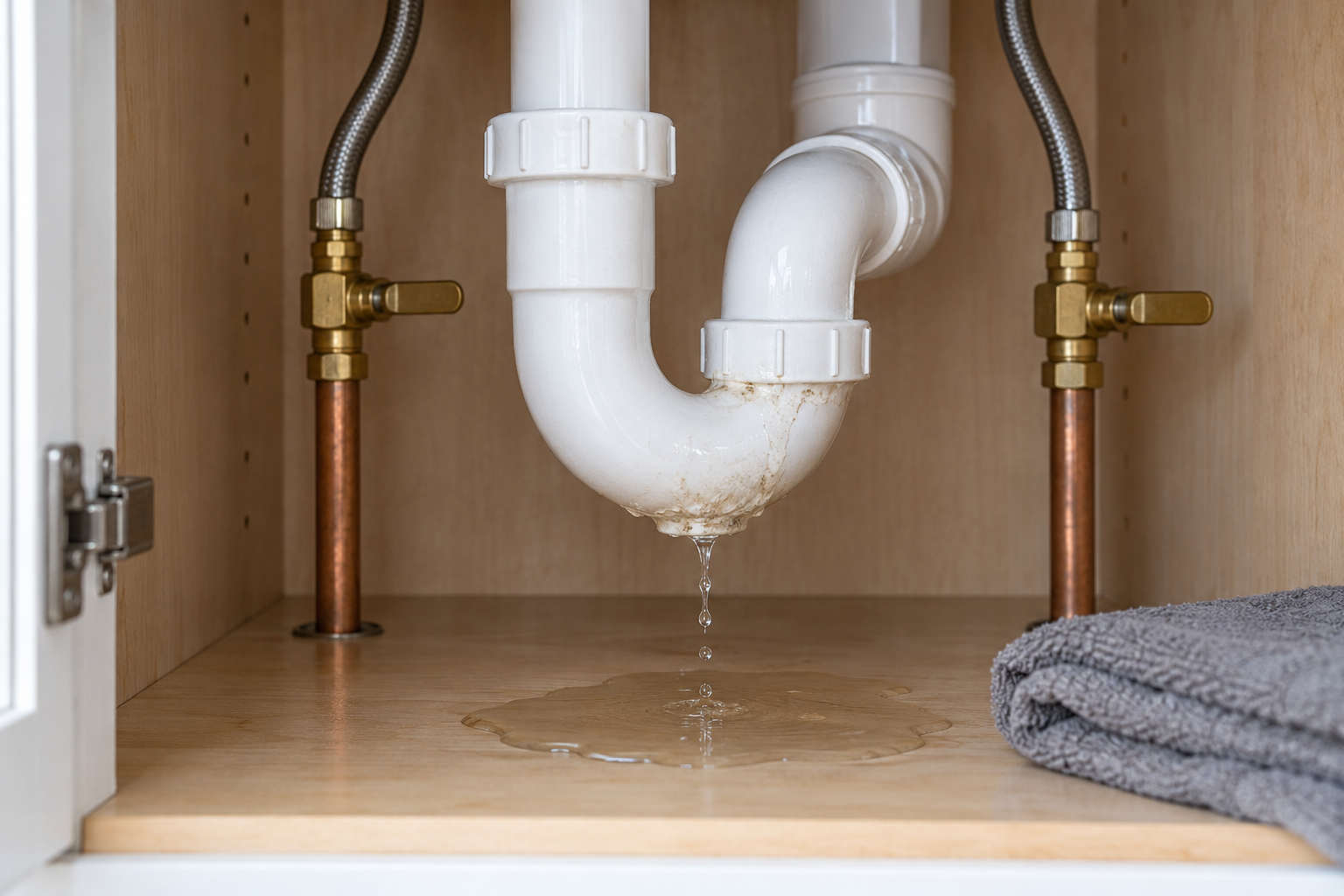
| Musty cabinet below sink | Trap, faucet, or supply connection | Dry area and observe with a flashlight |
Safety Steps Before You Investigate
Know where the main shutoff is before an emergency. It is often near the meter, where the service enters the house, or in a utility area. Operate only a normal homeowner-accessible valve; do not force a corroded valve or open a utility-owned meter box where local rules prohibit it. If closing the main, turn off heat sources that could be damaged by loss of water according to their manufacturer instructions, and tell occupants not to use fixtures until the system is restored.
Water and electricity are a dangerous combination. Do not touch a wet panel, unplug a wet appliance, cut into a damp wall, or stand in water to reach a switch. A sewage backup requires gloves, isolation of the area, and professional sanitation. If you smell gas, leave the building without operating switches or phones inside and contact the gas utility or emergency services from a safe location. Leak detection should never involve drilling blindly into walls that may contain wiring, gas lines, or structural components.

Step-by-Step Checks a Homeowner Can Make
First, stop all intentional water use. Turn off faucets and irrigation, wait for dishwashers and washing machines to finish, and make sure nobody uses a toilet. Note the water-meter reading or leak indicator, wait 30 to 60 minutes, and check again. Do not leave a suspected active leak unattended during a long test. If the reading changes, close toilet stop valves one at a time because silent toilet leaks are common. Food coloring in a tank can reveal water entering the bowl without a flush, but avoid dyes that may stain.
Next, inspect only accessible locations: under sinks, around toilets, behind removable appliance panels, near the water heater, and along visible pipes. Dry each area, place plain paper towels beneath suspect joints, and check for fresh moisture. For a ceiling mark, note whether it worsens after a particular fixture is used. Avoid destructive probing. If the main valve is closed and the meter still appears to register flow, contact the utility or a plumber because valve condition, meter interpretation, or a service-line issue may be involved.
Finally, document the evidence. Photograph stains with a ruler for scale, save water bills, note meter readings and times, and list which fixtures were operating. This information helps a leak detection specialist choose tests and may reduce diagnostic time. It can also support an insurance conversation, although coverage depends on the policy and cause. Do not delay mitigation while collecting perfect documentation.
Tools That Help Without Causing Damage
A bright flashlight, dry towels, painter’s tape, notebook, and a basic moisture meter can support a careful inspection. A pinless moisture meter compares relative readings across similar materials, but it does not prove that a pipe is leaking. Metal, fasteners, salts, and material density can affect readings. Use it to map a pattern, not to justify cutting a wall.
An inexpensive toilet dye test and a water-pressure gauge can reveal common problems, but pressure testing must be interpreted carefully. Excessive static pressure can strain fixtures and supply hoses; fluctuating pressure may indicate regulator or municipal conditions. Thermal cameras likewise show temperature differences rather than water itself. Renting advanced equipment without training can create false confidence. For a simple visible joint problem, follow a sound pipe leak repair process rather than covering the symptom and assuming the hidden moisture is resolved.
DIY Fixes That Are Usually Reasonable
Homeowners can often replace a toilet flapper, tighten a loose slip-joint nut by hand plus a small controlled adjustment, replace a worn appliance hose with the correct listed part, or renew a faucet washer after shutting off and verifying the water supply. Place a pan beneath the work, use two wrenches where needed to avoid twisting fixed piping, and test slowly while watching every connection. If a shutoff valve does not close reliably, stop rather than applying enough force to break it.
Temporary tape or a repair clamp may reduce leakage on an accessible cold-water pipe long enough to protect property, but it is not a universal permanent repair. Thread-seal tape belongs on appropriate tapered threaded fittings, not compression fittings, drain slip joints, or the outside of a leaking pipe. See does plumbing tape stop leaks before relying on it. Never patch gas piping, fire-sprinkler lines, badly corroded pipe, or a concealed line as a casual DIY project.

When Specialist Detection Is Worth the Cost
Call promptly when the meter confirms unexplained flow but no source is visible, a slab or finished wall is warm or damp, the leak returns after a surface repair, or multiple contractors disagree about the origin. Professional detection is also sensible before opening tile, hardwood, cabinetry, or a concrete slab. The diagnostic fee can be small compared with repairing unnecessary demolition. Active flooding, a sagging ceiling, contaminated water, or electrical exposure is an emergency rather than a routine appointment.
Ask the provider what systems they test, whether they repair as well as locate, and how they communicate uncertainty. A useful report should identify observations, tests, probable source, and recommended access area—not promise impossible precision in every building. For a water heater wet at the upper connections, review water heater leaking from top, shut down the unit as its instructions require, and get qualified help if the tank, gas connection, electrical components, or relief system may be involved.
What the Visit and Repair May Cost
Price depends on building construction, building construction, access, system length, and diagnostic method. A straightforward visible fixture leak may take one service visit. Locating a line beneath a slab, testing several plumbing zones, or tracing intermittent drainage can take longer and may involve a dedicated detection fee before repair. After-hours response, restoration, mold remediation, and finish replacement are normally separate costs. Get a written description of what the initial charge includes.
The least expensive repair is not always the smallest opening. A spot repair may make sense on otherwise sound piping, while repeated pinholes or deteriorated material may justify replacing a section or rerouting a line. Ask for alternatives and the consequences of each: access damage, warranty, code upgrades, drying needs, and likelihood of recurrence. Avoid approving broad demolition based only on a surface stain if non-destructive testing could first narrow the source.
Preventing Repeat Leaks and Hidden Damage
Inspect flexible supply hoses, shutoff valves, water-heater connections, sink cabinets, and appliance areas several times a year. Replace damaged hoses with manufacturer-approved parts, keep stored items from pressing on plumbing, and know the expected service life of fixtures. Maintain safe household water pressure through a qualified plumber if readings are consistently outside the limits for your fixtures. In freezing climates, insulate vulnerable piping and follow a safe plan for frozen water pipes.
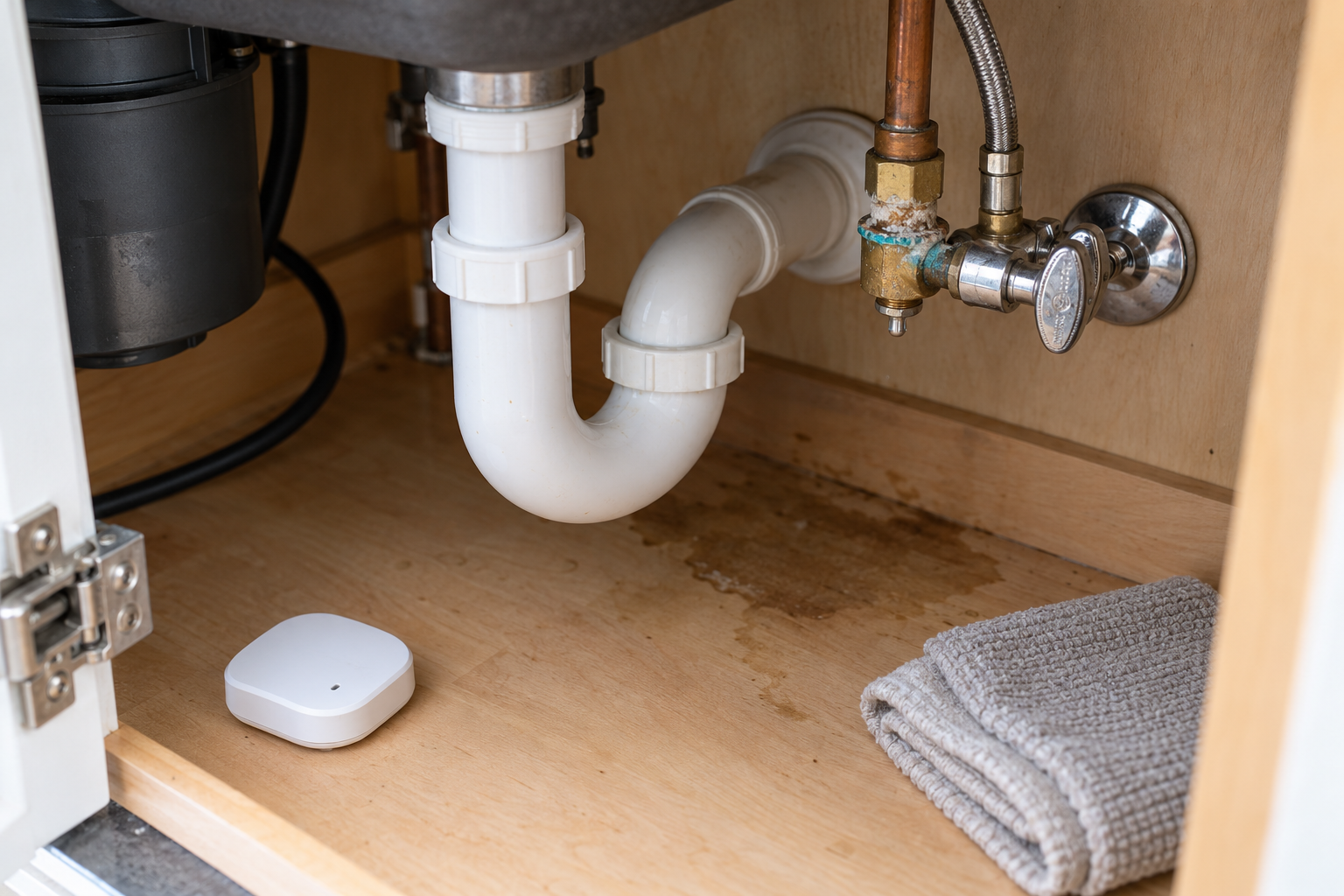
Consider leak alarms in low points near water heaters, washing machines, dishwashers, and under sinks. Automatic shutoff systems can limit damage, but they need correct sizing, installation, maintenance, and a plan for false alarms or power loss. After any leak, dry affected assemblies promptly and verify moisture has returned to an acceptable level before closing walls or installing finishes. Paint alone does not solve damp insulation, swollen subfloor, or microbial growth.
Frequently Asked Questions
What is the most common cause of an unexplained water leak?
Running toilets, failed fixture connections, aging supply hoses, and leaking irrigation are common and should be checked first. In older or high-pressure systems, pipe corrosion and joint failures become more likely. The symptom pattern and meter test are more useful than guessing from age alone.
Can a specialist find a leak without opening the wall?
Often, a specialist can narrow the likely source with moisture, acoustic, thermal, pressure, or camera testing. No method guarantees an exact point in every assembly. A small, targeted access opening may still be needed to confirm and repair the failure.
How urgent is a hidden leak?
Continuous meter movement, expanding stains, loss of pressure, hot flooring, or water near electricity deserves same-day attention. A tiny intermittent drip is less dramatic but can still damage finishes and framing. Stop using the triggering fixture and arrange diagnosis rather than waiting for visible deterioration.
Will homeowners insurance pay for leak detection?
Policies vary. Some cover sudden resulting water damage but exclude long-term seepage, maintenance, or the failed component itself. Mitigate damage, photograph conditions, retain invoices, and contact the insurer promptly. Do not assume coverage before authorizing restoration.
What should I avoid doing?
Do not cut or drill blindly, use open flames to thaw pipes, pour chemicals into an unknown blockage, patch gas lines, or energize wet equipment. Do not treat a stain with paint before the source and drying are verified. When the risk includes structure, contamination, gas, or electricity, leave the work to qualified professionals.
Why This Is Different in San Antonio
The Edwards Aquifer delivers water at roughly 357 mg/L, or 21 gpg, so mineral scale is part of the diagnosis rather than a cosmetic side issue. Scale can hold a valve partly open, abrade a cartridge, stiffen an old shutoff, and leave white crust that hides a slow seep. SAWS water-quality reporting is useful context, but the practical response is to inspect seals and valves more often and verify a repair after pressure is restored.
In Westover Hills and Alamo Ranch, newer PEX-heavy construction avoids some old-pipe problems, but hard-water scale still shortens cartridge, stop-valve, appliance, and water-heater component life. Across Bexar County, summer demand also exposes marginal valves and appliance hoses, while a hard freeze—Winter Storm Uri remains the clearest reminder—can split pipe or weaken a fitting that leaks later. Those conditions are why deciding whether specialist detection is justified requires more than copying a national checklist.
What San Antonio Homeowners Pay (2026)
| Local service scope | Typical 2026 homeowner range |
|---|---|
| Professional leak-detection visit | $250–$600 |
| Acoustic or thermal slab investigation | $350–$900 |
| Located slab-line repair or reroute | $2,000–$5,000 |
| Standard licensed-plumber labor | $85–$150 per hour |
These San Antonio planning ranges are not quotes. Access, pipe material, permit needs, after-hours timing, drying, and finish restoration can change the total. Ask for a written scope that separates diagnosis, plumbing work, access, and restoration so a low initial fee is not mistaken for the whole project.
When to Call a San Antonio Plumber
Stop DIY and call a licensed plumber when the main shutoff will not close, meter movement continues with every fixture off, water is inside a wall or slab, a ceiling sags, sewage is involved, or moisture is near electrical equipment. Recurring pinholes, widespread corrosion, a hot floor, and a repair that will leave the entire house without water are also clear escalation points.
Before authorizing work, ask how the source will be confirmed, what material will replace the failed section, whether testing is included, and whether the contractor handles permits required for the scope. A plumber serving San Antonio should be prepared to discuss Edwards Aquifer scale, freeze history, and the pipe materials common in the neighborhood—not simply replace the first wet component.
San Antonio FAQ
Does 21 gpg water prove hard water caused the leak?
No. It is a strong wear factor, not a diagnosis. Installation errors, excessive pressure, age, corrosion, movement, and freeze damage can also cause failure. Mineral crust near the source and repeated seal or cartridge problems make hard-water wear more likely.
Should I call SAWS for a suspected leak?
SAWS can help with meter or utility-side questions, but the homeowner is generally responsible for plumbing after the meter. If the meter changes while the house main is closed, report the evidence and ask whether the utility or a licensed plumber should inspect the service-line boundary.
Is a temporary clamp safe overnight?
Only when the product is listed for the exact pipe, pressure, and temperature and the damaged section remains visible. Keep the water isolated whenever practical. Never use a clamp as a permanent concealed repair or on gas, fire-sprinkler, relief, or heavily corroded piping.
What should I document before service?
Photograph the meter, source area, stain boundaries, and damaged finishes. Note which fixture triggers the symptom and whether hot or cold use changes it. Good evidence helps a San Antonio technician target testing and gives an insurer a clearer timeline.