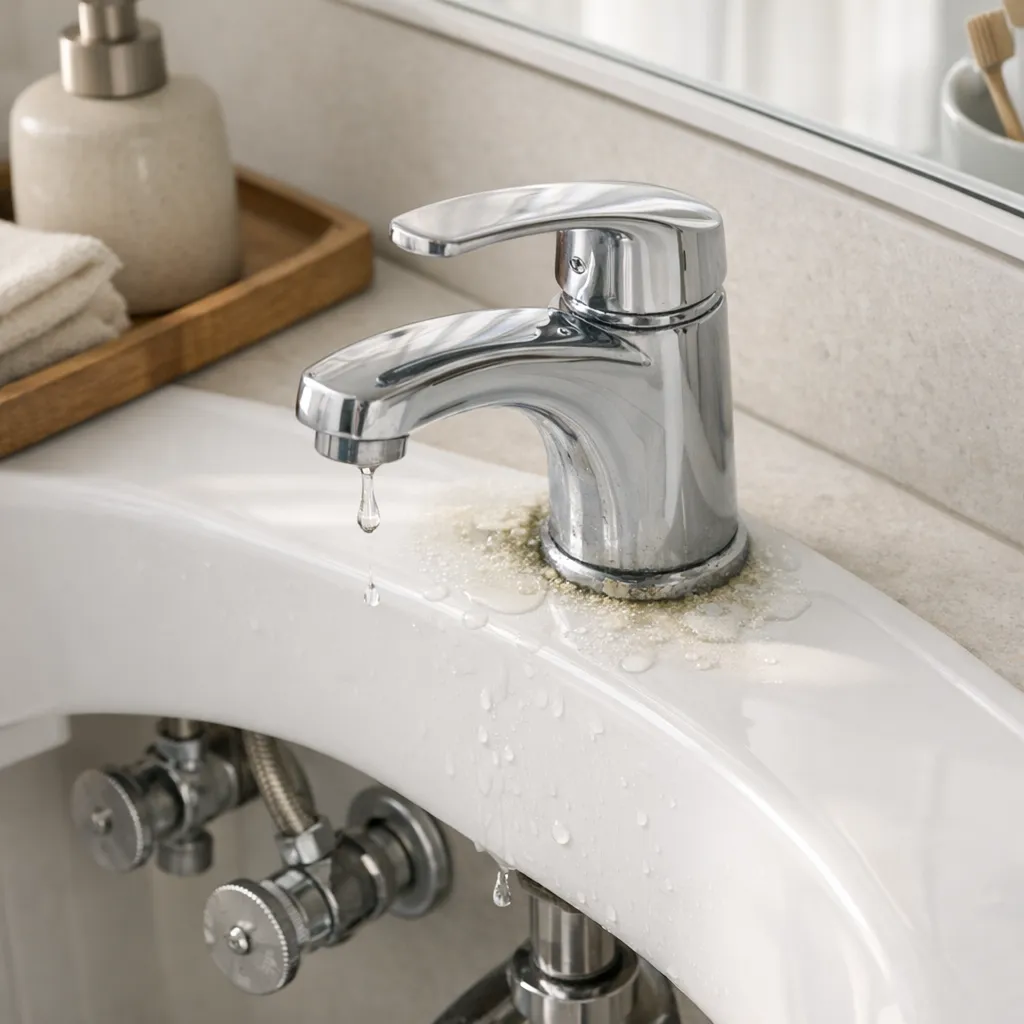
> San Antonio Local Insight: Faucet and fixture leaks happen faster in San Antonio because hard water mineral deposits (21 gpg from the Edwards Aquifer) grind down valve seats, corrode cartridges, and build up scale that prevents proper sealing. A faucet that might last 15 years in a soft-water city often starts leaking within 5–8 years here without a water softener.
Local Field Notes Before You Start
A leak under the sink usually looks simple until water runs along a supply line, cabinet floor, or drain arm and hides the real source. Treat the first ten minutes as diagnosis, not repair: dry the area, run one fixture at a time, and watch where the first bead of water appears. Our water and housing stock change the practical advice. Edwards Aquifer water is about 357 mg/L, or 21 grains per gallon, so scale is not a cosmetic detail; it affects how parts fail and how often maintenance should happen.
A homeowner in Medical Center area should also think about the age and layout of the house. The same symptom can mean a simple fixture repair in a newer PEX home, a corroded fitting in an older wall, or a slab-related problem that should not be handled as a weekend project. For budgeting, local plumber labor commonly runs $85-$150 per hour, and emergency calls cost more after hours.
How to Trace a Sink Leak Without Guessing
Work in this order: stop the immediate damage, make the area safe, identify whether one fixture or multiple fixtures are affected, then choose the least destructive repair. This keeps a small problem from becoming a cabinet, flooring, drywall, or slab repair.
Common Local Causes
Supply stop or braided connector seepage
Hard-water scale makes small valves stiff, so a connector can leak when bumped or partially closed.
Faucet cartridge or mounting seal failure
Mineral grit wears seals and lets water travel down through the faucet body.
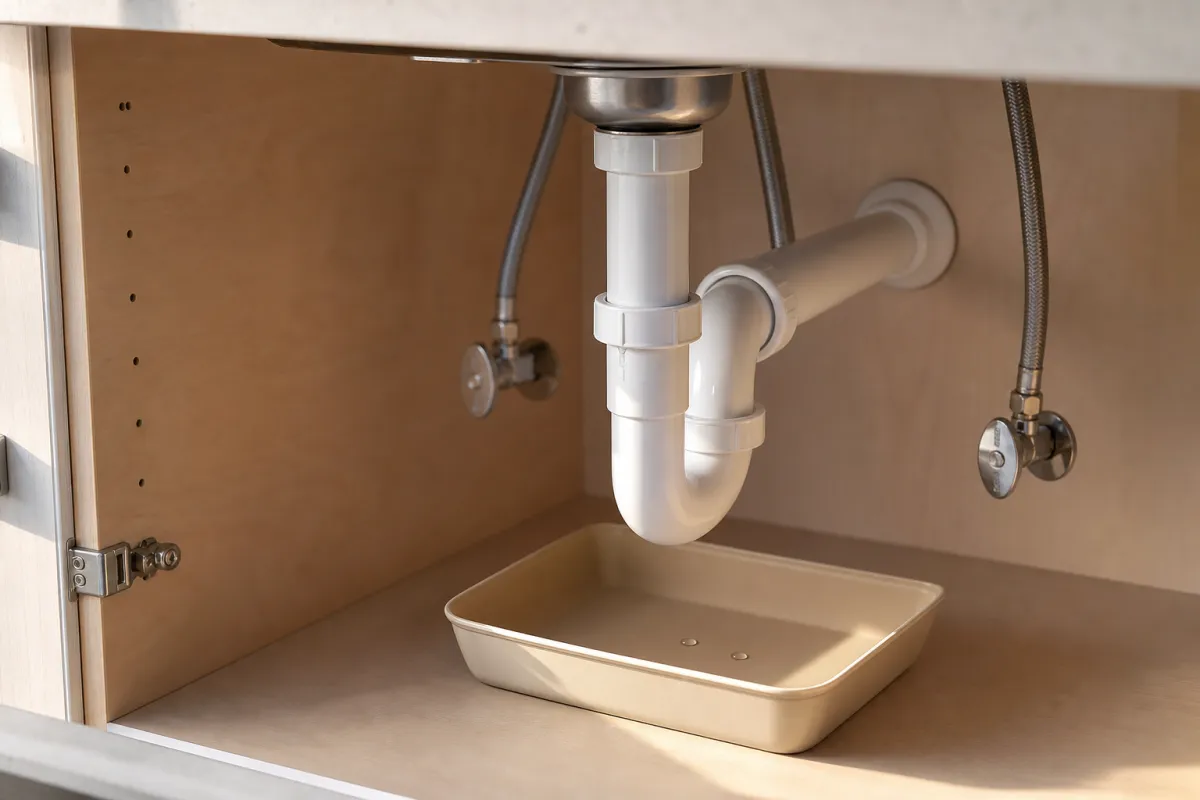
P-trap or slip-joint leak
Drain movement, overtightened plastic nuts, and scale at the washer can create a slow cabinet leak.
Garbage disposal or dishwasher connection
Vibration and mineral crust around the disposal flange can mimic a pipe leak.
Safe Homeowner Checks
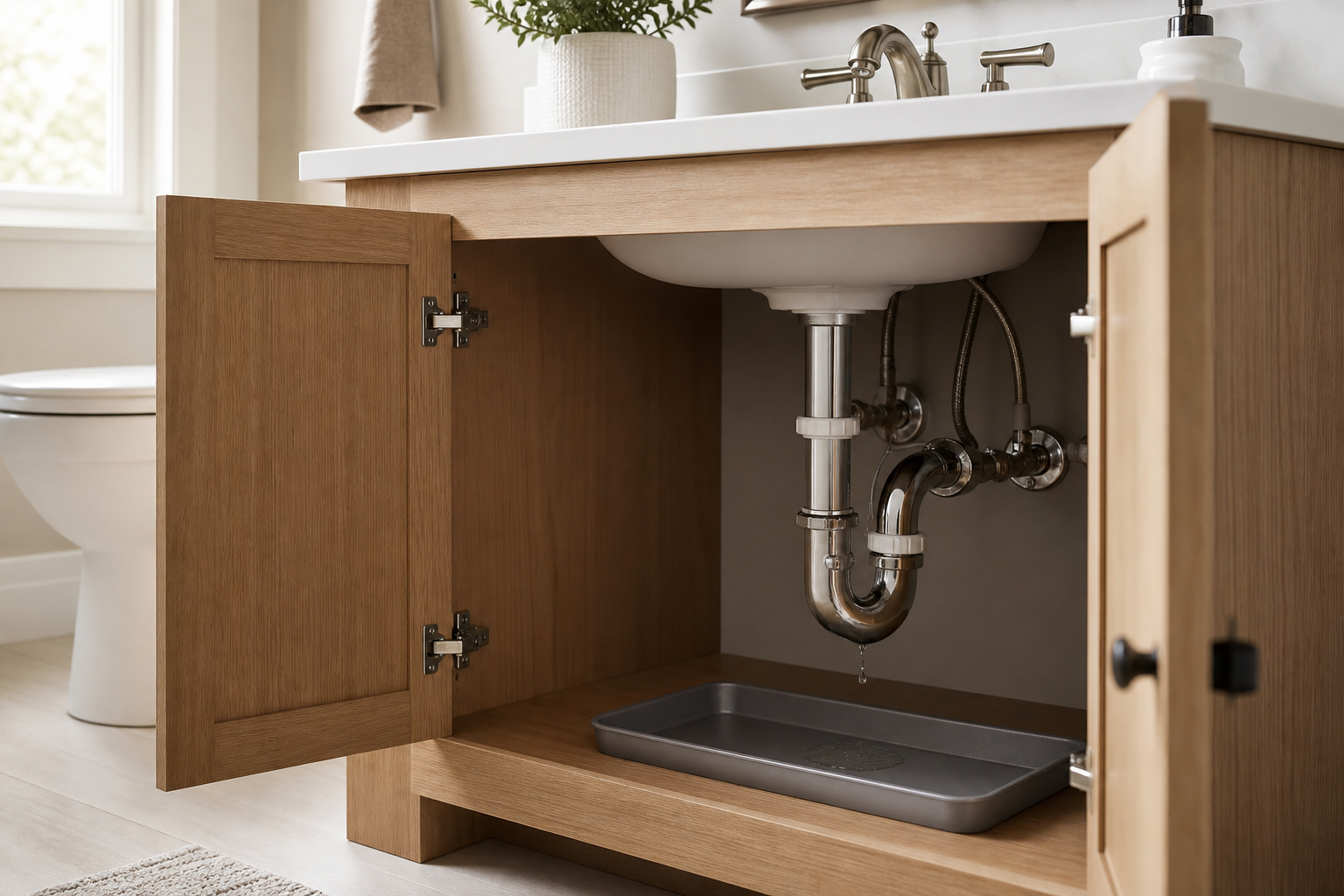
Empty the cabinet, dry every surface, place paper towels under each connection, then run cold, hot, and the drain separately. Tighten only by hand plus a small turn; cracked plastic or corroded metal needs replacement, not force. If you smell sewage, see water near wiring, cannot close the shutoff, or the same problem returns after a basic repair, stop troubleshooting and call a licensed plumber.
Step-by-Step Diagnostic Order
Start with the shutoff closest to the fixture. If that valve is stiff, crusted, or does not fully stop the water, do not force it; move to the main shutoff and treat the local valve as part of the repair. Next, dry the area completely so new moisture is easy to see. Use a flashlight and paper towels instead of guessing from where water pooled.
Run one test at a time. For supply-side problems, test cold and hot separately. For drain-side problems, run a small amount of water first, then a full basin or flush only if the first test is safe. For pipe or freeze concerns, inspect the ceiling below, the wall base, exterior hose bibs, and any nearby slab edge. The goal is to find the first wet point, not the largest puddle.
Once you know the source, decide whether the repair is a part swap, a cleaning task, or a plumbing-system warning. A single loose slip nut is different from repeated leaking, a corroded shutoff, or water appearing from behind a cabinet. In local hard-water conditions, repeat symptoms usually mean the mineral buildup has already affected more than one surface.
How to Decide Between DIY and a Paid Repair
A DIY repair makes sense when the part is accessible, the shutoff works, and the fix does not require cutting pipe, opening walls, handling gas, or disturbing a sewer line. Use basic tools, take photos before disassembly, and keep old parts until the repair has been leak-free for at least a day.
A paid repair makes sense when access is limited, the same symptom returns, corrosion is visible, or the issue could affect flooring, cabinets, drywall, or the slab. Paying for a diagnosis can be cheaper than replacing swollen cabinet panels or chasing hidden moisture later.
What Not to Do
Do not rely on a chemical solution when the symptom points to mineral buildup, pipe damage, or a repeated blockage. Do not overtighten old valves or plastic drain parts. Do not ignore water that disappears into a wall, cabinet base, ceiling, or slab edge; hidden moisture is where repair costs climb.
Prevention That Fits Local Water
Check visible valves and connections twice a year. Clean aerators, showerheads, and accessible strainers before they are fully restricted. If the home has a water heater, flush it every six months instead of following the national one-year rule. If scale returns quickly, consider testing hardness and pricing a softener.
What a Good Local Repair Should Include
A good repair should solve the immediate symptom and reduce the chance of the same failure coming back in a few months. That means the plumber or homeowner should look at the nearby shutoff valve, the condition of the connector, visible corrosion, mineral crust, and any stains that show the problem has been active longer than it first appeared. If only the obvious part is replaced while the crusted valve or damaged washer stays in place, the repair may look fixed but fail again under normal use.
Ask for plain-language notes about what failed and why. If the answer is only “old part,” that may be incomplete in a hard-water home. Better notes will mention scale, pressure, corrosion, movement, installation quality, or age of the surrounding pipe. Keep photos and receipts because repeat failures in the same area help identify whether the issue is isolated or part of a larger system pattern.
Seasonal Timing and Follow-Up
Spring is the best time to catch many plumbing problems before summer water use rises. During June through September, outdoor watering, guests, laundry, and higher appliance use can expose weak valves, old connectors, and partially blocked drains. In fall, inspect exposed pipe, hose bibs, and garage-wall plumbing before a cold snap. Freezes are rare, but the 2021 storm showed how expensive a short period of extreme weather can become.
After any repair, run a simple follow-up schedule. Check the area the same day, the next morning, one week later, and again after the next heavy-use day. Use a dry paper towel around the joint or drain because tiny leaks are easier to catch on paper than on a cabinet floor. If moisture returns, do not keep tightening; reopen the diagnosis.
Why This Is Different in San Antonio
San Antonio's Edwards Aquifer supplies some of the hardest municipal water in the United States at 357 mg/L, or 21 grains per gallon. This means sink leak problems often involve both the visible symptom and the mineral wear behind it:
- Calcium carbonate and magnesium create rough surfaces where debris and corrosion start.
- Fixtures, valves, pipes, and appliances can wear out 30-50% faster than in soft-water cities.
- SAWS water quality reports are useful, but homeowners still need shorter maintenance intervals at the fixture level.
Homes in Medical Center area are particularly affected because local age, pipe material, and remodel history change the risk profile from house to house.
> "In my 20 years working in San Antonio, the repair that lasts is the one that accounts for hard water, not just the broken part in front of you." — Licensed San Antonio plumber
What San Antonio Homeowners Pay (2026)
| Service | Typical Cost in San Antonio |
|---|---|
| Faucet replacement labor | $150–$300 |
| Emergency plumber call | $150–$350; after hours $250–$500 |
| Drain cleaning | $150–$350 |
| Plumber hourly rate | $85–$150/hr |
Prices are based on San Antonio metro area ranges for 2026. Costs may vary by access, pipe material, after-hours timing, and whether mineral damage has spread beyond the visible problem.
When to Call a San Antonio Plumber
Call a licensed San Antonio plumber if you cannot isolate the source, the shutoff valve will not close, water is near electrical components, sewage is involved, multiple fixtures are backing up, or the problem returns after a basic repair. Ask whether they have experience with Edwards Aquifer scale, older Bexar County homes, and the specific pipe or fixture material in your house.
San Antonio FAQ
Is San Antonio water hard enough to change plumbing maintenance?
Yes. Local water is about 357 mg/L, or 21 grains per gallon, which is hard enough to shorten maintenance intervals for fixtures, drains, and water heaters.
Do I need a water softener?
Many homes benefit from one, especially if scale returns quickly, valves get stiff, or water heaters fail early. A whole-home water softener installation commonly runs $1,500-$4,000.
How often should I check this problem again?
Recheck the repaired area within 24 hours, again after a week, and then during your twice-a-year plumbing walkthrough. For water heaters, use a six-month flush rhythm.