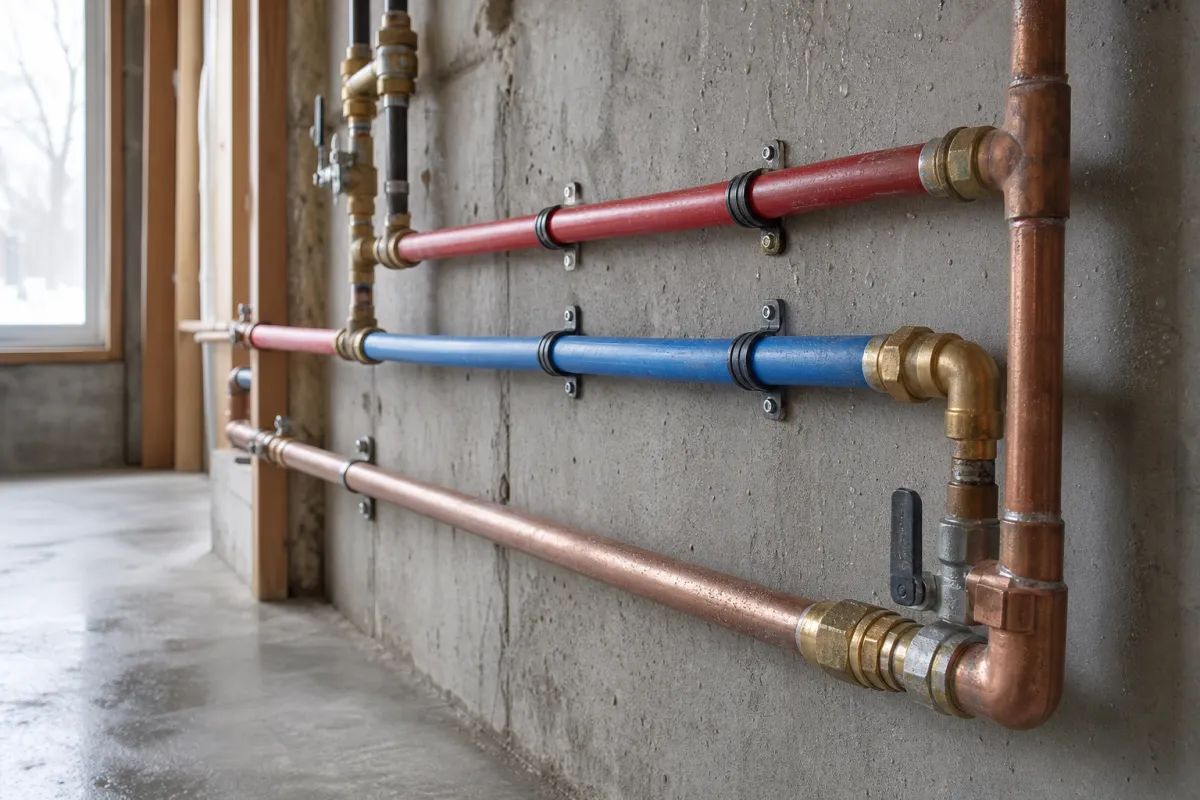
> San Antonio Local Insight: Pipe problems in San Antonio are driven by hard water corrosion from the Edwards Aquifer (357 mg/L). High calcium content eats through copper from inside, causes pinhole leaks, and builds deposits that restrict flow. local plumbers increasingly recommend PEX over copper for repiping because it resists mineral corrosion.
For a San Antonio home in King William, a drafty retrofit cavity can matter more than whether the tube is PEX or copper. Accessible freeze repairs often begin around $250–$750, but concealed water damage can make the final scope much larger.
When temperatures fall, PEX generally tolerates a freeze better than rigid copper because it can expand slightly as water turns to ice. That does not make PEX freeze-proof. A PEX line can still split, fittings can crack, and a thawed pipe can release enough water to damage walls, floors, and electrical equipment. Copper is less forgiving: ice pressure can stretch or split the tube, often at a point away from the visible frozen section.
For homeowners comparing PEX vs. copper pipe freezing, the practical answer is to focus less on the material and more on location, air sealing, insulation, and reliable heat. A protected copper pipe is safer than exposed PEX in a vented crawlspace. If a line is already frozen, shut off the water, open the affected faucet, and thaw it gently—never with a torch.
Why Both PEX and Copper Pipes Freeze
Pipes freeze when the water inside loses heat faster than the surrounding building can replace it. The vulnerable line may run through an exterior wall, unheated garage, crawlspace, attic, cabinet against an outside wall, or a hole where cold air enters around wiring and vents. Wind washing can make a small gap more important than the outdoor temperature alone. A pipe touching masonry or sitting outside the thermal envelope can also cool rapidly.
Material changes how a pipe responds, but not whether water reaches its freezing point. Long periods of cold, a heating outage, open foundation vents, or a thermostat set too low can overwhelm either system. Frozen water also creates pressure between the ice blockage and a closed faucet. That pressure—not simply the ice pushing outward at one spot—is a common reason a line fails. Opening the faucet reduces pressure and gives melting water an escape route.
How PEX Responds to Freezing
PEX is flexible cross-linked polyethylene. Many lengths can expand somewhat during a freeze and return toward their original shape after thawing, which is why PEX often survives events that would rupture rigid tubing. Continuous runs also need fewer joints, reducing the number of potential leak points. This resilience is useful in cold climates, particularly when the tubing is kept inside conditioned space.
The weak point may be a fitting, manifold, valve, or tightly bent section rather than the tubing. Metal or plastic fittings do not necessarily expand like the pipe, and repeated freeze-thaw cycles can weaken components. PEX can also be damaged by abrasion, excessive heat, ultraviolet exposure, or poor support. Never assume an intact-looking line is sound after a freeze; inspect the entire accessible run and watch it under normal pressure after thawing.
How Copper Responds to Freezing
Copper is strong, durable, and dimensionally stable under normal plumbing conditions, but it has little ability to stretch when trapped water expands. A freeze can create a narrow bulge or longitudinal split. The rupture may appear downstream of the ice plug, where pressure was trapped, so checking only the coldest section can miss the failure. Soldered joints and valves also deserve inspection.
Copper transfers heat readily. That can help during controlled thawing because warmth moves along the tube, but it also means an exposed pipe loses heat quickly in a cold draft. Copper's rigidity can make repairs straightforward for a plumber, yet soldering near combustible framing adds fire risk and is not a casual DIY task. Press fittings and approved repair couplings may avoid open flame, but they still require correct preparation and compatible tools.
Quick Comparison: PEX vs. Copper in Freezing Conditions
| Factor | PEX | Copper |
|---|---|---|
| Freeze tolerance | Often expands enough to survive, but not guaranteed | More likely to split when ice pressure rises |
| Common vulnerable points | Fittings, manifolds, valves, damaged bends | Tube walls, soldered joints, valves |
| Heat transfer | Lower, so it loses and gains heat more slowly | Higher, so cold and applied warmth travel faster |
| Joint count | Often fewer joints in long runs | Usually more fittings in routed installations |
| Inspection after thaw | Check tubing and every fitting | Look for bulges, splits, drips, and joint leaks |
| Best protection | Air sealing, insulation, conditioned routing | The same—material does not replace prevention |
This table describes typical behavior, not a warranty. Pipe age, water pressure, installation quality, fitting system, exposure duration, and the number of previous freezes all affect the outcome. Local plumbing codes and manufacturer instructions should guide any replacement or rerouting decision.
What to Check Before Cold Weather
Start by mapping supply lines near exterior walls and unconditioned areas. Look beneath sinks, behind removable access panels, near hose bibs, at crawlspace penetrations, and around the main shutoff. Feel for drafts on a windy day and inspect for missing insulation, gaps around pipes, disconnected crawlspace ducts, or open vents. Do not block required combustion-air openings or appliance clearances while air sealing.
Confirm that everyone in the home knows the main water shutoff location and that the valve turns without forcing it. Disconnect garden hoses and winterize exterior faucets according to their type. Keep garage doors closed when water lines run through the garage, and open sink cabinet doors during severe cold so room air can reach plumbing. Move cleaners and sharp objects away first, especially where children could access the cabinet.
How to Thaw a Frozen Pipe Safely
First, treat the situation as a possible concealed leak. Turn off the main water supply if you see a bulge, split, dripping, stained drywall, or water near outlets and appliances. If water is contacting electrical equipment, do not stand in it or touch the panel; leave the area and call the appropriate emergency professional. If there is no visible damage, opening the affected faucet can relieve pressure, but know where the shutoff is before thawing.
Warm the pipe gradually from the faucet side toward the frozen section using a hair dryer on a moderate setting, an electric heating pad, warm towels, or a listed pipe-thawing product used exactly as directed. Keep electrical cords dry and do not leave heating devices unattended. Never use a torch, heat gun at close range, charcoal heater, or open flame. Excessive heat can damage PEX, ignite framing, melt insulation, or overheat a copper joint.
What to Inspect After the Water Flows
Restoring flow is not the end of the job. Dry the pipe, fittings, valves, and surrounding surfaces, then bring pressure back slowly while watching for beads of water. Inspect the accessible run on both sides of the frozen area. With copper, look for swelling, flattened sections, and fine longitudinal cracks. With PEX, check for stretched tubing, scuffs, whitening, damaged clamps, and seepage at fittings.
Continue monitoring over the next several hours because a small leak may appear only under sustained pressure. Check the water meter with fixtures off; unexpected movement can indicate a hidden leak, though appliances such as ice makers may also use water. Damp insulation should be removed and replaced after the area dries. Wet drywall, flooring, or cabinetry may require prompt drying to limit mold and material damage.
Better Ways to Prevent the Next Freeze
Air sealing usually comes before pipe insulation. Seal safe gaps where cold exterior air crosses the building envelope using materials appropriate for the assembly and fire rating. Then insulate the pipe with correctly sized sleeves, closing seams and joints without crushing the material. Keep the pipe on the warm side of wall insulation whenever possible; insulation between the room and pipe can accidentally isolate plumbing from indoor heat.
For recurring trouble, rerouting the line through conditioned space is often more dependable than adding layers around a badly located pipe. Listed self-regulating heat cable may be appropriate on certain accessible pipes, but it must be approved for the pipe material and location, installed to its listing, protected by required electrical safeguards, and regularly inspected. Do not overlap ordinary heat tape, hide unapproved products in walls, or use extension cords as permanent wiring.
Mistakes That Increase Freeze Damage
A common mistake is believing a dripping faucet guarantees protection. A small flow may help in limited conditions, but it can stop, the drain can freeze, or another segment can still reach freezing temperature. It also wastes water. Use it only as a temporary measure during exceptional weather and follow local utility guidance. The durable fix is correcting exposure, drafts, and heat loss.
Another mistake is patching the first visible split without investigating why it froze. The same run may contain multiple weak points, and concealed cavities may be wet. Avoid adding insulation over an active leak, using automotive hose clamps as a permanent plumbing repair, or applying an open flame. Do not close crawlspace vents indiscriminately where moisture, radon, flood, or combustion requirements apply; the whole assembly needs a safe plan.
When to Call a Plumber or Other Professional
Call a licensed plumber when the frozen area is inside a wall or ceiling, the main service is affected, a valve or manifold is cracked, several fixtures have stopped, or any pipe has visibly deformed. Professional help is also sensible when you cannot isolate the line, when a repair involves soldering near framing, or when local code requires permitted work. A plumber can pressure-test, replace damaged sections, and recommend a safer route.
Bring in an electrician if water reached outlets, wiring, a service panel, furnace controls, or plugged-in equipment. Significant wet drywall, insulation, subfloor, or finished flooring may justify a water-damage specialist. If a gas odor, hissing, sewage backup, or structural damage is present, leave the area and contact the relevant emergency service rather than continuing a plumbing repair.
Frequently Asked Questions
Is PEX completely freeze-proof?
No. PEX is often more tolerant because it can expand, but fittings, valves, and the tubing itself can fail. It still needs protection from freezing.
Should I replace all copper with PEX in a cold house?
Not automatically. First correct drafts, missing insulation, and poor routing. Targeted rerouting may offer more value than replacing protected copper throughout the home.
Can I use a heat gun on frozen PEX?
It is easy to overheat or deform PEX with concentrated heat. Use gentler methods and follow the pipe manufacturer's temperature guidance; call a plumber if access is poor.
How can I tell where the pipe is frozen?
Start near the faucet that has little or no flow and trace the line toward colder exterior areas. Frost, an unusually cold surface, or a slight bulge may identify the section, but concealed blockages require professional equipment.
Will pipe insulation alone stop freezing?
Insulation slows heat loss; it does not create heat. A long cold period can still freeze an insulated pipe, particularly in a drafty or unconditioned space.
Why This Is Different in San Antonio
Freeze advice from northern climates needs adjustment for local buildings. Many Bexar County homes have plumbing in exterior walls, garages, attics, or lightly protected retrofit cavities because long freezes were historically uncommon. Winter Storm Uri showed that several hours of deep cold can overwhelm those assumptions.
In King William, older framing and later plumbing retrofits can leave both copper and PEX beside drafts or masonry. PEX generally survives expansion better, while copper is more likely to split, but fittings and valves can fail on either system. Route and air sealing are the first line of defense.
Edwards Aquifer water at about 357 mg/L, or 21 gpg adds a separate long-term issue: mineral deposits and corrosion can leave older valves difficult to close exactly when a freeze emergency begins. Test the main shutoff before winter. Follow SAWS emergency guidance during a severe-weather event, then correct the vulnerable route rather than relying on a permanent drip.
What San Antonio Homeowners Pay (2026)
| Service | Typical 2026 range |
|---|---|
| Accessible freeze-damage repair | $250–$750 |
| Emergency after-hours response | $250–$500 |
| Concealed wall/ceiling repair | $500–$1,500+ |
| Targeted reroute into conditioned space | $800–$2,500 |
| Major repipe after repeated failures | $4,500–$15,000+ |
Drywall, flooring, electrical exposure, historic finishes, and the number of split locations can cost more than the pipe itself. Ask whether drying and restoration are included.
When to Call a San Antonio Plumber
Call immediately for a visible split, water near wiring, a frozen main service, several dead fixtures, or a line concealed in a wall or ceiling. Shut off water if you can do so safely, but do not force a scaled or seized valve.
A plumber should inspect beyond the first thawed spot because pressure often opens a split away from the ice plug. Typical licensed labor runs $85–$150 per hour; freeze emergencies and restoration are additional. Use an electrician whenever water reaches outlets, panels, or equipment.
San Antonio FAQ
Is PEX freeze-proof?
No. It often tolerates expansion better than copper, but fittings, valves, and tubing can still fail.
Should I leave every faucet dripping?
Only as a temporary measure during exceptional weather and in line with SAWS guidance. Air sealing, insulation, heat, and safe routing are durable fixes.
How do I thaw a line safely?
Open the faucet, know where the main shutoff is, and use gentle warmth from the faucet side. Never use a torch.
When can I restore full pressure?
After inspecting accessible runs, restore pressure slowly and monitor the meter and surrounding finishes for hidden leakage.