> San Antonio Local Insight: Pipe problems in San Antonio are driven by hard water corrosion from the Edwards Aquifer (357 mg/L). High calcium content eats through copper from inside, causes pinhole leaks, and builds deposits that restrict flow. local plumbers increasingly recommend PEX over copper for repiping because it resists mineral corrosion.
Diagnose the PVC Failure Before Buying Fittings
PVC does not rust from Edwards Aquifer water, but San Antonio's roughly 357 mg/L (21 gpg) hardness still leaves scale at valves, transitions, and restricted fittings. The first useful question is whether the white pipe is a pressurized cold-water line, an irrigation branch, or a gravity drain. That answer controls the pipe rating, fitting type, cure time, and whether a homeowner repair is reasonable.
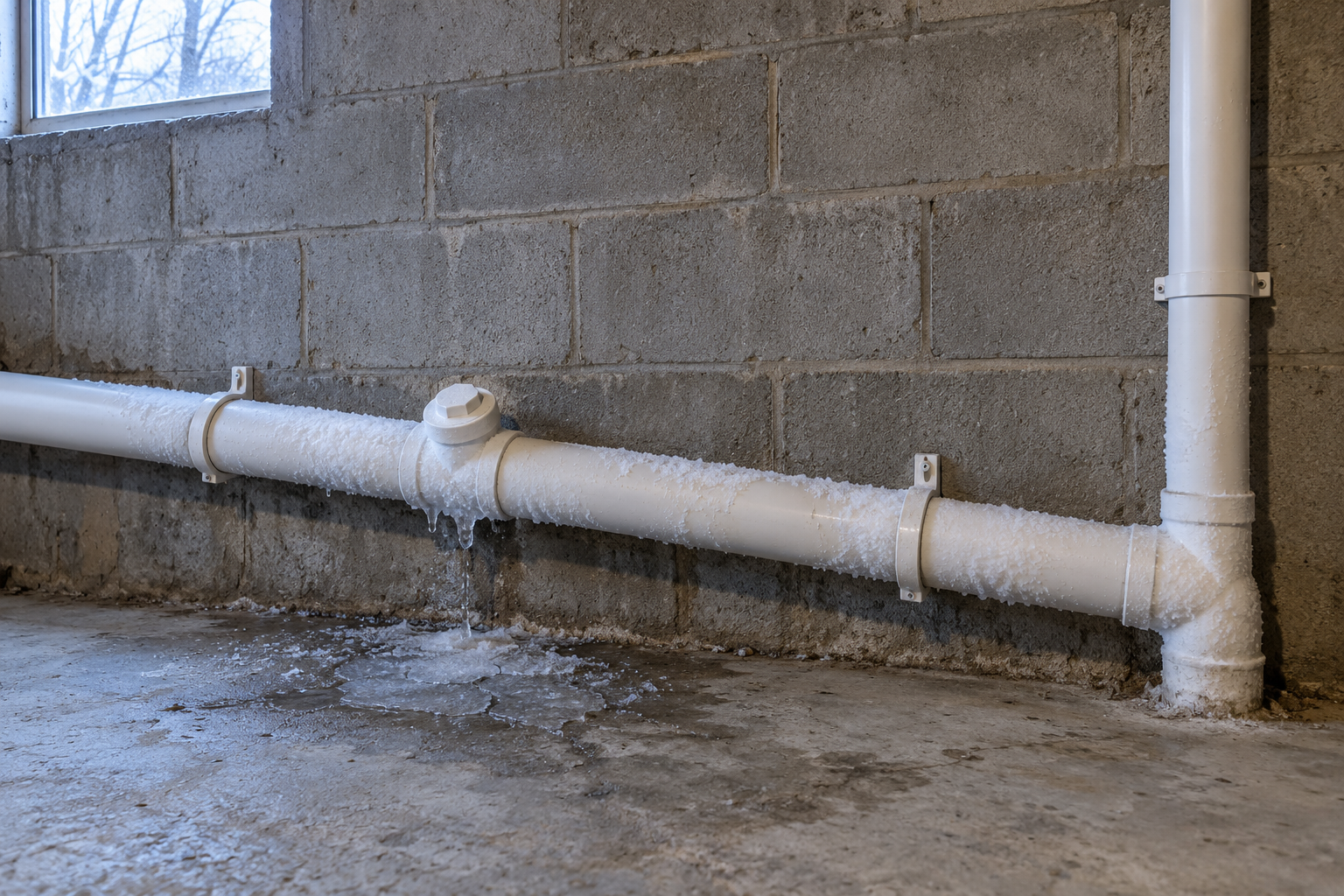
Around New Braunfels and Boerne, shifting Hill Country soils and exposed irrigation runs can crack rigid pipe at a coupling rather than in the middle of a straight section. Look for a crooked joint, unsupported span, freeze split, or a threaded transition carrying too much leverage. Winter Storm Uri remains the clearest reminder that an uninsulated repair can fail again even when the solvent weld itself is sound.
A straightforward accessible repair may involve a $150-$350 service call plus materials; buried excavation, wall access, or a failed main can push the total into four figures. Before paying a San Antonio contractor, ask for the pipe schedule, fitting method, pressure-test plan, and warranty in writing. For potable service, permit or backflow questions should be confirmed with the appropriate Bexar County authority or SAWS rather than guessed at the hardware aisle.
A sound PVC pipe repair begins with identifying the system, stopping flow, and understanding why the pipe failed. A small drip at a fitting may require a cut-out replacement; a crack caused by freezing, movement, or excessive pressure may justify a longer replacement and correction of the underlying problem. Homeowners can inspect accessible plumbing and sometimes repair simple, permitted sections, but pressurized, buried, contaminated, or concealed lines deserve extra caution.
Stop the leak and make the area safe
Turn off the relevant water supply before touching a pressurized PVC line. Open a downstream fixture to relieve pressure, then confirm flow has stopped. Keep water away from electrical devices and do not work in a contaminated drain spill without appropriate protection. If the pipe carries gas, compressed air, chemicals, fire-suppression water, or an unknown fluid, stop and hire a qualified professional.
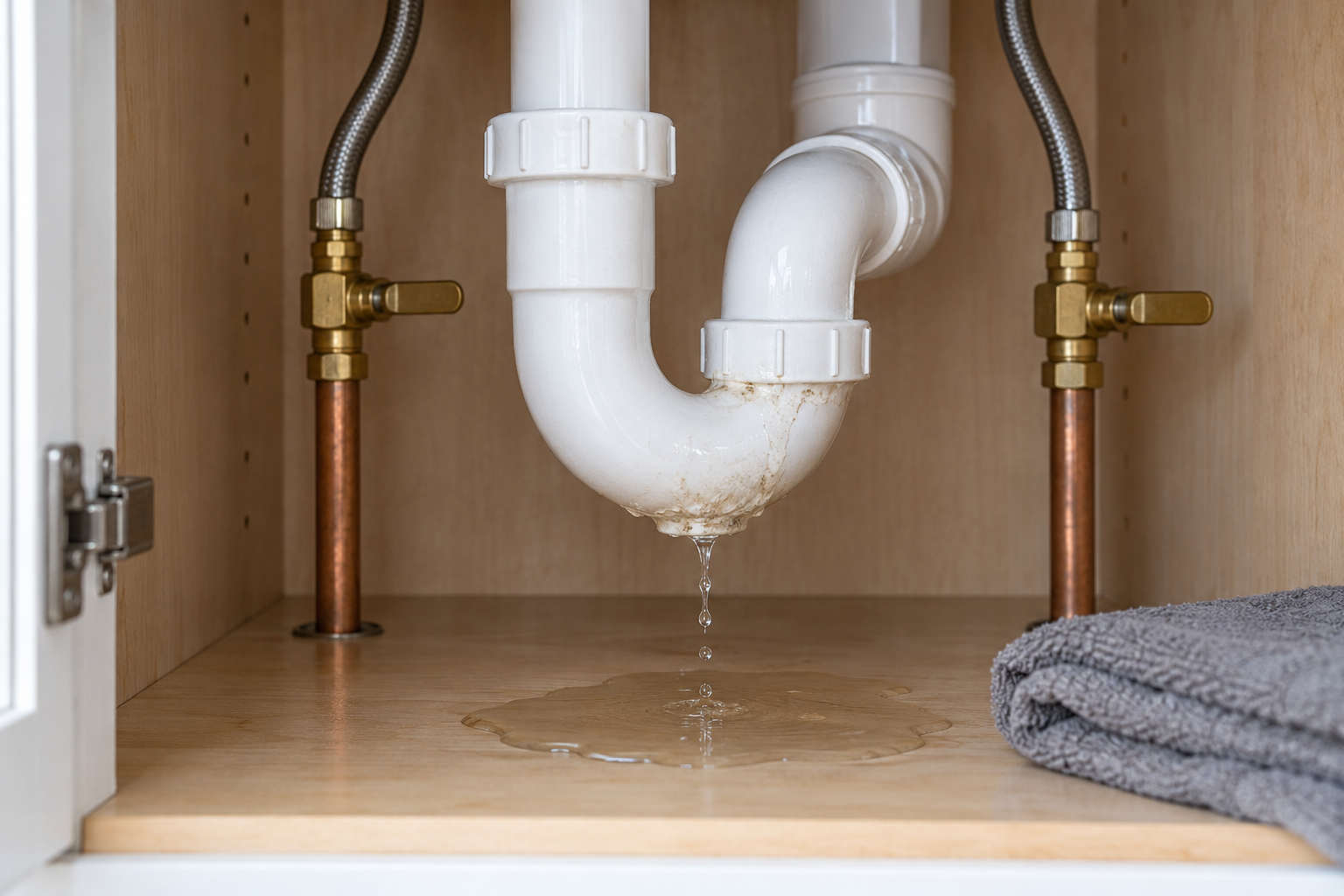
For a drain leak, stop using connected fixtures and place a container beneath the defect if safe. Dry the pipe so you can see whether water starts at a joint, crack, valve, or another surface above it. A wet elbow is not necessarily a failed elbow; water often tracks along a horizontal run before dripping.
Identify the PVC type and failure
White rigid PVC is common in drains and some cold-water or exterior applications, while CPVC, ABS, flexible tubing, and polyethylene require different products. Read the pipe markings where possible. Diameter, schedule, pressure rating, and local code determine compatible fittings. Never assume a glue labeled for one plastic is acceptable for another.
Look for a hairline split, puncture, poorly aligned socket, loose threaded adapter, freeze bulge, ultraviolet brittleness, or stress from unsupported weight. Repeated failure near a pump or valve may indicate vibration or water hammer. A defect caused by movement needs support or layout correction, not merely more cement.
Temporary measures versus durable repair
A rubber repair coupling or manufacturer-approved clamp may control an accessible, low-risk leak until a proper repair can be scheduled. Epoxy putty and wrap products have narrow use cases and depend on clean preparation and pressure limits. They should not be hidden in a wall as a substitute for replacing damaged pressure pipe.
A durable repair usually removes the compromised section and installs compatible pipe and approved fittings. Limited movement may require a telescoping repair coupling or shielded mechanical coupling permitted for that application. The best choice depends on whether the line is pressurized, buried, a drain, exposed to sunlight, or required to remain accessible.
Plan the cut before reaching for a saw
Map the repair length and check that there is enough straight, sound pipe for each fitting. Locate wires, framing, and other utilities around the cut. Support both sides so the pipe cannot drop or twist. For concealed work, create enough access to clean, align, and inspect the connection rather than working through a tiny opening.
Measure insertion depth and dry-plan the sequence, but do not force fully seated dry-fit PVC fittings because they can bind. Mark alignment lines. A square cut leaves an even bonding surface; deburr inside and outside edges so fragments do not obstruct flow or scrape cement from the socket.
Solvent-welded repair basics
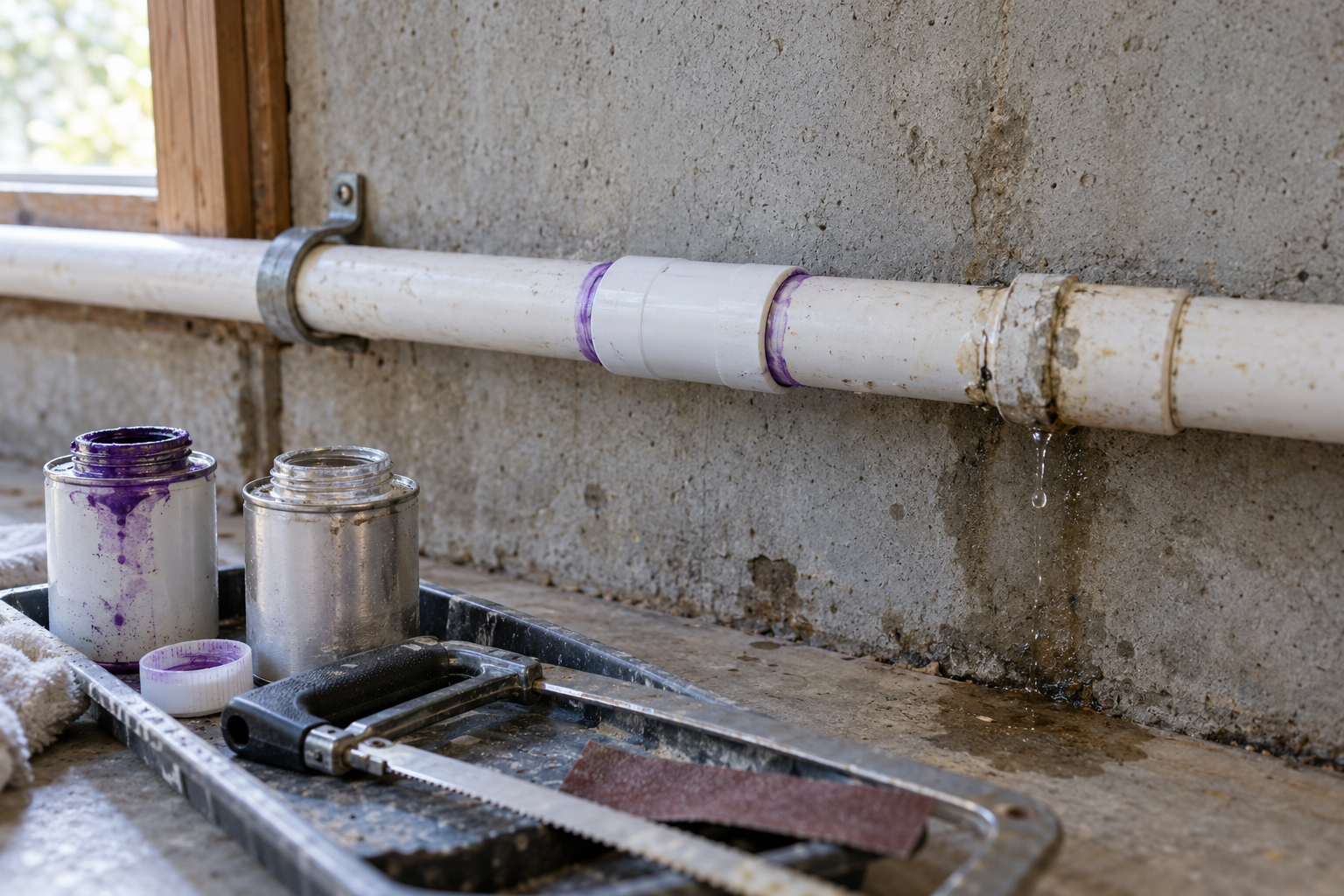
PVC solvent welding is a chemical joining process, not ordinary gluing. Use listed primer when required and cement matched to the pipe, fitting, size, temperature, and code. Work with ventilation, avoid flames, wear appropriate eye and skin protection, and follow the product instructions. Old, thickened, gelled, or contaminated cement should be discarded according to local rules.
Apply materials in the specified order, fully seat the pipe with the marked alignment, hold it against push-out, and wipe only the excess bead. Do not disturb the joint during initial set. Cure time varies with diameter, temperature, humidity, interference fit, and pressure; the can’s schedule controls. Pressurizing early is a common reason an otherwise neat repair fails.
Mechanical couplings and threaded transitions
Mechanical repair fittings can be valuable when the pipe cannot flex enough to accept standard sockets. Use a fitting specifically rated for the pipe material, size, pressure, burial condition, and fluid. On drain systems, shielded couplings help maintain alignment where code allows; an unshielded rubber sleeve is not interchangeable in every location.
Threaded plastic adapters are vulnerable to splitting from over-tightening or excessive sealant. Use the sealant and tightening method specified by the fitting manufacturer. Support heavy valves and metal components independently so their weight and leverage are not transferred to a plastic adapter.
Test before closing the wall or trench
Let the connection cure fully, then restore water slowly while observing every side of the repair. For a drain, run several fixtures and fill-and-release a basin to test a realistic surge. Dry tissue placed below a joint can reveal a small seep. Do not rely on a few dry seconds.
Keep the repair exposed through an adequate observation period and any required inspection. Buried pipe needs correct bedding and backfill without sharp rocks pressing on the fitting. Concealed pipe should be protected from screws and nails where it crosses framing. Photograph the open repair and measurements before closure.
When replacement or professional help is smarter
Call a plumber when the main shutoff will not close, the pipe is inaccessible, contamination is present, a fire-sprinkler line is involved, or the repair requires permits or specialized testing. Widespread brittleness, repeated cracks, badly misaligned runs, and freeze damage favor replacement beyond the visible spot. A professional can also determine whether pressure, support, or thermal movement caused the failure.
The quote should identify material, fittings, access, testing, permits, and restoration. Ask whether a local patch preserves a reasonable service life or merely postpones another opening. Paying for diagnosis is often less expensive than repeating drywall, cabinet, or landscape repairs after a rushed patch.
Buying materials without creating compatibility problems
Take readable photographs of pipe markings, the full fitting arrangement, and a ruler held beside the pipe before shopping. Nominal pipe size is not always the same as a casual outside-diameter measurement, and visually similar plastics are not necessarily compatible. A repair cart should include only products listed for the identified material and service, plus the preparation and safety items required by their instructions. Avoid assembling a system from unrelated products merely because each package says “plastic.”
Check whether local code restricts materials in potable water, drain, burial, sunlight, or concealed locations. Confirm that a coupling is pressure-rated when used on a supply line and that transition fittings are approved when materials change. For solvent welding, check the cement date and condition and buy a size appropriate to the job so it is not already degraded. Have enough pipe to remake the section if the first alignment is poor; trying to rescue a badly seated joint is false economy.
Before paying a contractor, use the same compatibility questions. The proposal should name the pipe and fitting system, not merely say “repair leak.” Ask how the line will be supported, tested, protected, and made accessible. A higher quote that includes correct transitions, permits, testing, and restoration may be more complete than a low quote that omits them. Compare scope, warranty, and responsibility rather than only the total.
Quick-reference checklist
| Check | Why it matters |
|---|---|
| Pipe marking and diameter | Determines compatible materials |
| Pressure or drain service | Changes fitting and test requirements |
| Sound pipe around damage | Confirms a local repair is viable |
| Alignment and support | Prevents stress cracking |
| Product cure time | Prevents early joint failure |
| Access for inspection | Avoids concealing a seep |
Frequently asked questions
Can PVC cement seal a crack from the outside?
Usually not as a dependable permanent repair. Solvent cement is intended for properly prepared socket joints, not as surface caulk. Replace the damaged section or use a listed repair product for the exact service.
Can I repair wet PVC pipe?
The joining surfaces normally need the preparation specified by the product, often including being clean and dry. Stop flow and follow the manufacturer’s conditions rather than trying to cement an actively leaking line.
How soon can I turn the water back on?
Use the cure schedule printed for the cement and your pipe size, temperature, humidity, and pressure. There is no single safe waiting period for every installation.
Why did the repair crack again?
Poor support, misalignment, freezing, vibration, pressure problems, incompatible materials, or brittle surrounding pipe may remain. Diagnose the cause before repeating the same patch.
Does PVC repair require a permit?
Rules vary by location and system. Main service lines, concealed supply work, and major drain changes are more likely to require permits or inspection; verify locally.
Why This Is Different in San Antonio
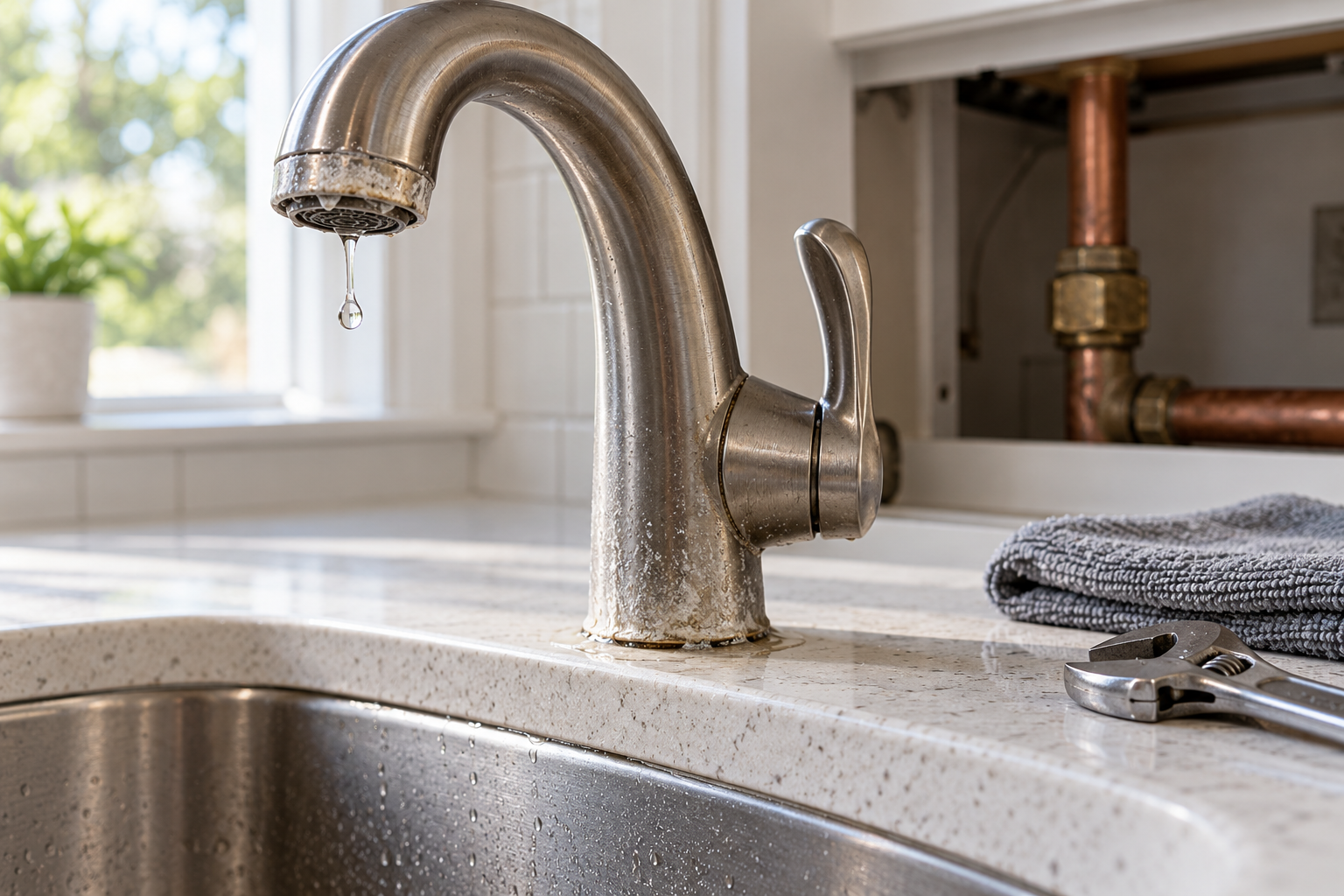
San Antonio's Edwards Aquifer supplies some of the hardest municipal water in the United States: about 357 mg/L, or 21 grains per gallon. That limestone-filtered groundwater carries calcium carbonate and magnesium into our fixtures, valves, drains, heaters, and supply lines. For pvc pipe repair, that matters because scale, corrosion, and age-related pipe weakness combine with slab foundations and older neighborhood plumbing materials.
- Scale buildup makes small restrictions worse, especially at cartridges, aerators, shutoff valves, drains, and heater connections.
- Fixtures, pipes, and appliances in our area can wear out 30-50% faster than in soft-water cities when maintenance is delayed.
- SAWS publishes annual water quality reports, but the practical homeowner takeaway is simple: maintenance intervals here should be shorter than national advice suggests.
Homes in New Braunfels and Boerne are particularly affected because nearby Hill Country water systems are also very hard and create similar maintenance pressure. Unlike cities with naturally soft water, local homeowners should treat hard-water maintenance as normal prevention, not an upsell.
> "When I see early leaks in San Antonio, I always look for hard-water scale, corrosion, and older neighborhood pipe materials before blaming one bad fixture." — Licensed local plumber
What San Antonio Homeowners Pay (2026)
| Service | Typical Cost in San Antonio |
|---|---|
| Emergency plumber call | $150–$350; after hours $250–$500 |
| Whole house repipe (PEX) | $4,500–$9,000 |
| Slab leak repair | $2,000–$5,000 |
Prices are based on local metro area ranges for 2026. Costs may vary by neighborhood, access, pipe material, after-hours timing, and whether the plumber finds hard-water damage beyond the visible problem.
When to Call a San Antonio Plumber
Call a licensed local plumber if the problem involves active leaking, a shutoff valve that will not close, sewer smell, recurring clogs, water near electrical components, a water heater leak, or any pipe inside a wall, ceiling, or slab. Locally, expect many licensed plumbers to charge roughly $85-$150 per hour, with emergency visits commonly around $150-$350 and after-hours calls closer to $250-$500.
When you call, ask three local questions:
1. Are you licensed and insured for work in Bexar County or the surrounding local metro?
2. Have you dealt with Edwards Aquifer hard-water scale on this type of repair?
3. Should I also check the water heater, shutoff valves, or water softener while you are there?
local plumbers see hard-water issues every week, so a good pro should be able to explain whether the failure is normal wear, mineral damage, freeze damage from a cold snap like Winter Storm Uri, or a sign of a larger plumbing system problem.
San Antonio FAQ
Is San Antonio water hard?
Yes. San Antonio water is very hard at about 357 mg/L, or 21 grains per gallon, because much of it comes from the Edwards Aquifer and passes through limestone. That mineral content is why scale shows up quickly on faucets, showerheads, valves, drains, and water heaters.
Do local homes need a water softener?
A water softener is recommended for many local homes, especially if you see white scale, repeated faucet or valve problems, short water-heater life, or cloudy spots on dishes. A typical whole-home water softener installation in San Antonio runs about $1,500-$4,000.