> San Antonio Local Insight: San Antonio's extremely hard water from the Edwards Aquifer (357 mg/L, 21 gpg) shortens water heater lifespan by 2–4 years. Sediment buildup forces heating elements to overwork, causes popping/rumbling noises, and leads to premature tank failure. local plumbers recommend flushing every 6 months — double the national frequency.
Local San Antonio Field Notes Before You Start
Before following any generic plumbing checklist, adjust it for our Edwards Aquifer water. At roughly 357 mg/L, or 21 grains per gallon, the calcium carbonate and magnesium in the water can turn a small maintenance issue into repeat wear on valves, seals, drains, heaters, and appliance connections. That means the useful question is not just capacity or fuel type; it is how the unit will handle sediment, descaling, anode wear, and the six-month maintenance rhythm our water demands.
A homeowner in New Braunfels and Boerne should be especially careful because nearby Hill Country systems have similar hard-water pressure on heaters and fixtures. If you are comparing advice from national repair guides, shorten the maintenance interval and inspect for white scale, crusted fittings, stiff shutoff valves, and early corrosion before assuming the part simply “got old.”
For budgeting, use local pricing instead of national averages: tank water-heater replacement runs about $1,200-$2,800 installed, while tankless replacement usually lands around $2,500-$5,500. If the issue appears after a summer high-use period or after a rare freeze like Winter Storm Uri, treat it as a local risk signal and document what you see before calling a licensed plumber in Bexar County.
A tankless heater can last many years, but only if its maintenance schedule reflects the water moving through it. The core local task is heat-exchanger descaling; inlet-screen cleaning, leak checks, vent inspection, condensate service, and combustion testing support it. Waiting for an error code usually means flow or heat transfer has already declined.
For a unit on untreated Edwards Aquifer water, begin with a six-month descaling interval and adjust only after inspecting what the flush removes. A protected system with consistently treated water may earn a longer interval under the manufacturer's instructions. In New Braunfels or Boerne, do not assume Hill Country groundwater is gentler—the same visible white scale around fixtures is a useful warning that the heat exchanger needs attention.
Keep a dated log beside the unit with error codes, flush dates, solution used, filter condition, and any change in outlet temperature. That record helps distinguish routine mineral restriction from a failing flow sensor, ignition problem, blocked vent, or undersized gas supply.
Why a Maintenance Schedule Matters
A well-planned tankless water heater maintenance schedule can significantly improve the lifespan of your unit. Regular maintenance not only enhances efficiency but also helps in identifying potential problems before they escalate. Here are a few reasons why you should prioritize this:
1. Efficiency: Mineral buildup can cause your system to work harder, leading to increased energy consumption. Regular descaling can help maintain efficiency.
2. Longevity: A properly maintained tankless water heater can last up to 20 years, far exceeding the lifespan of traditional units.
3. Cost Savings: Preventative maintenance can save you money in the long run by avoiding costly repairs and extending the life of your heater.
What to Check First
Before diving into a maintenance schedule, it's essential to understand what you should check regularly. Here are the most useful first checks:
1. Water Quality
The quality of the water in your home plays a significant role in the maintenance of your tankless water heater. Hard water, which contains high levels of minerals like calcium and magnesium, can lead to scale buildup. If you live in an area with hard water, consider installing a water softener to mitigate the effects.
2. Ventilation
Check the ventilation system of your tankless water heater. Proper ventilation is crucial for gas-powered models to function safely and efficiently. Ensure that vents are clear of obstructions, and inspect for any signs of corrosion or damage.
3. Filter and Inlet Screen
Most tankless water heaters come equipped with a filter or inlet screen to catch debris and sediment. Regularly inspect and clean this component to prevent blockages that can affect performance.
Best Practices for Tankless Water Heater Maintenance
Establishing a maintenance routine is key to keeping your tankless water heater in excellent working condition. Here’s a step-by-step guide:
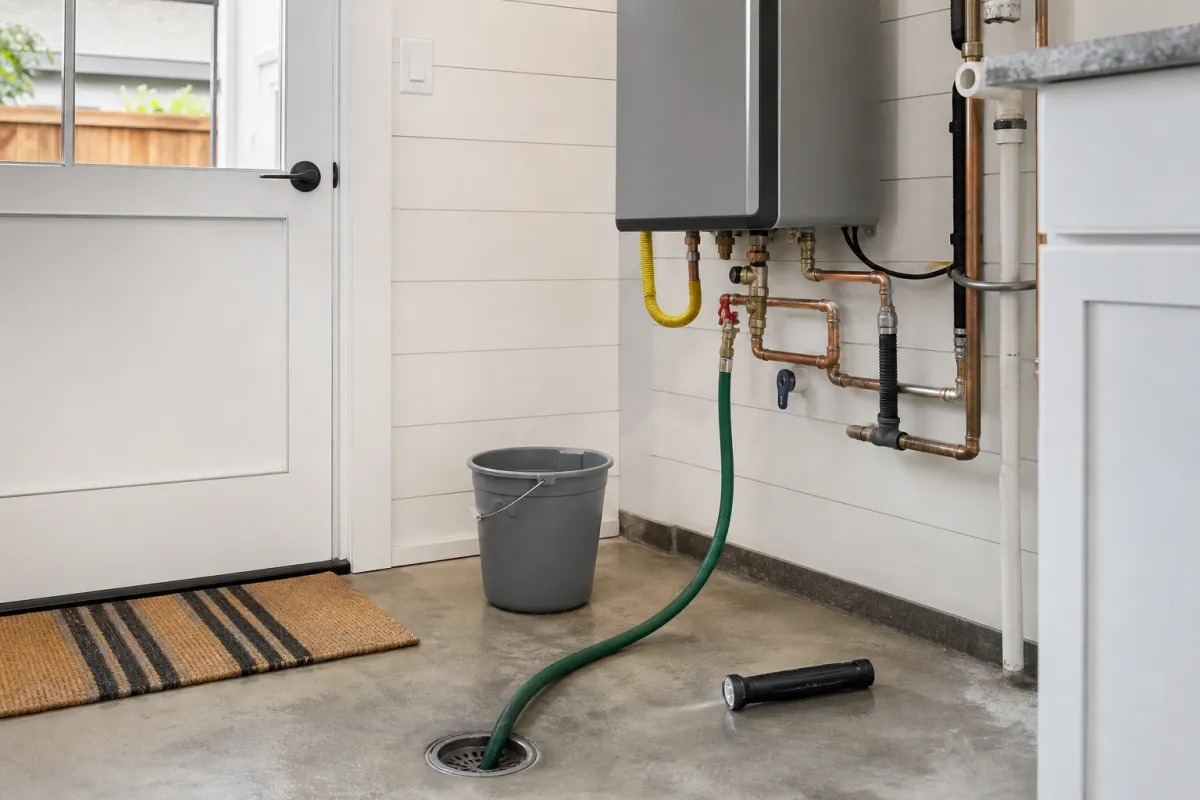
1. Descaling (Every 6-12 Months)
Descaling is crucial for homes with hard water. This process removes mineral buildup that can hinder performance.
- Step 1: Turn off the power supply and water supply to the heater.
- Step 2: Connect a pump to the service valves and fill a bucket with a descaling solution, such as vinegar or a commercial descaler.
- Step 3: Run the solution through the system for about 45 minutes.
- Step 4: Flush the system with clean water to remove any remaining solution.
2. Inspecting Isolation Valves and Flush Ports (Every 6 Months)
Exercise the isolation valves gently and inspect caps, gaskets, and flush-port threads for seepage or mineral crust. Tankless units do not use the sacrificial anode rod found in a conventional storage tank. If a valve binds or leaks, leave replacement to a plumber rather than forcing it.
3. Cleaning the Air Filter (Every 6 Months)
If your unit has an air filter, it’s essential to keep it clean for optimal operation.
- Step 1: Locate the air filter, usually near the combustion chamber.
- Step 2: Remove it and clean it with warm soapy water.
- Step 3: Rinse and allow it to dry completely before reinstalling.
4. Checking for Leaks (Monthly)
Regularly inspecting for leaks can help catch issues early.
- Step 1: Inspect the unit and surrounding areas for water stains or moisture.
- Step 2: Tighten any loose connections and replace faulty seals.
5. Professional Inspection (Annually)
While DIY maintenance is beneficial, an annual professional inspection can provide peace of mind.
- Step 1: Schedule a visit with a licensed technician.
- Step 2: Have them check for any hidden issues, such as gas leaks or electrical problems.
Mistakes to Avoid
While maintaining your tankless water heater, there are common pitfalls to watch out for:
1. Neglecting the Maintenance Schedule
One of the biggest mistakes homeowners make is forgetting to follow a maintenance schedule. Skipping maintenance can lead to more severe issues down the line, including complete system failure.
2. Using Incorrect Cleaning Solutions
Always use the recommended cleaning solutions for descaling. Harsh chemicals can damage the internal components of your heater.
3. Ignoring Warning Signs
If you notice fluctuating water temperatures or strange noises coming from your heater, don’t ignore these signs. Early intervention can save you from more extensive repairs.
4. DIYing Beyond Your Skill Level
While many maintenance tasks can be performed by homeowners, some issues are best left to professionals. If you’re unsure about a procedure, it’s safer and often more cost-effective to call in an expert.
When to Escalate Beyond DIY
While many maintenance tasks can be handled at home, there are times when it’s better to call a professional. Here are some scenarios:
1. Persistent Performance Issues
If you’ve performed regular maintenance but continue to experience issues like inconsistent water temperature or low water pressure, it’s time to bring in a professional.
2. Gas or Electrical Issues
If your tankless water heater is gas-powered and you suspect a gas leak, or if you’re facing electrical problems, don’t attempt to fix these yourself. These situations pose safety risks that require professional intervention.
3. Major Repairs
If your unit is leaking or showing signs of significant wear, a professional assessment is necessary. They can determine whether repairs are feasible or if a replacement is more cost-effective.
FAQ
What is the average lifespan of a tankless water heater?
A well-maintained tankless water heater can last between 15 to 20 years, depending on usage and water quality.
How often should I descale my tankless water heater?
If you have hard water, descaling every 6 to 12 months is recommended. For softer water, annual descaling may suffice.
Can I perform maintenance myself?
Yes, many maintenance tasks can be done by homeowners, but it’s crucial to know your limits. When in doubt, consult a professional.
What signs indicate I need to call a professional?
If you notice persistent performance issues, gas leaks, or significant wear, it’s best to call a professional.
Do I need to turn off my tankless water heater for maintenance?
Yes, always turn off the power and water supply before performing any maintenance tasks.
Quick Reference Checklist for Tankless Water Heater Maintenance
| Maintenance Task | Frequency | Notes |
|---|---|---|
| Descale | Every 6-12 months | Use vinegar or a commercial descaler. |
| Inspect Anode Rod | Every 2-3 years | Replace if significantly corroded. |
| Clean Air Filter | Every 6 months | Use warm soapy water for cleaning. |
| Check for Leaks | Monthly | Look for water stains or moisture. |
| Professional Inspection | Annually | Schedule a visit with a licensed technician. |
By following this comprehensive tankless water heater maintenance schedule, you can ensure that your system operates efficiently and lasts for years to come. Regular checks and preventive measures will save you money and headaches in the long run.
Why This Is Different in San Antonio
Water supplied from the Edwards Aquifer is commonly measured near 357 mg/L, or 21 grains per gallon—extremely hard by ordinary household standards. That matters to this job because descaling frequency, inlet-screen flow, and heat transfer. SAWS water-quality reporting is the right source for current systemwide data, while visible scale at a specific home shows what its equipment is actually experiencing.
In New Braunfels and Boerne, age, construction type, and access can change the repair plan as much as the failed part. Bexar County homeowners should photograph corrosion or leaks, note error codes and service dates, and ask whether the quote addresses the cause as well as the symptom. After a severe freeze or prolonged outage, inspect exposed lines before assuming the appliance itself is the only problem.
What San Antonio Homeowners Pay (2026)
| Service | Typical 2026 range |
|---|---|
| Tankless inspection and descaling | $200–$450 |
| Igniter, sensor, or valve repair | $250–$900 depending on part and access |
| Tankless replacement | $2,500–$5,500 installed |
| Whole-home water softener | $1,500–$4,000 installed |
These are planning ranges, not bids. Access, permits, fuel or electrical upgrades, equipment efficiency, warranty terms, and after-hours timing can move the final price. Ask for a written scope that separates equipment, labor, code-related upgrades, and optional water treatment.
When to Call a San Antonio Plumber
Call a licensed plumber when there is an active leak, a valve will not close, water is near electrical equipment, gas odor is present, a breaker trips repeatedly, or the repair requires opening a fuel, vent, or pressurized-water connection. Shut off the relevant utility only if you can do so safely. For gas odor, leave the building and contact the gas utility or emergency services from outside.
For non-emergency work, give the plumber the model number, symptoms, error codes, maintenance history, and photos. Ask whether the proposed repair accounts for hard-water scale and whether the contractor is licensed and insured for the work. A clear diagnosis is more valuable than replacing parts until the symptom disappears.
San Antonio FAQ
Is the local water hard enough to change maintenance intervals?
Yes. At roughly 357 mg/L / 21 gpg, mineral accumulation can be much faster than national maintenance examples imply. Follow the appliance manual first, then shorten inspection or descaling intervals when scale returns before the next planned service.
Does every home need a water softener?
No single answer fits every household. Treatment is worth evaluating when scale returns quickly, valves bind, appliance heat exchangers need frequent service, or water-heater life has been short. Test the water, compare maintenance costs, and make sure any treatment system is sized and maintained correctly.
What can a homeowner safely do before the appointment?
Document the symptom, clear access, stop using leaking or overheating equipment, and locate the correct shutoff. Do not bypass safeties, open gas components, work live electrical circuits, or force a corroded valve. Those boundaries protect both the home and the technician who follows.