> San Antonio Local Insight: Drain and sink clogs in San Antonio are different from other cities. Edwards Aquifer hard water (357 mg/L) deposits white calcium scale inside pipes that traps hair, grease, and soap more aggressively. Standard drain cleaners may miss mineral buildup, so local homes often need mechanical cleaning plus sensible scale control.
Read the Clog Before Reaching for Chemicals
A bathroom sink usually slows because hair and soap collect around the stopper, but Edwards Aquifer water changes the texture of that clog. At roughly 357 mg/L (21 gpg), mineral scale narrows the drain and gives residue a rough surface to grip. That is why a stopper-and-trap cleaning often works better than repeatedly pouring chemicals into the bowl.
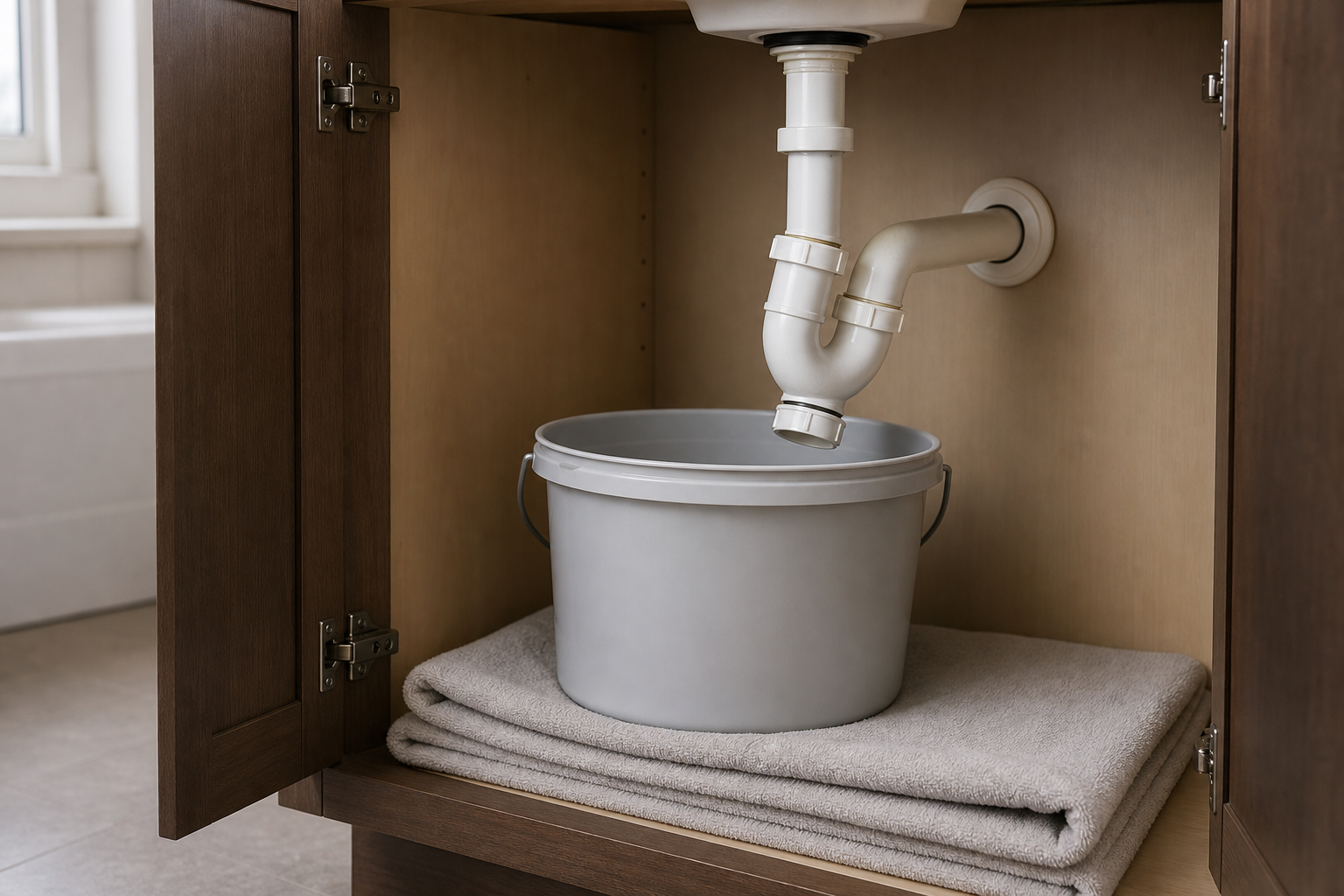
In King William, older cast-iron or galvanized branches and tight retrofit vanities reward a gentle approach. Start at the stopper, then use a plunger or remove the P-trap with a bucket underneath. Never mix drain products, and do not open a trap after chemicals have been used unless you can protect your eyes and skin and safely contain the liquid.
A straightforward local drain cleaning is often $150–$350; a camera inspection may add $200–$400 when several fixtures are slow. Those numbers are useful boundaries: a single accessible sink invites careful DIY work, while recurring backup across fixtures points beyond the vanity.
A slow or stopped bathroom sink is usually caused by hair, soap residue, toothpaste, or grooming products collecting around the stopper and in the trap. The safest way to unclog a bathroom sink drain is to begin with the visible, accessible parts, then progress to the stopper and P-trap only if simpler methods fail. Most localized clogs can be cleared without harsh chemicals or specialized equipment.
Before starting, remove items from the vanity, place a bucket and towels below the plumbing, and keep water away from outlets, power strips, and electric grooming tools. Stop and call a plumber if water is backing up in several fixtures, sewage is present, the drain pipe is damaged, or opening the faucet causes an uncontrolled leak.
Identify What the Drain Is Telling You
A sink that drains slowly but eventually empties usually has a partial blockage close to the drain opening. You may see hair around the stopper, notice a dark ring of residue, or hear a light gurgle as water squeezes past buildup. If the basin holds water indefinitely, the obstruction may be denser or farther into the trap. A sink that drains normally but leaks below the cabinet has a sealing or pipe problem, not necessarily a clog.
Check whether the issue is limited to one bathroom fixture. Run the tub or shower briefly and flush the toilet while watching for unusual movement or sounds. If several fixtures drain slowly, a branch drain or main line may be restricted. Do not keep adding water to test a widespread backup; that can force contaminated water into a lower fixture. A sewer odor that persists after the sink has been used may indicate a dry trap, failed venting, or a loose connection that deserves professional diagnosis.
Safety Steps Before You Touch the Plumbing
Turn the faucet off and let standing water cool if anyone recently used hot water. If the faucet itself leaks uncontrollably, close the hot and cold shutoff valves beneath the sink by turning them clockwise. Valves that are corroded, stuck, or begin dripping should not be forced. Use the home’s main shutoff if necessary and arrange repair. Drain work normally does not require shutting off water, but doing so prevents accidental filling while the trap is removed.
Wear eye protection and waterproof gloves because trapped water can contain bacteria, cleaning products, and sharp debris. Never combine drain cleaners, bleach, vinegar, ammonia, or other chemicals. Mixing products can release hazardous gas or cause a violent reaction. If chemical cleaner has already entered the drain, do not plunge or dismantle the trap; splashing can cause burns. Ventilate the room, follow the product label, and tell any plumber exactly what was used.
Gather Simple Tools and Protect the Vanity
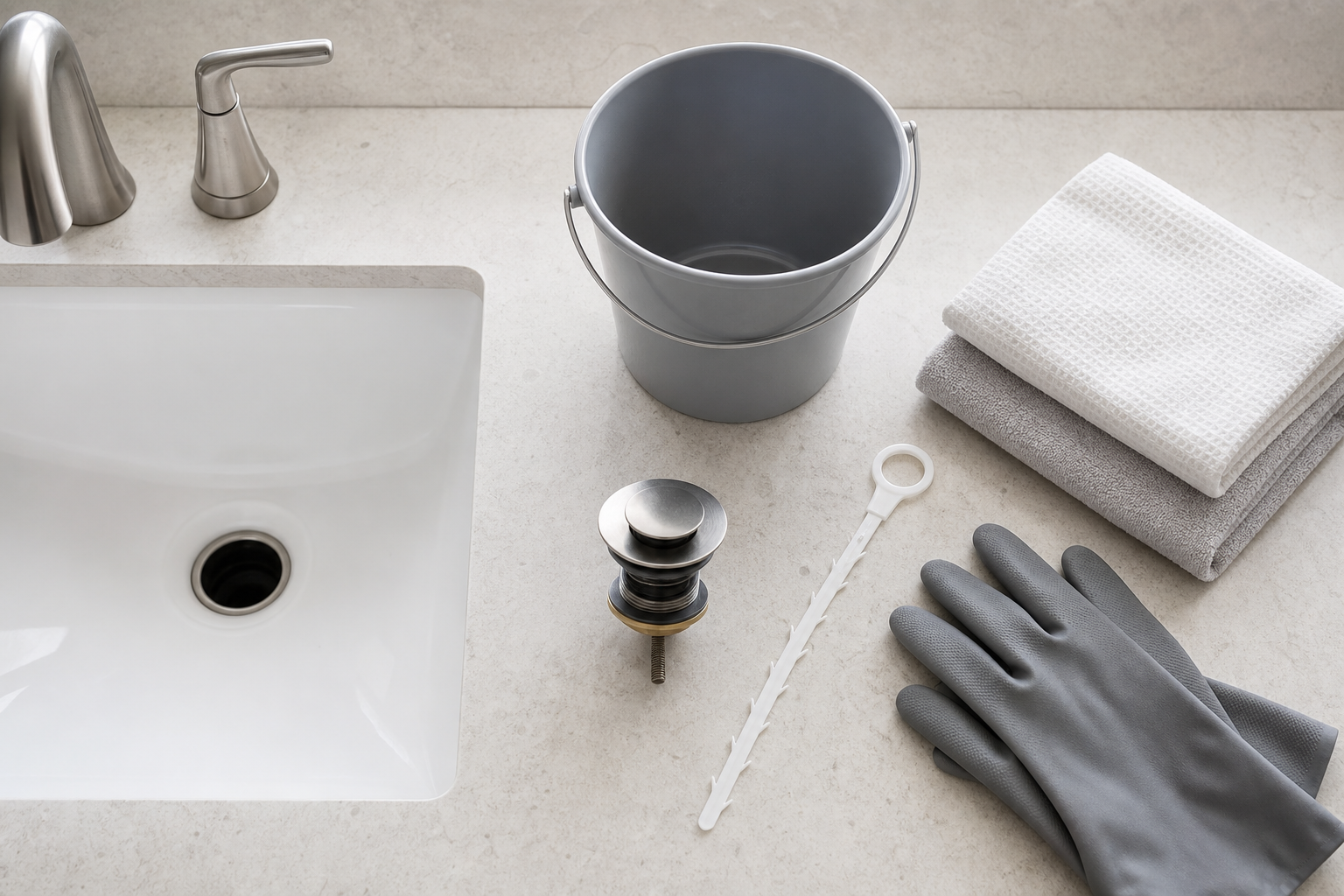
Useful supplies include a bucket, old towels, flashlight, slip-joint pliers, a small cup, a plastic drain-cleaning strip, and an old toothbrush or narrow cleaning brush. A sink plunger is helpful if its cup can seal around the drain. Keep a replacement stopper gasket or trap washers on hand only if you know the pipe size; reusing cracked or deformed washers often creates a leak.
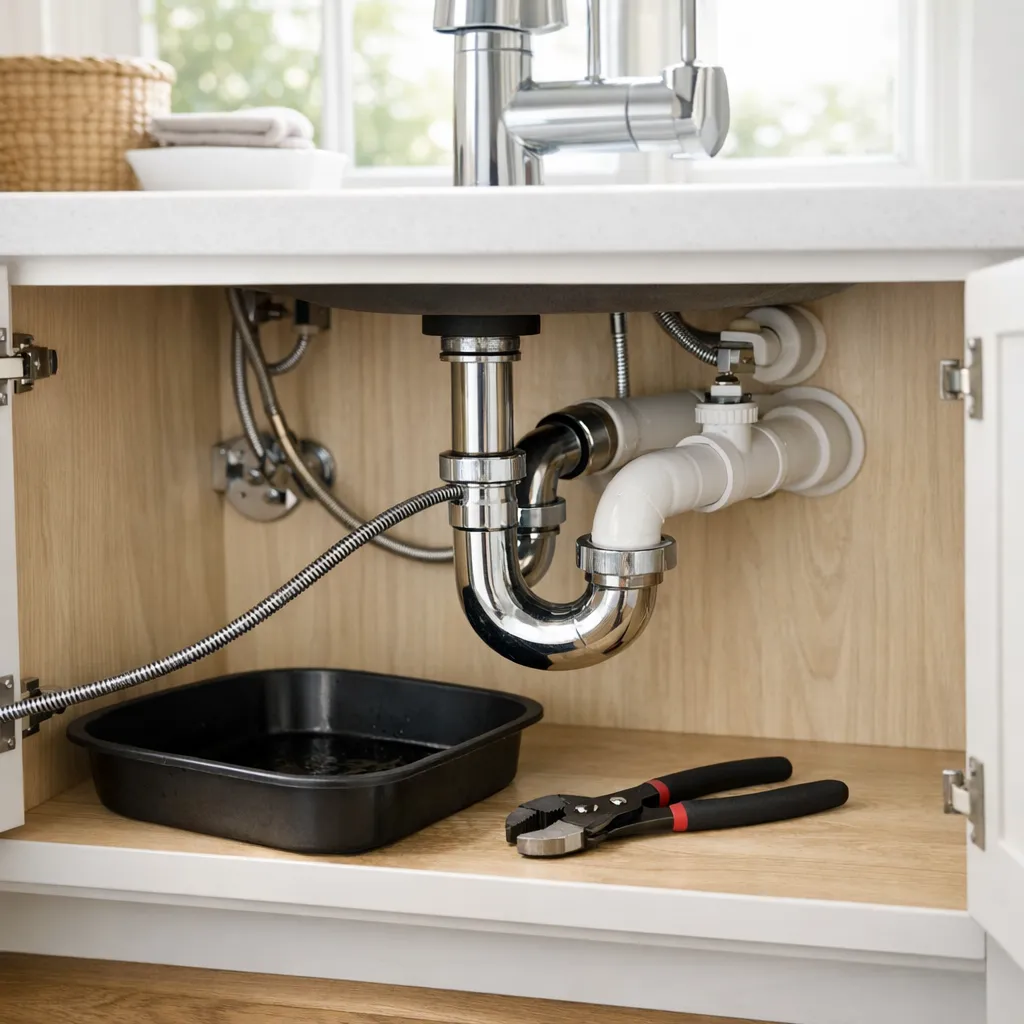
Empty the cabinet so water cannot damage toiletries, paper products, or the cabinet base. Put the bucket directly beneath the P-trap—the curved pipe below the sink—and spread a towel around it. Photograph the plumbing before loosening anything. The photo records the orientation of washers and fittings and is especially useful when a pivot rod operates the stopper.
| Symptom | Likely area | Best first step |
|---|---|---|
| Water drains slowly | Stopper or upper drain | Remove visible debris and clean stopper |
| Water does not move | Dense local clog or trap | Remove standing water, then plunge |
| Gurgling in one sink | Partial clog or vent issue | Clean local parts; monitor other fixtures |
| Several fixtures back up | Branch or main drain | Stop using water and call a plumber |
| Water appears in cabinet | Joint, supply, or drain leak | Dry area and locate leak before unclogging |
Start With the Stopper and Drain Opening
Scoop standing water into a container so you can see the drain. Lift or twist out a removable stopper. On many pop-up assemblies, the stopper is held by a horizontal pivot rod behind the drain tailpiece. Place the bucket below it, loosen the retaining nut by hand, pull the rod out gently, and lift the stopper from above. Do not force a corroded assembly; older metal can crack.
Remove hair and residue with a plastic barbed strip or small brush. Keep the tool shallow and controlled so it does not become lodged. Wipe the stopper clean, including the narrow stem where sludge accumulates. Avoid pushing debris farther down with a screwdriver or wire coat hanger, which can scratch the finish, puncture flexible piping, or compact the obstruction.
After cleaning, run a modest stream of warm—not boiling—water. Very hot water can soften some plastic pipe and damage certain sink materials. If drainage is restored, clean the basin and reinstall the stopper. If it remains slow, proceed to plunging rather than repeatedly flushing a blocked line.
Use a Sink Plunger Correctly
Block the overflow opening with a wet cloth; otherwise, pressure escapes through that passage. Add enough water to cover the plunger cup, center the cup over the drain, and establish a seal. Use several controlled pushes and pulls while keeping the rim in contact with the basin. The goal is to move the clog in both directions, not hammer the plumbing with extreme force.
Remove the plunger and see whether the water drains. Repeat once or twice if movement improves. Stop if a pipe below the sink shifts, a joint begins leaking, or dirty water rises elsewhere. Do not plunge after using chemical cleaner because the action can spray caustic liquid. Also avoid improvised compressed-air devices; excessive pressure may separate joints hidden inside a wall.
Clean the P-Trap When the Clog Persists
If the stopper and plunging do not solve the problem, the P-trap is the next accessible location. Confirm both faucet handles are off, position the bucket, and loosen the two slip nuts that hold the curved section. Plastic nuts often turn by hand; use pliers gently if needed. Support the trap while loosening it because it contains water. Note which direction each tapered washer faces.
Lower the trap into the bucket and remove residue with a bottle brush. Inspect it under good light for cracks, corrosion, distorted threads, or objects. Never reach blindly into a metal pipe where glass or sharp grooming tools may be lodged. Clean the adjoining tailpiece only as far as a safe plastic tool reaches. If the wall pipe is blocked, a hand auger may be appropriate, but it requires care to avoid damaging fittings.
Reassemble the trap in its original orientation. Seat washers evenly, start nuts by hand to avoid cross-threading, and tighten them snugly—not excessively. Run a thin stream while inspecting every joint with a dry paper towel, then fill the basin partway and release it to test higher flow. If a joint weeps, turn off the faucet, reposition the washer, and retighten. Persistent leakage usually calls for a new washer or trap component.
Know the Limits of a Hand Auger
A small sink auger can reach buildup beyond the trap after the trap has been removed. Feed the cable into the wall-side drain gradually, lock it, rotate the drum, and advance without forcing it. Resistance may be a bend rather than a clog. Retract and clean the cable periodically. Protect surfaces because the cable can bring back dark residue and can scratch porcelain or cabinetry.
Stop if the cable will not advance, repeatedly catches, or appears in another fixture. Powered drain machines can injure hands, damage old pipe, and become trapped; they are generally not sensible for an inexperienced homeowner. If the blockage returns quickly after augering, the pipe may have poor slope, heavy internal scaling, a vent problem, or damage that mechanical cleaning alone will not correct.
Avoid Common Fixes That Create Bigger Problems
Chemical drain openers may seem convenient, but they can remain pooled behind a clog, harm some piping, create dangerous splash exposure, and complicate later service. Baking soda and vinegar produce fizz but do not reliably remove a dense mat of hair. They can make a sink smell fresher, yet they should not be treated as a substitute for physically removing the obstruction.
Do not pour boiling water into an unknown drain system, jam rigid metal objects into the opening, or overtighten plastic fittings. Avoid disconnecting glued joints or plumbing inside a wall. A wet/dry vacuum can expose its operator to contaminated water and should never be used where a chemical product may be present. The safest successful repair is usually the least aggressive method that gives access to the actual debris.
Prevent the Next Bathroom Sink Clog
Brush hair away from the basin before rinsing, and use a compatible screen if it does not interfere with the stopper. Wipe greasy cosmetics, clay masks, waxes, and thick creams into the trash instead of sending them down the drain. Run water while using toothpaste and for a short period afterward so residue moves through the trap rather than settling there.
Clean the stopper routinely before drainage noticeably slows. Look below the sink during cleaning for moisture, discoloration, swollen cabinet material, or mineral deposits around joints. Early attention to a small drip can prevent mold and cabinet damage. If the household repeatedly experiences clogs despite careful use, ask a plumber to assess pipe condition, slope, and venting rather than relying on repeated temporary clearing.
When to Stop DIY and Call a Plumber
Call promptly if multiple drains are slow, sewage backs up, a strong sewer odor persists, or water appears around a wall or floor. These signs can indicate a larger drainage, vent, or hidden-leak problem. Professional help is also appropriate when pipes are severely corroded, a shutoff valve fails, the trap connection breaks, or an auger cannot pass the obstruction.
A plumber may remove a deeper clog, inspect the line with a camera when warranted, replace damaged fittings, or correct a configuration that encourages recurring buildup. Explain the symptoms, which fixtures are affected, what you disassembled, and whether any chemical was used. Accurate information protects the technician and reduces unnecessary troubleshooting.
Frequently Asked Questions
Can I unclog a bathroom sink without removing the stopper?
You can try plunging after blocking the overflow, but removing and cleaning the stopper is often the fastest solution because hair commonly wraps around its stem. If the stopper mechanism is corroded or unfamiliar, avoid forcing it and use professional help.
Is it safe to pour boiling water down the drain?
Not as a universal remedy. Boiling water can stress some sink finishes, seals, and plastic piping, and it will not dissolve a compact hair clog. Warm water is safer after solid debris has been physically removed.
Why does my bathroom sink clog again after a few days?
A portion of the blockage may remain in the trap or wall-side drain. Recurrence can also reflect pipe scaling, poor slope, a damaged pipe, or venting trouble. Clean accessible parts thoroughly and arrange diagnosis if the pattern continues.
What if the sink gurgles after it drains?
An occasional small sound may accompany a partial local obstruction. Persistent gurgling, especially with other affected fixtures, can indicate restricted drainage or venting. Stop testing with more water if backups develop.
How do I know the P-trap is leak-free?
Dry all joints, run a small stream, then release a partly filled basin while watching and touching each connection with dry tissue. Any moisture means the joint needs reseating, a sound washer, or repair before the cabinet is put back into service.
A methodical approach—visible debris first, then plunging, then the trap—solves many bathroom sink clogs while minimizing risk. Work cleanly, test every reassembled joint, and recognize signs of a problem beyond one fixture.
Why This Is Different in San Antonio
San Antonio's Edwards Aquifer supplies some of the hardest municipal water in the United States: about 357 mg/L, or 21 grains per gallon. That limestone-filtered groundwater carries calcium carbonate and magnesium into our fixtures, valves, drains, heaters, and supply lines. For unclog bathroom sink drain, that matters because calcium scale roughens the inside of drains, so hair, grease, soap film, and food debris catch more aggressively than they do in soft-water cities.
- Scale buildup makes small restrictions worse, especially at cartridges, aerators, shutoff valves, drains, and heater connections.
- Fixtures, pipes, and appliances in our area can wear out 30-50% faster than in soft-water cities when maintenance is delayed.
- SAWS publishes annual water quality reports, but the practical homeowner takeaway is simple: maintenance intervals here should be shorter than national advice suggests.
Homes in King William are particularly affected because historic homes may still have cast iron, galvanized pipe, and tight retrofit spaces. Unlike cities with naturally soft water, local homeowners should treat hard-water maintenance as normal prevention, not an upsell.
> "San Antonio drains do not just fight hair and grease. The mineral scale gives debris something to grab onto, so clogs become stubborn faster." — Licensed local plumber
What San Antonio Homeowners Pay (2026)
| Service | Typical Cost in San Antonio |
|---|---|
| Drain cleaning | $150–$350 |
| Sewer line camera inspection | $200–$400 |
| Emergency plumber call | $150–$350; after hours $250–$500 |
Prices are based on local metro area ranges for 2026. Costs may vary by neighborhood, access, pipe material, after-hours timing, and whether the plumber finds hard-water damage beyond the visible problem.
When to Call a San Antonio Plumber
Call a licensed local plumber if the problem involves active leaking, a shutoff valve that will not close, sewer smell, recurring clogs, water near electrical components, a water heater leak, or any pipe inside a wall, ceiling, or slab. Locally, expect many licensed plumbers to charge roughly $85-$150 per hour, with emergency visits commonly around $150-$350 and after-hours calls closer to $250-$500.
When you call, ask three local questions:
1. Are you licensed and insured for work in Bexar County or the surrounding local metro?
2. Have you dealt with Edwards Aquifer hard-water scale on this type of repair?
3. Should I also check the water heater, shutoff valves, or water softener while you are there?
local plumbers see hard-water issues every week, so a good pro should be able to explain whether the failure is normal wear, mineral damage, freeze damage from a cold snap like Winter Storm Uri, or a sign of a larger plumbing system problem.
San Antonio FAQ
Is San Antonio water hard?
Yes. San Antonio water is very hard at about 357 mg/L, or 21 grains per gallon, because much of it comes from the Edwards Aquifer and passes through limestone. That mineral content is why scale shows up quickly on faucets, showerheads, valves, drains, and water heaters.
Do local homes need a water softener?
A water softener is recommended for many local homes, especially if you see white scale, repeated faucet or valve problems, short water-heater life, or cloudy spots on dishes. A typical whole-home water softener installation in San Antonio runs about $1,500-$4,000.