> San Antonio Local Insight: San Antonio's extremely hard water from the Edwards Aquifer (357 mg/L, 21 gpg) shortens water heater lifespan by 2–4 years. Sediment buildup forces heating elements to overwork, causes popping/rumbling noises, and leads to premature tank failure. local plumbers recommend flushing every 6 months — double the national frequency.
A power outage does not always mean the water heater has failed. The safe goal is to determine whether the problem is lost power, a tripped safety control, a gas-supply issue, or a pre-existing heater fault revealed when service returned. In an Alamo Heights home with an older electrical panel, the heater circuit deserves the same careful inspection as the appliance.
Expect recovery to take time: many electric tanks need one to two hours to produce a useful amount of hot water, while a full tank may take longer. Do not keep resetting a breaker to speed that process. A $150–$350 diagnostic visit is cheaper than damaged wiring or a flooded utility room.
First: Identify the Heater and Make the Area Safe
If water is leaking, you smell gas, hear arcing, or see scorched wiring, leave the controls alone. Move away, call the gas utility or emergency services for a gas odor, and arrange professional service. Never stand in water while touching a panel, disconnect, or appliance.
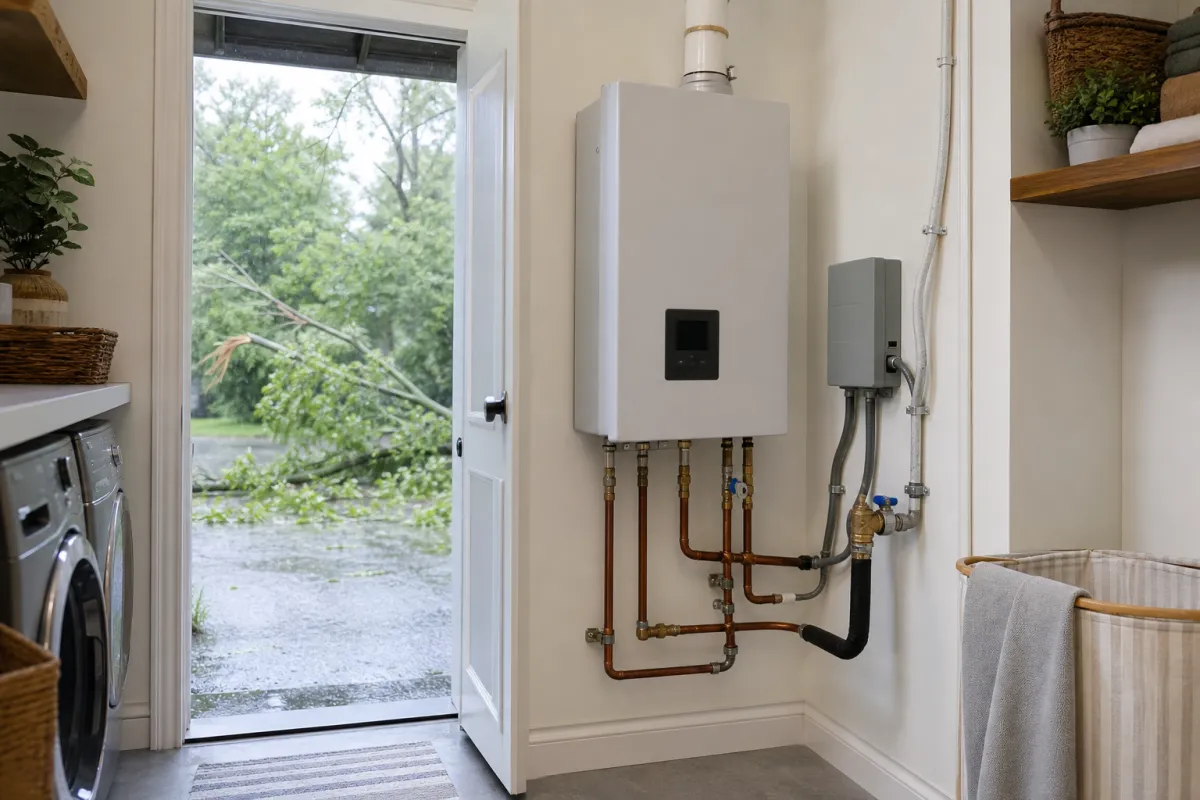
For an electric tank, verify the dedicated double-pole breaker is fully on. A breaker can sit in a middle position; switch it firmly off once, then on. If it trips again, stop. For a gas model with electronic ignition, confirm other gas appliances work and read the manufacturer’s status light. Do not relight a sealed-combustion unit with a match. Tankless units may need both electrical and gas service and often display a useful error code.
A Safe Restart Checklist
1. Confirm the tank is full. Open a hot faucet until water flows steadily before energizing an electric heater; dry-firing an element can destroy it.
2. Inspect the floor, drain pan, supply connectors, temperature-and-pressure relief discharge pipe, and electrical cover.
3. Reset the breaker only once. For a unit with an accessible manufacturer-approved high-limit reset, turn power off first and follow the manual exactly.
4. Restore the normal temperature setting—about 120°F for many households—and wait through a normal recovery cycle.
5. Test water temperature at a faucet with a thermometer, keeping children away from unexpectedly hot water.
Do not remove live access covers, bypass a thermostat, tape down a safety switch, or repeatedly press a high-limit reset. Those actions erase the warning instead of correcting the fault.
What the Symptoms Mean
No display on a tankless heater often means the receptacle, disconnect, or breaker has no power. A display plus no ignition may indicate gas interruption, venting trouble, condensate backup, or a stored fault code. An electric tank that has some lukewarm water but never recovers may have lost one heating element. Very hot water after restoration can indicate a failed thermostat or welded contact and requires immediate shutdown.
Popping after power returns is commonly steam moving through sediment around an element—not proof of an electrical surge. At 21 gpg, scale can insulate an element, increasing operating temperature and making an older component fail during restart. Record the model, serial number, error code, breaker behavior, and how long the unit ran before symptoms appeared.
Why This Is Different in San Antonio
Water supplied from the Edwards Aquifer is very hard—about 357 mg/L, or 21 grains per gallon. That mineral load does not create every plumbing problem, but it changes how quickly scale forms and how often equipment needs attention. SAWS customers can confirm service alerts and water-quality information with the utility; private-well owners should use a current lab test rather than assume their chemistry matches the municipal supply.
Across San Antonio and Bexar County, homes also combine hot attics and garages, long cooling seasons, and occasional hard freezes. Winter Storm Uri showed why exposed lines, exterior-wall plumbing, and equipment in unconditioned spaces deserve a seasonal check. Mineral deposits can hide a weak seal or restricted passage until a pressure or temperature change makes it obvious. The practical response is earlier inspection—not aggressive chemicals or unnecessary replacement.
What San Antonio Homeowners Pay (2026)
| Service | Typical local range | Notes |
|---|---|---|
| Diagnostic/service call | $150–$350 | Electrical, ignition, and safety-control testing |
| Electric element or thermostat repair | $250–$650 | Depends on access and tank condition |
| Gas control or ignition repair | $350–$900 | Venting and manufacturer parts affect price |
| Tank heater replacement | $1,200–$2,800 | Standard installation; upgrades can add cost |
| Tankless replacement | $2,500–$5,500 | Gas, vent, electrical, and descaling access matter |
Ask whether permits, haul-away, drain-pan work, expansion control, and code-required connections are included. SAWS rebates or conservation programs can change, so verify current eligibility directly rather than relying on an old article.
When to Call a San Antonio Plumber
Call immediately for gas odor, carbon-monoxide alarm, scorched wiring, a breaker that trips twice, water at electrical components, a leaking tank, or discharge from the relief valve. Shut off the energy source only if you can do so without entering water or approaching a gas hazard.
Arrange service when a reset does not restore normal operation, an error code returns, or water temperature is unstable. A technician can test voltage, current draw, grounding, combustion, venting, and safety controls. That is especially important after widespread grid restoration, when several appliance problems may appear at once.
San Antonio FAQ
How long should hot water take to return?
A typical tank begins producing usable hot water within one or two hours, but size, incoming-water temperature, fuel, and sediment affect recovery.
Is it safe to reset the breaker repeatedly?
No. One reset is enough for diagnosis. A repeat trip indicates a fault that needs testing.
Did the outage create the popping noise?
Possibly not. Restart can expose sediment already accumulated around the burner or elements.
Should I flush the tank immediately after an outage?
Not if it is leaking, electrically unsafe, or unfamiliar to you. Once operation is stable, discuss a controlled flush; a neglected old tank can leak after sediment is disturbed.