> San Antonio Local Insight: San Antonio's hard water from the Edwards Aquifer affects every plumbing system in your home. With 357 mg/L mineral content (21 grains per gallon), our water causes faster corrosion, heavier scale buildup, and more frequent repairs than most US cities. Understanding this local factor helps you make better decisions about maintenance, repair, and prevention.
First, Give the Softener Time to Complete the Job
In Alamo Heights, a salt refill does not instantly soften the hard water already sitting in the heater and household piping. A manual regeneration may take 90 minutes to more than two hours, followed by enough normal use to replace stored hard water. Before buying parts, spend $10–$25 on hardness strips and compare an untreated outdoor tap with a cold indoor tap.
Check that the bypass is in service, the clock is correct, and the brine tank does not have a hollow salt bridge. Use a broom handle only to press gently through salt—never strike the tank. Do not mix cleaners or dismantle a pressurized control valve. SAWS water supplied from the Edwards Aquifer can be about 357 mg/L, or 21 gpg, so an incorrect hardness setting can exhaust capacity sooner than expected.
Adding salt should help a water softener regenerate, but it does not make hard water disappear immediately. If the water still feels hard, soap will not lather, or scale returns after a refill, the problem may be as simple as waiting for the next regeneration—or as involved as clearing a salt bridge, restoring water flow, or repairing the control valve.
Start with low-risk checks: confirm the unit has power, make sure it is not in bypass, inspect the salt, and verify that the clock and hardness settings are reasonable. Then run a manual regeneration according to the manufacturer’s instructions. Do not dismantle a pressurized valve or handle electrical components in a wet area.
Why adding salt may not fix the water right away
Salt does not directly soften household water. During regeneration, the softener dissolves salt into brine and uses that brine to recharge the resin beads in the mineral tank. Those beads then exchange hardness minerals such as calcium and magnesium for sodium or potassium as water flows through the unit. A refill only supplies raw material for a future regeneration cycle.
Many demand-initiated units regenerate overnight after their calculated capacity is exhausted. If you add salt in the afternoon, hard water already in the plumbing and water heater can remain noticeable until the unit regenerates and several fixtures have been used. A conventional tank-style water heater may hold many gallons of previously hard water, so the hot side can lag behind the cold side. Give a correctly operating unit one full regeneration and normal household use before judging the result.
Quick-reference diagnosis table
Use symptoms to narrow the problem instead of changing several settings at once.
| What you notice | Likely first check | Safe next step |
|---|---|---|
| Salt level never seems to drop | Salt bridge or unit not regenerating | Probe gently with a wooden handle and review cycle history |
| Tank is full of loose salt but water is hard | Regeneration has not occurred | Confirm power, time, settings, and start one manual cycle |
| Display is blank | Outlet, transformer, or control failure | Test the outlet safely and check the breaker/GFCI |
| Water is hard only at one fixture | Local scale, cartridge, or plumbing issue | Clean the aerator and compare other cold-water fixtures |
| Brine tank has unusually high water | Blocked drain, injector, or brine-line issue | Stop repeated cycles and arrange service if basic checks fail |
| Water tastes salty after regeneration | Incomplete rinse or drain restriction | Run cold water briefly; service the unit if it persists |
A home hardness test strip is useful here. Test untreated water at an outdoor tap or another known hard-water point, then test cold water downstream of the softener. Testing gives you evidence that is more reliable than “slippery” or “not slippery” skin feel, which can change with soap, temperature, and expectations.
Check power, bypass position, and basic settings
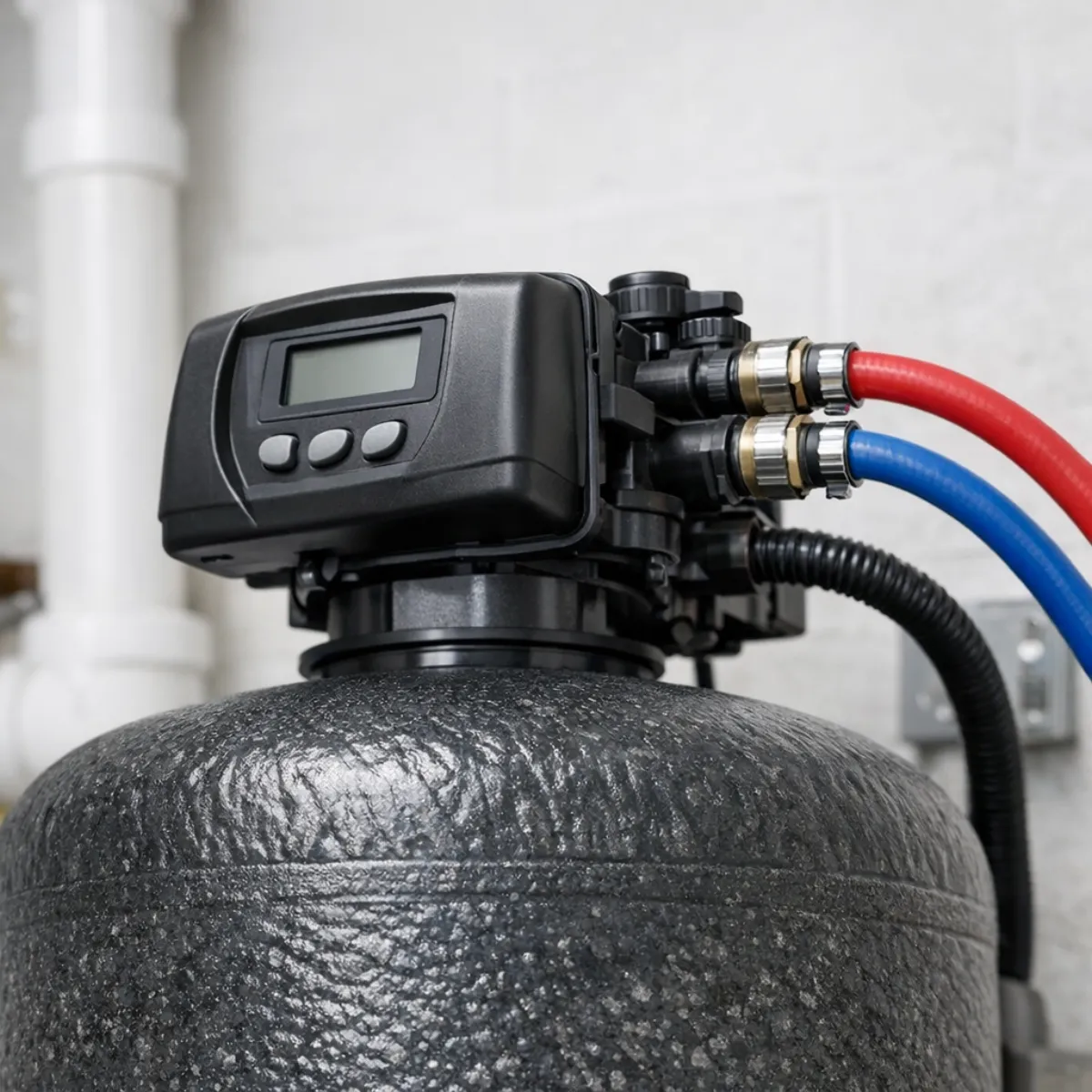
Look at the control head without removing covers. The display should be on, the clock should be close to the correct time, and there should be no obvious error code. If it is blank, verify that the transformer is plugged into a dry, functioning outlet and check the relevant breaker or GFCI. Do not use an extension cord across a damp floor. If an outlet repeatedly trips, stop and have the electrical fault evaluated rather than repeatedly resetting it.
Next, inspect the bypass valve. Its handle or knobs must be in the service position, not bypass. Labels vary, so use the diagram on the valve or in the manual rather than forcing a stiff control. Also review the programmed hardness, household size or capacity, and current time. A prolonged outage can reset some controls. A hardness setting that is far too low delays regeneration; one set excessively high wastes salt and water. Well-water households may need an iron allowance specified by the manufacturer.
Look for a salt bridge or compacted salt
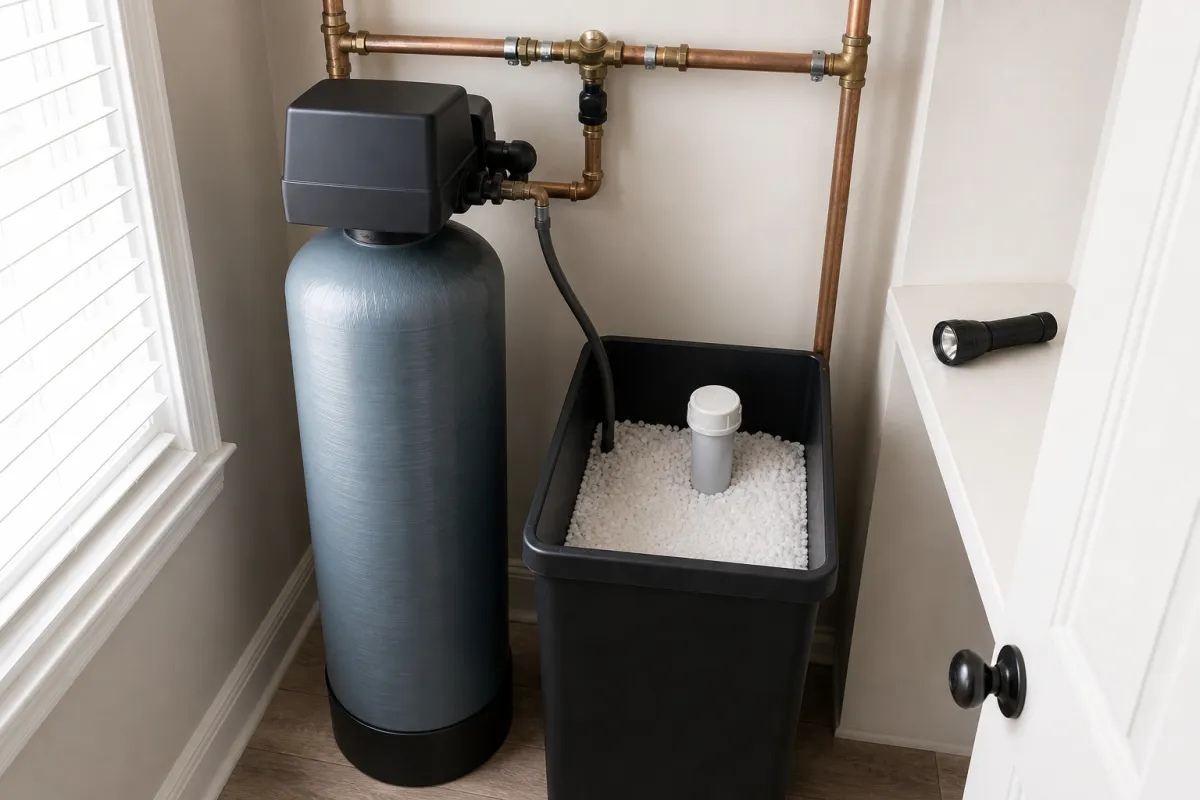
A salt bridge is a hardened crust that spans the brine tank while leaving an empty space below. From above, the tank appears full, but the water cannot contact enough salt to make brine. Bridges are more likely with humidity, overfilling, or certain salt forms. Shine a flashlight into the tank and press gently on the surface with a clean wooden broom handle. Do not strike the tank wall or jab at internal components.
If the surface is hollow underneath, carefully break the crust into manageable pieces without damaging the brine well or float assembly. Remove large compacted chunks if necessary, then keep the tank roughly one-third to one-half full unless your manual says otherwise. Do not pour household chemicals or hot water into the tank. If the salt has turned into a dense wet mass at the bottom, removing the old salt and cleaning the tank may be more effective than repeatedly adding fresh product.
Confirm that the brine tank can make and draw brine
A typical brine tank contains some water, but the visible level depends on the design and where the unit is in its cycle. During regeneration, the control valve should send a measured amount of water to the tank and later draw salty brine into the mineral tank. No water at all, persistently excessive water, or a level that never changes can point to a clogged injector, kinked brine tube, stuck safety float, air leak, or restricted drain.
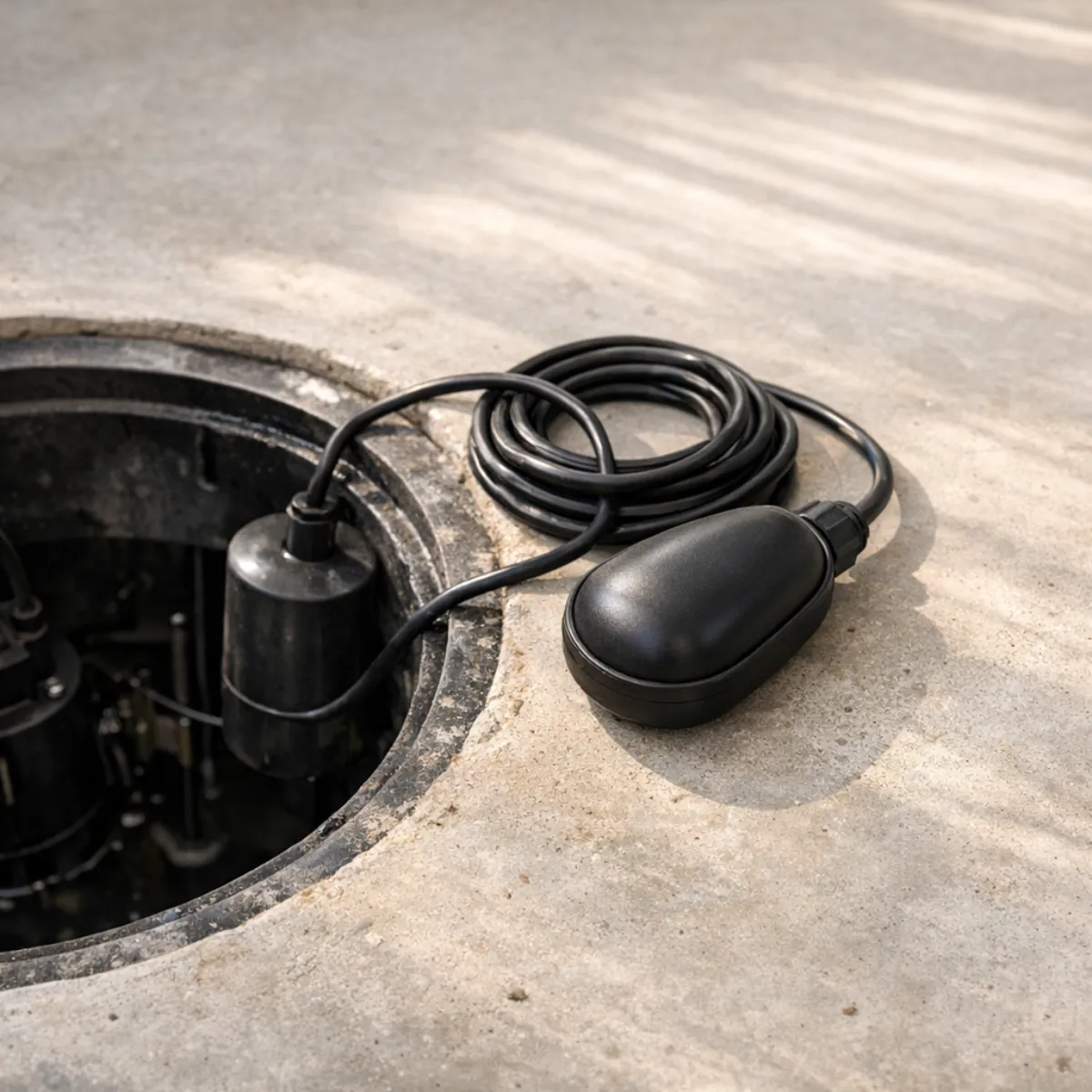
You can safely inspect accessible tubing for obvious kinks, loose fittings, or salt crust. Make sure the float in the brine well is not visibly jammed, but do not defeat or remove this overflow protection. Marking the water level before a manual regeneration can show whether it changes. If water rises toward the overflow, leaks from a fitting, or fails to draw down, stop running repeat cycles. Valve cleaning often requires depressurizing the system and using model-specific parts, so it is a sensible service call.
Run one manual regeneration correctly
After confirming that the unit has power, is in service, and has usable salt, initiate a manual regeneration using the exact control procedure in the manual. Some controls require holding a button; others offer immediate and delayed options. Choose immediate regeneration for diagnosis. Avoid using large amounts of water while the softener cycles, because many units provide hard bypass water during that time.
Watch from a safe distance for normal stage changes and listen for drain flow. The cycle may take well over an hour depending on the model. The drain hose should be secure, unobstructed, and terminate with the required air gap; never place it in a way that could siphon sewage into the appliance. After the cycle finishes, test cold softened water. Do not start multiple back-to-back regenerations unless the manufacturer recommends it for a newly restored or severely depleted bed, since every cycle consumes water and salt and may stress a blocked drain.
Consider salt type, salt quality, and cleaning needs
Use solar salt, evaporated pellets, block salt, or potassium chloride only if the manufacturer permits it. High-purity pellets generally leave less insoluble residue, while some inexpensive rock salts can contribute more sediment. Mixing products is not automatically harmful, but changing between salt and potassium chloride may require a dosage adjustment. Do not assume that “more salt” means “softer water”; once enough brine is available, performance depends on correct regeneration and intact resin.
Iron, manganese, sediment, or organic fouling can coat resin and reduce capacity even when the brine system works. If your home uses a private well, compare the actual water analysis with the softener’s rating. A resin cleaner must be explicitly compatible with the equipment and water conditions. Significant iron may be better addressed upstream; see the considerations in our guide to the best water softener for well water with iron. A softener is not a substitute for disinfection or a filter designed for unsafe contaminants.
Rule out plumbing and water-use causes
A closed or partially closed main valve, a cross-connection, or recent plumbing work can create confusing symptoms. Confirm that both the inlet and outlet valves are open. If only one bathroom seems hard, clean the faucet aerator or showerhead and test another cold fixture. Scale already attached to glass and fixtures does not vanish as soon as soft water returns, so existing deposits are not proof of ongoing failure.
Unusually high consumption can also exhaust capacity before the scheduled cycle. Guests, a leaking toilet, outdoor watering connected through the softener, or a change in household size may exceed the programmed assumptions. Check for silent toilet leaks and review whether exterior taps should be softened. If the system is consistently undersized, compare replacement implications and water softener installation cost rather than compensating with unnecessarily frequent cycles.
Mistakes to avoid during troubleshooting
Do not keep pouring salt into a tank that is already bridged or waterlogged. Extra salt cannot fix a clogged injector, failed motor, obstructed drain, or bypassed valve. Likewise, do not randomly raise the hardness or capacity setting. Record the original settings and change only values supported by a water test and the manual, then evaluate the result after a complete cycle.
Avoid opening the control valve while the plumbing is pressurized. Shutoff and depressurization procedures vary, and a released fitting can cause flooding or injury. Keep electrical plugs and transformers dry. Never cap a drain line, eliminate an air gap, disable a float, or use bleach, acids, or unapproved resin chemicals. If there is leaking, burning odor, a repeatedly tripped circuit, sewage backup near the drain, or an inability to isolate the appliance, stop DIY work.
When repair or professional service makes sense
Call a water-treatment technician when the motor runs without advancing, the unit shows a recurring error, brine will not draw, the drain flow is absent or continuous, or the tank overfills. A technician can test injector suction, seals and spacers, piston movement, flow-meter readings, and resin condition. Provide the model, serial number, water source, hardness result, and a description of what happened during the manual cycle.
Replacement may be more practical when a very old control head needs major parts, the resin has permanently lost capacity, or the equipment is badly undersized. Ask for a diagnosis before agreeing to replacement, and compare treatment goals carefully. If your main concern is scale rather than removing hardness, understanding a water softener vs. water conditioner can prevent buying the wrong technology.
Frequently asked questions
How long after adding salt should a water softener work?
It should begin producing properly softened water after it completes a successful regeneration, but hard water already in pipes and the water heater takes time to flush. Test a cold fixture downstream after one full cycle.
Should I add water after adding salt?
Usually not. Most modern units add the required water automatically. Some empty or newly commissioned tanks have model-specific startup instructions, so follow the manual rather than guessing.
Why is the salt level not going down?
A bridge may hide an empty cavity, or the unit may not be regenerating or drawing brine. Check the clock, power, cycle history, salt surface, and water-level change during one manual regeneration.
Can too much salt stop a water softener?
Overfilling can encourage bridging and makes inspection difficult, although loose salt itself does not normally stop a healthy unit. Keep the level recommended by the manufacturer and break up only obvious crusts gently.
Is hard water after a refill an emergency?
Hardness itself is usually an appliance and scale concern rather than an immediate plumbing emergency. Leaks, electrical faults, drain backups, contaminated well water, or a brine tank nearing overflow require prompt attention.
Why This Is Different in San Antonio
At roughly 357 mg/L (21 gpg), Edwards Aquifer water can consume a softener’s programmed capacity quickly. A unit set for 10 gpg may appear to run normally yet deliver hard water well before its next cycle. Older mixed-metal plumbing around Alamo Heights can also release scale after softening resumes, so judge recovery with a hardness test, not slippery feel alone. Check SAWS notices if pressure or supply conditions changed, and use a Bexar County water-treatment professional when diagnosis moves beyond routine cleaning.
What San Antonio Homeowners Pay (2026)
| Softener service | Typical local range |
|---|---|
| Diagnostic visit | $95–$185 |
| Injector/brine-line cleaning | $150–$350 |
| Control-valve repair | $350–$850 |
| Correctly sized replacement | $1,500–$4,000 |
Ask whether resin, installation, drain correction, and warranty are included. For San Antonio homeowners, a $15 hardness test can prevent an unnecessary replacement.
When to Call a San Antonio Plumber
Stop DIY work if the bypass will not move, water leaks from the valve head, the drain runs continuously, the brine tank overflows, or regeneration produces no brine draw after the basic checks. Keep electrical connections dry and never open the control head under pressure.
San Antonio FAQ
How soon should water test soft after adding salt?
After one complete regeneration and enough cold-water use to clear the household lines. A water heater can retain hard water longer.
What setting should I use?
Use a current measured hardness result and the manufacturer’s instructions. Account for iron if a private test finds it; do not guess from water feel.