> San Antonio Local Insight: San Antonio's extremely hard water from the Edwards Aquifer (357 mg/L, 21 gpg) shortens water heater lifespan by 2–4 years. Sediment buildup forces heating elements to overwork, causes popping/rumbling noises, and leads to premature tank failure. local plumbers recommend flushing every 6 months — double the national frequency.
Popping is usually the sound of water flashing to steam beneath a layer of sediment and mineral scale at the bottom of a tank. It is common in local hard water, but “common” does not mean harmless. The insulated heat-transfer surface runs hotter, recovery slows, and the tank experiences repeated thermal stress.
A Stone Oak homeowner may hear the noise first during morning showers when the burner or elements run continuously. A planned $200–$450 flush or maintenance visit can be reasonable; continuing until the tank leaks can turn the decision into a $1,200–$2,800 replacement.
Identify the Sound Before Acting
A low rumble or popcorn-like popping from the bottom of a tank points toward sediment. A sharp water-hammer bang occurs when a valve closes and may be heard in nearby piping. Ticking during warm-up can come from normal pipe expansion against framing. A sizzling sound may mean water is reaching a hot burner or electrical component and requires shutdown.
Observe when the sound starts, how long it lasts, whether hot-water volume has declined, and whether rust-colored water or moisture is present. Do not remove covers or place your face near the burner. A carbon-monoxide alarm, gas odor, flame rollout, soot, or water around wiring is an emergency—not a maintenance project.
Should You Flush the Tank?
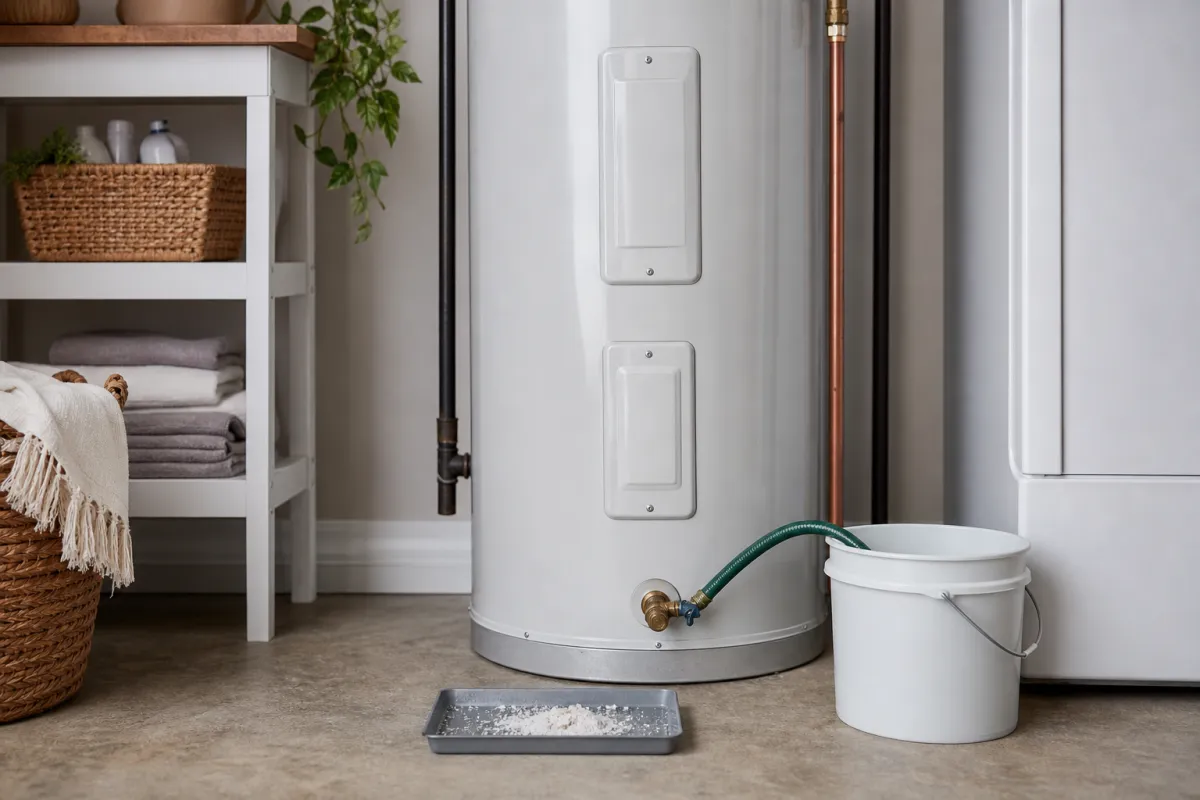
A homeowner who knows the appliance and has a sound drain setup may perform a manufacturer-approved flush: turn off energy, allow water to cool, close the cold supply, connect a rated hose to a safe drain point, admit air through a hot faucet, and drain carefully. Restore a full, air-free tank before turning an electric unit back on.
There are important exceptions. Do not improvise a flush on a badly corroded valve, a tank already leaking, a unit with no safe discharge route, or an old heater that has never been serviced. Sediment can be sealing a weakened drain valve or tank seam. Hot water can scald, a hose can burst, and opening the relief valve can leave it dripping.
Maintenance That Actually Helps
For a serviced tank in this water, inspect every six months and set a flushing interval based on what comes out—not a national one-size schedule. Check the drain pan and visible connectors monthly. Keep the thermostat near 120°F unless a healthcare or appliance requirement calls for another managed setting. Test safety devices only as directed by the manufacturer.
A whole-home softener can reduce scale but needs correct sizing, drainage, salt management, and plumbing arrangement. Point-of-use filtration alone generally does not remove hardness. Tankless heaters also scale; they require isolation valves and periodic descaling. Keep service records because noise that returns quickly after a thorough flush can indicate a dip-tube, burner, element, or tank condition that maintenance alone cannot solve.
Why This Is Different in San Antonio
Water supplied from the Edwards Aquifer is very hard—about 357 mg/L, or 21 grains per gallon. That mineral load does not create every plumbing problem, but it changes how quickly scale forms and how often equipment needs attention. SAWS customers can confirm service alerts and water-quality information with the utility; private-well owners should use a current lab test rather than assume their chemistry matches the municipal supply.
Across San Antonio and Bexar County, homes also combine hot attics and garages, long cooling seasons, and occasional hard freezes. Winter Storm Uri showed why exposed lines, exterior-wall plumbing, and equipment in unconditioned spaces deserve a seasonal check. Mineral deposits can hide a weak seal or restricted passage until a pressure or temperature change makes it obvious. The practical response is earlier inspection—not aggressive chemicals or unnecessary replacement.
What San Antonio Homeowners Pay (2026)
| Service | Typical local range | What affects it |
|---|---|---|
| Tank inspection and flush | $200–$450 | Access, drain condition, and sediment volume |
| Anode rod service | $300–$700 | Headroom and seized fittings |
| Element/thermostat repair | $250–$650 | Electrical testing and parts |
| Standard tank replacement | $1,200–$2,800 | Pan, vent, connections, permit, haul-away |
| Tankless descaling | $250–$600 | Isolation valves and severity of scale |
A quote should distinguish maintenance from repair. Ask what happens if the drain valve will not reseal and whether replacement credit applies if inspection shows the tank is near failure.
When to Call a San Antonio Plumber
Call for leaking at the tank shell, rust streaks, relief-valve discharge, no hot water, repeated breaker trips, gas odor, soot, or a noise that suddenly becomes violent. Turn off power at a dry accessible disconnect; for gas, use the appliance control only if there is no odor or emergency.
Professional assessment also makes sense when the heater is beyond its expected service life, the drain valve is seized, or popping returns soon after a documented flush. The plumber should evaluate the tank—not merely sell a chemical additive—and explain whether sediment removal, component repair, or replacement is the safer investment.
San Antonio FAQ
Will popping make the tank explode?
Popping alone does not mean an explosion is imminent, but failed safety controls or a blocked relief path are serious. Never cap the relief pipe.
Can vinegar dissolve the sediment?
Descaling methods depend on heater design. Do not pour chemicals into a tank unless the manufacturer provides a procedure.
How often should a tank be flushed?
Inspect about every six months in very hard water and adjust based on sediment, warranty guidance, and a plumber’s assessment.
Why did the noise return after flushing?
Heavy deposits may remain, or the sound may come from an element, burner, expansion, or water hammer. A diagnosis is better than increasingly aggressive flushing.