> San Antonio Local Insight: San Antonio's hard water from the Edwards Aquifer affects every plumbing system in your home. With 357 mg/L mineral content (21 grains per gallon), our water causes faster corrosion, heavier scale buildup, and more frequent repairs than most US cities. Understanding this local factor helps you make better decisions about maintenance, repair, and prevention.
Local Diagnosis Before You Start
Low pressure is easiest to solve when you map the pattern before touching a valve. In New Braunfels or Boerne, test one cold fixture at a time, then hot water, and write down which rooms change. A $5-$20 aerator may solve one weak faucet; whole-house diagnosis by a licensed technician commonly begins around $125-$300, before parts. That quick room-by-room check separates fixture scale from a regulator, service-line, or leak problem.
The Edwards Aquifer supplies water at about 357 mg/L, or 21 gpg, so scale can narrow small passages, stiffen valves, and disguise the real fault. SAWS notices can help rule out utility work when the whole property changes at once. Winter Storm Uri also showed why freeze history matters: a pipe can remain weakened long after thawing. Document the pattern and keep DIY work to visible, reversible checks.
Map the Pressure Problem Room by Room
When homeowners ask, “Why is my water pressure low in my house?” the answer usually falls into one of four categories: a single clogged fixture, a partly closed valve, a pressure-regulator or supply problem, or restricted plumbing. The pattern matters. Weak flow at one faucet points toward that fixture; low pressure at every outlet suggests a house-wide issue. A sudden change deserves faster attention than a gradual decline.
Begin with observations rather than adjustments. Test hot and cold water, compare several floors, and note whether the problem is constant or appears only when two fixtures run. Look for leaks and check whether neighbors have the same issue. Do not immediately turn a regulator screw or replace a pump. A basic diagnosis can prevent damage and tell a plumber exactly what changed.
Pressure and Flow Are Related but Different
Water pressure is the force available in the supply, usually measured in pounds per square inch. Flow is the volume delivered through a fixture over time. A pipe can have acceptable static pressure when nothing is running but poor flow once a faucet opens because mineral scale, a clogged filter, or an undersized pipe restricts movement. Conversely, a high-flow tub spout may feel strong even when measured pressure is only moderate.
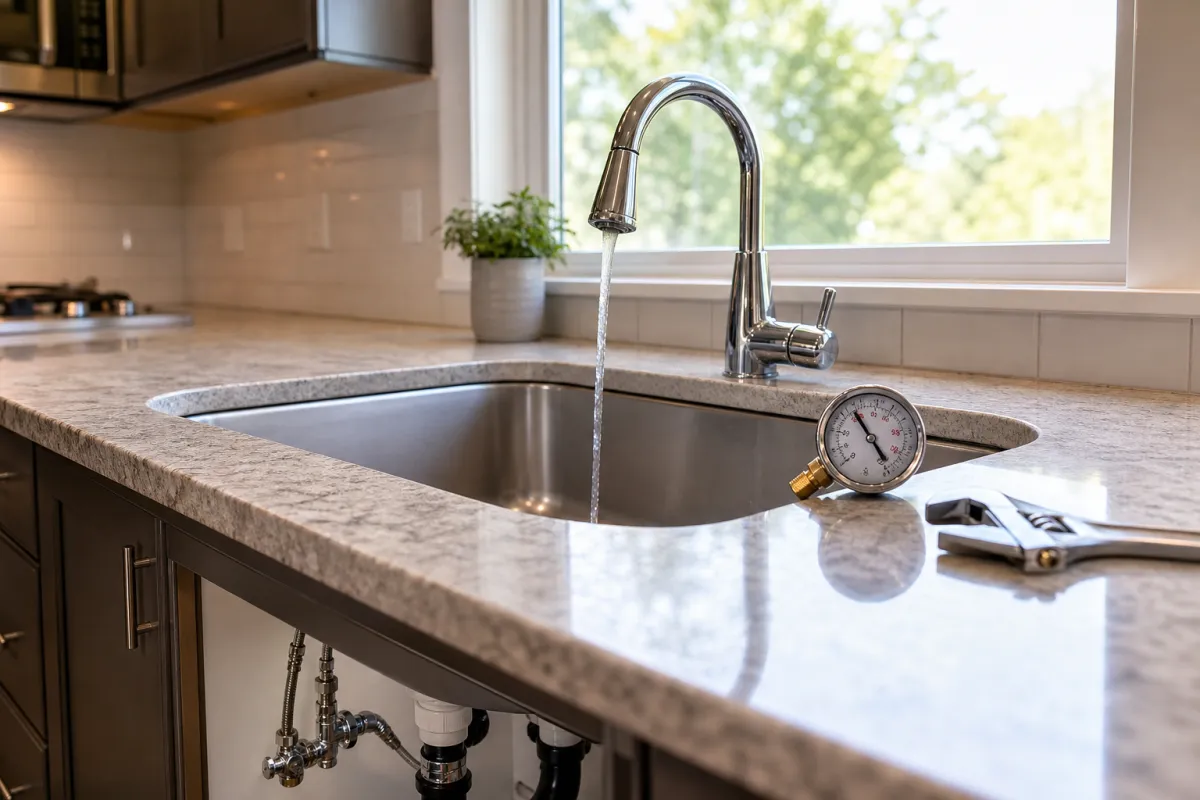
This distinction explains why guessing from the feel of a shower can mislead. A blocked showerhead reduces flow at that outlet without changing pressure throughout the plumbing. A gauge attached to a compatible hose connection provides more useful information, but only if the connection is sound and the test is performed carefully. Note static pressure and the reading while a known fixture runs; a large drop under demand is a clue for a supply restriction or capacity issue.
Map the Problem Before Taking Anything Apart
Test several fixtures in a repeatable order. Start with a ground-floor cold-water tap, then an upper-floor faucet, shower, exterior hose bib, and a hot-water outlet. Remove no parts yet. Record whether each is normal, weak on cold only, weak on hot only, or weak on both. Also note noise, sputtering, discoloration, and how long it takes for pressure to recover.
| Pattern | Likely area to investigate first | Safe first action |
|---|---|---|
| One faucet is weak | Aerator, cartridge, local shutoff, supply tube | Clean aerator and confirm local valves are open |
| Hot water is weak everywhere | Water-heater valves, sediment, hot-side piping | Inspect externally; call for tank or valve service |
| Whole house is suddenly weak | Main valve, utility work, leak, regulator | Check for leaks and contact utility if neighbors are affected |
| Pressure drops when two fixtures run | Restricted service line, scale, pump capacity | Measure static/dynamic pressure and arrange assessment |
| Upper floor is consistently weaker | Elevation, regulator setting, pipe sizing | Professional pressure and flow evaluation |
Avoid repeatedly cycling valves that are badly corroded or frozen in place. An old gate valve can break internally or begin leaking at the stem. If movement requires unusual force, stop and have it serviced.
Check the Simplest Fixture-Level Causes
For one weak faucet, unscrew the aerator only after closing the drain so small parts cannot disappear. Mineral particles often collect on the screen after utility work or water-heater service. Rinse the pieces, soak mineral-encrusted components in an appropriate household descaler if the finish permits, and reinstall them in order. If flow is strong with the aerator removed, the problem is local.
A showerhead can clog in the same way. A kinked braided supply tube, partly closed under-sink stop, clogged faucet cartridge, or debris in a mixing valve can also restrict one fixture. Do not force a brittle stop valve or disassemble a pressure-balanced shower valve without shutting off water and understanding the model. Hidden shower components can release full supply pressure when opened. If both hot and cold remain weak after the outlet is cleaned, the branch or valve may need professional attention.
Confirm Main and Local Valves Are Fully Open
A main shutoff can be left partly closed after a repair, inspection, or vacation. Locate the house-side main valve and inspect its position. A lever-style ball valve is normally open when the handle aligns with the pipe and closed when perpendicular. Multi-turn gate valves are less visually obvious and can fail internally. Turn only a valve you can identify confidently, and never disturb a utility-owned curb stop or sealed meter equipment.
Check the water-heater cold inlet valve when hot flow alone is poor, but keep clear of hot pipes and relief-valve discharge. Local fixture stops should also be open, though a valve can appear open while a deteriorated washer blocks the passage. Watch every operated valve for stem leaks. Know how to shut off the home before testing; if the main is inaccessible, corroded, or will not close, correcting that should be a priority before other plumbing work.
Look for Leaks and Hidden Water Use
A leak can reduce available pressure, increase the bill, and damage the building. Turn off faucets, ice makers, irrigation, humidifiers, and other known water users, then observe the meter's leak indicator if it is safely accessible. Continued movement suggests water is going somewhere, though appliance refill cycles and irrigation controls must be ruled out. Never enter a flooded space when electrical outlets, panels, or equipment may be energized.
Walk through the home and look for toilet refilling, damp cabinets, ceiling stains, warped flooring, hissing behind walls, pooling near the foundation, and unusually green soil over the service-line route. A burst service line may not produce an indoor puddle. If pressure fell suddenly along with meter movement, wet ground, or running-water sounds, close the house shutoff if safe and call a plumber. Contact the utility when the suspected leak is on its side of the meter.
Ask Whether the Utility Supply Changed
Municipal flushing, main breaks, nearby firefighting, construction, and planned maintenance can temporarily reduce pressure or release sediment that later clogs aerators. Ask a nearby neighbor whether the change affects their home, then check the water provider's alert page or call its service line. If several properties are affected, altering your plumbing will not solve the source problem.
Homes on private wells follow a different path. Low pressure may involve the pressure tank, switch, pump, electrical supply, well yield, or a clogged treatment filter. Do not remove a pressure-switch cover or touch pump wiring unless qualified; terminals may remain energized. Rapid pump cycling, no gauge response, air sputtering, or loss of prime warrants a well professional. Shut off power only at a correctly identified breaker if flooding threatens electrical equipment.
Inspect Filters, Softeners, and Treatment Equipment
A whole-house sediment filter is a frequent source of gradual flow loss. Read the pressure gauges before and after the unit if installed; a notable drop while water runs indicates restriction. Follow the manufacturer's isolation and depressurization procedure before changing a cartridge. Opening a pressurized housing can cause injury and flooding. Use the specified cartridge rather than a finer replacement that the system cannot support.
A softener stuck in a cycle, clogged carbon tank, closed bypass, or failing treatment valve can affect the entire home. If the equipment has a bypass designed for homeowner operation, briefly comparing flow in service and bypass can isolate the cause—but only when the manual permits it and the untreated water is safe for the test. Do not bypass equipment needed to remove a known health contaminant. Call the treatment provider if settings, valves, or sanitation are uncertain.
Evaluate the Pressure-Reducing Valve Carefully
Many homes have a bell-shaped pressure-reducing valve, or PRV, near the main entry. It protects fixtures from excessive municipal pressure and provides a steadier house setting. A failing PRV may cause pressure that is consistently low, fluctuates, creeps higher when unused, or changes abruptly. Adjustment is not automatically the correct repair: internal wear, blocked strainers, and a weak spring can make the response unpredictable.
Use a sound pressure gauge to establish the current condition before anyone adjusts the valve. Test at more than one time because municipal pressure varies. Excessively high settings can damage appliance hoses, cause water hammer, and stress valves; local codes and fixture ratings apply. If the PRV leaks, will not hold a stable setting, or is old and corroded, replacement by a plumber is safer than repeated adjustment. A closed plumbing system may also require a correctly charged thermal expansion tank.
Consider Corroded, Scaled, or Undersized Pipes
Galvanized steel pipe can narrow internally over decades as corrosion accumulates. Hard-water scale may restrict hot-water piping and valves, while old service lines can be undersized for modern simultaneous demand. These problems often appear as reasonable flow at first, followed by a sharp drop as more fixtures open. Rust-colored water or weak branches near old galvanized sections strengthens the case for an internal restriction.
Pipe replacement should be based on a real assessment, not a sales assumption. A plumber can compare pressure at the meter and house, measure flow, isolate branches, and inspect accessible pipe. Repiping may be targeted or extensive depending on the layout. Do not attempt aggressive chemical descaling on unknown plumbing; loosened debris can block cartridges, and some chemicals damage pipe, seals, septic systems, or drinking-water quality.
Common Mistakes That Make the Problem Worse
Do not assume low pressure calls for a booster pump. A pump installed ahead of a clogged line or active leak treats the symptom and may violate utility rules. It can also create noise, short cycling, and excessive pressure unless properly sized with controls and a tank. Establish available street pressure, required flow, pipe condition, and local requirements first.
Other mistakes include forcing old valves, opening a water-heater drain without a safe discharge plan, raising a PRV blindly, and ignoring high pressure because the complaint is intermittent low flow. Never heat frozen pipes with a torch. Keep water away from energized equipment, and stop immediately if a wall or ceiling is swelling. Sewage odor, contaminated floodwater, gas odor, or a suspected cross-connection requires professional help rather than ordinary troubleshooting.
When to Call a Plumber or the Utility
Call promptly for a sudden whole-house drop, visible or suspected service-line leak, recurring pressure swings, contaminated or rusty water, pipes that have frozen, or pressure problems paired with banging and failed valves. A licensed plumber is also appropriate when the main shutoff will not operate, the PRV needs replacement, galvanized piping is restricted, or work would involve opening walls and changing pipe sizes.
Contact the water utility when neighbors share the problem, the meter area leaks, water quality changed after main work, or the issue appears upstream of your responsibility boundary. Well owners should use a qualified well contractor for pump, tank, switch, and yield problems. Good notes—when the issue began, affected fixtures, gauge readings, and meter behavior—can shorten diagnosis and reduce unnecessary work.
FAQ
Why is my water pressure low only in the shower?
The showerhead, flow restrictor, cartridge, or pressure-balancing valve may be clogged. Clean the showerhead first. If both temperature sides remain weak or the valve behaves erratically, arrange service rather than opening a concealed valve under pressure.
Why does pressure drop when the washing machine runs?
Simultaneous demand exposes restrictions or limited supply capacity. A clogged whole-house filter, small service line, scaled piping, weak well system, or failing regulator can all cause this pattern.
Can a water heater cause low pressure?
It can restrict hot-water flow through a partly closed valve, sediment, a clogged connection, or deteriorated hot-side piping. It will not normally explain low cold-water flow throughout the home.
What is a normal house water-pressure reading?
Acceptable ranges depend on local code, elevation, fixtures, and equipment. Rather than chasing one universal number, compare measured readings with your regulator setting, appliance limits, and a plumber or utility's local guidance.
Will cleaning aerators fix whole-house low pressure?
It helps when utility debris clogs multiple outlets, but it will not correct a restricted service line, leak, failing PRV, treatment filter, or well-system problem. Use the pattern across fixtures to decide what to inspect next.
Why This Is Different in San Antonio
San Antonio's Edwards Aquifer supplies some of the hardest municipal water in the United States: about 357 mg/L, or 21 grains per gallon. That limestone-filtered groundwater carries calcium carbonate and magnesium into our fixtures, valves, drains, heaters, and supply lines. For why is my water pressure low in my house, that matters because mineral scale changes the maintenance schedule, failure signs, and realistic repair costs for local homeowners.
- Scale buildup makes small restrictions worse, especially at cartridges, aerators, shutoff valves, drains, and heater connections.
- Fixtures, pipes, and appliances in our area can wear out 30-50% faster than in soft-water cities when maintenance is delayed.
- SAWS publishes annual water quality reports, but the practical homeowner takeaway is simple: maintenance intervals here should be shorter than national advice suggests.
Homes in New Braunfels and Boerne are particularly affected because nearby Hill Country water systems are also very hard and create similar maintenance pressure. Unlike cities with naturally soft water, local homeowners should treat hard-water maintenance as normal prevention, not an upsell.
> "In my 20 years working in San Antonio, I would say most surprise plumbing failures I see start with homeowners following soft-water maintenance advice in a hard-water city." — Licensed local plumber
What San Antonio Homeowners Pay (2026)
| Service | Typical Cost in San Antonio |
|---|---|
| Emergency plumber call | $150–$350; after hours $250–$500 |
| Plumber hourly rate | $85–$150/hr |
| Water softener installation | $1,500–$4,000 |
Prices are based on local metro area ranges for 2026. Costs may vary by neighborhood, access, pipe material, after-hours timing, and whether the plumber finds hard-water damage beyond the visible problem.
When to Call a San Antonio Plumber
Call a licensed local plumber if the problem involves active leaking, a shutoff valve that will not close, sewer smell, recurring clogs, water near electrical components, a water heater leak, or any pipe inside a wall, ceiling, or slab. Locally, expect many licensed plumbers to charge roughly $85-$150 per hour, with emergency visits commonly around $150-$350 and after-hours calls closer to $250-$500.
When you call, ask three local questions:
1. Are you licensed and insured for work in Bexar County or the surrounding local metro?
2. Have you dealt with Edwards Aquifer hard-water scale on this type of repair?
3. Should I also check the water heater, shutoff valves, or water softener while you are there?
local plumbers see hard-water issues every week, so a good pro should be able to explain whether the failure is normal wear, mineral damage, freeze damage from a cold snap like Winter Storm Uri, or a sign of a larger plumbing system problem.
San Antonio FAQ
Is San Antonio water hard?
Yes. San Antonio water is very hard at about 357 mg/L, or 21 grains per gallon, because much of it comes from the Edwards Aquifer and passes through limestone. That mineral content is why scale shows up quickly on faucets, showerheads, valves, drains, and water heaters.
Do local homes need a water softener?
A water softener is recommended for many local homes, especially if you see white scale, repeated faucet or valve problems, short water-heater life, or cloudy spots on dishes. A typical whole-home water softener installation in San Antonio runs about $1,500-$4,000.