> Planning answer: A straightforward like-for-like disposal replacement is the lowest-cost scenario. The total rises when the quote must also correct power, a corroded sink flange, poor drain alignment, a dishwasher connection, or seized shutoff valves. Compare the complete scope, not a single labor number.
For a San Antonio homeowner, the fastest way to get a useful estimate is to photograph the cabinet, identify the existing model, measure the drain layout, and tell the installer whether the sink has a switched grounded receptacle. Those details separate a routine replacement from a plumbing-and-electrical project.
Build the estimate line by line
Use this worksheet before requesting quotes. The ranges are quote categories—not fixed market prices—and should be filled with current local numbers.
| Cost item | When it applies | What the quote should state |
|---|---|---|
| Disposal unit | Every project | Exact model, horsepower, feed type, warranty |
| Remove and haul old unit | Replacement only | Included or separate fee |
| Basic installation labor | Existing sink, mount, drain, and power are usable | Leak test and operation test included |
| Sink flange or mounting correction | Old mount is incompatible, loose, or corroded | New flange/mount and seal method |
| Trap or discharge realignment | Outlet height or drain geometry changes | Parts and final slope/alignment |
| Dishwasher connection | Dishwasher drains through disposal | Knockout removal, hose loop/air-gap handling as applicable |
| Electrical work | No suitable receptacle/switch, damaged cable, or new circuit needed | Licensed electrical scope and permit responsibility |
| Cabinet or water-damage repair | Existing leak has damaged the base | Separate remediation—not hidden inside installation labor |
A quote that says only “install disposal” is hard to compare. Ask whether the price assumes a direct swap and what conditions trigger a change order.
Three installation scenarios
1. Direct replacement
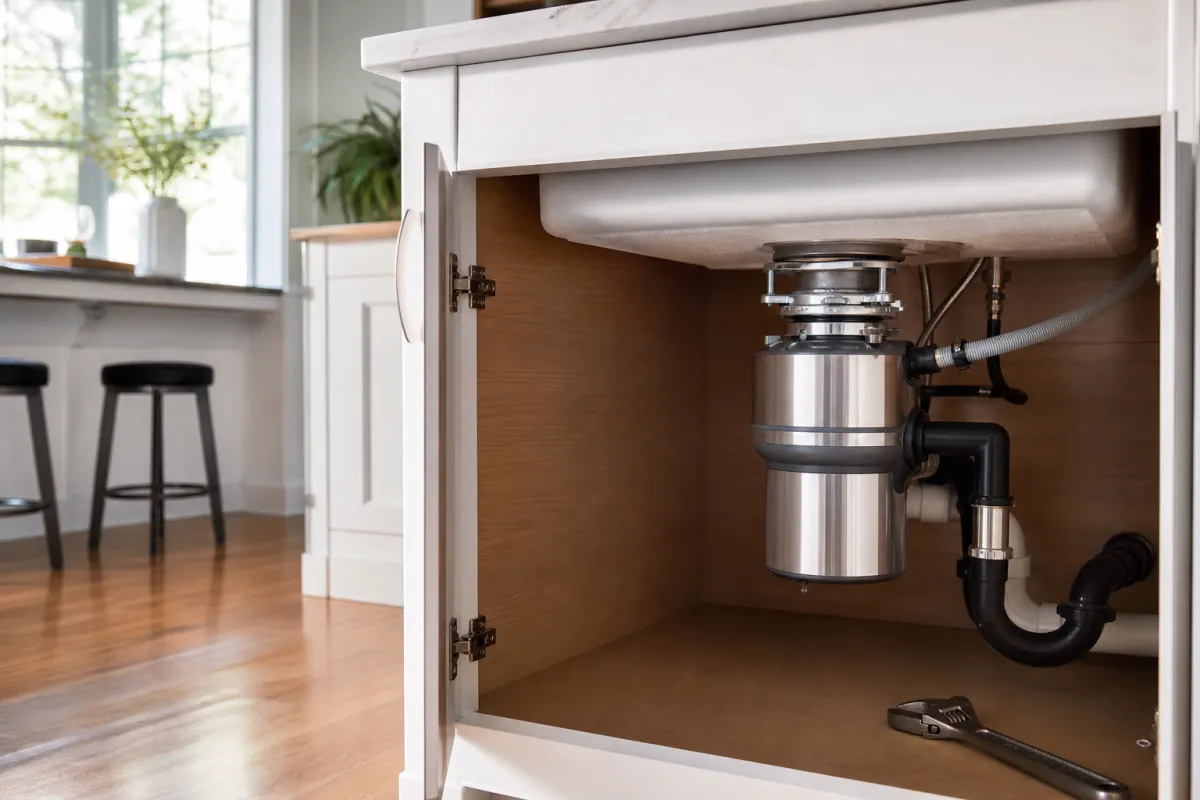
This is the cleanest case: the old disposal already has a sound mount, correctly aligned trap, functional switch or air switch, and no leak damage. The replacement has compatible dimensions and the dishwasher hose reaches correctly. Labor is mostly removal, mounting, reconnecting, and testing.
2. Replacement with plumbing correction
A deeper sink or taller disposal can move the discharge below the existing trap inlet. The installer may need to rebuild the tubular drain, replace a corroded flange, correct a double-trap or poor slope, or address a dishwasher hose that was never installed correctly. This is common after countertop or sink changes.
3. First-time installation
Adding a disposal where none existed may require a new flange, drain reconfiguration, switch or air-switch control, and an appropriate power source. It can involve both plumbing and electrical work. San Antonio’s residential permit guidance requires licensed trade contractors for new electrical and plumbing project components. A simple like-for-like replacement may be treated differently, but the City does not publish a disposal-specific blanket exemption; confirm the exact scope through Development Services or the registered contractor before work begins.
What to photograph before calling
Take five clear photos:
1. the full cabinet interior;
2. the label on the existing disposal;
3. the sink flange from above;
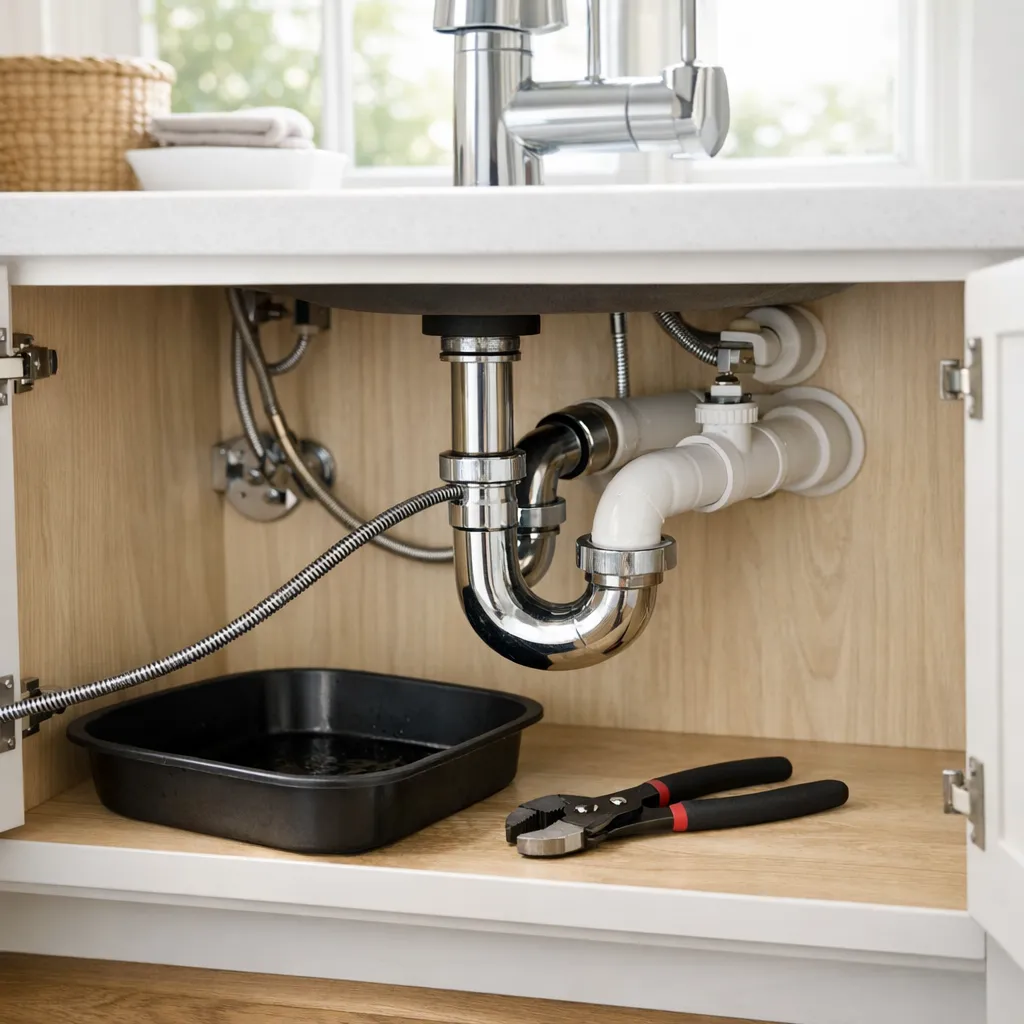
4. the trap and wall connection;
5. the receptacle, switch cable, or air-switch hardware.
Also note whether a dishwasher connects to the disposal, whether any valve or pipe is damp, and whether the cabinet base is swollen. With that information, an installer can explain assumptions instead of quoting blind.
Choosing the unit without overspending
Motor size should match use, but fit and service access matter just as much.
- 1/2 HP: reasonable for light residue after plates are scraped.
- 3/4 HP: a common middle ground for regular household use and often better sound insulation.
- 1 HP: useful for heavier use, but larger bodies can crowd the cabinet and the extra power does not make grease, fibrous scraps, or bones drain-safe.
- Batch feed: adds a stopper-activated safety step but can cost more and limit model choice.
- Continuous feed: common and convenient; requires disciplined operation and a suitable control.
Read the exact manufacturer installation manual before purchase. Confirm voltage, cord or hardwire requirements, sink-flange compatibility, body dimensions, discharge height, and dishwasher instructions. Do not assume every box includes a power cord.
San Antonio hard water and older fittings
SAWS explains that naturally occurring calcium carbonate from aquifer water makes local water hard. See the current SAWS water-quality report and water-quality FAQ.
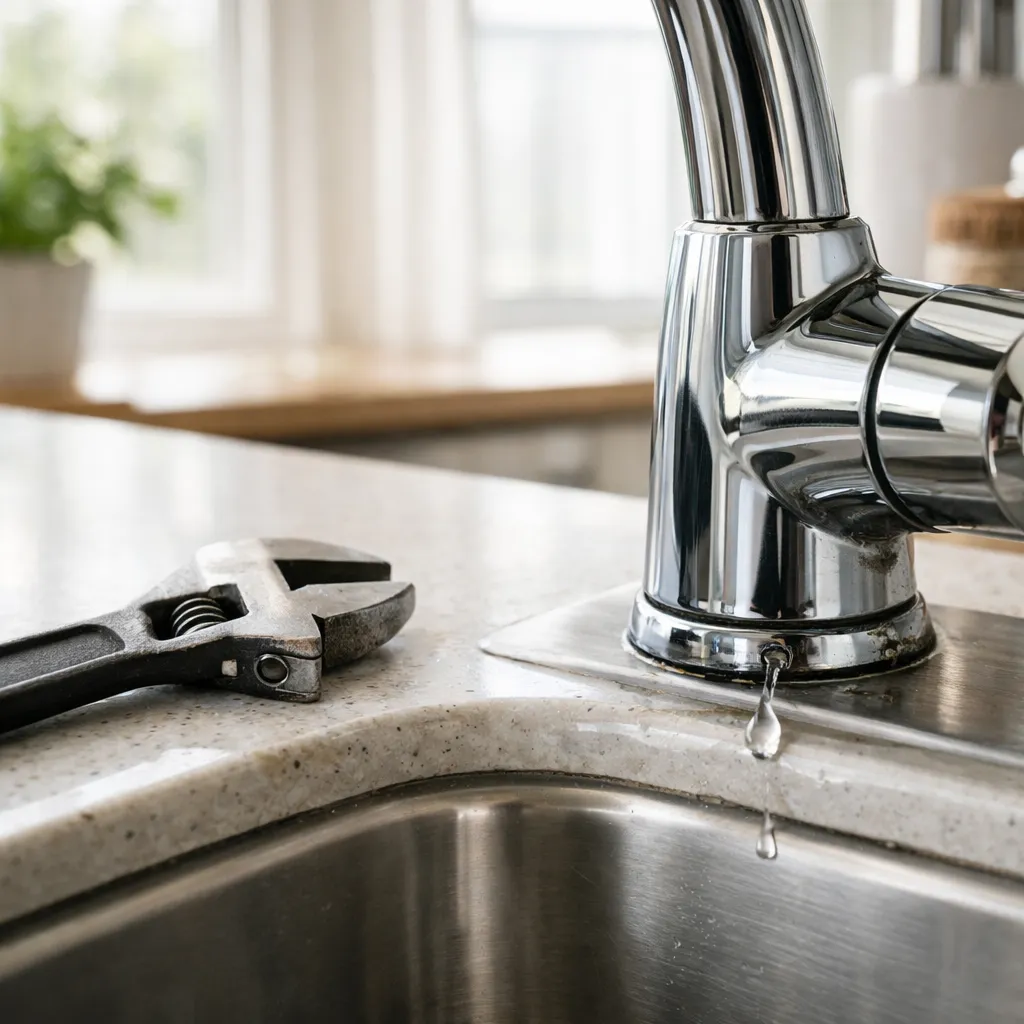
Hard water does not determine disposal horsepower, but mineral deposits can make the surrounding job less predictable. A scaled sink flange may resist removal. A crusted trap joint can crack when disturbed. A stiff shutoff valve under the same sink can start seeping after tools move nearby piping. Ask the installer to flag those conditions before work rather than automatically replacing unrelated parts.
Homes with mixed remodel-era plumbing deserve extra attention. Photograph existing conditions and require approval before added work.
DIY versus professional installation
A direct swap may be a reasonable DIY project for someone comfortable with plumbing connections and basic electrical safety. Follow the exact manual, switch the breaker off, verify that the unit cannot energize, support the unit during removal, and test every connection with the cabinet dry.
Stop and hire qualified help when:
- there is no appropriate grounded receptacle or control;
- wiring is damaged, improvised, or does not match the manual;
- the trap must be substantially reconfigured;
- the wall connection moves or leaks;
- the sink deck or flange is corroded;
- the cabinet has mold, swelling, or active water damage;
- a valve will not close normally;
- more than one drain is slow, suggesting a larger drainage issue.
Never put a hand into the grinding chamber. Disconnect power and use the manufacturer’s documented jam-clearing method.
Installation-day acceptance test
Before the installer leaves—or before calling a DIY job finished—verify:
- breaker, switch, and overload reset operate as intended;
- unit is secure and does not twist at startup;
- sink flange stays dry with a full basin;
- discharge and trap joints stay dry while running;
- dishwasher connection stays dry during a drain cycle;
- water drains freely without gurgling or cabinet vibration;
- model number, receipt, and warranty information are saved;
- cabinet is dry after a final paper-towel check around every joint.
A ten-minute leak check is more valuable than an installer saying the motor turns on.
Questions that make quotes comparable
1. Is this price for a direct swap only?
2. What exact model is included, and can I review its official manual first?
3. Are removal, haul-away, cord, flange, and drain parts included?
4. What plumbing alignment is assumed?
5. Does the power setup comply with the model instructions?
6. Who handles any required permit for added electrical or plumbing work?
7. Will you test the dishwasher drain connection?
8. What condition would require a change order, and will you ask before proceeding?
FAQ
How long does installation take?
A clean direct swap can be short. First-time installations and jobs with drain or electrical corrections take longer. Time alone is a poor comparison unless the scope is identical.
Should I buy the disposal myself?
You can, but confirm dimensions and installation requirements with the installer first. If the contractor supplies it, ask for the exact model and how product warranty versus labor warranty is handled.
Does hard water mean I need a premium disposal?
No. Hard water mainly affects surrounding fittings and maintenance. Serviceability, correct fit, proper installation, and good food-waste habits matter more than a premium label.
Where should I go next?
If the home uses onsite wastewater, read how to choose a disposal for a septic system. For recurring clogs, compare Drano and Liquid-Plumr risks. For a scoped local estimate, use the project request form.